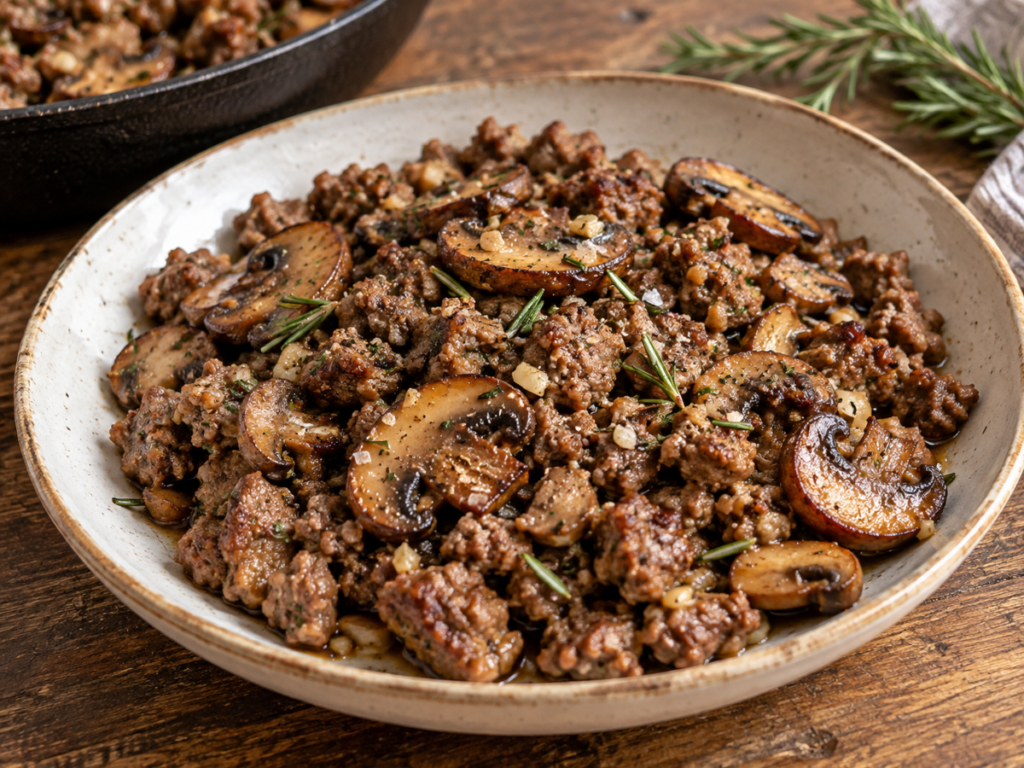
Ground lamb develops a deeply savory flavor when browned in a hot skillet, especially when paired with mushrooms cooked until their moisture evaporates and their edges turn golden. Fresh rosemary contributes a distinctive herbal aroma, while garlic adds warmth and depth without overpowering the meat. A finishing sprinkle of sea salt brings the ingredients together in a simple dish that depends on careful browning rather than a complicated sauce.
This Grass-Fed Lamb & Mushroom Skillet is particularly well suited to a low-lectin meal plan because its primary ingredients require few dietary adjustments. Lamb, cultivated mushrooms, garlic, and fresh herbs are commonly included in low-lectin cooking, allowing the dish to be prepared without grain-based thickeners, legumes, or nightshade vegetables. The ingredients also provide enough natural flavor that additional seasonings are largely unnecessary.
Cooking the mushrooms separately before combining them with the lamb makes a noticeable difference in the finished texture. Mushrooms release considerable moisture as they heat, and allowing that liquid to evaporate helps them develop a firmer texture and concentrated savory flavor. Once the lamb has browned, the mushrooms return to the skillet with rosemary and garlic, creating a cohesive dish with enough natural cooking juices to keep the mixture moist.
Grass-Fed Lamb & Mushroom Skillet with Rosemary and Garlic
Ingredients
- 1 pound grass-fed ground lamb
- 12 ounces fresh cremini mushrooms, cleaned and sliced approximately ¼ inch thick
- 1 tablespoon extra virgin olive oil
- 3 garlic cloves, finely minced
- 2 teaspoons fresh rosemary leaves, finely chopped
- ¼ teaspoon fine sea salt, plus additional to taste if desired
Instructions
- Prepare the ingredients. Clean the mushrooms with a damp paper towel or rinse them briefly under cool running water if needed, then dry thoroughly. Slice them evenly, mince the garlic, and finely chop the rosemary leaves. Keep the raw lamb separate from the prepared ingredients, and wash your hands and any surfaces that contact the raw meat.
- Preheat the skillet. Place a large, heavy-bottomed skillet over medium-high heat and allow it to warm for approximately 1–2 minutes. Add the extra virgin olive oil and swirl to coat the cooking surface, allowing the oil to become hot without smoking.
- Brown the mushrooms. Add the sliced mushrooms to the skillet and spread them into as even a layer as possible. Cook uncovered for approximately 9–11 minutes, stirring occasionally, until their released moisture has largely evaporated and the mushrooms develop golden-brown edges. Avoid continuous stirring, which can interfere with browning.
- Remove the mushrooms. Transfer the browned mushrooms to a clean plate and set aside. Leave any small browned bits in the skillet, as they will contribute additional flavor to the lamb.
- Brown the ground lamb. Add the ground lamb to the skillet, adjusting the heat slightly if the pan is excessively hot. Spread the meat across the cooking surface and allow it to brown undisturbed for approximately 2 minutes before breaking it into bite-sized pieces with a wooden spoon or spatula.
- Continue cooking the lamb. Cook for another 5–7 minutes, stirring occasionally to develop browning on several sides. The lamb will release some of its natural fat as it cooks. If a substantial amount accumulates, carefully spoon off the excess, leaving approximately 1 tablespoon in the skillet.
- Add the rosemary and garlic. Reduce the heat to medium and stir the chopped rosemary and minced garlic into the lamb. Cook for approximately 30–60 seconds, stirring continuously, until the garlic becomes fragrant without turning dark brown.
- Combine the ingredients. Return the cooked mushrooms to the skillet and gently stir them into the lamb. Continue cooking for approximately 1–2 minutes, allowing the flavors to combine. Verify that the ground lamb reaches an internal temperature of at least 160°F (71°C), using an instant-read thermometer to check several of the larger meat pieces without touching the skillet. Continue cooking if necessary until the safe temperature is reached.
- Finish with sea salt. Remove the skillet from the heat and sprinkle the sea salt evenly over the lamb and mushrooms. Stir gently, taste, and adjust the seasoning if desired.
- Serve immediately. Divide the mixture among four plates or shallow bowls while warm. Spoon any remaining cooking juices over each serving.
Why Grass-Fed Lamb Works Well in This Dish
Grass-fed lamb has a characteristic savory flavor that can vary depending on the animal’s diet, age, and the particular cuts used for grinding. Some products have a pronounced grassy or mineral quality, while others are comparatively mild. Browning develops roasted notes that complement the meat’s natural richness, making it especially compatible with earthy mushrooms and aromatic herbs.
Ground lamb often contains enough fat to remain moist during skillet cooking, although the amount varies considerably between products. That fat also helps distribute the flavor of the rosemary and garlic throughout the mixture. Removing excessive rendered fat prevents the finished dish from becoming greasy while retaining enough to coat the mushrooms.
Grass-fed lamb is an appropriate choice for people who prefer meat from pasture-based production systems. However, grass-fed and conventionally raised lamb are both compatible with the low-lectin ingredient approach used here. The distinction concerns animal feeding practices and potential differences in flavor and fat composition rather than an established difference in dietary lectin exposure.
Choosing the Right Mushrooms
Cremini mushrooms are particularly effective in this skillet because their relatively firm texture holds up during sautéing. Their earthy flavor becomes more concentrated as moisture evaporates, helping them complement the richness of the lamb. They also retain enough structure to provide a noticeable contrast to the smaller pieces of ground meat.
White button mushrooms are a practical alternative and will produce a slightly milder result. Shiitake mushrooms, with their tough stems removed, offer a stronger savory character and a somewhat chewier texture. Oyster mushrooms can also be used, although their more delicate structure means they may require less cooking time, especially when torn into smaller pieces.
For consistent cooking, slice the mushrooms to approximately the same thickness. Very thin slices may shrink considerably, while thicker pieces take longer to release their moisture. Drying the mushrooms after cleaning also helps prevent unnecessary surface moisture from delaying browning.
Cultivated culinary mushrooms are commonly included in low-lectin meal plans, although mushrooms are biologically diverse and should not automatically be described as lectin-free. Their suitability depends on the particular ingredient and dietary approach. In this dish, sautéing is used to develop flavor and texture rather than as a verified method for eliminating mushroom lectins.
Fresh Rosemary and Garlic for Balanced Flavor
Rosemary has a concentrated, resinous aroma that works naturally with lamb. Its flavorful compounds disperse through the warm fat in the skillet, seasoning both the meat and mushrooms. Finely chopping the leaves prevents large, woody pieces from interfering with the finished texture.
The quantity matters because rosemary can easily dominate a dish. Two teaspoons of finely chopped fresh rosemary provide a noticeable herbal character without obscuring the lamb’s flavor. If fresh rosemary is unavailable, approximately ¾ teaspoon of crushed dried rosemary can be substituted, although its flavor may be somewhat more concentrated. Add dried rosemary during the final 2–3 minutes of cooking the lamb to give it additional time to soften and release its aroma.
Garlic benefits from being introduced late in the cooking process. Minced garlic can burn quickly in a hot pan, particularly when the surface contains browned meat residue. Brief cooking after the lamb has browned softens the garlic’s sharp raw flavor while preserving its distinctive aroma.
For a gentler garlic presence, two thinly sliced cloves can replace the three minced cloves. The slices create occasional mild, aromatic bites rather than distributing garlic evenly throughout the mixture. Keep the heat moderate and stir frequently to prevent the slices from scorching.
Getting the Best Texture from the Skillet
A large cooking surface makes a noticeable difference when working with mushrooms and ground meat. Both ingredients release moisture, and excessive crowding can trap that liquid long enough for the food to steam rather than brown. A 12-inch skillet provides enough room for the specified quantities in most kitchens, although particularly large mushrooms may require cooking in batches. Dividing the mushrooms into batches will add several minutes to the total cooking time.
Resisting the urge to stir constantly also improves browning. Allowing the lamb to remain in contact with the hot skillet briefly encourages the reactions responsible for its roasted aroma and darker exterior. Breaking the meat into moderately sized pieces preserves a more substantial texture than reducing it to very fine crumbles.
Temperature control becomes especially useful once the garlic enters the skillet. By that point, the meat should have developed most of its browned exterior, so continuing at very high heat provides little advantage. Reducing the heat helps prevent scorching and limits unnecessary moisture loss from the lamb.
Browning alone cannot establish that ground meat is safely cooked, since color is not a reliable indicator of internal temperature. Ground lamb must reach at least 160°F (71°C), even when the exterior appears thoroughly browned. An instant-read thermometer provides a more dependable check than visual appearance.
Low-Lectin Considerations and Practical Substitutions
This skillet uses a short ingredient list that aligns with many low-lectin eating patterns without requiring specialized preparation techniques. It contains no beans, wheat flour, tomato sauce, or pepper-based seasoning, making it suitable for meal plans that limit those ingredients. The recipe’s low-lectin character comes primarily from ingredient selection rather than an attempt to alter lectin activity through cooking.
Extra virgin olive oil contributes a mild fruity richness to the mushrooms, although avocado oil can replace it in the same quantity. Ghee is another option, providing a slightly buttery flavor that complements the lamb. Since ground lamb releases its own fat, additional oil is usually unnecessary once the meat begins cooking.
Ground beef can replace lamb in an equal quantity, although its flavor will be different and may be less distinctive alongside the rosemary. Ground turkey is another possibility, but lean varieties generally release less fat and may need an additional teaspoon or two of olive oil to prevent dryness and sticking. Ground beef must reach 160°F (71°C), while ground turkey and other ground poultry must reach 165°F (74°C).
For those who prefer a milder herbal flavor, fresh thyme can replace rosemary in the same quantity. Thyme has a softer, less resinous character that works well with both lamb and mushrooms. The substitution changes the aromatic profile without affecting the cooking method or moisture balance.
Serving the Lamb and Mushroom Skillet
The concentrated flavor of the lamb and mushrooms pairs well with vegetables that provide a contrasting texture. Cauliflower mash creates a soft base that absorbs the skillet juices, while roasted asparagus or sautéed leafy greens offer a lighter accompaniment. Steamed broccoli finished with a small amount of extra virgin olive oil also works well alongside the rosemary and garlic.
For a more substantial meal, spoon the mixture over cooked millet or properly prepared white rice if those ingredients fit the intended dietary approach. These additions introduce a different texture and make the skillet easier to divide into larger meal portions. Because the lamb mixture is relatively concentrated, a mild accompaniment generally works better than one with heavily competing seasonings.
Another option is to serve the mixture inside roasted acorn squash halves. The squash provides a mildly sweet contrast to the savory lamb, and its hollow center creates a convenient place for the filling. Roast the squash separately until tender before adding the fully cooked lamb and mushrooms. If avoiding squash skins or seeds is part of the chosen low-lectin approach, remove the seeds before roasting and serve only the tender flesh with the filling.
Storage, Reheating, and Meal Preparation
Leftover lamb and mushrooms can be stored together in shallow, airtight containers in the refrigerator at 40°F (4°C) or below for 3–4 days. Refrigerate the cooked mixture within 2 hours of preparation, or within 1 hour when the surrounding temperature exceeds 90°F (32°C). Shallow containers allow the food to cool more quickly and reduce the time it spends at temperatures that encourage bacterial growth.
For longer storage, freeze individual portions in freezer-safe containers or tightly sealed freezer bags at 0°F (-18°C) or below. The mixture will generally maintain its best quality for approximately 2–3 months, although properly frozen food remains safe beyond that period if continuously maintained at an appropriate freezing temperature. Thaw frozen portions in the refrigerator before reheating.
Reheating in a covered skillet over medium-low heat helps preserve moisture. Add 1–2 tablespoons of water if the mixture appears dry, stirring occasionally until the food reaches an internal temperature of 165°F (74°C). The water loosens the refrigerated cooking juices without substantially changing the seasoning.
The skillet can also be reheated in a covered, microwave-safe container. Stir partway through heating to reduce cold spots, and verify that the food reaches 165°F (74°C) throughout. Allow the mixture to stand briefly after reheating so the heat distributes more evenly before serving.
For meal preparation, portioning the lamb and mushrooms separately from accompanying vegetables or grains helps maintain their individual textures. Refrigerated mushrooms may release some moisture during reheating, particularly after freezing and thawing. If the mixture appears watery, remove the skillet lid briefly after the food has reached a safe reheating temperature and allow excess liquid to evaporate over medium heat, stirring occasionally to prevent the lamb from drying out.