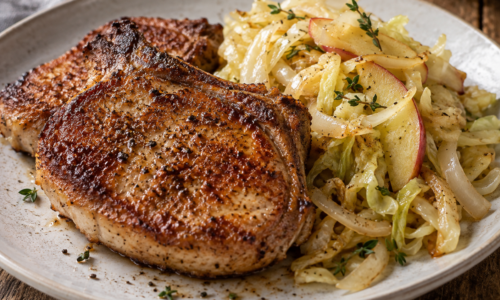
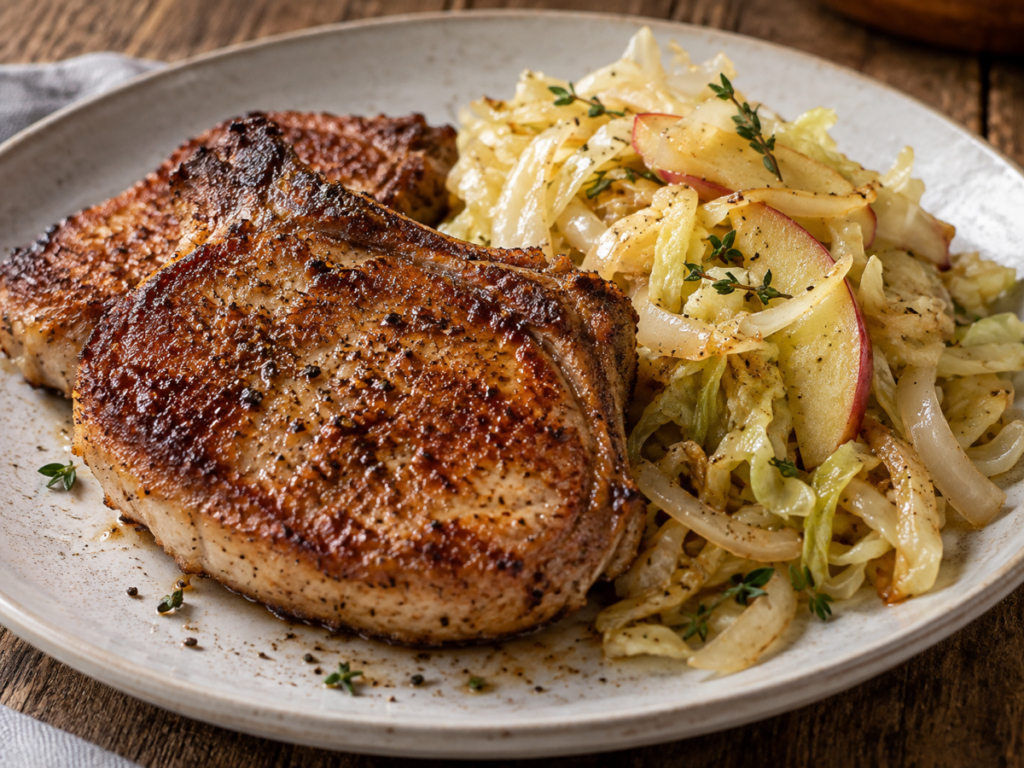
A good weeknight pork chop needs contrast. The meat should stay juicy, the outside should have enough texture to make each bite interesting, and whatever sits beside it should bring acidity and freshness rather than another heavy layer of food. These cassava-crusted pork chops do exactly that, pairing a thin, crisp coating with warm cabbage and apples cooked just long enough to soften while keeping some structure.
For a low-lectin kitchen, the combination also works without relying on wheat bread crumbs, cornmeal, or a long list of specialty ingredients. Cassava flour provides the crust, cabbage forms the bulk of the side dish, and apple cider vinegar cuts through the richness of the pork. The finished meal feels familiar rather than restrictive, which matters if this way of eating needs to work on ordinary Tuesday nights as well as carefully planned weekends.
There is another practical advantage here. The pork and slaw can be prepared in the same skillet, allowing the browned bits left behind by the chops to become part of the flavor of the cabbage instead of something destined for the sink.
Why Cassava Flour Works Well as a Pork Chop Coating
Cassava flour behaves differently from almond flour or coconut flour. It is made from the cassava root and contains a substantial amount of starch, which allows a thin coating to dry and brown against a hot skillet. That makes it especially useful when the goal is a breaded texture without conventional wheat flour.
The coating should stay thin. A heavy layer of cassava flour can become pasty where moisture collects, while a light layer clings to the egg, browns quickly, and develops small crisp edges across the surface of the pork. Patting the chops dry before coating them and letting the coated meat sit for several minutes also helps the flour adhere.
Cassava does deserve a bit of context because raw cassava naturally contains cyanogenic compounds that must be reduced through proper processing. Preparation methods used in cassava production, including drying, cooking, and flour processing, can greatly lower these compounds, which is one reason commercially prepared cassava flour should be purchased from a reputable food producer rather than made casually from raw cassava root. This food-safety issue is separate from the discussion around dietary lectins.
From a low-lectin perspective, cassava flour can be a useful alternative for people who choose to limit wheat and certain grain-based coatings. That does not mean every person will respond to cassava the same way, and cassava is still a concentrated source of starch. Low-lectin eating does not automatically mean low-carbohydrate eating, so portion size can still be adjusted according to personal goals and tolerance.
Pork Chops Benefit From Simple Cooking
Pork chops often become dry because they are cooked according to appearance rather than temperature. Browning on the outside tells you very little about what is happening in the center, especially with a flour coating that can darken before the pork is finished.
For whole pork chops, the USDA recommends cooking to a minimum internal temperature of 145°F, followed by a rest of at least three minutes. A food thermometer placed into the thickest part of the chop is far more dependable than judging doneness by color alone.
One-inch chops work particularly well for this recipe because they give the coating time to brown without forcing the meat to spend too long in the skillet. Thinner chops can still be used, although they need closer attention because the center will reach temperature quickly. Very thick chops may benefit from finishing briefly in a moderate oven after browning.
Warm Cabbage and Apples Bring the Meal Together
Raw cabbage has plenty of crunch, but gently cooking it changes the character of the vegetable. It softens, becomes slightly sweeter, and readily absorbs the pan juices and vinegar around it. Stopping the cooking while the cabbage still has some bite keeps the slaw from turning into braised cabbage.
Apples add another layer without requiring a sweet sauce. A tart-sweet variety such as Granny Smith, Pink Lady, or Honeycrisp works well because the slices can soften at the edges while holding their shape. Adding them near the end keeps the apple recognizable rather than allowing it to disappear into the cabbage.
Apple cider vinegar provides the sharper note that balances the pork and cassava coating. A small amount of optional honey can round out a particularly acidic apple or vinegar, but the dish does not need to become sweet. Taste the slaw before adding it because ripe apples may already provide all the sweetness the skillet needs.
Crispy Cassava-Crusted Pork Chops with Warm Apple-Cabbage Slaw
Ingredients
- ---- For the porkchops ----
- 4 boneless pork chops, about 1 inch thick
- 3/4 cup cassava flour
- 1 teaspoon garlic powder
- 1 teaspoon dried thyme
- 3/4 teaspoon sea salt
- 1/2 teaspoon freshly ground black pepper
- 1 large egg
- 1 tablespoon water
- 2 to 3 tablespoons avocado oil or extra virgin olive oil, as needed
- ---- For the Warm Apple-Cabbage Slaw ----
- 5 cups thinly sliced green cabbage
- 1 medium crisp apple, cored and thinly sliced
- 1/2 small yellow onion, thinly sliced
- 1 tablespoon extra virgin olive oil
- 2 tablespoons apple cider vinegar
- 1 teaspoon fresh thyme leaves, or 1/2 teaspoon dried thyme
- 1/2 teaspoon sea salt, plus more to taste
- 1/4 teaspoon freshly ground black pepper
- 1 teaspoon honey, optional
- 2 tablespoons water, if needed during cooking
Instructions
- Pat the pork chops thoroughly dry with paper towels. Removing surface moisture helps the egg and cassava coating stay attached while also encouraging better browning in the skillet.
- Combine the cassava flour, garlic powder, dried thyme, salt, and black pepper in a shallow bowl. In a second shallow bowl, whisk the egg with one tablespoon of water until evenly blended.
- Dip each pork chop lightly into the egg mixture, allowing the excess to drip back into the bowl. Press the chop into the seasoned cassava flour on both sides, then shake away loose flour so only a thin coating remains.
- Place the coated chops on a plate and let them rest for about five minutes while the skillet heats. This short rest gives the flour time to absorb a little moisture from the egg and helps prevent the coating from sliding away during cooking.
- Heat two tablespoons of avocado oil or olive oil in a large skillet over medium to medium-high heat. Once the oil is hot, add the pork chops without crowding the pan, working in batches if necessary.
- Cook for approximately 4 to 5 minutes on the first side, resisting the temptation to move the chops constantly. Flip carefully and cook the second side for another 3 to 5 minutes, adjusting the heat if the cassava coating begins browning too quickly.
- Check the thickest portion of each chop with a food thermometer. Remove the pork when it reaches at least 145°F, then transfer the chops to a clean plate and allow them to rest for at least three minutes before serving.
- Carefully wipe away any very dark flour residue from the skillet while leaving the flavorful browned bits that have not burned. Add one tablespoon of olive oil and return the pan to medium heat.
- Add the sliced onion and cook for about two minutes, stirring occasionally. The onion should begin softening without becoming deeply browned.
- Add the cabbage, thyme, salt, and black pepper. Cook for approximately 4 to 5 minutes, tossing regularly so the cabbage softens evenly and picks up flavor from the skillet.
- Stir in the apple slices and apple cider vinegar. Continue cooking for another 2 to 3 minutes, until the apples are slightly tender but still hold their shape and the cabbage remains pleasantly firm.
- Add the optional honey if the slaw needs a softer acidic edge. If the pan becomes too dry before the cabbage reaches the texture you want, add one or two tablespoons of water rather than additional oil.
- Taste and adjust the salt or vinegar before serving. Spoon the warm slaw beside the rested pork chops so the crispy coating remains exposed rather than sitting underneath the moist vegetables.
Getting the Cassava Crust Crisp Instead of Gummy
Moisture is the main obstacle to a crisp cassava coating. Wet pork, too much egg, or a very thick layer of flour can create soft spots where the starch hydrates instead of frying. Keeping each layer thin solves most of the problem.
Pan temperature matters as well. The skillet needs to be hot enough for the coating to begin setting soon after the pork goes into the pan, but excessively high heat can brown cassava flour before a thick chop finishes cooking. Medium or medium-high heat usually provides better control than an aggressively hot skillet.
The oil does not need to cover the chops. This is shallow pan cooking rather than deep frying, so a thin film across the bottom of the skillet is enough. Add another small amount between batches if the pan becomes dry.
Moving the pork too early can also tear the coating. Give the first side enough uninterrupted cooking time to form a crust, then slide a thin spatula underneath before turning. Once browned, the cassava layer becomes much easier to handle.
Adjusting the Recipe for Individual Tolerance
Low-lectin eating works best when it leaves room for observation. Cassava, apples, cabbage, eggs, onions, and seasonings can all fit comfortably into many low-lectin meal patterns, but a food being commonly used in such a pattern does not guarantee that every person will digest it equally well.
Someone who finds large servings of raw cruciferous vegetables difficult to digest may actually prefer the cabbage cooked a little longer. Another person may want it barely softened. The difference can be as simple as two additional minutes in the skillet, which is why recipes like this are easy to personalize without rebuilding the entire meal.
The apple can also be peeled if that better matches personal preference or digestive comfort. If sweetness is something you are watching closely, use half an apple and increase the cabbage slightly. For a more acidic slaw, skip the honey and add another teaspoon of vinegar after the pan comes off the heat.
Seasonings are equally flexible. Rosemary works well with pork and apples, while sage creates a more autumn-style flavor. Garlic can be reduced or omitted without affecting the cooking method, which makes the recipe adaptable for people who are tracking tolerance to specific ingredients rather than following a rigid food list.
Choosing the Right Pork Chop
Boneless center-cut chops are convenient because they cook evenly and are easy to coat. Bone-in chops have excellent flavor as well, although the shape can make even contact with the skillet more difficult and cooking time may increase.
Look for chops with a little visible fat rather than completely lean, pale pieces. That small amount of fat contributes flavor and helps protect the meat during cooking, especially since the cassava coating needs several minutes in contact with the skillet to become crisp.
If possible, choose chops of similar thickness so they finish at roughly the same time. Cooking four very different pieces together often results in one being dry while another is still below the desired internal temperature.
Making the Meal Work Beyond One Dinner
The cabbage mixture reheats especially well, which makes it useful for meal planning. Cooked leftovers should be refrigerated promptly, and USDA guidance recommends using most cooked leftovers within three to four days.
The pork is best on the first night because refrigeration softens the cassava crust. For leftovers, reheat the chops in a skillet or oven rather than a microwave when preserving some of that texture matters. A small amount of oil and moderate heat can bring back much of the surface crispness without requiring another coating.
The slaw can also be made in a larger batch and paired with roasted chicken, turkey, or another simply prepared protein later in the week. Its mix of cabbage, apple, vinegar, and herbs is flexible enough to function as more than a side dish for one recipe, which helps a low-lectin kitchen stay practical rather than dependent on cooking an entirely new meal every evening.