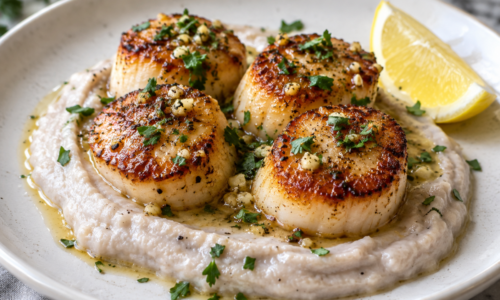
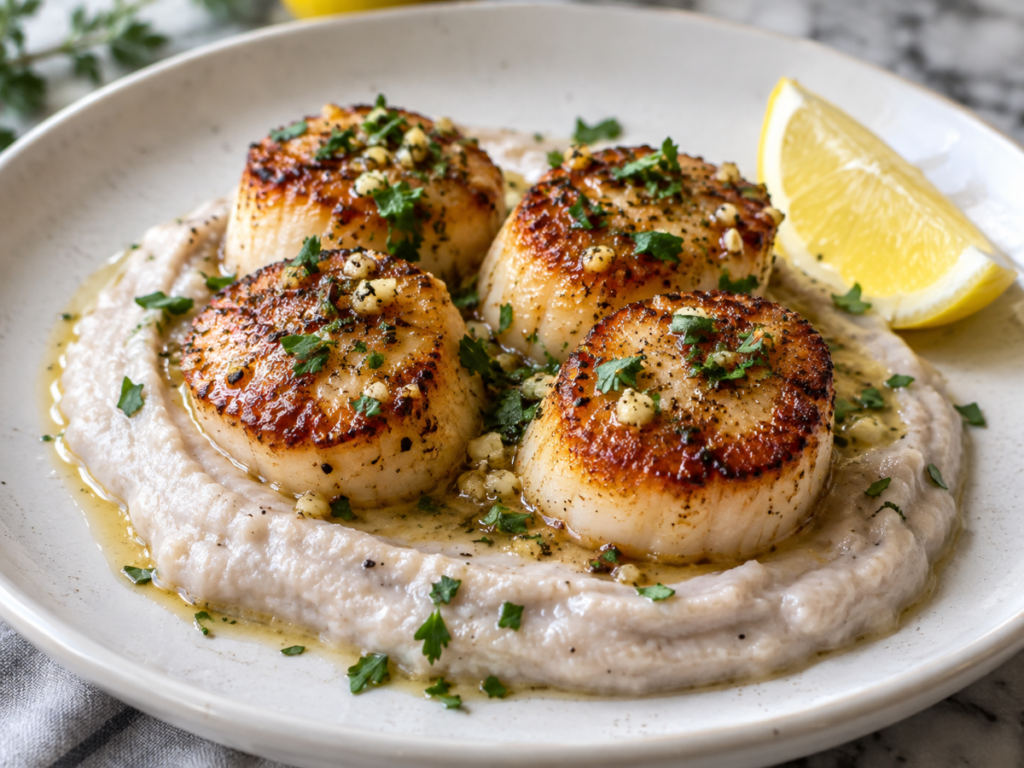
A plate of seared scallops over a smooth root vegetable puree has the kind of simplicity that makes each ingredient matter. There is nowhere for an overcooked scallop, underseasoned puree, or poorly prepared taro to hide. Done well, though, the combination is surprisingly elegant: sweet and lightly caramelized scallops sit against a mild, earthy puree with enough richness to make the meal satisfying without burying the seafood.
For someone following a low-lectin lifestyle, taro deserves a little more explanation than a typical recipe gives it. Taro is a traditional staple in many parts of the world, but the raw corm contains calcium oxalate crystals and other compounds that make thorough cooking necessary. Taro also contains a lectin known as tarin, which means describing taro as completely lectin-free would go beyond the evidence. Careful preparation, sensible portions, and individual tolerance make more sense than trying to force the ingredient into an absolute category.
Why Taro Works So Well as a Puree
Taro has a dense, starchy texture that becomes soft and almost velvety when fully cooked. Once mashed with a little warm liquid and fat, it produces a puree with more body than cauliflower but a milder flavor than many other root vegetables. That makes it especially useful under delicate seafood because it contributes texture without taking over the plate.
The flavor falls somewhere between a mild potato and a slightly nutty root vegetable. It readily takes on garlic, herbs, ghee, olive oil, coconut milk, or dairy, so the puree can be adjusted without fundamentally changing the dish. For this version, I keep the seasoning restrained and let the browned scallops provide most of the stronger savory flavor.
Taro also offers something that can be difficult to find in restrictive eating patterns: a genuinely satisfying starch that does not rely on wheat, corn, or conventional grain products. That does not automatically make taro appropriate for every person following a low-lectin plan. It simply gives people who tolerate it another whole-food option to test rather than assuming every meal has to center on the same small group of vegetables.
Taro Needs to Be Fully Cooked
Raw taro should not be sampled while preparing the recipe. The corm can contain needle-shaped calcium oxalate crystals associated with the characteristic itching, burning, or irritating sensation of improperly prepared taro. The University of Hawaii specifically advises against eating taro corms or leaves raw and notes boiling, baking, and roasting as traditional preparation methods.
Boiling is particularly useful for a puree because it softens the starch while allowing some water-soluble compounds to move into the cooking water. Research on taro and related Colocasia foods has found that cooking, especially boiling, can reduce oxalates and other antinutritional compounds. That is one reason I prefer boiling the peeled taro in plenty of water and discarding that water rather than relying only on baking for this recipe.
Lectins require a little more care in how we talk about them. Taro contains tarin, a naturally occurring carbohydrate-binding protein. A 2025 laboratory study found that boiling altered some properties of taro lectins and reduced certain measures of biological activity, although carbohydrate-binding activity was still detectable in boiled samples. Laboratory measurements like these do not tell us exactly what effect a normal serving of cooked taro has in human digestion, so it would be inaccurate to promise that boiling eliminates every active lectin.
For practical low-lectin eating, that leaves room for individual decisions. Someone who tolerates thoroughly cooked taro may find it useful, while someone following a very strict elimination phase may prefer a different puree until they have a reason to test it.
Scallops Keep the Meal Light but Satisfying
Scallops provide the protein portion of the meal without requiring much preparation. Seafood contributes protein and several micronutrients to the diet, and seafood in general is also a recognized dietary source of selenium.
The challenge with scallops is mostly technical. They contain a great deal of moisture, so browning depends on removing surface water before they hit the pan. Patting them thoroughly dry and giving them enough room prevents the pan from rapidly filling with steam.
I also salt scallops shortly before cooking rather than letting them sit heavily seasoned for a long period. A hot pan, a thin film of avocado oil or ghee, and minimal movement are usually all they need. Once the scallop touches the pan, leave it alone long enough for the surface to form a golden crust before turning it.
Food safety still matters even when the goal is a good sear. FDA guidance recommends cooking seafood thoroughly, and scallops should become opaque and firm. Most seafood can also be checked for an internal temperature of 145°F when a thermometer is practical to use.
This recipe keeps the ingredient list fairly short so the scallops and taro remain distinct. A2 dairy can be used if it fits your approach, while full-fat unsweetened coconut milk provides an easy dairy-free alternative.
Seared Scallops over Creamy Taro Root Puree
Ingredients
- -- For the taro puree --
- 1 1/2 pounds taro root
- 2 cloves garlic, peeled
- 1/3 cup A2 whole milk or unsweetened full-fat coconut milk, plus more as needed
- 2 tablespoons ghee or extra virgin olive oil
- 1/2 teaspoon sea salt, plus more to taste
- 1 tablespoon chopped fresh chives or parsley
- 1 teaspoon fresh lemon juice
- -- For the scallops --
- 1 1/4 to 1 1/2 pounds large sea scallops, about 12 to 16
- 1 tablespoon avocado oil
- 1 tablespoon ghee
- Sea salt to taste
- 1 small garlic clove, lightly crushed
- 1 teaspoon fresh lemon juice
- -- For serving --
- Chopped chives or parsley
- Fresh lemon wedges
- Extra virgin olive oil, optional
Instructions
- Peel the taro completely and cut it into roughly 1-inch cubes. Some people experience skin irritation while handling raw taro, so food-safe gloves are a reasonable option if your skin is sensitive. Keep raw pieces away from foods that will be eaten without further cooking.
- Place the taro and two garlic cloves in a saucepan and cover them generously with fresh water. Bring the water to a boil, reduce it to a steady simmer, and cook for about 20 to 25 minutes. The taro should be completely tender, with no firm or crunchy center remaining.
- Drain the taro thoroughly and discard the cooking water. Return the taro to the warm saucepan for a minute or two over very low heat so excess surface moisture can evaporate. This produces a thicker puree and reduces the amount of added liquid needed later.
- Warm the A2 milk or coconut milk separately rather than pouring cold liquid directly onto the hot taro. Add the ghee or olive oil, salt, lemon juice, and about half of the warm liquid to the cooked taro.
- Mash thoroughly with a potato masher, or use an immersion blender for a smoother finish. Add the remaining liquid a little at a time until the puree reaches a soft, spoonable consistency. Taro can absorb liquid quickly, so adding everything at once can take the puree from thick to loose faster than expected.
- Fold in the chopped herbs and taste for salt. Keep the puree warm over very low heat while the scallops cook, adding another spoonful of warm milk or coconut milk if it becomes too thick.
- Check the side of each scallop for a small, firmer piece of muscle and remove it if present. Pat the scallops very dry on all sides with clean paper towels. Surface moisture is one of the biggest obstacles to browning.
- Heat a heavy stainless steel or cast-iron skillet over medium-high heat. Add the avocado oil and allow it to become hot before adding the scallops. Arrange them in a single layer with space between each one rather than crowding the skillet.
- Season lightly with sea salt and cook without moving them until the first side develops a deep golden surface, usually about two to three minutes depending on thickness and pan temperature. Turn each scallop once, then add the ghee and crushed garlic to the pan.
- Tilt the pan slightly and spoon the melted ghee over the scallops as the second side cooks. Continue cooking until the scallops are opaque and firm rather than translucent through the center, following current food-safety guidance. Finish with a small squeeze of lemon juice, then remove the scallops promptly so residual heat does not keep cooking them.
- Spoon a generous portion of warm taro puree onto each plate and spread it slightly with the back of the spoon. Place three or four scallops over the puree, depending on their size, and spoon a small amount of the garlicky pan fat over the top.
- Finish with chopped chives or parsley and a little fresh lemon. A thin drizzle of extra virgin olive oil can add richness, but keep it light enough that the browned surface of the scallops remains the dominant flavor.
- A simple green vegetable fits naturally beside the dish. Steamed broccoli, sautéed cabbage, asparagus, bok choy, or lightly cooked leafy greens all provide contrast to the soft puree without turning dinner into a complicated project.
Adjusting the Recipe for Individual Tolerance
Taro is the ingredient to pay attention to if you are using food tracking to build a personalized low-lectin approach. Preparation affects the food, but preparation does not guarantee that every person will respond to it in exactly the same way. A modest serving alongside scallops and vegetables gives you a much clearer test than eating a large bowl of taro by itself.
If you are introducing taro for the first time, keeping the rest of the meal familiar can make observations easier. That means resisting the temptation to add five new seasonings, a new vegetable, an unfamiliar sauce, and a new dessert on the same night. When several variables change together, it becomes much harder to connect a later reaction with one specific food.
People who prefer to avoid taro can use the same scallop preparation over cauliflower puree, mashed celery root, or a mixture of cauliflower and parsnip. The cooking technique for the seafood does not need to change, so the recipe can remain useful even if the starch underneath it evolves with your own food choices.
Taro also benefits from portioning well. Leftover puree can be refrigerated promptly in a covered container and reheated gently with a splash of A2 milk, coconut milk, or water. Cooked seafood is best handled more conservatively, so refrigerate leftovers promptly and reheat them thoroughly rather than allowing cooked scallops to sit for extended periods at room temperature.
The combination works because neither component has to carry the entire meal. The scallops bring protein, sweetness, and a browned exterior, while the fully cooked taro provides the soft, grounding texture underneath. With proper preparation and an honest view of individual tolerance, it is the kind of dinner that can add variety to low-lectin meal planning without pretending that every ingredient fits every person in exactly the same way.