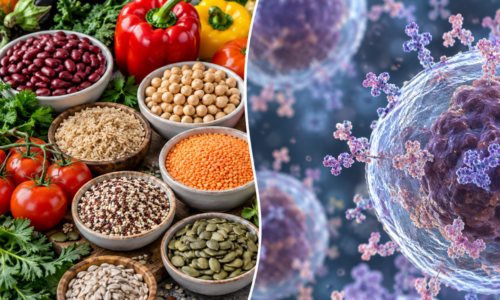
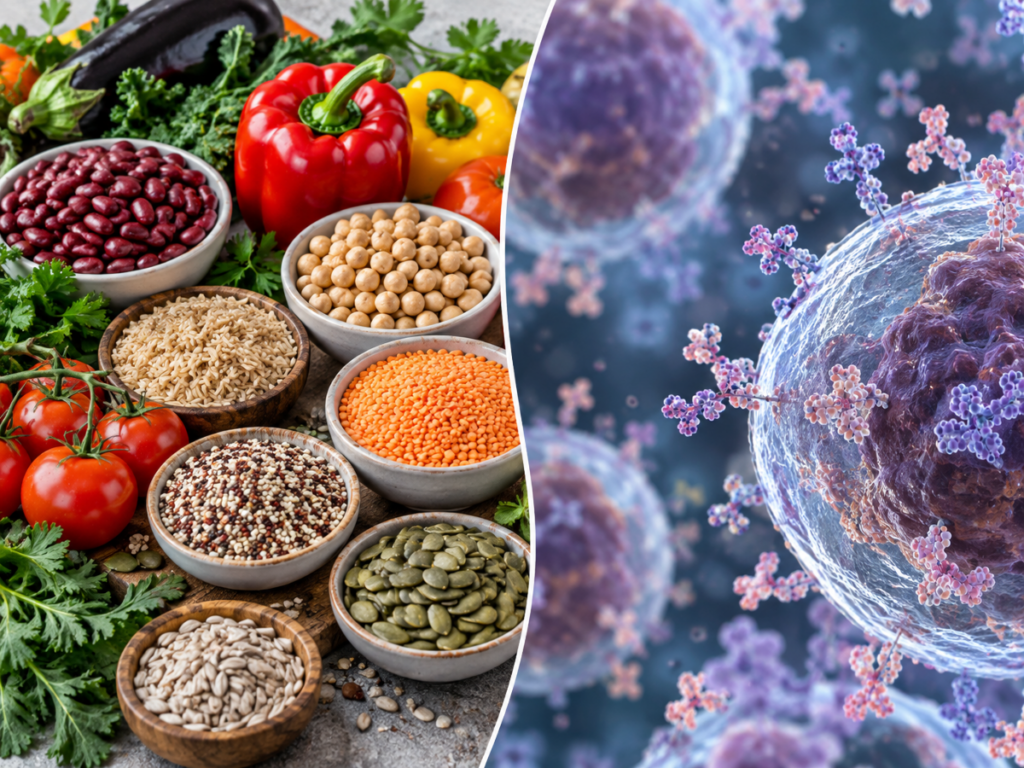
For anyone following a low-lectin lifestyle, the word “lectin” usually brings food to mind. Beans, wheat, certain seeds, nightshades, and other plant foods contain proteins that can bind to carbohydrates, and some people choose to reduce their exposure to particular dietary lectins based on digestion, tolerance, or personal experience.
There is another side of lectin biology that rarely enters the dietary conversation. The human body produces its own lectins, including several families of carbohydrate-binding proteins that participate in immune activity, cell communication, tissue maintenance, inflammation, and recognition of microorganisms. These endogenous lectins are normal parts of human physiology, and they should not be confused with the plant lectins people are trying to manage through food choices.
Understanding the difference helps clear up one of the more confusing parts of lectin discussions. The shared name describes a broad biochemical ability, carbohydrate binding, rather than a single protein or a single biological effect.
“Lectin” Describes a Function, Not One Substance
Lectins are a highly diverse collection of proteins capable of recognizing and binding specific carbohydrate structures. They occur throughout nature in plants, animals, fungi, bacteria, and other organisms, and proteins classified as lectins can differ greatly in structure and biological purpose.
This matters because discussions about lectins can easily lump very different molecules together. The phytohaemagglutinin found in kidney beans, wheat germ agglutinin found in wheat, a galectin produced by human cells, and mannose-binding lectin circulating in human blood are all called lectins, but they are not interchangeable versions of the same protein.
A useful comparison is the word “enzyme.” Thousands of enzymes exist, and knowing that two proteins are enzymes does not tell us that they perform the same reaction. In much the same way, calling something a lectin tells us something about carbohydrate recognition, but far less about what that protein actually does inside a particular organism.
Plant and animal lectins can even belong to entirely different structural families while recognizing similar carbohydrates. Researchers classify many plant and animal lectins separately because their carbohydrate-recognition domains, structures, locations, and physiological roles differ considerably.
Your Cells Are Covered in Carbohydrate Information
To understand why humans make lectins, it helps to look at carbohydrates differently. In nutrition, carbohydrates are usually discussed as sugars, starches, fiber, and sources of dietary energy. Inside the body, however, small carbohydrate structures called glycans are also attached to proteins and fats on cell surfaces and in secreted molecules.
Those glycans can act as biological identifiers. Their patterns may help cells recognize one another, influence immune responses, affect how proteins move through cells, and help the immune system interpret whether something appears to belong to the body or comes from a microorganism.
Human lectins are among the proteins that read some of this carbohydrate information. Immunology research describes galectins, Siglecs, and C-type lectin receptors as major glycan-binding protein families involved in immune cell development, activation, movement, and regulation.
This makes endogenous lectins less like unwanted dietary compounds and more like components of a biological recognition system. Depending on the lectin, its location, and the carbohydrate it encounters, the resulting signal can contribute to immune activation, immune restraint, cell adhesion, tissue responses, or other cellular processes.
Galectins Are One Major Family of Human Lectins
Galectins are among the best studied endogenous lectins. They generally recognize carbohydrates containing beta-galactosides and can function both inside and outside cells.
Research has linked different galectins with immune regulation, cell adhesion, tissue repair, inflammation, pathogen recognition, and several other normal biological processes. Their effects are highly context dependent, which is one reason researchers continue studying individual galectins rather than treating them as a single biological unit.
The same galectin may behave differently depending on the tissue, surrounding cells, available binding partners, and physiological conditions. Altered galectin activity has also been observed in cancer, fibrosis, inflammatory disorders, infections, and metabolic disease, although finding altered levels in disease does not automatically mean the galectin caused the condition. Researchers are studying some galectins as possible biomarkers and therapeutic targets, which further illustrates how different endogenous lectins are from the dietary lectins discussed in meal planning.
Trying to remove endogenous galectins through a low-lectin diet therefore would not make biological sense. They are proteins encoded and produced by the body as part of normal cellular activity.
Siglecs Help Immune Cells Read Signals of “Self”
Another interesting group is the sialic-acid-binding immunoglobulin-like lectins, usually shortened to Siglecs. Many Siglecs appear on immune cells and recognize glycans containing sialic acid, a carbohydrate commonly found at the outer ends of glycans on vertebrate cells.
This recognition can help the immune system interpret the molecular environment around it. Many Siglecs send inhibitory or regulatory signals that can prevent immune cells from becoming unnecessarily active when they encounter normal host tissues.
That system is considerably more complicated than a simple “lectins cause inflammation” model. Some endogenous lectin pathways can encourage immune activity, while others help restrain it. The biological result depends on the receptor, ligand, cell type, and circumstances in which the interaction occurs.
Research into Siglecs has expanded because microorganisms and cancer cells can sometimes exploit these signaling systems. Even here, however, the relevant issue involves specific receptor and glycan interactions inside human biology, not the amount of lectin consumed in yesterday’s dinner.
C-Type Lectins Participate in Immune Surveillance
C-type lectins form another broad family with many roles in immunity. Some C-type lectin receptors are located on immune cells and recognize molecular patterns associated with fungi, bacteria, damaged cells, or altered tissues.
Current research describes these receptors as part of the communication system linking innate and adaptive immune responses. They can respond both to microbial molecules and to signals associated with tissue injury or cell death.
Mannose-binding lectin offers a good example of an endogenous lectin operating outside cells. This protein circulates in blood, recognizes certain carbohydrate patterns on microorganisms, and can activate the lectin pathway of the complement system, one of the body’s early immune defense mechanisms.
Again, the similarity in terminology can be misleading. Human mannose-binding lectin is produced by the body and participates in immune defense. Eating a food that contains a mannose-binding plant lectin does not simply add more human mannose-binding lectin to the bloodstream.
Dietary Lectins Enter Through a Very Different Route
Dietary lectins begin outside the body, usually as proteins made by plants. After food is eaten, those proteins encounter heat from cooking, stomach acid, digestive enzymes, intestinal microbes, and the physical environment of the digestive tract.
Many food proteins are broken into peptides and amino acids during digestion. Some plant lectins are comparatively resistant to digestion or heat, however, which is one reason preparation methods matter. Their stability differs substantially from one lectin to another, so broad statements claiming that every dietary lectin is completely destroyed by digestion or that every lectin remains fully active are both too simple.
Kidney bean phytohaemagglutinin provides the clearest food-safety example. Raw or inadequately cooked kidney beans can contain enough active phytohaemagglutinin to cause nausea, vomiting, abdominal symptoms, and diarrhea. Proper cooking greatly reduces this activity, which is why food-safety guidance specifically identifies raw and undercooked beans as the problem rather than properly cooked beans.
That situation should not be projected onto every food containing a lectin. Plant lectins differ in concentration, heat sensitivity, carbohydrate specificity, digestive stability, and biological activity. Processing methods such as soaking, boiling, fermentation, and pressure cooking can reduce the activity of many food lectins, although the effectiveness depends on the food and method being used.
Eating Lectins Does Not Create Your Endogenous Lectins
One misconception worth clearing up is the idea that dietary lectins somehow become the body’s endogenous lectins. Human cells manufacture endogenous lectins according to genetic instructions, just as they manufacture thousands of other proteins.
Dietary protein can eventually provide amino acids that the body reuses for protein synthesis, but that does not preserve the original identity of the food protein. An amino acid that once belonged to a bean lectin might later become part of an enzyme, muscle protein, hormone-related protein, antibody, or countless other molecules.
Some relatively digestion-resistant dietary lectins can interact with structures along the gastrointestinal tract before being degraded or removed. That possibility is relevant to food research and to people interested in individual digestive tolerance, but it remains a separate biological issue from endogenous lectin production.
Reducing dietary lectins therefore does not mean reducing all lectins in the body. Nor would eliminating endogenous lectins be a reasonable dietary goal, since many of them are involved in normal immune and cellular functions.
The Gut Is Where the Two Subjects Can Appear to Meet
The most interesting connection between dietary and endogenous lectins may occur indirectly in the gastrointestinal environment. The intestinal lining, mucus layer, immune cells, microbes, dietary proteins, and glycans all interact within the same biological space.
C-type lectin receptors, Siglecs, galectins, and other glycan-binding proteins participate in immune regulation at barrier tissues, including the gastrointestinal tract. Researchers are increasingly examining how carbohydrate recognition influences relationships between immune cells, tissues, microorganisms, and the intestinal microbiome.
That does not establish a simple chain in which eating a particular lectin switches an endogenous lectin pathway on or off. Human intestinal biology contains many overlapping signals, and much of the mechanistic research involving lectins comes from laboratory systems, animal studies, or highly specific disease research rather than controlled dietary trials in people.
For someone experimenting with a low-lectin lifestyle, that distinction is useful. A meal can be evaluated by how its ingredients, preparation method, portion size, and overall composition affect personal tolerance without needing to assume that every symptom reflects an endogenous lectin pathway.
What This Means for a Low-Lectin Lifestyle
The existence of beneficial human lectins does not invalidate concerns about specific dietary lectins, and the effects of improperly prepared kidney beans do not mean every carbohydrate-binding protein is harmful. Those are separate biological situations sharing the same broad protein label.
A practical low-lectin approach can stay focused on food. Properly cook legumes when they are included, use preparation methods appropriate to the ingredient, choose foods that fit personal tolerance, and pay attention to patterns rather than assuming that the word “lectin” predicts how every food will affect the body.
This distinction also removes an unrealistic goal from the equation. A low-lectin lifestyle is about managing dietary exposure, preparation practices, and individual food tolerance. It is not an attempt to create a lectin-free human body.
Your own lectins will continue doing what human lectins have evolved to do, recognizing carbohydrate structures, helping cells communicate, participating in immune responses, and responding to changes within tissues. Dietary decisions take place alongside that biology rather than replacing it, which is one more reason that food tolerance is best treated as something to observe carefully rather than reduced to a single protein category.