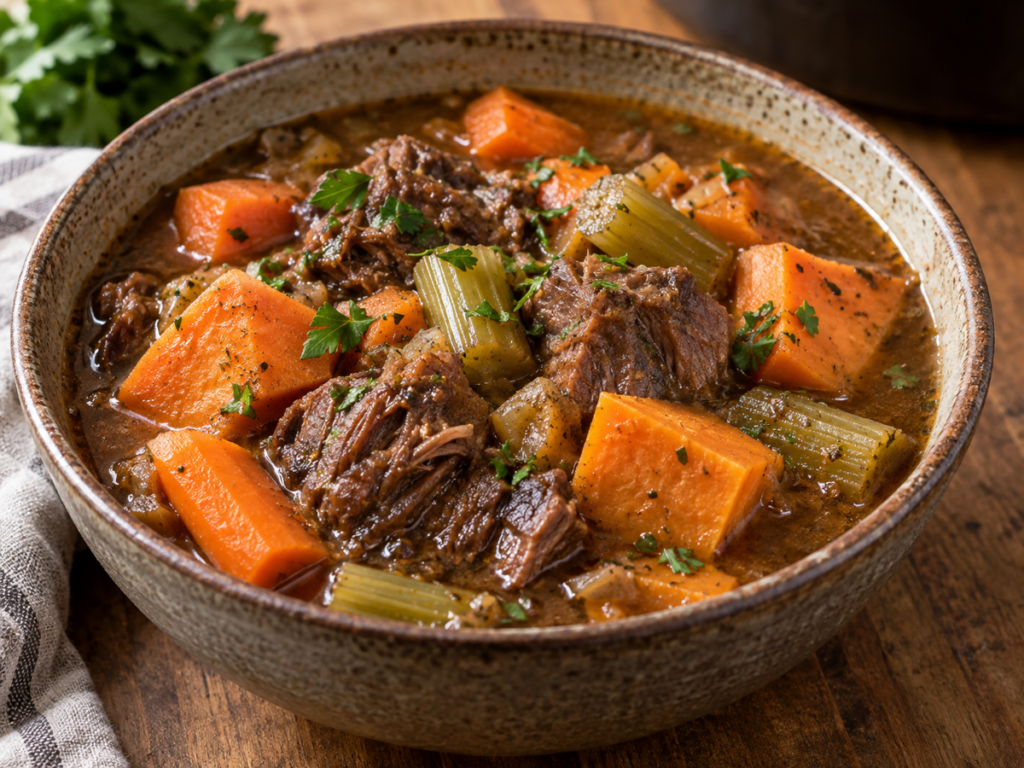
A pot of beef chuck, root vegetables, and broth is one of those meals that earns its place in a low-lectin kitchen because it is simple, filling, and easy to adapt. Grass-fed beef brings richness and protein, carrots and peeled sweet potatoes add gentle sweetness and body, celery adds a savory backbone, and beef bone broth ties everything together without requiring flour, beans, tomatoes, or other ingredients that some low-lectin eaters prefer to limit.
The pressure cooker is especially useful here because chuck is a hard-working cut with plenty of connective tissue. Under moist heat and pressure, it becomes tender in a fraction of the time normally needed for a long braise. The result is a deep, spoonable meal that feels slow-cooked even on a day when there is no time to keep a Dutch oven simmering for hours.
Why Beef Chuck Works So Well Under Pressure
Chuck comes from the shoulder area of the animal, so it contains more connective tissue than naturally tender cuts such as tenderloin. That structure is exactly why chuck can seem tough when cooked too quickly, but it also makes the cut ideal for braising and pressure cooking. USDA guidance lists chuck roast among cuts suited to moist cooking, and stew-style beef is commonly cooked in liquid until tender.
For this recipe, cutting the chuck into large cubes gives two advantages. The pieces cook more evenly than a whole roast, and the exposed surfaces can be browned before the broth goes in. Browning does not seal in juices, but it does build roasted flavor through surface reactions that make the finished broth taste fuller and more developed.
Grass-fed beef is a reasonable choice for people who prefer it for flavor, farming practices, or its fat profile, but the label does not make every package nutritionally identical. Recent research on commercial North American beef found that grass-fed samples averaged higher levels of several omega-3 fatty acids than grain-fed samples, while also showing substantial variation within both groups. That makes grass-fed beef a useful preference rather than a guarantee of a specific nutrient profile.
Where This Meal Fits in a Low-Lectin Approach
Lectins are carbohydrate-binding proteins found throughout the plant world, but the highest dietary concentrations that raise practical food-safety concerns are associated with foods such as raw or undercooked beans. The FDA specifically identifies phytohaemagglutinin in raw and undercooked beans as a lectin that can cause acute gastrointestinal illness, while properly cooked kidney beans contain much lower levels.
That distinction matters because a low-lectin meal does not need to treat every vegetable as if it carries the same concern as a raw kidney bean. Harvard’s Nutrition Source notes that legumes and whole grains are among the richer sources of dietary lectins and that wet, high-heat cooking methods can inactivate many lectins. It also points out that long-term human research on dietary lectins and health remains limited, so sweeping claims about lectins causing chronic disease go beyond the evidence we currently have.
This stew-style meal is built around ingredients that fit comfortably into many low-lectin eating patterns without depending on a dramatic claim that pressure cooking somehow makes every ingredient “safe.” Beef itself is not a plant lectin source. Carrots, celery, and sweet potatoes are commonly used as practical whole-food ingredients in low-lectin cooking, and peeling the sweet potatoes is an easy preparation choice for people who prefer a more conservative approach or simply like a softer final texture.
The Role of Peeled Sweet Potatoes
Sweet potatoes do more than make the broth taste slightly sweet. Their starch softens into the cooking liquid and gives the finished dish a fuller texture, especially after a few pieces break down around the edges. Orange-fleshed varieties also contain carotenoids, including beta-carotene, and recent food-science research has found that pressure cooking can retain beta-carotene well in some sweet potato preparations.
Peeling is useful here for texture as much as for dietary preference. The skin can separate during pressure cooking, and peeled cubes create a smoother, more cohesive stew. Cut them larger than the carrots because sweet potatoes soften quickly under pressure and can turn into puree if the pieces are too small.
Bone Broth Builds Flavor Without Making the Recipe Complicated
A rich beef bone broth gives the dish a stronger savory base than water, but there is no need to turn the broth into a health claim. Its most dependable contribution is culinary: it carries the flavor of the browned beef, herbs, vegetables, and cooking juices through the entire pot. If using packaged bone broth, check the ingredient list for tomato concentrates, added sugars, seed oils, yeast-heavy flavor blends, or other ingredients that do not fit your own version of low-lectin eating.
Homemade broth also works well, especially if it has already been chilled so excess fat can be removed easily. A lightly salted broth gives you more control because the liquid reduces in intensity as it cooks. Salt can always be adjusted after pressure cooking, but an oversalted pot is harder to correct.
This recipe makes a hearty main dish with enough broth to spoon into bowls. The vegetables are added in two stages so the beef has time to become tender without reducing the sweet potatoes and carrots to mush.
Pressure-Cooked Grass-Fed Beef Chuck with Carrots, Sweet Potatoes, and Celery
Ingredients
- 2 1/2 pounds grass-fed beef chuck, trimmed of large pieces of excess fat and cut into 1 1/2-inch cubes
- 1 1/2 teaspoons sea salt, divided, plus more to taste
- 1/2 teaspoon freshly ground black pepper, optional
- 1 tablespoon extra virgin olive oil or avocado oil
- 4 medium carrots, peeled and cut into thick pieces
- 2 medium sweet potatoes, peeled and cut into 1 1/2-inch chunks
- 3 celery stalks, cut into 1-inch pieces
- 1 small yellow onion, chopped, optional if tolerated
- 3 garlic cloves, minced
- 4 cups unsalted or low-sodium beef bone broth
- 1 teaspoon dried thyme
- 1 teaspoon dried rosemary, crushed between the fingers
- 1 bay leaf
- 1 tablespoon chopped fresh parsley for serving, optional
Instructions
- Pat the beef dry with paper towels, then season it with about 1 teaspoon of the salt and the black pepper if using. Dry beef browns more efficiently, so this small step makes a noticeable difference in the flavor of the finished broth.
- Set the pressure cooker to sauté and add the oil. Brown the beef in two or three batches so the pieces have room to make direct contact with the hot surface, transferring each browned batch to a plate before adding the next.
- Add the onion, if using, and celery to the cooker and cook for 2 to 3 minutes. Stir in the garlic and cook briefly, just until fragrant, then pour in about 1 cup of the broth and scrape the bottom thoroughly to loosen the browned bits.
- Return the beef and any collected juices to the pot. Add the remaining broth, thyme, rosemary, bay leaf, and the remaining 1/2 teaspoon salt, then lock the lid and cook at high pressure for 30 minutes.
- Let the pressure release naturally for 10 minutes, then carefully release any remaining pressure according to the instructions for your cooker. Open the lid and check that the beef is beginning to feel tender when pressed with a fork.
- Add the carrots and sweet potatoes, keeping the pieces fairly large. Lock the lid again and cook at high pressure for 4 minutes, then use a quick release once the cooking cycle ends so the vegetables do not continue softening for too long.
- Remove the bay leaf and taste the broth before adding more salt. If you prefer a thicker consistency, use a spoon to mash two or three sweet potato pieces against the side of the pot and stir them back into the broth instead of adding flour or starch.
- Let the stew stand uncovered for 5 minutes before serving. Spoon it into bowls and finish with chopped parsley if desired, making sure each serving gets beef, vegetables, and plenty of broth.
Getting the Vegetable Texture Right
Pressure cookers are efficient, but they are not gentle with small pieces of vegetables. If the carrots are cut into thin coins or the sweet potatoes into small dice, they can lose their shape quickly. Large pieces hold together better and still become tender enough to break easily with a spoon.
The two-stage method also keeps the meat and vegetables on separate timelines. Beef chuck benefits from a long pressure cycle, while carrots and sweet potatoes need only a few minutes once full pressure is reached. Celery can go in earlier because it is meant to soften into the broth and contribute flavor rather than remain crisp.
If you prefer firmer vegetables, reduce the second pressure cycle to 3 minutes and release pressure promptly. If you like a softer, almost pot-roast texture, 5 minutes works well, especially when the carrot pieces are thick.
Seasoning Without Relying on Tomato or Flour
Many traditional beef stews lean on tomato paste, Worcestershire sauce, flour, or potatoes for depth and body. None of those are mandatory. Good browning, concentrated beef broth, garlic, celery, herbs, and the natural starch from sweet potatoes create plenty of character on their own.
For more depth, add mushrooms after browning the beef if they fit your eating pattern. A small splash of coconut aminos can also add savory flavor, though it changes the broth slightly and may add sodium. Fresh thyme can replace dried thyme, and a little chopped parsley at the end brightens a stew that is otherwise rich and earthy.
Making the Recipe Work for Individual Tolerance
Low-lectin eating is rarely identical from one person to the next. Some people are comfortable with onions and garlic, while others reduce them because of digestive sensitivity unrelated to lectins, including sensitivity to fermentable carbohydrates. Those ingredients can be decreased or omitted without changing the pressure-cooking method.
The same flexibility applies to the fat used for browning. Extra virgin olive oil works well at moderate sauté settings, while avocado oil is a practical alternative when a higher-temperature sear is preferred. If you tolerate dairy and use it regularly, a small spoonful of ghee can add richness, but it is not needed for the recipe to work.
Tracking how a meal actually sits with you is more useful than assigning a rigid label to every ingredient. If this combination feels comfortable, it can become a dependable batch-cooking meal. If one ingredient repeatedly seems troublesome, changing that single variable is usually more informative than rebuilding the entire recipe at once.
Food Safety, Cooling, and Leftovers
Because the beef is cooked under pressure until tender, it will generally exceed the minimum temperature required for whole cuts of beef, but safe handling still starts before the lid closes. USDA guidance recommends cooking whole cuts of beef to at least 145 degrees Fahrenheit with a three-minute rest, while leftovers should be reheated to 165 degrees Fahrenheit.
For leftovers, cool the stew promptly and refrigerate it in shallow containers rather than leaving a large hot pot on the counter for an extended period. The broth often tastes even more integrated the next day, and any solidified fat on the surface can be lifted off easily before reheating. The sweet potatoes will continue to soften during storage, so reheat gently and stir only as much as needed to keep some of the vegetables intact.