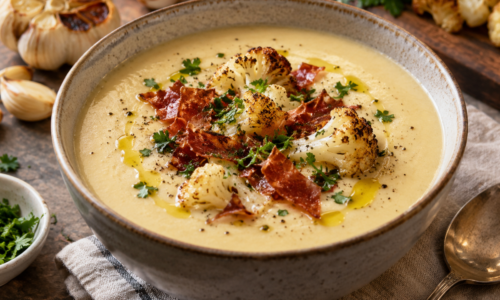
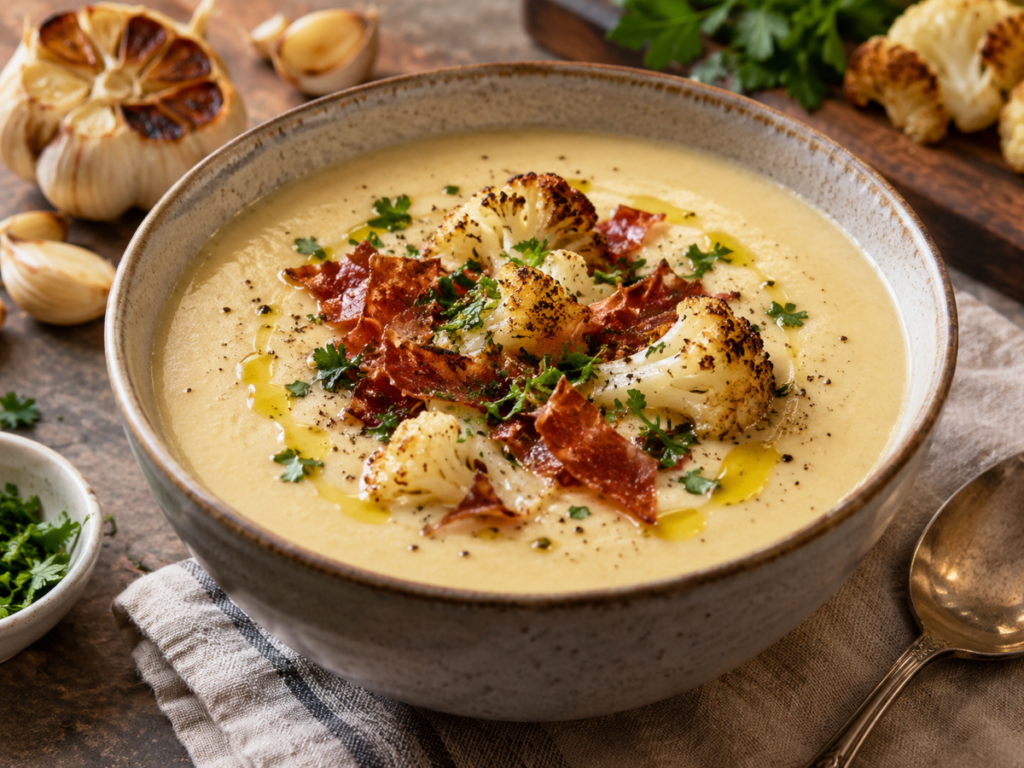
A bowl of cauliflower soup can be simple enough for a weeknight and still feel like something you would order at a small neighborhood restaurant. Roasting changes the character of cauliflower, giving the edges a deeper, slightly nutty flavor, while a whole head of garlic turns soft and mellow enough to blend directly into the broth. A small amount of crisped prosciutto adds salty contrast without turning the soup into a meat-heavy dish.
For someone following a low-lectin lifestyle, this is also an easy recipe to keep within familiar ingredients. Cauliflower, garlic, olive oil, herbs, and broth can form the base without relying on beans, wheat flour, corn starch, or tomato-based thickeners. The creaminess comes from blending the cauliflower itself, with optional dairy or coconut milk added only for extra richness.
Why Cauliflower Works So Well in a Creamy Soup
Cauliflower has a useful texture for blended soups because its cooked flesh becomes soft without becoming gummy. Once blended with broth and roasted garlic, it creates a smooth body that can reduce or eliminate the need for flour, potato starch, or other common thickeners. That matters in low-lectin cooking because it keeps the ingredient list simple and makes the soup easier to adapt around individual preferences.
Cauliflower is part of the Brassica family, along with broccoli, cabbage, and Brussels sprouts. Research on Brassica vegetables often focuses on glucosinolates and related compounds, whose levels and conversion can change with chopping and cooking. Different cooking methods affect these compounds differently, so roasting should be thought of primarily as a flavor and texture choice rather than a special health technique.
The vegetable also contributes dietary fiber. Fiber supports normal digestive function, but tolerance still varies, especially among people who are sensitive to larger servings of cruciferous vegetables. NIDDK guidance notes that fiber can help support bowel function, while also acknowledging that increasing fiber too quickly may lead to gas or bloating in some people.
That distinction is useful for anyone keeping a food journal. If cauliflower agrees with you at one serving size but causes discomfort at a much larger portion, that pattern may be more informative than labeling the food itself as either “good” or “bad.” Portion size, the rest of the meal, and personal digestive tolerance can all matter.
Where Lectins Fit Into This Recipe
Lectins are carbohydrate-binding proteins found throughout nature, including in many plants. They are not all the same, and their biological effects vary by type, amount, food source, preparation method, and exposure. Current reviews continue to describe both potentially adverse and potentially useful biological activities, while also pointing out that the evidence is still incomplete for many claims about dietary lectins and long-term human health.
Most of the food-safety concern around lectins has historically centered on certain raw or undercooked legumes, especially common beans. Heat processing can reduce lectin activity in many of those foods, although the degree depends on the food and method. Cauliflower is not treated like raw kidney beans in food-safety guidance, so roasting it for this soup should not be presented as a required lectin-neutralizing step.
For low-lectin cooking, the value of this recipe is more practical. It starts with ingredients that many people following this style of eating already use, then avoids several ingredients that commonly create substitution work. There is no wheat flour roux, no bean puree, no corn-based thickener, and no need for a conventional bread garnish unless you choose to add one.
Roasted Garlic Changes the Flavor Without Taking Over
A whole bulb of garlic may sound aggressive, but roasting transforms it. The cloves soften inside their skins and develop a sweeter, rounder flavor than raw garlic, so they blend into the cauliflower rather than dominating it. Roasting both the cauliflower and garlic at the same time also keeps the recipe efficient.
Garlic can still be a personal tolerance issue for reasons unrelated to lectins. Garlic is a concentrated source of fructans, one type of fermentable carbohydrate that can trigger symptoms in some people with irritable bowel syndrome or similar digestive sensitivity. Monash University lists garlic among higher-fructan foods, and NIDDK notes that some people with IBS may benefit from a professionally guided low-FODMAP approach. If garlic is one of your known triggers, roasted garlic may still cause symptoms even though its flavor is gentler.
In that case, the recipe can be adjusted without losing the whole idea. Garlic-infused olive oil can provide garlic flavor because fructans are water-soluble rather than fat-soluble, provided the garlic solids are removed from the oil. The soup will taste slightly different, but the roasted cauliflower and herbs will still provide plenty of depth.
Choosing the Broth and Creamy Element
Broth deserves more attention than it usually gets in a simple soup. Commercial broths can contain starches, sugar, yeast extracts, flavor blends, tomato concentrates, or other ingredients that may or may not fit a person’s preferred low-lectin framework. A broth with a short ingredient list is easier to evaluate, and homemade chicken broth or vegetable broth works well if you already keep it on hand.
For extra richness, heavy cream gives the most traditional texture. Readers who prefer A2 dairy can use an A2 dairy cream product if available, although availability varies. Unsweetened full-fat coconut milk is another option and gives the soup a softer, slightly sweeter finish. If you want the cleanest cauliflower flavor, you can skip both and simply blend the roasted vegetables thoroughly with broth and olive oil.
The prosciutto works best as a garnish rather than the main protein. It becomes crisp in a skillet or oven and adds enough salt and savory flavor that the soup itself usually needs less seasoning. Because cured meats can contribute a meaningful amount of sodium, it is worth tasting before adding extra salt. The FDA Daily Value for sodium is 2,300 milligrams, and packaged foods can vary widely in sodium content.
Creamy Roasted Garlic and Cauliflower Soup with Crisped Prosciutto
Ingredients
- 1 large head cauliflower, cut into florets, about 6 cups
- 1 whole bulb garlic
- 3 tablespoons extra virgin olive oil, divided
- 1 small shallot, roughly chopped
- 4 cups low-sodium chicken broth or vegetable broth, plus more as needed
- 1/2 teaspoon dried thyme, or 1 teaspoon fresh thyme leaves
- 1/4 teaspoon ground black pepper
- 1/2 teaspoon sea salt, plus more to taste
- 1/3 cup heavy cream, A2 dairy cream if preferred and available, or unsweetened full-fat coconut milk
- 3 ounces thinly sliced prosciutto
- 1 tablespoon chopped fresh parsley or chives, optional
- Extra virgin olive oil for finishing, optional
Instructions
- Heat the oven to 425 degrees Fahrenheit. Line a large rimmed baking sheet with parchment paper or leave it bare if you prefer stronger browning.
- Spread the cauliflower florets across the baking sheet. Drizzle with about 2 tablespoons of olive oil, then season lightly with salt and black pepper.
- Slice the top from the garlic bulb to expose the upper part of the cloves. Drizzle the cut surface with a little olive oil, wrap the bulb loosely in foil, and place it on the baking sheet beside the cauliflower.
- Roast the cauliflower and garlic for 30 to 35 minutes. Turn the cauliflower once during cooking so more than one side can brown. The cauliflower should be tender with golden edges, and the garlic cloves should feel soft when pressed carefully through the foil.
- While the vegetables roast, place the prosciutto in a large soup pot or skillet over medium heat. Cook until crisp, turning as needed, then transfer it to a plate lined with a paper towel. Once cool enough to handle, break it into small pieces.
- Add the remaining olive oil and chopped shallot to the soup pot. Cook over medium-low heat for about 3 to 4 minutes, just until the shallot softens.
- Add the roasted cauliflower to the pot. Squeeze the softened roasted garlic cloves from their skins directly into the pot, then add the broth and thyme.
- Bring the soup to a gentle simmer and cook for 5 to 8 minutes so the flavors can come together. Remove the pot from the heat before blending.
- Blend with an immersion blender until smooth. If using a countertop blender, work in batches and allow steam to escape according to the manufacturer's instructions, since hot liquids can build pressure inside a sealed blender jar.
- Stir in the cream or coconut milk. Add extra broth if you prefer a thinner consistency, then taste and adjust the salt and pepper.
- Ladle into bowls and top each serving with crisped prosciutto and fresh parsley or chives. A light drizzle of extra virgin olive oil can be added at the table if you want a richer finish.
Making the Texture Work for You
The final texture depends heavily on how much broth you add and how thoroughly you blend. Four cups gives a pourable but creamy soup with an average large cauliflower. If your cauliflower is especially big, or if you prefer a looser soup, another half cup of broth may be useful.
An immersion blender gives a slightly more rustic result, while a high-powered countertop blender can make the soup exceptionally smooth. Neither is better from a nutrition standpoint. The choice is about the texture you enjoy and the equipment you already have.
If the soup seems thin after blending, simmer it uncovered for a few minutes rather than adding a starch. If it seems too thick, add warm broth a little at a time. This kind of adjustment is easier than trying to predict the exact liquid requirement before roasting, because cauliflower heads vary considerably in size and water content.
Easy Variations Without Rebuilding the Recipe
The basic soup can move in several directions without becoming a completely different dish. Fresh rosemary can replace thyme for a woodier flavor, while chopped chives keep the finish mild and onion-like. A small amount of grated aged Parmesan can be stirred in at the end if dairy fits your approach, although the prosciutto already contributes plenty of savory character.
For a dairy-free version, full-fat coconut milk works best in a modest amount. Too much can shift the soup toward coconut flavor, so starting with one-third cup keeps the cauliflower and garlic in front. Another option is to skip the creamy addition entirely and finish each bowl with olive oil.
If prosciutto is not part of your diet, roasted mushrooms can supply a savory topping, though they change the flavor considerably. Chopped walnuts or macadamias can add crunch, and crisped pieces of pasture-raised chicken can turn the soup into a more substantial meal. The point is to keep the base dependable while changing the topping according to what you tolerate and what you have available.
Storage, Reheating, and Meal Planning
The soup stores well because the cauliflower base stays smooth after chilling. Refrigerate leftovers promptly in a covered container and reheat gently on the stove, adding a splash of broth if the soup thickens overnight. Keep the prosciutto separate until serving so it stays crisp.
For meal planning, the soup can be made one or two days ahead and reheated in portions. It also pairs easily with a simple green salad, roasted chicken, wild-caught fish, or a small piece of bread that fits your own dietary plan. A serving can work as a light lunch on its own, but adding a separate protein makes it more filling for many people.
This is also a good recipe for tracking personal tolerance because the ingredient list is relatively short. If cauliflower, garlic, dairy, or cured meat has been uncertain for you, changing one element at a time gives clearer information than changing the entire meal. A low-lectin lifestyle becomes far easier to sustain when recipes can be adjusted around the foods you actually tolerate, rather than forcing every meal into one rigid formula.