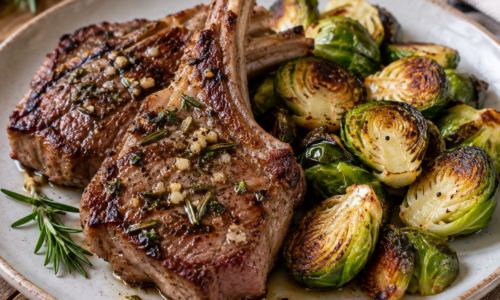
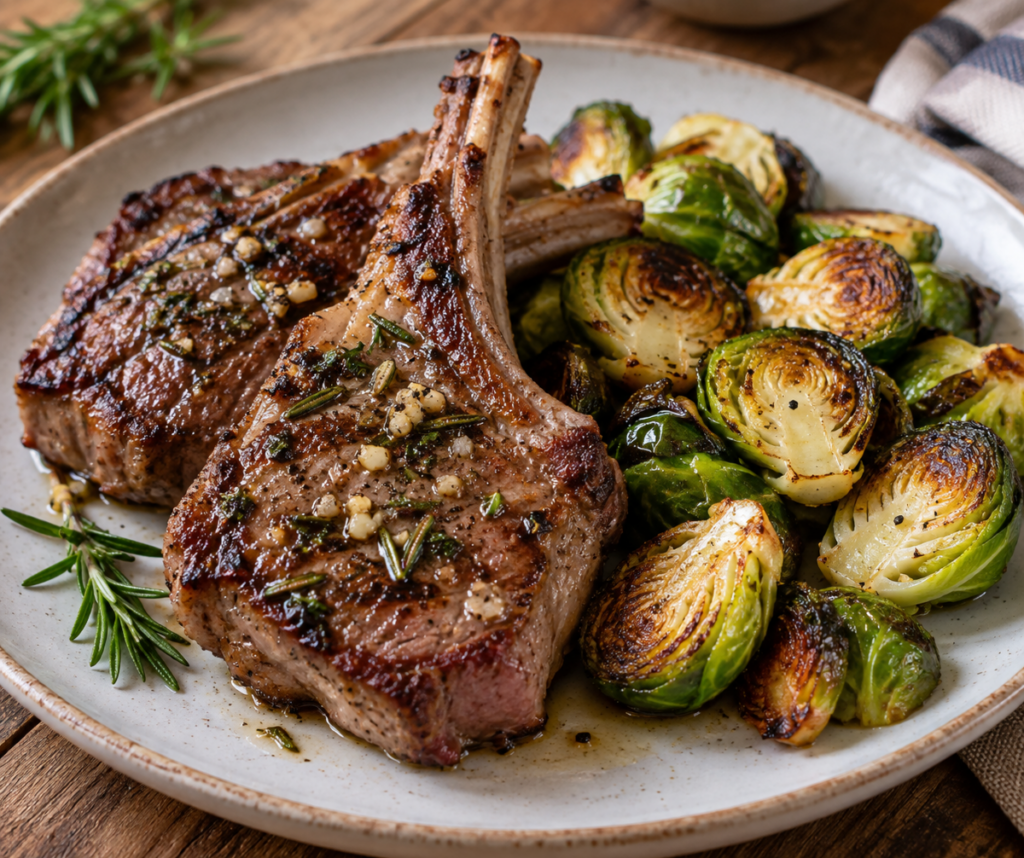
A plate of rosemary-garlic lamb chops beside crisp roasted Brussels sprouts is the kind of meal that works well for low-lectin eating because the ingredients are simple, the cooking methods are direct, and there is very little need for specialty substitutes. The lamb brings richness and a substantial source of protein, while the Brussels sprouts add a deeply browned vegetable side that holds up well against the flavor of the meat. For anyone trying to build meals around whole foods without turning dinner into a complicated project, this is a useful combination to keep in regular rotation.
From a lectin perspective, lamb is straightforward because animal muscle does not contain plant lectins. Brussels sprouts belong to the Brassica family, and the strongest food-safety concerns around dietary lectins are centered on foods such as raw or inadequately cooked legumes, especially certain beans. Research on lectins is far more developed for legumes and grains than it is for cruciferous vegetables, so it is more accurate to treat Brussels sprouts as a practical low-lectin choice than to make sweeping claims that they are completely free of lectins. Current reviews also make clear that lectins differ substantially by food source and that preparation changes their activity, which is one reason broad claims about all lectins being harmful do not fit the evidence.
Why Lamb Fits This Style of Eating So Well
Lamb is naturally free of the plant proteins that people are usually trying to reduce when they follow a low-lectin pattern. It is also nutritionally dense, providing complete protein along with nutrients commonly found in animal foods, including vitamin B12 and zinc. NIH guidance identifies meat as a source of both nutrients, and USDA nutrient data show that cooked lamb cuts can provide meaningful amounts of vitamin B12.
Grass-fed lamb can also differ somewhat from lamb raised with heavier concentrate feeding. Studies of lamb production systems have found that pasture-based feeding can increase the proportion of omega-3 fatty acids in the meat and change the balance of several fatty acids. Those findings are useful, but they should not be stretched into a claim that every grass-fed lamb chop is automatically healthier in every respect, since breed, cut, finishing system, total fat, and the animal’s diet all affect the final composition.
For cooking, chops are one of the easiest lamb cuts to work with because they respond well to fast, high heat. Rosemary and garlic are classic partners for lamb, and they do enough on their own that there is no need for sugary marinades, bottled sauces, breadcrumbs, or complicated coatings. A small amount of avocado oil helps the seasoning cling to the meat and works well for high-heat searing or grilling.
Roasted Brussels Sprouts Bring the Right Contrast
Brussels sprouts work especially well beside lamb because roasting changes both their texture and flavor. The cut sides become browned and crisp, while the centers soften and turn slightly sweet. That contrast matters with a rich protein such as lamb, where a soft or watery vegetable can make the whole plate feel heavy.
Avocado oil is a practical roasting fat here because it handles a hot oven well and has a mild flavor. The goal is to coat the sprouts lightly rather than soak them. Too much oil can slow browning and leave the outer leaves greasy, while too little can make them dry before the centers are tender.
Spacing matters almost as much as temperature. If the Brussels sprouts are packed tightly together, they release moisture and steam one another. Giving the halved sprouts room on the pan, preferably with many of the cut sides facing down, encourages the caramelized edges that make this side worth serving.
Grass-Fed Lamb Chops with Roasted Brussels Sprouts
Ingredients
- 8 grass-fed lamb rib or loin chops, about 1 to 1 1/4 inches thick
- 2 tablespoons avocado oil, divided
- 3 garlic cloves, finely minced
- 1 tablespoon fresh rosemary, finely chopped
- 1 teaspoon sea salt, or to taste
- 1/2 teaspoon freshly ground black pepper
- 1 1/2 pounds Brussels sprouts
- 2 tablespoons avocado oil
- 1/2 teaspoon sea salt
- 1/4 teaspoon freshly ground black pepper
- 1 tablespoon fresh lemon juice, optional, for finishing
Instructions
- Heat the oven to 425 degrees Fahrenheit. Trim the dry stem ends from the Brussels sprouts, remove any loose or damaged outer leaves, and cut the sprouts in half from top to bottom. Place them on a large sheet pan, add 2 tablespoons avocado oil, salt, and black pepper, then toss until lightly coated.
- Turn as many Brussels sprouts as possible cut-side down and spread them into a single layer. Roast for about 20 to 25 minutes, stirring only if needed, until the cut surfaces are deeply browned and the centers are tender. If using lemon juice, add it after roasting so the acidity stays fresh rather than cooking away in the oven.
- While the sprouts roast, pat the lamb chops dry with paper towels. Combine 1 tablespoon avocado oil with the garlic, rosemary, salt, and black pepper, then rub the mixture over both sides of the chops. Let them stand at room temperature for about 10 minutes while the pan or grill heats.
- For pan-searing, heat a heavy skillet over medium-high heat and add the remaining tablespoon of avocado oil. Place the chops in the hot skillet without crowding them and cook until well browned, generally about 3 to 4 minutes on the first side and another 3 to 4 minutes on the second, depending on thickness. For grilling, cook over medium-high direct heat, turning once, and use the same temperature check rather than relying only on time.
- USDA guidance recommends cooking lamb chops to a minimum internal temperature of 145 degrees Fahrenheit, measured with a food thermometer, followed by at least a 3-minute rest. The exact cooking time will vary with chop thickness, starting temperature, and the heat of the pan or grill, so the thermometer is more reliable than color alone.
- Transfer the lamb chops to a plate and let them rest while the Brussels sprouts finish roasting. Serve two chops per person with a generous portion of Brussels sprouts, spooning any juices from the resting plate back over the lamb if desired.
Getting Better Browning Without Overcooking the Lamb
Good browning starts with a dry surface. Lamb chops that are wet from packaging or a watery marinade tend to steam before they sear, which delays browning and can leave the interior more cooked than intended by the time the outside develops color. Patting the chops dry before applying the rosemary-garlic mixture makes a noticeable difference.
The skillet also needs enough heat before the lamb goes in. A heavy stainless-steel or cast-iron pan works well because it retains heat when the meat is added. If the pan is small, cook the chops in batches rather than crowding all eight together, since crowding drops the pan temperature and traps moisture.
Garlic deserves a little attention because finely minced pieces can burn during a hard sear. Rubbing the garlic into the meat rather than leaving large clumps on the surface helps, and any loose bits can be brushed aside before the chops hit the hottest part of the pan. Fresh rosemary is more forgiving and stands up well to the short cooking time.
A Practical Low-Lectin Meal Without Extra Substitutions
One of the strengths of this dinner is that there is very little to replace. There is no wheat-based breading, no bean-based side dish, no commercial sauce that needs label checking, and no grain required to make the plate feel complete. For many people, that simplicity makes low-lectin eating easier to sustain because the meal still looks and tastes like normal dinner rather than a collection of specialty foods.
That does not mean every person following a low-lectin pattern will respond to the meal in exactly the same way. Food tolerance is individual, and some people may prefer less garlic, a smaller portion of Brussels sprouts, or a different cooking fat based on their own digestion and experience. Those adjustments can be made without changing the structure of the meal.
If Brussels sprouts are not a good fit, roasted cauliflower, broccoli, cabbage wedges, or sautéed leafy greens can fill the same role. The useful pattern is a simply seasoned animal protein paired with a non-starchy vegetable prepared with enough heat to build flavor. Once that pattern becomes familiar, it can be repeated with lamb, beef, poultry, fish, or eggs without relying on the same recipe every time.
Shopping and Make-Ahead Notes
When buying lamb chops, look for pieces of similar thickness so they cook at roughly the same rate. Rib chops are smaller and often more tender, while loin chops are a little meatier and resemble tiny T-bone steaks. Either works here, and choosing between them is mostly a matter of price, availability, and personal preference.
Grass-fed labeling can be useful if that production method matters to you, but it is still worth looking at the actual chops rather than buying on the label alone. Even grass-fed lamb can vary in fat content, and some people prefer leaner chops while others want enough exterior fat to baste the meat as it cooks. The fat can be trimmed before cooking or after, depending on the result you want.
The Brussels sprouts can be trimmed and halved earlier in the day, then refrigerated in a covered container until cooking time. The rosemary and garlic can also be chopped ahead. I would wait to salt the lamb until close to cooking unless you are intentionally dry-brining it for a longer period, since the recipe is designed as a quick weeknight preparation rather than an overnight project.
Leftover lamb and Brussels sprouts make an easy next-day lunch. Slice the lamb cold or gently rewarm it, then serve it over greens with the roasted sprouts and a simple dressing made from extra virgin olive oil and lemon juice. Reheating lamb aggressively can make it tough, so lower heat and a short warming time usually give a better result than trying to recreate the original sear.