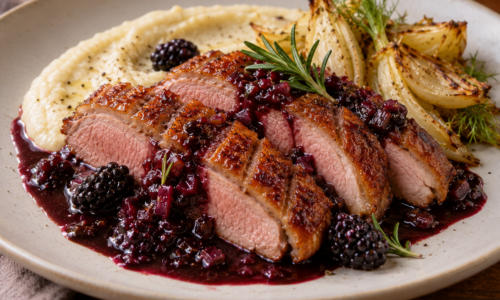
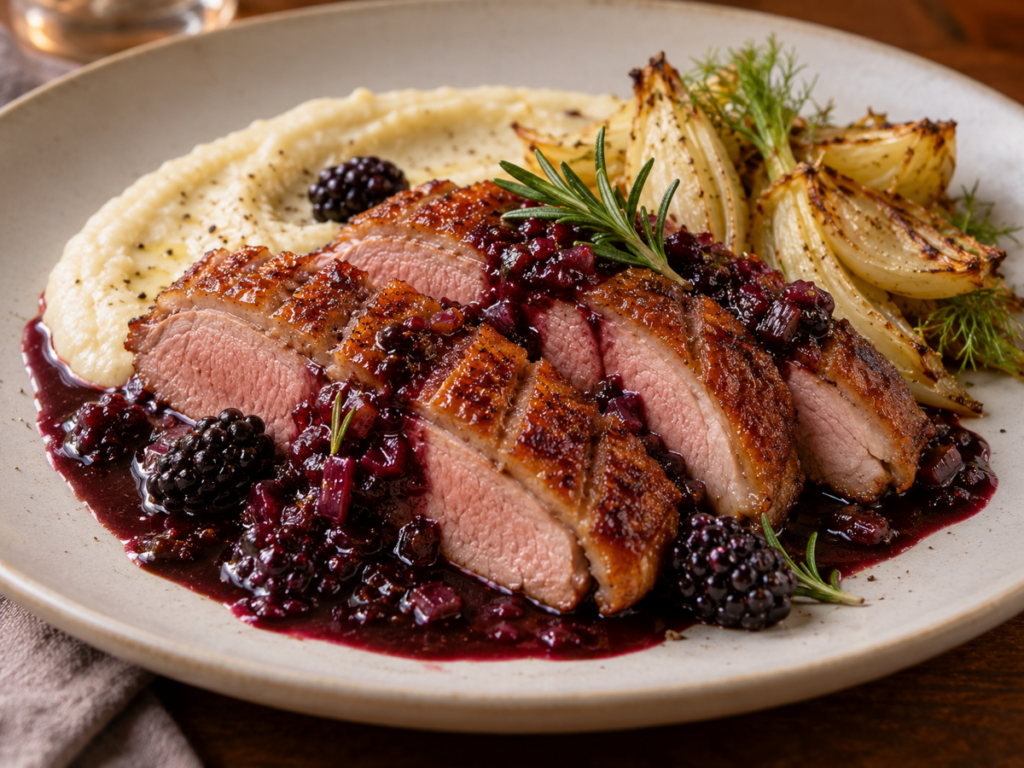
Duck breast has a rich, distinctive flavor that pairs particularly well with fruit-based sauces. Its natural richness benefits from a little acidity, and blackberries provide a combination of sweetness and tartness that complements the meat without overwhelming it. Fresh rosemary brings an earthy, aromatic quality to the reduction, while a small amount of balsamic vinegar deepens the sauce’s flavor.
The preparation centers on rendering the fat beneath the duck’s skin slowly enough to produce a crisp, golden exterior. Unlike chicken breast, duck breast typically has a substantial layer of fat beneath its skin, which requires a different approach to pan-searing. Beginning with a cold skillet allows the fat to melt gradually, helping the skin brown evenly before the meat finishes cooking in the oven.
For a low-lectin kitchen, this dish relies on straightforward ingredients rather than flour-based thickeners, grain-derived ingredients, or heavily processed sauces. The blackberry reduction develops its consistency as moisture evaporates and the softened fruit breaks down, creating a sauce that clings lightly to the sliced meat. Served with roasted vegetables or cauliflower purée, the finished duck makes an appealing main course for a special dinner or a more ambitious weekend meal.
Pan-Seared Duck Breast with Rosemary-Infused Blackberry Reduction
Ingredients
- 2 boneless, skin-on duck breasts (6 to 8 ounces each)
- 1/2 teaspoon kosher salt
- 1/4 teaspoon freshly ground black pepper
- 1 cup fresh blackberries (approximately 5 ounces), rinsed and drained
- 1/3 cup unsalted chicken stock
- 2 tablespoons finely minced shallot
- 2 teaspoons balsamic vinegar
- 1 teaspoon honey
- 1 fresh rosemary sprig, approximately 4 inches long
- 1 teaspoon rendered duck fat, reserved from cooking
- 1 teaspoon unsalted butter or ghee
- 1/8 teaspoon kosher salt
Instructions
- Prepare the oven and ingredients. Preheat the oven to 400°F. Measure the blackberry reduction ingredients and mince the shallot before handling the raw duck. Keep the fruit and sauce ingredients away from surfaces or utensils that contact raw poultry.
- Prepare the duck breasts. Pat the breasts thoroughly dry with paper towels. Using a sharp knife, score the skin and underlying fat in a shallow crosshatch pattern, spacing the cuts approximately 1/4 inch apart. Avoid slicing into the meat.
- Season the duck. Sprinkle both sides of the duck breasts evenly with the kosher salt and black pepper. Place the breasts skin-side down in a large, cold, oven-safe skillet, leaving space between them.
- Render the duck fat. Place the skillet over medium-low heat and allow it to warm gradually. Cook the breasts skin-side down for approximately 12 to 16 minutes, until the skin is deeply golden and crisp and much of the fat has rendered. Adjust the heat if the skin browns too quickly or the fat begins smoking.
- Remove excess fat. Carefully spoon or pour off excess rendered fat into a heat-safe metal or other suitable heat-resistant container as it accumulates, leaving enough in the skillet to prevent sticking. Reserve at least 1 teaspoon for the sauce. Handle the hot fat carefully to prevent splashing.
- Sear the flesh side. Once the skin is evenly browned, turn the duck breasts over with tongs. Cook the flesh side for approximately 1 to 2 minutes to develop a lightly browned surface.
- Finish cooking in the oven. Transfer the skillet to the preheated oven with the skin facing upward. Roast for approximately 8 to 15 minutes, checking the internal temperature toward the beginning of this range. Continue cooking as needed until an instant-read thermometer inserted into the thickest part of each breast registers 165°F, the USDA-recommended minimum internal temperature for duck and other poultry. Actual cooking time depends on breast thickness and the amount of heat absorbed during searing.
- Rest the duck. Remove the skillet from the oven using an oven mitt, remembering that the handle will remain extremely hot. Transfer the breasts to a clean cutting board or warm plate, keeping the skin facing upward. Rest uncovered for approximately 8 to 10 minutes while preparing the reduction.
- Sauté the shallot. Place 1 teaspoon of the reserved duck fat in a small saucepan over medium-low heat. Add the minced shallot and cook for approximately 1 to 2 minutes, stirring frequently until softened but not browned.
- Build the blackberry reduction. Add the blackberries, chicken stock, balsamic vinegar, honey, rosemary sprig, and 1/8 teaspoon kosher salt. Stir gently and bring the mixture to a simmer.
- Reduce the sauce. Simmer uncovered for approximately 7 to 10 minutes, stirring occasionally. Lightly crush several blackberries with the back of a spoon to release their juices. Continue cooking until the fruit has softened and the liquid has reduced enough to lightly coat a spoon. If the reduction becomes too thick, stir in 1 tablespoon of water.
- Finish the reduction. Remove and discard the rosemary sprig. For a smoother sauce, press the mixture through a fine-mesh strainer into a clean bowl, then return the strained sauce to the saucepan. Remove from the heat and stir in the butter or ghee until incorporated.
- Slice and serve. Cut each rested duck breast across the grain into slices approximately 1/4 to 1/2 inch thick. Arrange the slices on warm plates with the crispy skin facing upward. Spoon the rosemary-infused blackberry reduction alongside the meat or lightly over the exposed slices, leaving most of the skin uncovered.
Why Duck Breast Works with Blackberry and Rosemary
Duck breast has a fuller, more pronounced flavor than most commonly prepared poultry breasts because of its darker muscle tissue and characteristic fat. The fat beneath the skin contributes much of the dish’s richness, particularly when it renders properly during cooking. A fruit-based reduction introduces acidity that balances this richness without requiring a heavy cream sauce or additional starch.
Blackberries are well suited to this combination because they offer sweetness alongside noticeable acidity. Their dark fruit flavor stands up to duck without requiring large amounts of added sugar. As the berries simmer, they soften and release their juices into the chicken stock, creating a sauce with enough body to coat the sliced meat.
Rosemary contributes a pine-like herbal aroma that complements duck’s savory character. Its flavor can become overpowering or slightly bitter when too much is used or the leaves are cooked aggressively, which is why a single sprig is sufficient for this reduction. Removing it before serving preserves the herbal flavor without leaving tough leaves in the finished sauce.
Balsamic vinegar adds another layer of acidity and a subtle sweetness that reinforces the blackberries. The small amount of honey rounds out particularly tart fruit, although the reduction should remain more savory than sweet. The finished sauce should provide contrast to the duck rather than resemble a dessert topping.
Low-Lectin Considerations for the Ingredients
The low-lectin approach in this dish begins primarily with ingredient selection. Duck breast provides the main protein without the grain- or legume-based components that some low-lectin eating plans restrict. The sauce is prepared without wheat flour, cornstarch, soy-based seasonings, or commercial thickening mixes.
Blackberries are a practical fruit choice for this preparation, although their inclusion should not be interpreted as evidence that they contain no lectins. Lectin types and activity vary among plant foods, and reliable measurements of biologically active lectins in individual fruits are limited. The berries are included for their culinary characteristics and compatibility with the publication’s ingredient preferences, without making unsupported claims about their biological effects.
Some people following more restrictive low-lectin eating plans prefer to limit fruit seeds. Passing the reduction through a fine-mesh strainer removes much of the blackberry seed material and produces a smoother sauce, although there is insufficient evidence to conclude that this meaningfully reduces lectin exposure. Keeping the seeds gives the reduction a more rustic texture and preserves more of the fruit pulp.
The reduction also avoids relying on commercially prepared fruit sauces that may contain added starches, sweeteners, or ingredients a reader prefers to limit. Choosing an unsalted chicken stock with a straightforward ingredient list gives the cook more control over the final seasoning. The stock contributes savory depth, helping the reduction complement the duck rather than taste like a sweet fruit preserve.
Getting the Best Texture from Pan-Seared Duck
Why the Skin Should Start in a Cold Skillet
Duck breast benefits from a slower initial cooking process than many other cuts of meat. The thick layer of fat beneath its skin needs time to melt before the skin can develop an even, crisp surface. Placing the breast in a very hot skillet can brown the exterior before enough fat has rendered, leaving a thick, soft layer beneath the skin.
A cold skillet over medium-low heat allows the fat to warm gradually. As it melts, the duck effectively cooks in its own fat, creating an evenly browned surface without requiring additional cooking oil. The exact rendering time depends on the thickness of the fat layer, the size of the breast, and the skillet’s heat retention.
Scoring the skin encourages more even rendering by creating shallow channels through the skin and fat. These cuts should stop before reaching the underlying muscle, since cutting into the meat can cause unnecessary moisture loss during cooking. A sharp knife and light pressure make the scoring process easier to control.
Balancing Crisp Skin and Proper Doneness
Restaurants sometimes serve duck breast medium-rare, but that preparation does not meet the USDA’s recommended minimum internal temperature of 165°F for poultry. Cooking to this temperature produces a firmer texture than restaurant-style pink duck breast, making careful heat management particularly valuable. Rendering the fat slowly before finishing the meat in the oven helps develop the skin without relying on prolonged high-heat searing.
Breast thickness has a greater effect on cooking time than weight alone. A thick breast can require several additional minutes in the oven even when its surface appears fully browned. Checking the internal temperature with a thermometer avoids relying on color, firmness, or cooking time as the only indicators of doneness.
Resting the duck before slicing helps limit the amount of moisture released onto the cutting board. Keeping the skin exposed during this period also reduces the accumulation of steam that can soften its surface. Slicing against the grain shortens the muscle fibers and makes the cooked breast easier to eat.
Adjusting the Blackberry Reduction
The balance of sweetness and acidity will vary according to the ripeness of the blackberries. Fully ripe berries may need very little additional sweetener, while tart berries can benefit from the measured teaspoon of honey. Taste the reduction near the end of cooking, after its flavors have concentrated, before deciding whether an adjustment is necessary.
Frozen blackberries can replace fresh berries in an equal quantity when fresh fruit is unavailable. Add them directly to the saucepan without thawing and allow a few additional minutes for the mixture to return to a simmer. Frozen berries tend to soften and release their juices readily, making them convenient for a cooked reduction.
For a slightly sharper sauce, add another 1/2 teaspoon of balsamic vinegar after reducing. If the sauce tastes overly acidic, a small additional amount of honey can soften the edge without making it excessively sweet. These adjustments are best made in small increments because reducing the liquid naturally concentrates both sweetness and acidity.
The finishing butter or ghee contributes a smoother mouthfeel and a subtle sheen. It should be stirred in after the saucepan has been removed from the heat so that the fat incorporates without separating. For a dairy-free preparation, replace it with 1 teaspoon of extra virgin olive oil, recognizing that the sauce may have a slightly different texture and flavor.
Getting the Right Sauce Consistency
A well-reduced blackberry sauce should lightly coat the back of a spoon while remaining fluid enough to pour. Reducing the mixture too aggressively can concentrate the honey and fruit sugars, creating a thick sauce that becomes sticky as it cools. Gentle simmering gives the fruit time to soften while allowing moisture to evaporate gradually.
Straining changes the reduction’s consistency as well as its appearance. Removing seeds and pulp produces a smoother sauce, but it may also leave the liquid thinner than the unstrained version. If needed, return the strained sauce to the saucepan and simmer briefly until it reaches the desired consistency, stirring frequently to prevent scorching.
What to Serve with Blackberry-Glazed Duck
Roasted cauliflower makes a suitable accompaniment because its mild flavor allows the duck and blackberry reduction to remain the focus of the plate. Cauliflower purée offers another option, particularly when prepared with olive oil or ghee for a smooth consistency. Its pale color provides an appealing contrast to the dark blackberry sauce.
Roasted fennel works especially well with duck because its mild sweetness develops during cooking. Cutting the bulbs into wedges and roasting them until tender produces caramelized edges and a soft interior. Their gentle anise flavor complements rosemary without competing heavily with the blackberries.
Sautéed mushrooms provide a more savory accompaniment, particularly varieties such as cremini, oyster, or shiitake. Their earthy flavor pairs naturally with duck, and cooking them separately in a little olive oil allows their moisture to evaporate before serving. A small portion of sautéed Swiss chard or other leafy greens can contribute additional color and a slightly earthy contrast.
For a more substantial meal, roasted sweet potato or mashed rutabaga can provide a starchy element. Both have enough natural sweetness to complement the fruit reduction, so the sauce should remain moderately tart when serving either accompaniment. Heavily sweetened vegetable preparations are less suitable because they can compete with the blackberries and make the overall meal taste excessively sweet.
Preparing the Dish Ahead of Time
The blackberry reduction can be prepared in advance, making the final cooking process more manageable when serving guests. Cook the sauce in a separate saucepan using 1 teaspoon of olive oil in place of the rendered duck fat, then transfer it to a shallow container and refrigerate promptly. Reheat the sauce to a boil before serving, then remove it from the heat and incorporate the finishing butter or ghee.
Preparing the duck breasts completely in advance is less desirable because the skin loses much of its crispness during refrigeration. The breasts can, however, be scored and seasoned ahead of time and kept covered in the refrigerator until cooking. Keep the raw duck separate from ready-to-eat ingredients, and wash hands, cutting boards, and utensils thoroughly after handling the poultry.
When preparing both components immediately before serving, the duck’s resting period provides a convenient opportunity to finish the reduction. Having the blackberries measured, shallot minced, and remaining sauce ingredients ready before searing the duck prevents unnecessary delays. The sauce can remain off the heat briefly while the meat finishes resting, then be stirred and spooned onto the plates.
Storing and Reheating Leftover Duck
Leftover cooked duck and blackberry reduction should be transferred to separate shallow, airtight containers and refrigerated within two hours of cooking, or within one hour if the surrounding temperature exceeds 90°F. Both should be kept at 40°F or below and used within three to four days. Separating the sauce from the duck helps prevent the skin from absorbing moisture during storage.
Refrigerated duck can be reheated in a covered, oven-safe dish with a small amount of broth to limit moisture loss. Use an oven set to at least 325°F and heat the meat until its center reaches 165°F. Reheating will soften the skin and further firm the meat, so leftover duck generally will not have the same texture as a freshly cooked breast.
The blackberry reduction should be reheated separately in a small saucepan until it reaches a boil, stirring as necessary to prevent sticking. If it has thickened considerably during refrigeration, a tablespoon of water or unsalted chicken stock can restore a spoonable consistency. Add the warmed reduction to the duck immediately before serving so the sauce does not unnecessarily soften the skin.
Making the Most of the Rendered Duck Fat
The fat collected during searing is a useful byproduct of preparing skin-on duck breast. Rather than discarding it, the clear rendered fat can be strained into a clean, heat-safe container and cooled promptly for refrigeration. Avoid pouring very hot fat into ordinary glass jars or other containers that may crack or become damaged by sudden temperature changes.
Duck fat has a distinctive savory flavor and works particularly well for roasting sweet potatoes, cauliflower, or root vegetables. A small amount can also replace butter or cooking oil when sautéing mushrooms or browning vegetables. Because homemade rendered fat may contain residual moisture or small amounts of meat juices, it should be treated as perishable rather than stored indefinitely at room temperature.
For the cleanest reserved fat, strain out the browned solids and refrigerate it promptly in a sealed container. If it will not be used within a few days, freezing it in small portions is a practical alternative. A silicone ice cube tray can help divide the fat into convenient amounts for later cooking, after which the frozen portions can be transferred to a labeled freezer-safe container. This makes it easy to use a small amount for a future skillet preparation without repeatedly thawing the entire supply.