
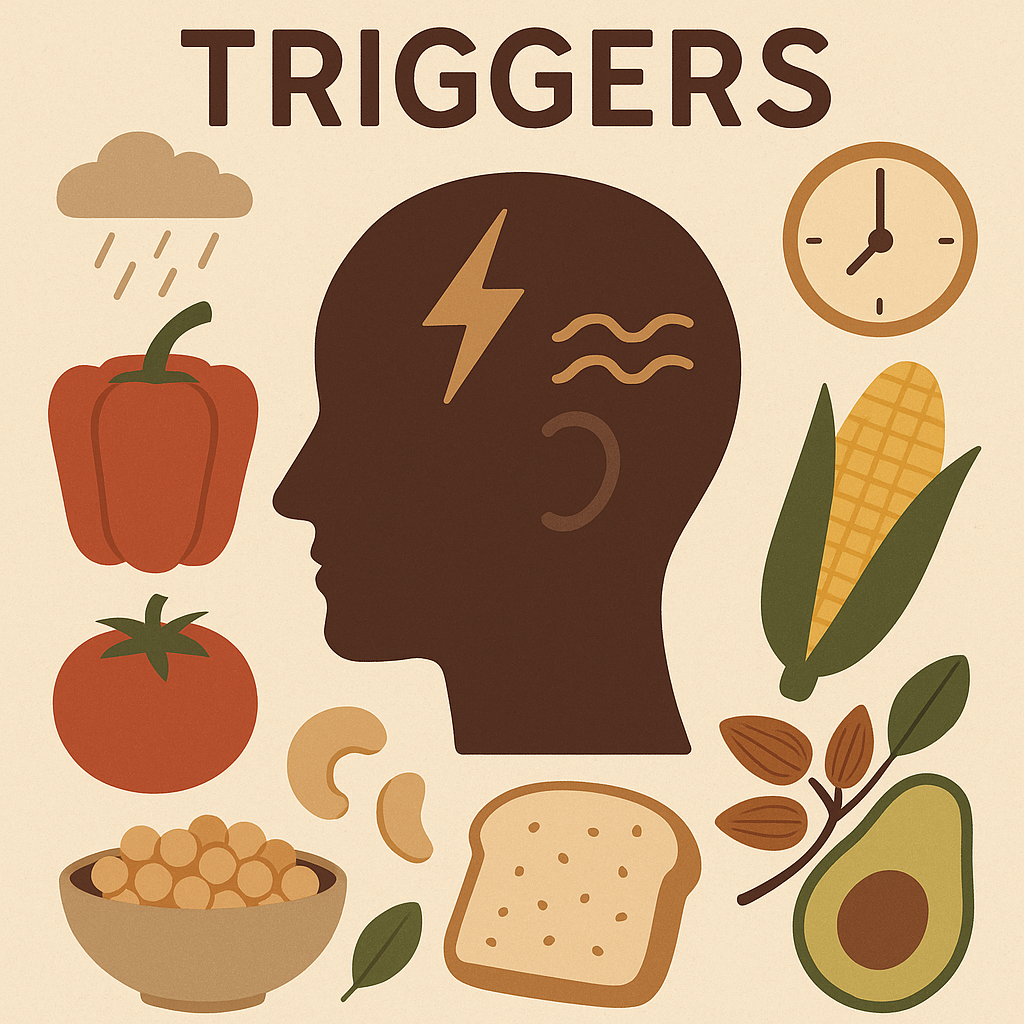
For many people exploring low-lectin eating or simply trying to understand why their digestion, energy, or inflammation fluctuates, there comes a moment of confusion. You clean up your meals, make intentional choices, reduce obvious culprits, and yet something still feels “off.” A meal leaves you bloated for no clear reason. A snack you’ve tolerated for months suddenly makes your joints ache. A vegetable you always thought was harmless now seems to spark a reaction.
This is often the beginning of the journey into understanding personal triggers, and it can feel both empowering and bewildering. On the one hand, your body is sending clearer signals than before; on the other, the signals feel new and unpredictable. The truth is, identifying food triggers is rarely straightforward because reactions are deeply individual that is shaped by gut health, genetics, stress levels, sleep patterns, and even what you ate the day before. But navigating those signals becomes much easier when you understand how triggers behave, why they appear, and what patterns to watch for.
The Subtle Nature of Triggers
One of the challenges in identifying triggers is that they often do not behave dramatically. Instead of a full-blown allergic response, a true “trigger” tends to whisper. It may appear as a mild headache, a slow-motion energy crash, slight stiffness in your knuckles, or an emotional shift you didn’t expect. These quiet reactions easily blend into everyday life, and for many years people overlook them, chalking them up to stress, aging, hormones, or a bad night of sleep.
But as you begin eating more intentionally, the volume on those whispers increases. Eliminating certain irritants or reducing lectins often strips away a layer of background “noise” your body once lived with. Suddenly, you can sense more. You may notice that bell peppers give you the same sluggish afternoon you once blamed on coffee. Or that a handful of cashews leaves your stomach feeling unsettled in a way that doesn’t make sense on paper. This isn’t hypersensitivity. It’s clarity.
Understanding triggers begins with accepting that they aren’t always obvious and rarely fit a neat checklist. What matters is the pattern, not the intensity.
When Patterns Speak Loudest
The body almost never reacts in isolation. A trigger may reveal itself through timing, symptoms that appear within minutes suggest a different mechanism than those that surface two hours later. Some reactions are inflammatory, some neurological, some digestive, and some are a mix of all three.
For instance, someone may eat tomatoes without noticing anything for years. Then, after reducing inflammatory foods overall, the seeds or skins suddenly begin causing bloating or brain fog. Another person may be fine with tomatoes until they pair them with wheat or alcohol. The pattern isn’t the ingredient alone but the context in which it is eaten.
It’s the repeated pairings that matter:
- A food that always precedes poor sleep.
- A meal that consistently ends in gas or discomfort.
- A snack that reliably triggers cravings, mood drops, or irritability.
These repeating cycles reveal the real triggers not because the symptoms are extreme but because they are consistent.
The Hidden Triggers No One Talks About
Most people assume triggers are purely about what they eat, but the truth is more nuanced. A food can be problematic not because of the food itself but because of what else is happening that day. Stress lowers tolerance. Fatigue makes digestion sluggish. Dehydration amplifies irritation. And an already-inflamed gut reacts more dramatically to even gentle foods.
A person might tolerate chickpeas perfectly on a relaxed weekend, only to experience discomfort from the same bowl on a stressful workday. Nightshades may feel fine during restful weeks and irritating after several nights of poor sleep. The body is dynamic, and triggers often ride the waves of those fluctuations.
This is why identifying triggers requires attention not just to ingredients but to state or your internal landscape when you eat something.
The Most Common Trigger Families
Although everyone has unique sensitivities, certain foods consistently appear in people’s personal “top offenders.” Not because they are universally harmful, but because they contain compounds like lectins, saponins, histamines, or difficult-to-digest fibers, that interact strongly with compromised guts.
Legumes, for example, contain lectins that may challenge digestion when undercooked or not pressure-cooked. Certain nuts and seeds can cause inflammatory or histamine-based responses. Nightshades may irritate individuals with joint issues or autoimmune tendencies. Grains may cause bloating or fatigue in someone dealing with permeability issues or microbiome imbalance.
But here’s the key: these categories only become obvious once your system is calm enough to detect them. When someone transitions to a low-lectin lifestyle, the reduction in overall irritation often unmasks hidden sensitivities they never knew they had. The food didn’t suddenly become a trigger. Your awareness did.
How Your Body Signals You
Identifying triggers isn’t about diagnosing yourself; it’s about paying attention to the body’s communication style. The signs are not always dramatic. Sometimes they take the form of slight discomfort or shifts in mood or energy.
Some people feel triggers as digestive changes: bloating, gas, urgency, or constipation. Others experience them emotionally through irritability, anxiety, or brain fog. Some feel them physically: stiff hands, aching joints, tension around the neck or lower back. And others feel them in patterns of fatigue, like their energy was drained abruptly after a meal.
Each body has its own way of warning: “That didn’t sit well with us.” The trick is to catch it early, before it becomes a full-blown issue.
What Makes a Trigger Hard to Spot
Two main obstacles make identifying triggers more complicated than people expect.
First, many triggers have a delayed reaction. You may eat something at noon but not feel the effects until evening. Or you might feel slightly “off” the next morning and not link it back to dinner the night before. Delayed reactions can stretch out as long as 12 to 24 hours in some individuals, which makes them far more subtle and easy to overlook.
Second, triggers often hide behind other foods. Someone may assume that tomatoes bother them when the real culprit is the pepper seeds hidden inside the salsa, or the bean flour in a gluten-free wrap, or the cashews blended into a sauce. Modern food combinations make the investigative process a bit like detective work, one clue at a time, discovering what ingredient consistently appears before discomfort.
Why Slowing Down Helps
The faster you eat and the more mixed your meals are, the harder it becomes to pinpoint a trigger. Slowing down and eating intentionally gives your body a chance to react in a way you can actually observe. A simple meal like grilled chicken and steamed greens carries fewer variables, making any reaction traceable.
When people simplify their meals temporarily, patterns emerge quickly. You might notice that your body feels dramatically lighter and calmer after a few days of gentler foods. And then, when you reintroduce something with a bit more complexity, say like nuts or a nightshade vegetable, the reaction becomes clear and unmistakable.
This isn’t about restriction; it’s about creating enough contrast to see what’s happening.
Building a Personal Awareness Framework
As you begin tuning into your reactions, you’ll start noticing the difference between a one-off discomfort and a true pattern. Awareness builds in layers: first noticing that something feels off, then noticing when it happens, then identifying what preceded it.
At first, this process requires conscious effort. You might jot down observations, reflect on what you ate earlier, or consider how you slept the night before. Over time, though, awareness becomes intuitive. You will remember how a certain food made you feel last time. You will sense subtle shifts more quickly. You will learn, almost instinctively, what your body is asking for.
This is how many people regain control of their wellbeing, not by memorizing long lists of “safe” or “unsafe” foods, but by understanding how their own body responds inside real-world situations.
When You Finally Spot the Pattern
There is a quiet confidence that comes with recognizing a trigger. Not fear, not restriction, just clarity. You begin to understand why your energy dips at certain times. Why that one dinner always leaves you puffy the next morning. Why some days feel effortless and others feel heavy for no obvious reason.
Identifying a trigger doesn’t mean you must eliminate the food forever. In many cases, it simply means modifying it: pressure-cooking instead of slow-cooking, peeling instead of eating the skin, pairing it with fats or acids to reduce irritation, or keeping it as an occasional treat instead of a daily staple.
Sometimes, removing a trigger temporarily is enough to allow the gut to heal so that the food becomes tolerable again in the future.
The power is not in restriction but in choice.
Learning to Trust Your Body Again
The modern world often conditions us to ignore our own signals. We push through fatigue, normalize inflammation, blame symptoms on aging, and assume discomfort is random. But once you begin identifying triggers, a new relationship forms between you and your body, one built on listening rather than overriding.
You become more attuned to when something feels nourishing and when something feels disruptive. You begin making decisions based on internal cues rather than rules. And gradually, that deep sense of trust returns, the knowledge that your body is not working against you but trying to communicate with you.
That trust becomes the foundation of long-term change.
An Ongoing, Evolving Journey
Trigger identification is not a one-time project. Your sensitivities can evolve as your gut heals, as your stress levels change, or as you enter new phases of life. A food that bothers you today may be fine in six months. A food you tolerated for years may become problematic if your sleep, microbiome, or hormones shift.
Rather than seeing this as a setback, it helps to view it as an ongoing conversation. Your body is giving feedback based on its needs in the present moment. As you learn to understand and adapt to those signals, you begin living in a way that feels far more aligned physically, emotionally, and energetically.
Triggers no longer become obstacles but information. A guide. A direction pointing you toward what supports your health and away from what disrupts it.
And in that awareness lies the heart of transformation.