When people talk about lectins today, the conversation often centers on digestion, inflammation, or dietary tolerance. But long before lectins became a topic in human nutrition debates, they existed for a very different reason. Lectins are not accidental compounds or nutritional mistakes. They are purposeful molecules shaped by millions of years of plant evolution. To understand lectins properly, we have to step away from the dinner plate and look instead at the quiet, complex world of plant defense.
Plants cannot run, bite, or hide. They remain rooted in place, exposed to insects, animals, microbes, and environmental stressors. Survival depends on chemistry. Lectins are one of many biochemical tools plants use to sense their environment, interact with other organisms, and defend themselves from being eaten or infected. Studying lectins opens a window into how plants communicate danger, discourage predators, and maintain their own integrity in hostile surroundings.
This article explores what lectins reveal about plant defense systems, not as villains or heroes, but as evolutionary solutions to a fundamental biological problem: how to survive without movement.
The Evolutionary Problem Plants Had to Solve
Early plants faced relentless pressure from herbivores and microorganisms. Any organism that produced edible tissue immediately became a target. Unlike animals, plants could not evolve claws, speed, or teeth. Instead, they developed layered defense strategies that worked invisibly but effectively.
Structural defenses like thorns, bark, and tough fibers formed the first line of protection. Chemical defenses came next. Plants began producing compounds that tasted bitter, disrupted digestion, interfered with reproduction, or triggered discomfort in predators. Over time, these chemical systems grew increasingly sophisticated.
Lectins emerged as part of this chemical arsenal. They did not need to kill predators outright. They only needed to make eating the plant costly or unpleasant enough to discourage repeat attacks. From an evolutionary perspective, survival does not require perfection, only advantage.
What Lectins Are and Why Binding Matters
Lectins are proteins that bind specifically to carbohydrates. This binding ability is the key to their function. Unlike enzymes, lectins do not chemically alter what they bind to. Instead, they attach, recognize patterns, and influence biological interactions.
Carbohydrates are abundant on the surfaces of cells. They form part of cell membranes, signaling molecules, and protective coatings. By binding to these sugars, lectins can interact directly with the outer surfaces of bacteria, fungi, insects, and animal cells.
In plants, this binding ability allows lectins to serve as recognition molecules. They help the plant distinguish between friend and foe, self and non-self. When a lectin binds to a carbohydrate structure common to predators or pathogens, it can interfere with normal biological processes in that organism.
This specificity is not random. Different plants produce different lectins, each tuned to particular threats in their environment.
Lectins as Deterrents Rather Than Toxins
One of the most important distinctions in understanding lectins is recognizing that they are not primarily designed as poisons. While some lectins can be toxic in high concentrations, their evolutionary role is more subtle.
Insects that feed on lectin-rich plants may experience disrupted digestion, reduced nutrient absorption, slower growth, or impaired reproduction. Mammals may experience gut irritation or immune activation. These effects do not necessarily kill the predator, but they create a biological memory. The animal learns that this food source is problematic.
From the plant’s perspective, this is an efficient strategy. Killing predators outright can destabilize ecosystems and invite other threats. Discouraging feeding while remaining edible enough for selective consumers allows plants to coexist within complex food webs.
Lectins function as behavioral modifiers. They influence what eats the plant, how much, and how often.
The Role of Lectins in Insect Resistance
Insects represent one of the greatest threats to plants. Many insects specialize in feeding on specific plant tissues, and some can devastate crops rapidly. Lectins play a significant role in plant resistance to insect predation.
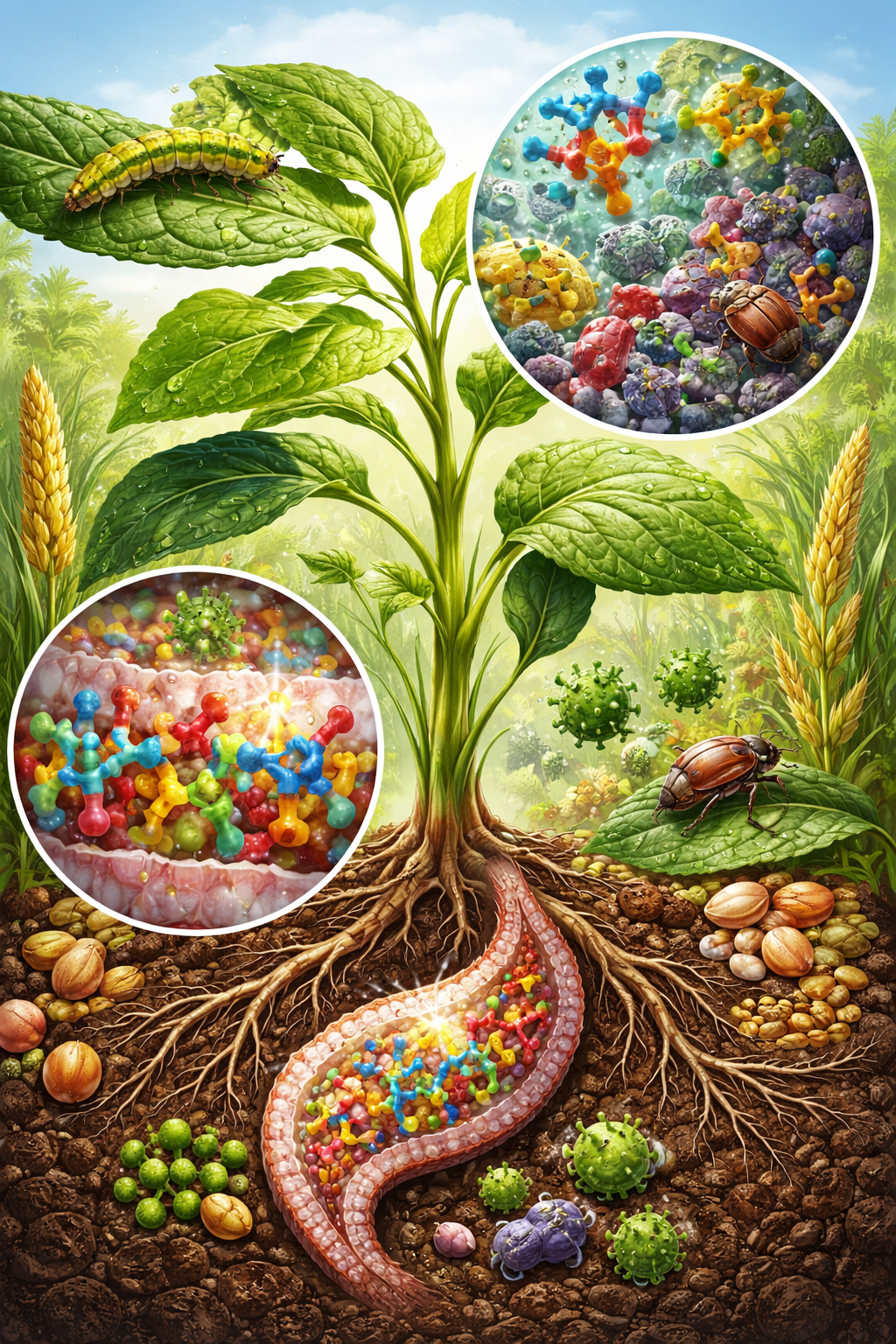
When insects consume lectin-containing tissues, lectins can bind to carbohydrates in the insect gut lining. This binding may interfere with nutrient transport, enzyme activity, or gut integrity. Over time, affected insects may grow more slowly, reproduce less, or abandon the plant altogether.
Some plants increase lectin production in response to insect damage. This inducible defense allows the plant to conserve energy until a threat appears. Once feeding begins, lectin levels rise, making the plant progressively less appealing.
This dynamic response highlights that lectins are not static compounds. They are part of an adaptive defense system that responds to environmental signals.
Lectins and Microbial Defense
Plants are constantly exposed to bacteria, fungi, and viruses. Many of these microorganisms attempt to penetrate plant tissues or exploit plant sugars for energy. Lectins help protect against these threats by binding to carbohydrate structures on microbial surfaces.
When a lectin binds to a bacterium or fungus, it can prevent adhesion to plant cells, disrupt colonization, or signal immune responses within the plant. In some cases, lectins may agglutinate microbes, clumping them together and limiting their spread.
This function blurs the line between defense and communication. Lectins act as molecular sentinels, recognizing patterns that indicate danger and triggering appropriate responses.
Storage Tissues and Defensive Tradeoffs
One of the reasons lectins appear prominently in human diets is because they are often concentrated in seeds, legumes, and grains. These tissues represent a plant’s future. Seeds contain the genetic material and energy reserves needed to produce the next generation.
Protecting seeds is critical. Lectins help ensure that seeds are not easily digested by animals that might otherwise consume them before they can germinate. If a seed passes through an animal intact, it may even benefit the plant by being dispersed to new locations.
This explains why lectins are especially abundant in foods designed by plants for reproduction rather than immediate consumption. Leaves and fruits often have lower lectin levels, while seeds and seed-derived products tend to have higher concentrations.
Cooking and Human Adaptation
Human use of fire introduced a new dynamic into the relationship between plants and predators. Cooking alters protein structure, and many lectins are sensitive to heat. Boiling, fermenting, soaking, and pressure cooking can significantly reduce lectin activity.
From an evolutionary standpoint, this represents a rare case where a predator developed a tool that partially bypassed plant defenses. Humans did not eliminate lectins entirely, but they reduced their impact enough to make previously defended foods more accessible.
This does not mean lectins became irrelevant. Instead, it created variability. Some individuals tolerate lectin-containing foods well, while others experience discomfort or immune responses. The interaction between human biology and plant defense chemistry remains complex and individualized.
Lectins as Signals Rather Than Enemies
Framing lectins as purely harmful misses their biological significance. Lectins are not mistakes or contaminants. They are signals. They tell a story about the plant’s environment, its threats, and its evolutionary priorities.
In some contexts, lectins may even have beneficial roles. Researchers have explored lectins for their ability to target specific cell types, modulate immune responses, and bind to cancer-associated carbohydrate patterns. These properties arise from the same binding specificity that makes lectins effective defense molecules in plants.
Understanding lectins as part of a communication system rather than a nutritional flaw allows for a more nuanced view of plant chemistry.
Agricultural Implications and Selective Breeding
Modern agriculture has unintentionally altered lectin exposure. Selective breeding often prioritizes yield, taste, and appearance over natural defense mechanisms. In some cases, this reduces lectin content. In others, it concentrates it.
Genetically uniform crops may rely more heavily on chemical defenses, including lectins, because they lack the genetic diversity that once provided resilience. At the same time, pest pressures have increased in large-scale monoculture systems.
Researchers continue to study how lectins influence crop resistance, pest management, and sustainability. Understanding lectins can inform agricultural practices that balance productivity with ecological stability.
What Lectins Ultimately Reveal About Plants
Lectins reveal that plants are far from passive organisms. They sense, respond, and defend. Their chemistry reflects constant negotiation with the living world around them. Every lectin molecule represents a solution to a specific evolutionary challenge.
When humans consume lectins, we are interacting with this ancient defense system. Sometimes the interaction is neutral. Sometimes it is uncomfortable. Sometimes it prompts adaptation on both sides.
Rather than asking whether lectins are good or bad, a better question is what they are telling us about plants. The answer is clear. Plants are strategic, responsive, and deeply intelligent in their own biochemical language.
Understanding lectins does not require fear or dismissal. It requires perspective. They are not evidence that plants are hostile. They are evidence that plants are alive, aware in their own way, and fully engaged in the ongoing story of survival on Earth.