Plants live in a world of constant pressure. Unlike animals, they cannot run from predators, swat away insects, or relocate when conditions turn hostile. Yet despite this immobility, plants have survived hundreds of millions of years of evolution, adapting to environments filled with grazing animals, burrowing insects, microbial pathogens, and shifting climates. Their success lies in a sophisticated internal toolkit of structural, chemical, and molecular defenses. Among the most fascinating of these tools are lectins.
Lectins are proteins that bind to carbohydrates with remarkable specificity. At first glance, this may seem like a small biochemical detail, but carbohydrate binding turns out to be a powerful way for plants to detect, deter, and sometimes disable threats. When we study lectins closely, we gain insight not just into plant biochemistry, but into how plants perceive their environment and actively protect themselves from harm.
Understanding lectins as part of plant defense systems reframes them entirely. Rather than viewing them as passive or incidental compounds, lectins emerge as active participants in an ongoing evolutionary dialogue between plants and the organisms that feed on them.
The Challenge of Survival Without Movement
To appreciate why lectins matter, it helps to consider the constraints under which plants operate. Animals rely heavily on behavior to survive. They flee, fight, hide, or adapt their diets. Plants do none of these things. Their survival depends on anticipation and preparation rather than reaction.
From the moment a seed germinates, the plant must contend with herbivores that want to eat it, insects that want to lay eggs inside it, fungi that want to colonize it, and bacteria that see it as a nutrient source. Over time, plants evolved layered defense strategies that operate at different scales. Physical barriers such as thick cell walls, waxy cuticles, and spines provide the first line of defense. Chemical defenses add another layer, producing compounds that taste bitter, interfere with digestion, or disrupt cellular processes in attackers.
Lectins occupy a unique position within this chemical arsenal. They are not toxins in the traditional sense, nor are they merely structural proteins. Instead, they function as molecular recognition tools, capable of identifying specific carbohydrate patterns on the surfaces of cells that interact with the plant.
Lectins as Molecular Sensors
One of the most revealing aspects of lectins is their selectivity. Lectins do not bind randomly to sugars. Each lectin recognizes particular carbohydrate structures, such as those found on the cell walls of fungi, the exoskeletons of insects, or the gut lining of animals. This specificity allows lectins to act as sensors as much as deterrents.
When a pathogen or insect interacts with plant tissue, lectins can bind to carbohydrate motifs on the invader’s surface. This binding can trigger defensive signaling pathways inside the plant, activating additional responses such as localized cell death, production of antimicrobial compounds, or reinforcement of cell walls.
In this way, lectins help plants distinguish between harmless environmental contact and genuine biological threats. They are part of the plant’s early warning system, enabling detection before an infestation or infection becomes overwhelming.
Interfering With Digestion and Nutrient Uptake
Beyond detection, lectins can directly affect organisms that attempt to consume plant tissue. In herbivores and insects, lectins may bind to carbohydrate-containing molecules in the digestive tract. This binding can interfere with nutrient absorption, damage gut lining cells, or alter enzyme activity.
For insects, even small disruptions in digestion can have significant consequences. Reduced nutrient uptake slows growth, delays reproduction, or increases vulnerability to predators. Over time, plants that produce lectins with these effects gain a survival advantage because they are less likely to be eaten extensively.
In mammals, the interaction is more complex. Some lectins are broken down during cooking or digestion, while others remain intact enough to interact with the gut lining. From the plant’s perspective, this variability is irrelevant. What matters evolutionarily is that lectins create a cost for consumption, discouraging overfeeding and improving the plant’s chances of reproduction.
Lectins and Microbial Defense
Plants also face constant microbial threats. Fungi, bacteria, and viruses all seek entry points into plant tissues. Lectins play a role here as well by binding to carbohydrate structures on microbial cell surfaces.
In some cases, lectin binding directly inhibits microbial growth. In others, it marks the invader for further defensive action by the plant. Research has shown that certain plant lectins can prevent fungal spores from germinating or interfere with bacterial adhesion to plant surfaces.
This antimicrobial role highlights an important theme in plant defense. Plants do not rely on a single compound or pathway. Lectins operate alongside enzymes, secondary metabolites, and signaling molecules, forming a coordinated network that responds dynamically to threats.
Localization and Timing of Lectin Production
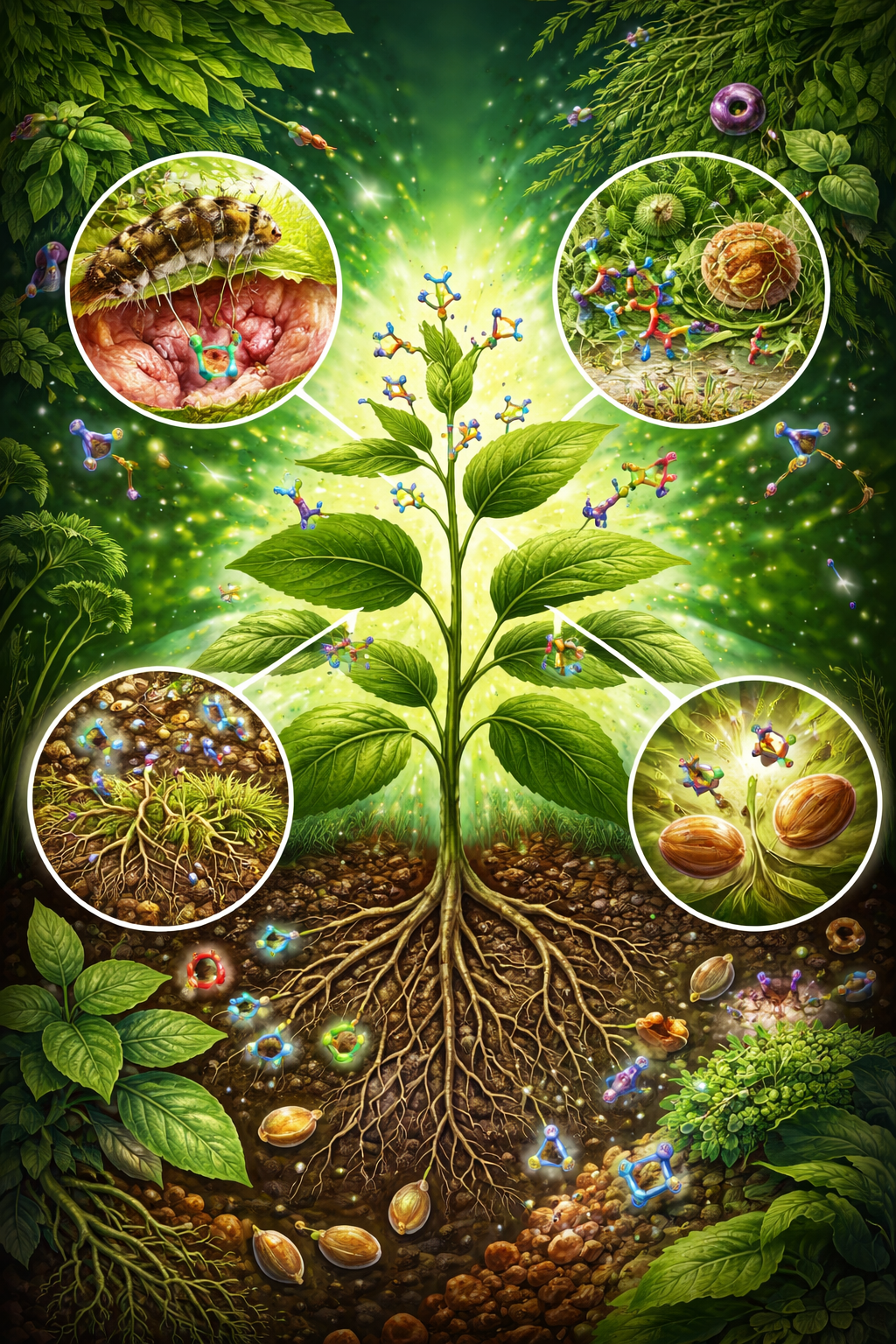
Another insight lectins offer into plant defense is how precisely they are deployed. Lectins are not evenly distributed throughout all plant tissues. Many are concentrated in seeds, roots, bark, or young leaves, areas where damage would be particularly costly to the plant’s survival or reproduction.
Seeds, for example, represent a plant’s future. High lectin concentrations in seeds help protect them from being eaten before they can germinate. Roots, constantly exposed to soil microbes and insects, often contain lectins that contribute to underground defense.
Plants also regulate lectin production over time. Stress conditions such as drought, pest attack, or infection can trigger increased lectin expression. This inducible response allows plants to conserve energy under normal conditions while rapidly strengthening defenses when danger arises.
Evolutionary Arms Races and Adaptation
Lectins also tell a story of coevolution. As plants evolved lectins that deter predators, those predators evolved countermeasures. Some insects developed enzymes that degrade lectins or altered gut receptors that reduce lectin binding. Certain animals learned to avoid plants with particularly strong defensive profiles or to process them in ways that minimize harm.
This back and forth shaped the diversity of lectins found across plant species. Different plants produce lectins with varying structures, binding targets, and strengths. This diversity reflects millions of years of selective pressure, with each species refining its defenses in response to local threats.
From an evolutionary perspective, lectins exemplify how molecular specificity can drive adaptation. Small changes in protein structure can significantly alter binding behavior, tipping the balance between deterrence and vulnerability.
Lectins Beyond Defense
While lectins are deeply tied to defense, their roles are not limited to hostility. In some contexts, lectins participate in beneficial interactions. Certain lectins help plants form symbiotic relationships with nitrogen-fixing bacteria or mycorrhizal fungi. By recognizing compatible carbohydrate patterns, lectins contribute to selective cooperation rather than blanket exclusion.
This dual role reinforces the idea that lectins are not simply weapons. They are communication tools that allow plants to navigate a complex biological environment, distinguishing allies from enemies and responding appropriately to each.
What Lectins Teach Us About Plants as Active Organisms
Studying lectins challenges outdated views of plants as passive life forms. Instead, plants emerge as active participants in their ecosystems, capable of sensing, responding, and adapting at the molecular level. Lectins demonstrate that intelligence in nature does not require a nervous system. It can arise through biochemical networks finely tuned by evolution.
Plants monitor their surroundings continuously, using lectins as part of a molecular language that interprets carbohydrate signals. This language informs decisions about growth, defense, and resource allocation, allowing plants to survive despite their immobility.
Implications for Human Understanding
For humans, lectins occupy an interesting intersection between plant biology and nutrition. While much discussion focuses on how lectins affect human digestion, viewing them through the lens of plant defense provides valuable context. Lectins are not designed to harm humans specifically. They are broad-spectrum tools shaped by ecological pressures that predate humanity itself.
Understanding lectins as defense molecules encourages more nuanced conversations about food, preparation methods, and individual tolerance. It also opens doors to agricultural innovation, where lectins may be harnessed or modified to improve crop resistance to pests without relying solely on synthetic chemicals.
Conclusion
Lectins reveal a hidden layer of plant defense that operates through recognition, interference, and communication. They show how plants defend themselves not through brute force, but through molecular precision. By binding to specific carbohydrate patterns, lectins help plants detect threats, discourage consumption, and manage relationships with both enemies and allies.
In exploring lectins, we gain more than biochemical knowledge. We gain a deeper appreciation for plants as dynamic, responsive organisms engaged in constant negotiation with their environment. Far from being static greenery, plants are active strategists, and lectins are one of the many tools they use to survive in a challenging world.