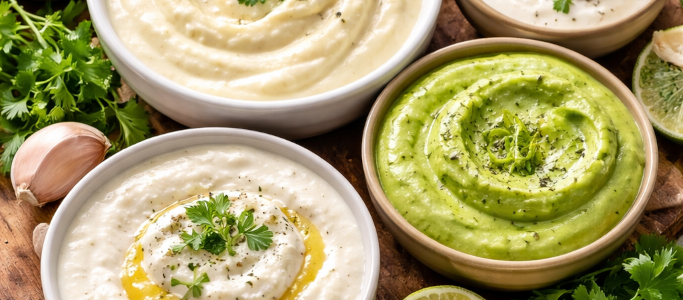
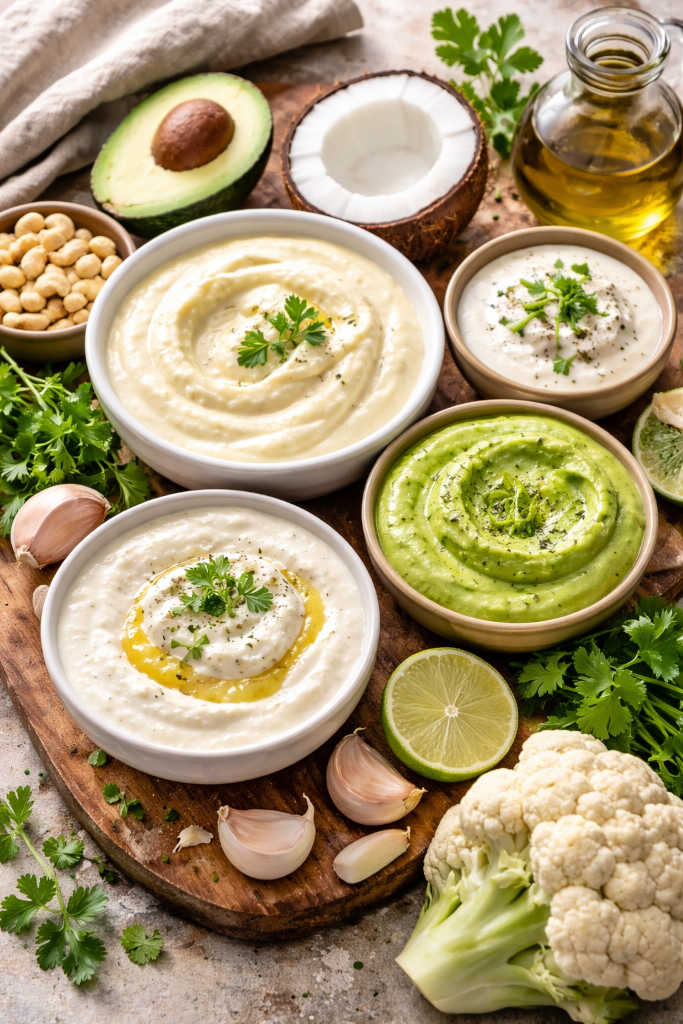
Creaminess has a reputation problem. For decades, we’ve been trained to associate rich, smooth textures with dairy products, thickeners, and stabilizers. Cream comes from cream. Body comes from cheese. Silkiness comes from gums, starches, and industrial tricks hidden deep inside ingredient lists. When people remove dairy or avoid gums and additives because of digestive sensitivity, it can feel like they’re giving up not just foods, but an entire sensory experience.
That assumption is wrong. Creaminess is not an ingredient. It’s a physical texture, a structural outcome, and a sensory perception created by how water, fats, fibers, and proteins interact. Once you understand that, the door opens to creamy foods that rely on whole ingredients, traditional techniques, and basic food physics rather than emulsifiers, gums, or dairy proteins that many people struggle to tolerate.
For those navigating lectin sensitivity, gut irritation, or inflammatory responses, this distinction matters. Many commercial “dairy-free” products simply swap milk proteins for gums, seed oils, and stabilizers that can be just as problematic or worse. True creaminess, the kind that feels nourishing rather than heavy or irritating, comes from working with food structure rather than forcing it.
This article explores how creamy textures can exist naturally, how humans achieved them long before modern additives, and how you can recreate them today without dairy or gums, using techniques that align with lectin-aware eating and digestive health.
Why Creaminess Matters More Than We Think
Texture plays a powerful role in how the body experiences food. Creamy foods tend to feel comforting, grounding, and satisfying. They slow eating, increase satiety, and often feel easier to digest when done correctly. This isn’t accidental.
From a physiological standpoint, smooth textures reduce mechanical stress in digestion. They require less chewing, move more predictably through the stomach, and reduce friction in an already sensitive gut. Psychologically, creaminess signals energy density and nourishment, which can help people feel satisfied even when meals are simpler or lower in volume.
The problem arises when creaminess is manufactured instead of built naturally.
Modern food systems often rely on gums like xanthan, guar, locust bean and modified starches to simulate thickness. While these ingredients are legal and widely used, they are not universally tolerated. Many people report bloating, gas, or digestive discomfort after consuming gum-thickened foods, especially when the gut lining is already compromised.
For those exploring lectin reduction, the goal isn’t just avoiding certain foods. It’s restoring digestive trust. Texture plays a quiet but crucial role in that process.
Creaminess Before Modern Food Processing
Humans created creamy textures long before refrigeration, industrial dairies, or food labs. Traditional cuisines across the world relied on slow cooking, mechanical breakdown, and naturally occurring fibers and fats to create smoothness.
Think of stewed vegetables cooked until they collapse into themselves. Root vegetables mashed with broth. Soups thickened by blending part of the pot back into itself. Nut pastes stone-ground into silky sauces. These methods worked because they respected the inherent structure of food rather than trying to override it.
In many traditional diets, dairy was either limited, fermented, or absent altogether. Creaminess came from technique, not additives. When modern food production scaled up, speed replaced patience, and gums replaced time.
Relearning these older approaches is not regression. It’s refinement.
The Science of Creaminess (Without the Jargon)
At its core, creaminess depends on three factors:
- Particle size
- Water binding
- Fat dispersion
When food particles are broken down finely enough, the tongue perceives smoothness. When fibers bind water, liquids thicken naturally. When fats are evenly distributed, richness emerges without separation.
Dairy accomplishes this easily because milk proteins naturally emulsify fat and water. Gums do it artificially by binding water aggressively. But whole foods can achieve the same effect through physical processing and cooking.
Heat softens cell walls. Blending reduces particle size. Natural fibers swell and trap moisture. Fats from whole sources distribute themselves when handled gently. None of this requires lab-derived stabilizers.
Vegetables as the Foundation of Creaminess
Vegetables are often overlooked as thickening agents, yet they are one of the most reliable paths to dairy-free creaminess. Certain vegetables become remarkably smooth when cooked thoroughly and blended. Their fibers absorb water and create body without heaviness. Cauliflower, for example, has a neutral flavor and breaks down into a silky base that can replace cream in soups and sauces. Zucchini behaves similarly when peeled, seeded, and cooked gently. Root vegetables like parsnips or turnips create richness without sweetness when balanced properly.
What matters is complete softening. Undercooked vegetables produce grainy textures. Fully cooked vegetables collapse structurally, allowing fibers to bind liquid evenly. This is one reason slow cooking matters. Creaminess is often a byproduct of patience.
Natural Fats Without Dairy
Fat is essential for mouthfeel, but not all fats behave the same way. Whole-food fats like those found in avocados, olives, coconuts, and certain animal sources, integrate smoothly when treated correctly. Unlike isolated seed oils, these fats come with accompanying compounds that help them disperse more gently.
Coconut milk, when made without gums, offers natural creaminess due to its saturated fat profile. Avocado creates instant silkiness through its fine cellular structure. Olive oil, when emulsified slowly into warm vegetable bases, adds richness without overwhelming the dish.
The key is moderation and integration. Dumping fat into liquid causes separation. Slowly incorporating it into a warm, blended base allows it to disperse evenly. This is less about recipes and more about technique.
Blending Is a Tool, Not a Shortcut
Modern blenders are powerful, but power alone does not guarantee smoothness. Creaminess improves when blending is paired with proper cooking. Blending raw or lightly cooked foods often results in chalky or fibrous textures. Heat transforms structure first; blending finishes the job.
Immersion blenders, high-speed blenders, and even manual mashing all have roles depending on the desired result. What matters is reducing particle size enough for the tongue to perceive uniformity. In traditional cooking, this happened through sieving, pounding, or long simmering. Today, we simply do it faster but the principle remains the same.
Why Avoiding Gums Can Improve Digestive Comfort
Gums are technically soluble fibers, but they behave differently than fibers found in whole foods. They bind water aggressively and resist breakdown, which can create fermentation issues for sensitive guts.
For people already dealing with lectin-related irritation, adding highly fermentable gums can amplify symptoms. This doesn’t mean gums are universally harmful, but they are not neutral for everyone.
Whole-food thickeners behave more predictably. Their fibers are accompanied by minerals, natural sugars, and structural components that the digestive system recognizes more easily. The result is thickness without stagnation. Creaminess should soothe, not bloat.
The Emotional Side of Creamy Foods
Food is not just fuel. Creamy textures often carry emotional weight like comfort, safety, nostalgia. Removing them can feel like deprivation, even if nutritional needs are met. This is why replacing creaminess matters psychologically as much as physically. When people feel satisfied, they are more likely to stay consistent with dietary changes. When food feels restrictive or joyless, compliance breaks down.
Creating creamy textures without dairy or gums restores pleasure without compromise. It allows people to eat in a way that supports healing while still feeling indulgent. That balance is sustainable.
Creaminess Across Cultures Without Dairy Dependence
Many global cuisines developed creamy textures without heavy dairy reliance. Southeast Asian cooking uses coconut as a structural base. Mediterranean dishes rely on emulsified vegetables and olive oil. Middle Eastern foods create richness from blended legumes and vegetables (though lectin-sensitive individuals may modify those ingredients).
These traditions demonstrate that creaminess is not culturally or nutritionally bound to dairy. It’s a culinary choice shaped by available resources and techniques. Modern lectin-aware cooking simply refines those ideas with better ingredient selection.
Troubleshooting Texture Without Additives
When creaminess fails, the issue is rarely missing ingredients. It’s process. Grainy textures usually mean insufficient cooking or incomplete blending. Thin sauces often need reduction or additional vegetable base rather than starch. Separation points to fat being added too quickly or at the wrong temperature.
Learning to adjust texture by feel rather than formula builds confidence. Over time, intuition replaces measurement, and creaminess becomes second nature. This is how traditional cooks worked. It still works now.
Creaminess as a Signal of Digestive Readiness
Interestingly, people who struggle with digestion often find smoother foods easier to tolerate during healing phases. Creamy textures reduce mechanical stress and slow gastric emptying in a controlled way.
This doesn’t mean all food should be puréed forever, but it highlights why texture matters during recovery. Creamy soups, sauces, and blended dishes can serve as bridges between restrictive eating and dietary expansion. In this context, creaminess isn’t indulgence. It’s strategy.
Rethinking “Dairy-Free” Altogether
The goal is not to mimic dairy perfectly. Chasing replicas often leads back to gums, starches, and ultra-processing. The goal is to create foods that stand on their own, with textures that feel good and ingredients that respect the body.
When creaminess is reframed as structure rather than substitution, the entire conversation shifts. Instead of asking, “What replaces cream?” the question becomes, “How do I build body naturally?” That question leads to better food, better digestion, and better long-term outcomes.
Closing Thoughts
Creamy textures do not belong exclusively to dairy or industrial additives. They are a natural outcome of understanding food structure, respecting cooking time, and using whole ingredients as they were meant to be used.
For those navigating lectin sensitivity, digestive challenges, or simply seeking cleaner, more intuitive cooking, learning to create creaminess without dairy or gums is empowering. It replaces restriction with creativity and fear with confidence. Creaminess, when done right, isn’t heavy or artificial. It’s calm, grounding, and deeply human.
And it has always been within reach.