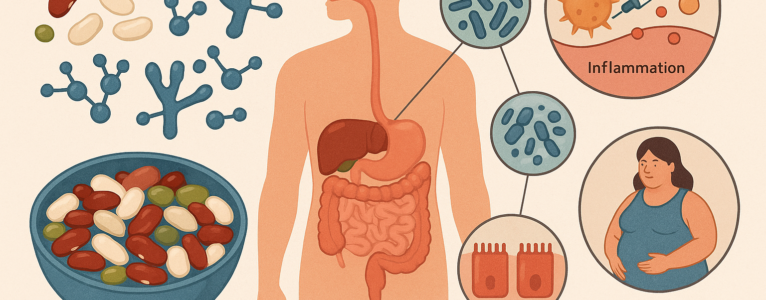
Why Gut Integrity Is Hard to Measure
Gut health has become one of the most talked-about topics in modern nutrition and wellness.

For those who want to dig deeper, this category examines the studies, scientific discussions, and evolving theories behind lectins, gut health, metabolic inflammation, and food-based immune responses. Articles summarize research in clear, accessible language while exploring both the benefits and limitations of current scientific understanding.
If you’re looking for evidence-based insight or want to stay current on emerging research, this section provides a balanced, thoughtful view of the science behind low-lectin living.
Gut health has become one of the most talked-about topics in modern nutrition and wellness.
Autoimmune conditions are often described as if they all belong to the same family, sharing a single cause and a single solution. In reality, they behave more like distant relatives who share a surname but live very different lives.
Plants live in a world of constant pressure. Unlike animals, they cannot run from predators, swat away insects, or relocate when conditions turn hostile.
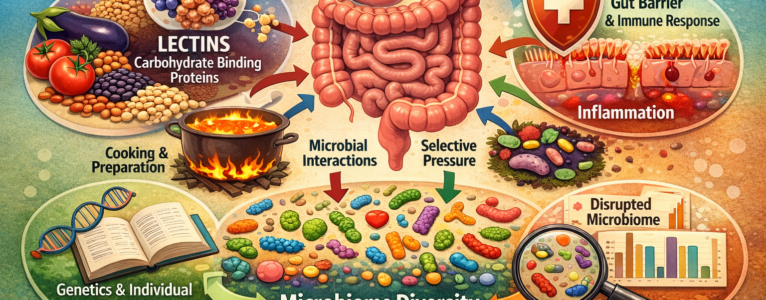
The human gut microbiome is one of the most complex ecosystems on the planet. Trillions of microorganisms coexist within the digestive tract, forming a dynamic community that influences digestion, immunity, metabolism, and even mood and cognition.
When people talk about lectins today, the conversation often centers on digestion, inflammation, or dietary tolerance. But long before lectins became a topic in human nutrition debates, they existed for a very different reason.
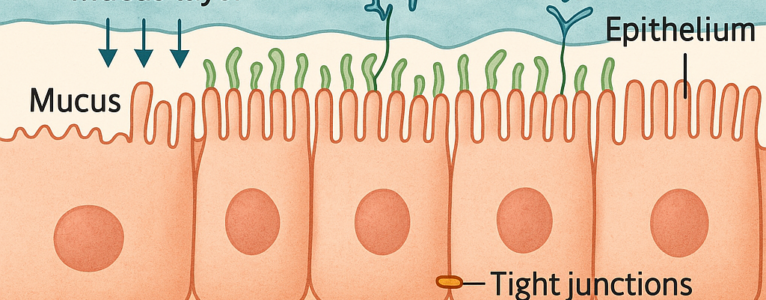
The moment food enters the body, a series of microscopic exchanges quietly begins. Most of these interactions are harmless and routine, fueling the body with nutrients that pass through cells without incident.
Autoimmune diseases have a way of reshaping a person’s life slowly and silently. One morning it’s stiff joints. Another day it’s unexplained fatigue.
Lectins have always occupied a strange space in nutrition science that is fascinating, controversial, and often misunderstood.
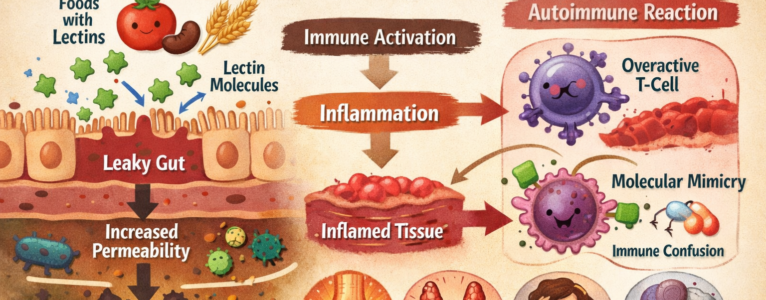
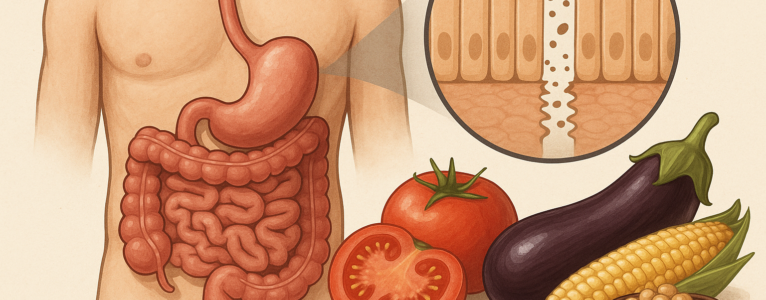
For anyone who has ever gone down the rabbit hole of gut health, the term lectins tends to appear with an almost mythical aura that is spoken of as invisible saboteurs hiding in ordinary foods, capable of wreaking havoc on the digestive lining
Modern nutrition research often circles back to a handful of food components that seem to spark endless debate like sugar, seed oils, gluten, processed additives, and more recently, lectins.