


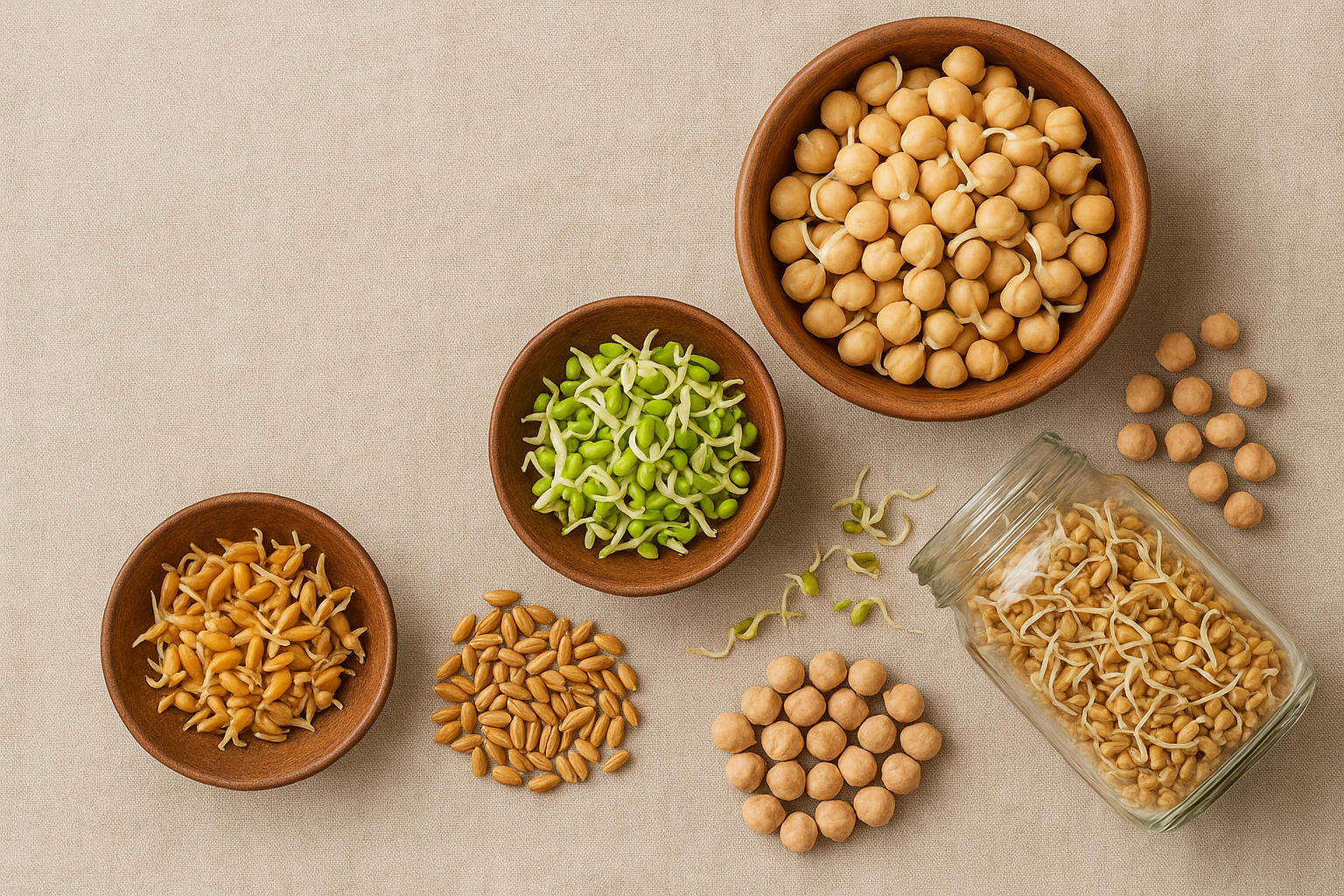
Sprouting grains and legumes has been practiced for thousands of years, long before nutrition science had the tools to explain why it worked. Ancient cultures sprouted foods out of observation and experience. Seeds that were soaked and allowed to germinate often became easier to digest, cooked faster, and caused fewer digestive complaints. Today, sprouting has been revived as a modern health practice, frequently promoted for improved nutrient availability, better digestion, and reduced anti nutrients.
Yet sprouting is not universally beneficial, nor is it risk free. While the process can change the nutritional profile of grains and legumes in meaningful ways, it can also introduce food safety concerns or fail to deliver benefits for certain individuals. Understanding what sprouting actually does at a biological level is essential for deciding whether it belongs in a particular diet and how to do it safely.
This article explores how sprouting works, what benefits are supported by research, where the risks lie, and how to apply best practices for those who choose to sprout grains and legumes at home.
What Sprouting Actually Is
Sprouting is the controlled germination of seeds. Grains and legumes are both seeds designed by nature to remain dormant until conditions are right for growth. When exposed to moisture, warmth, and oxygen, enzymes inside the seed activate. The seed begins converting stored energy into forms that support early plant growth.
From a nutritional perspective, this transformation is significant. A dry seed is a storage unit, rich in starches, proteins, and protective compounds that prevent premature digestion or damage. A sprouting seed is a living system, actively breaking down those reserves into simpler molecules that can be absorbed more easily by a growing plant and, in many cases, by humans as well.
Sprouting usually involves three basic stages: soaking, draining, and germinating. During soaking, water penetrates the seed coat and activates enzymes. During germination, the seed begins to grow a small root, often visible within one to three days depending on the species.
How Sprouting Changes Nutritional Composition
One of the most commonly cited benefits of sprouting is improved nutrient availability. This claim is not unfounded, but it requires nuance.
During sprouting, enzymes such as amylases, proteases, and phytases become active. These enzymes begin breaking down starches into simpler sugars, proteins into amino acids, and phytic acid into more usable mineral forms.
Phytic acid deserves special attention. It is a natural compound found in grains and legumes that binds minerals such as iron, zinc, calcium, and magnesium. While phytic acid plays a protective role for the plant, it can reduce mineral absorption in humans. Sprouting activates phytase, an enzyme that reduces phytic acid content, potentially increasing mineral bioavailability.
Vitamin content can also shift. Some studies show increases in certain B vitamins and vitamin C during sprouting, particularly in legumes. However, the magnitude of these changes varies widely depending on the food type, sprouting duration, and environmental conditions.
It is important to note that sprouting does not magically transform grains and legumes into nutritional powerhouses. The improvements are incremental, not absolute. Sprouting modifies what is already present rather than creating nutrients out of nothing.
Sprouting and Digestibility
Digestibility is where many people experience the most noticeable effects of sprouting. Grains and legumes contain complex carbohydrates and proteins that can be difficult to break down, particularly for individuals with sensitive digestion.
As enzymes break down starches during sprouting, some of the complex carbohydrates that feed gas producing gut bacteria are reduced. This can lead to less bloating or discomfort for certain people. Protein structures also begin to change, which may make them easier to digest.
That said, sprouting does not eliminate all digestive challenges. Some fibers remain intact, and certain resistant starches may still cause symptoms. For individuals with specific gut conditions, such as irritable bowel syndrome or small intestinal bacterial overgrowth, sprouted foods can still provoke reactions.
Digestive response is highly individual, and sprouting should be viewed as a tool, not a guarantee.
The Impact of Sprouting on Lectins
Lectins are carbohydrate binding proteins found in many plant foods, especially grains and legumes. Some lectins are resistant to digestion and can interact with the gut lining in sensitive individuals.
Sprouting can reduce certain lectins, but the effect is uneven. In legumes, particularly beans and lentils, sprouting may lower some lectin activity. However, many lectins are heat sensitive rather than water sensitive. This means that sprouting alone is often insufficient to neutralize them.
Cooking remains essential for legumes, sprouted or not. Raw sprouted beans, especially kidney beans, can still contain dangerous levels of lectins such as phytohaemagglutinin. Sprouting should never be seen as a substitute for proper cooking.
Grains contain fewer problematic lectins than legumes, but sprouting does not universally eliminate them. The reduction depends on the grain type and the length of germination.
Enzyme Activation and Metabolic Effects
Sprouting introduces active enzymes into food. While these enzymes primarily serve the sprouting seed, they may influence digestion in subtle ways when consumed.
Some proponents claim that eating enzyme rich sprouted foods reduces the digestive burden on the pancreas. Scientific evidence for this claim is limited. Digestive enzymes from food are largely broken down in the stomach and small intestine, though they may contribute modestly during chewing and early digestion.
More significant is the way sprouting pre processes food. By partially breaking down macronutrients before consumption, sprouted foods may require less digestive effort overall. This effect is real, but again, variable.
Risks Associated With Sprouting
Despite its benefits, sprouting carries genuine risks that should not be minimized. The warm, moist environment required for germination is also ideal for bacterial growth.
Foodborne pathogens such as Salmonella, E. coli, and Listeria have been linked to raw sprouts. These bacteria can be present on seeds before sprouting and may multiply rapidly during the germination process. Washing seeds does not reliably eliminate this risk.
Unlike surface contamination on vegetables, bacterial contamination in sprouts can become internalized as the seed grows, making it resistant to rinsing or sanitizing.
This risk is highest for raw sprouts consumed without cooking. Cooking sprouts significantly reduces the danger, but many people consume them raw for perceived health benefits.
Individuals with weakened immune systems, pregnant women, older adults, and young children are generally advised to avoid raw sprouts entirely.
Sprouting Does Not Make All Foods Safe
A common misconception is that sprouting makes grains and legumes inherently safe or superior. This is not true.
Sprouting does not eliminate all anti nutrients, toxins, or allergens. It does not make gluten safe for people with celiac disease. Sprouted wheat is still wheat, and sprouted barley still contains gluten.
Similarly, sprouting does not neutralize all problematic compounds in legumes. Proper cooking remains non negotiable for safety.
Sprouting should be understood as a preparatory step, not a final solution.
Choosing Which Foods to Sprout
Not all grains and legumes respond equally well to sprouting. Some are more forgiving, safer, and more beneficial than others.
Lentils, mung beans, chickpeas, and certain peas are commonly sprouted with relatively low risk when handled properly. Whole grains such as wheat berries, spelt, and rye are also frequently sprouted, though they must be dried or cooked afterward.
Large beans, especially kidney beans, should be approached with caution. Their lectin content remains dangerous unless fully cooked, sprouted or not.
Seeds sold specifically for sprouting are generally safer than those intended for planting or animal feed, as they are handled and stored with food safety in mind.
Best Practices for Safe Sprouting
For those who choose to sprout grains or legumes, careful technique matters more than enthusiasm.
Start with high quality, food grade seeds intended for sprouting. Avoid cracked, damaged, or moldy seeds. Clean all equipment thoroughly before use, including jars, lids, and trays.
Soak seeds in clean, cool water for the recommended time, usually eight to twelve hours depending on the type. Drain thoroughly and rinse at least twice daily with fresh water. Stagnant moisture increases bacterial risk.
Sprout at cool room temperature, not in overly warm conditions. Once sprouts reach the desired length, they should be refrigerated and used promptly.
Cooking sprouted grains and legumes dramatically reduces food safety risks and is strongly recommended, especially for legumes. Light steaming, boiling, or baking is sufficient to kill harmful bacteria.
Drying and Cooking Sprouted Grains
Many sprouted grain products on the market are made by sprouting grains and then drying them before milling into flour. This approach offers some of the benefits of sprouting while reducing microbial risk.
Drying should be done thoroughly and at safe temperatures to prevent mold growth. Once dried, sprouted grains can be stored, ground, or cooked like their unsprouted counterparts.
Cooking remains essential. Sprouted grain bread, for example, is baked, not raw. The same principle should apply at home.
Who May Benefit Most From Sprouting
Sprouting may be most helpful for individuals who tolerate grains and legumes but experience mild digestive discomfort. It can also be useful for people seeking to improve mineral absorption when dietary intake is marginal.
However, for individuals with autoimmune conditions, severe gut sensitivity, or known reactions to grains and legumes, sprouting may not provide sufficient relief. In these cases, elimination or careful reintroduction may be more appropriate.
Sprouting is a refinement, not a cure.
A Balanced Perspective on Sprouting
Sprouting sits in an interesting middle ground between traditional food preparation and modern nutritional optimization. It reflects an intuitive understanding that raw seeds are not designed for easy digestion and that preparation matters.
At the same time, sprouting has been oversold in some health circles as a universal upgrade. It is not. It offers real but limited benefits and carries real but manageable risks.
The most sustainable approach is an informed one. Sprouting can be valuable when done thoughtfully, cooked appropriately, and consumed by those who tolerate the resulting foods well.
Final Thoughts
Sprouting grains and legumes is neither a miracle nor a mistake. It is a biological process that alters food in predictable ways, some beneficial and some risky. When understood and applied correctly, it can improve digestibility and nutrient availability for certain people. When misunderstood or done carelessly, it can introduce avoidable hazards.
As with many traditional practices, sprouting works best when combined with modern knowledge. Respecting both the science and the limitations of sprouting allows it to remain a useful option rather than a misunderstood trend.
The decision to sprout should always be guided by individual tolerance, safety awareness, and an honest assessment of whether the benefits outweigh the effort and risks for a given diet.