

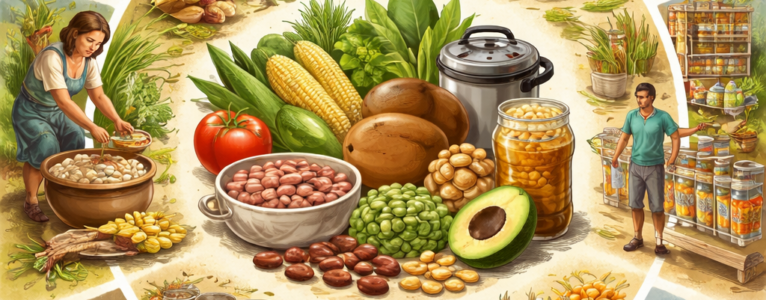

Long before lectins became a modern buzzword linked to gut health, inflammation, or elimination diets, they were quietly present in nearly every plant food humans touched. Lectins are not a recent addition to the human diet. They are ancient proteins, deeply woven into the evolutionary relationship between plants and the animals that eat them. To understand how lectins fit into human nutrition today, it helps to step back and look at how people once ate, how food preparation evolved, and how industrialization reshaped our relationship with plants and their natural defenses.
This is not a story of good foods versus bad foods. It is a story of adaptation, technology, and forgetting. It is about how traditional food wisdom developed slowly over thousands of years and how, in just a few generations, many of those practices faded away.
Lectins as Plant Defense, Not Human Invention
Lectins exist because plants cannot run away. Unlike animals, plants rely on chemical defenses to discourage insects, animals, and microbes from consuming them. Lectins are part of that system. They bind to carbohydrates and can interfere with digestion, nutrient absorption, or cellular communication in the organisms that eat them.
From the plant’s perspective, lectins serve a purpose. They help ensure survival. From the human perspective, they represent a challenge that had to be solved long before anyone understood proteins or molecular biology.
Early humans did not know the word lectin, but they understood its effects. Certain foods caused discomfort. Others required careful handling. Some plants were nourishing only after specific steps were taken. Through observation and trial and error, humans learned how to work around plant defenses rather than eliminate plant foods entirely.
Hunter Gatherer Diets and Natural Limits
For most of human history, diets were shaped by availability, seasonality, and effort. Hunter gatherer societies relied heavily on animal foods, wild fruits, roots, nuts, and leaves. Many high lectin foods as we know them today, such as large quantities of grains and legumes, were not dietary staples.
Wild plants tend to be smaller, tougher, and less concentrated in lectins than their domesticated counterparts. Wild legumes existed, but they were not eaten in large volumes. Grains, when present, were consumed sparingly and often only after rudimentary processing.
More importantly, food was rarely eaten raw unless it was clearly safe. Cooking was not just about flavor. It was about survival. Heat, soaking, and fermentation emerged naturally as tools to make plant foods edible.
The Agricultural Shift and the Rise of Lectin Exposure
The agricultural revolution marked a major turning point in human lectin exposure. As humans began cultivating grains and legumes, they gained a reliable food source that could be stored and transported. This stability allowed populations to grow, but it also changed the nutritional landscape.
Grains like wheat and barley and legumes like lentils and beans became dietary staples rather than occasional foods. These crops were efficient to grow and calorie dense, but they were also rich in lectins and other antinutrients.
Early agricultural societies did not simply harvest and eat these foods raw. They developed elaborate preparation methods. Grains were soaked, sprouted, fermented, and cooked. Beans were soaked for long periods and boiled thoroughly. These practices were not optional traditions. They were essential for making food tolerable and nourishing.
Traditional Food Preparation as a Hidden Science
Across cultures, similar preparation techniques emerged independently. This is one of the strongest clues that lectins and related compounds were being managed intuitively.
In parts of Africa and Asia, grains were fermented into porridges and flatbreads. In Europe, sourdough fermentation became a cornerstone of bread making. In the Americas, corn was treated with alkaline solutions in a process now known as nixtamalization, which reduced antinutrients and improved nutrient availability.
Legumes were rarely eaten without soaking and long cooking. In many traditional cuisines, they were simmered for hours, sometimes with repeated water changes. Fermented soy products such as miso and tempeh developed in cultures that consumed soy regularly, while raw soybeans were largely avoided.
These methods did not eliminate lectins entirely, but they reduced their activity enough for most people to tolerate the foods. The key point is that traditional diets accounted for plant defenses, even if they did not name them.
Selective Breeding and Changing Plant Chemistry
As agriculture advanced, humans selectively bred plants for traits like yield, sweetness, and storage stability. This process dramatically changed plant chemistry.
Modern wheat is not the same as ancient wheat. Modern beans are larger and higher yielding than their wild ancestors. Selective breeding often increased carbohydrate content while unintentionally altering levels of lectins and other defense compounds.
At the same time, traditional preparation methods began to erode. As milling technology improved, grains were refined and stripped of fiber and germ. Bread became faster to make. Soaking and fermentation were shortened or eliminated. Convenience took precedence over tradition.
This combination of altered plant chemistry and reduced preparation marked a significant shift in lectin exposure.
Industrialization and the Loss of Time
The industrial age did not introduce lectins, but it changed how often and how intensely people encountered them. Food processing prioritized speed, shelf life, and uniformity. Soaking beans overnight became unnecessary when canned beans were available. Long fermentation lost ground to commercial yeast and quick baking.
Ultra processed foods compounded the issue. Isolated plant proteins, thickeners, and stabilizers often derived from lectin containing sources were added to products in concentrated forms. These ingredients did not exist in traditional diets.
At the same time, diets became more plant heavy in terms of calories but less diverse in preparation. People ate more grains and legumes than ever before, but with fewer mitigating steps.
For many individuals, this shift caused no obvious problems. For others, subtle digestive or inflammatory issues emerged over time. Without a clear framework to explain the cause, symptoms were often attributed to stress, aging, or unrelated health conditions.
Modern Nutrition Science and Rediscovery
The scientific study of lectins began in earnest in the twentieth century. Researchers identified their ability to bind to cells, agglutinate blood, and resist digestion. Some lectins were found to be harmless in small amounts, while others were clearly toxic if consumed raw.
Nutrition science initially focused on vitamins, minerals, and macronutrients. Antinutrients were acknowledged but often minimized. The prevailing belief was that a varied diet solved most problems.
In recent decades, renewed interest in gut health, autoimmune conditions, and chronic inflammation brought lectins back into the conversation. Researchers and clinicians began connecting traditional food practices with modern digestive resilience.
This renewed attention does not suggest that all lectins are harmful or that humans should avoid plant foods altogether. Instead, it highlights a mismatch between how foods evolved to be eaten and how they are commonly consumed today.
Cultural Memory and Dietary Resilience
One of the most striking aspects of lectin history is how much cultural memory once guided food preparation. Recipes were passed down not just for taste, but for safety. Elders knew which foods required care. Children learned by watching.
When food systems became centralized and industrialized, that knowledge became less necessary on the surface. Food arrived pre processed, pre cooked, and pre packaged. The price of convenience was the loss of context.
Today, people rediscover these practices not as nostalgia, but as tools for health. Soaking beans, fermenting grains, pressure cooking legumes, and choosing traditional preparations are not trends. They are reconnections.
How Eating Habits Continue to Evolve
Human diets have always evolved alongside technology. Fire, agriculture, fermentation, and industrial processing each reshaped what and how people eat. The current era is no different.
What sets the present apart is the speed of change and the scale of exposure. Never before have so many people eaten so many plant derived foods with so little preparation.
At the same time, modern tools offer solutions. Pressure cookers dramatically reduce lectin activity in legumes. Fermentation can be done safely at home. Information that once took generations to pass down is now widely accessible.
The challenge is not returning to the past, but integrating its lessons into modern life.
A Broader Perspective on Lectins
Lectins are not villains. They are signals. They tell a story about how plants protect themselves and how humans historically responded with ingenuity and patience.
Understanding the history of lectins in human diets reframes the modern debate. It shifts the focus from restriction to preparation, from fear to awareness.
When people experience discomfort from certain foods, it is not necessarily because those foods are inherently wrong. Often, it is because the relationship between human biology, plant defenses, and preparation has been disrupted.
By viewing lectins through a historical lens, it becomes clear that humans have always lived with them. What has changed is not their presence, but how thoughtfully they are handled.
Closing Reflections
The story of lectins mirrors the story of human eating itself. It is a story of adaptation, compromise, and resilience. From wild foraging to agriculture, from fermentation crocks to factory lines, each shift altered how lectins interacted with the human body.
As eating habits continue to change, the opportunity lies in blending modern convenience with ancient wisdom. Not every meal needs to be traditional, and not every food requires fear. But understanding how our ancestors navigated plant defenses offers valuable insight into why certain foods feel supportive while others do not.
Lectins remind us that food is not just fuel. It is a relationship shaped by biology, culture, and time. When that relationship is honored, the human diet becomes not only more nourishing, but more forgiving as well.