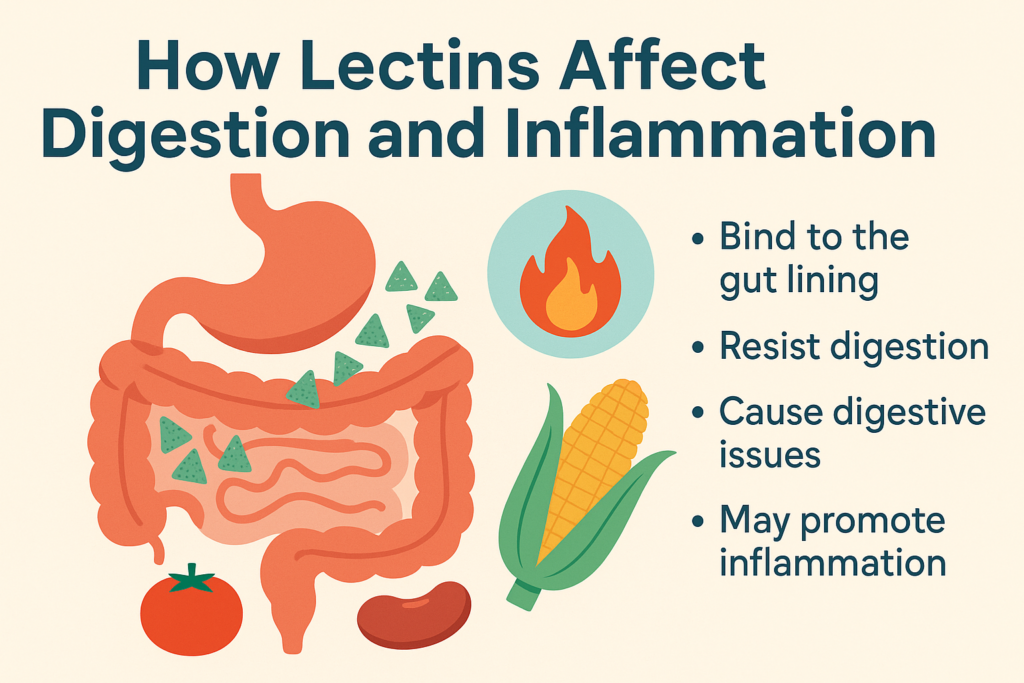
The relationship between dietary lectins, digestion, and inflammation involves several areas of biological research that are often discussed together despite having different levels of scientific support. Researchers have demonstrated that certain lectins can survive digestion, interact with intestinal cells, influence immune activity, and produce measurable changes in laboratory environments. Establishing whether those same effects occur when people consume ordinary, properly prepared meals is a more difficult scientific question.
For individuals exploring a low-lectin lifestyle because of digestive discomfort, recurring food reactions, or inflammatory symptoms, these distinctions have practical consequences. A food may cause noticeable discomfort without producing measurable intestinal inflammation, while a dietary change may improve symptoms without revealing which specific compound was responsible. Understanding how lectins behave within the digestive system helps explain why researchers continue investigating them and where current evidence can guide everyday food decisions.
Understanding Lectins Within the Digestive System
Lectins are a diverse family of proteins that recognize and bind to particular carbohydrate structures. Many of these structures occur naturally on the surfaces of human cells, including the epithelial cells lining the digestive tract. Different lectins recognize different carbohydrates, which helps explain why their biological effects can vary considerably.
The digestive system normally breaks dietary proteins into smaller peptides and amino acids through the combined action of stomach acid and digestive enzymes. Certain lectins possess structural characteristics that make them relatively resistant to these processes. Depending on their original structure and how the food was prepared, some may retain enough biological activity to interact with intestinal tissues.
Resistance to digestion is only one part of the process. The amount of active lectin remaining after cooking, the quantity consumed, the presence of other food components, and the conditions within the digestive tract all influence potential exposure. Two meals containing the same ingredient may therefore deliver different amounts of biologically active lectin if their preparation methods differ.
Readers unfamiliar with these proteins can explore their classification, food sources, and basic biological functions in What Are Lectins? A Beginner-Friendly Breakdown of the Science.
What the Latest Scientific Assessment Reveals
In January 2026, the European Food Safety Authority (EFSA) published a comprehensive scientific assessment of the human health risks associated with plant lectins in food. The assessment considered toxicological research, human reports of adverse reactions, food preparation methods, dietary exposure estimates, and the biological mechanisms through which certain lectins may produce harmful effects.
The researchers found sufficient evidence to conduct a formal risk characterization for phytohemagglutinin (PHA), a lectin associated with beans belonging to the Phaseolus genus. Human cases of gastrointestinal illness associated with undercooked beans established a clear food-safety concern. Animal experiments provided additional evidence of effects involving intestinal tissues, the pancreas, and immune activity.
For other dietary lectins, the available information was considerably more limited. Researchers identified shortages of reliable human data, inconsistent analytical methods for measuring lectin activity in foods, and insufficient evidence concerning prolonged exposure to smaller quantities.
These findings help establish the boundaries of current knowledge. Acute illness caused by inadequately cooked beans is a documented health risk, while many questions surrounding everyday lectin exposure and chronic inflammation remain unresolved. The difference matters when interpreting research or deciding whether a particular food requires modification or avoidance.
How Lectins May Interact With the Intestinal Barrier
The intestinal barrier is a living system that performs several functions at once. It permits the absorption of nutrients and water while helping regulate the passage of microorganisms, dietary substances, and other material from the digestive tract into underlying tissues. Its protective features include a mucus layer, intestinal epithelial cells, immune cells, and specialized structures known as tight junctions.
Tight junctions help regulate movement through the spaces between neighboring epithelial cells. Their behavior changes in response to biological signals, infections, inflammatory processes, and certain environmental conditions. Increased intestinal permeability occurs when the regulation of this barrier changes sufficiently to allow greater passage of particular substances.
Some lectins can recognize carbohydrate structures associated with intestinal epithelial cells. Experimental research has investigated whether these interactions influence cellular communication, transport processes, and the integrity of the epithelial barrier.
Wheat Germ Agglutinin and Intestinal Cells
Wheat germ agglutinin, commonly abbreviated as WGA, is one of the better-studied dietary lectins in this area. Its ability to bind to specific carbohydrate structures has made it useful in experiments examining interactions between plant proteins and mammalian cells.
A 2009 laboratory study investigating the effects of wheat germ agglutinin on gastrointestinal epithelial and immune cells examined how WGA influenced communication between these cellular systems. Researchers observed that exposure to WGA could stimulate immune cells to produce inflammatory signaling molecules. Substances released by those immune cells subsequently affected measurements associated with epithelial barrier integrity.
The findings suggest a possible indirect mechanism through which a lectin could influence intestinal barrier behavior. The interaction may involve communication between immune cells and intestinal tissues rather than a simple process of a protein attaching to a cell and immediately causing damage.
The study used an experimental cellular model rather than participants consuming wheat-containing meals. Consequently, it does not establish that eating ordinary bread or other wheat products produces the same effects in living humans. The amount of active WGA reaching intestinal tissues after food processing and digestion remains relevant to that question.
The regulation of intestinal permeability involves several additional biological processes. Our article on zonulin and intestinal permeability examines the regulation of intestinal tight junctions and the complexities associated with dietary influences on barrier function.
Lectins and Nutrient Absorption
Some plant lectins are classified as antinutritional compounds because they can interfere with normal nutritional processes under certain conditions. Animal experiments involving substantial exposure to active lectins have demonstrated changes in intestinal structure, digestive function, and nutrient absorption.
One possible explanation involves interactions with the absorptive surfaces of intestinal epithelial cells. These cells possess microscopic projections called microvilli that increase the surface area available for nutrient absorption. Changes in their structure or function can influence how efficiently nutrients move from the digestive tract into the body.
Lectins should be distinguished from other compounds frequently grouped under the antinutrient label. Phytates can bind certain minerals and reduce their availability for absorption, while some plant compounds inhibit enzymes responsible for breaking down dietary proteins. These mechanisms differ from the carbohydrate-binding characteristics that define lectins.
Legumes can contain several of these compounds simultaneously. When inadequately prepared legumes produce digestive problems, assigning every effect to lectins alone overlooks the other components present in the food.
There is also insufficient evidence to conclude that ordinary consumption of properly prepared lectin-containing foods routinely causes clinically significant nutrient deficiencies in humans. Beans and whole grains provide fiber, protein, minerals, and other nutrients, making their preparation and overall dietary contribution relevant when considering restrictions.
Lectins and the Gut Microbiome
The digestive tract contains a large community of microorganisms that participate in carbohydrate fermentation, immune regulation, and the production of biologically active substances. Their collective activity helps influence bowel function, intestinal conditions, and aspects of metabolism. The composition of this microbial community also changes in response to dietary habits, medications, illness, and environmental exposure.
Because microorganisms possess carbohydrate structures on their surfaces, some lectins can interact with them. Researchers have investigated whether these interactions affect bacterial attachment, microbial growth, and communication between microorganisms and intestinal tissues. Animal studies have also raised questions about whether microbial interactions contribute to some of the intestinal effects observed after exposure to active lectins.
However, the ability of a particular lectin to interact with bacteria in an experimental setting does not establish that eating lectin-containing foods disrupts the human microbiome. Whole foods contain many other substances that influence microorganisms, including fermentable carbohydrates and dietary fiber.
Beans offer a useful example. Their carbohydrates can be fermented by intestinal bacteria, producing gases and other metabolic products. This process can cause bloating in some individuals while also supporting microbial activity and the production of short-chain fatty acids.
Removing beans may therefore reduce digestive discomfort for someone who struggles with fermentation-related symptoms. That improvement does not necessarily indicate that lectins were damaging their microbiome. Distinguishing between microbial fermentation, intestinal sensitivity, and potential lectin activity requires more information than symptoms alone can provide.
How Lectins May Influence Inflammatory Processes
Inflammation is a coordinated biological response involving immune cells, signaling molecules, and surrounding tissues. It helps the body respond to infection and injury, although persistent or improperly regulated inflammatory activity can contribute to disease.
Researchers investigating lectins have examined several possible mechanisms through which particular proteins could influence these processes. The scientific evidence ranges from established laboratory observations to hypotheses that have yet to receive adequate clinical confirmation.
Immune Activation and Inflammatory Signaling
Immune cells communicate through signaling proteins called cytokines. Some cytokines promote inflammatory activity, while others help regulate or limit immune responses. Their production depends on the nature of the stimulus and the biological conditions in which the response occurs.
Certain lectins can stimulate immune cells under laboratory conditions. Phytohemagglutinin, for example, has long been used in research to stimulate the proliferation of particular immune cells. Wheat germ agglutinin has also demonstrated effects on inflammatory signaling in experimental models.
These characteristics make lectins scientifically interesting, but their activity in isolated cellular systems cannot establish how much inflammatory signaling occurs after an ordinary meal. The concentrations used in experiments, the route of exposure, and whether digestion or food processing has altered the protein all influence the relevance of the findings.
A lectin’s ability to stimulate an immune cell in a laboratory is therefore evidence of biological activity. Demonstrating that consuming a particular food causes persistent inflammatory disease requires additional research.
Intestinal Permeability and Systemic Inflammation
The intestinal barrier helps manage interactions between the contents of the digestive tract and the immune system. When its regulation changes, immune cells may encounter different quantities or types of microbial products and dietary substances.
Researchers continue studying these relationships in conditions involving intestinal inflammation and abnormal immune responses. If a biologically active lectin contributes to changes in barrier function under particular circumstances, it could theoretically influence immune activity beyond its initial point of contact.
The difficulty lies in establishing the complete sequence in humans. Researchers would need to demonstrate that realistic dietary exposure produces measurable barrier changes, that those changes alter immune activity, and that the resulting effects are clinically meaningful. Existing lectin research has not consistently established that sequence for ordinary dietary consumption.
Molecular Mimicry and Autoimmune Conditions
Molecular mimicry describes a process in which similarities between foreign biological structures and the body’s own components may contribute to an immune response directed against human tissues. This mechanism is studied in several autoimmune conditions, particularly in relation to certain infections.
Dietary lectins have also appeared in discussions of potential immune cross-reactivity. Researchers have proposed that similarities between particular plant proteins and human structures could contribute to abnormal immune recognition under specific circumstances.
A 2024 scientific review examining dietary lectins and immune regulation discusses both inflammatory and potentially regulatory effects associated with different lectins. The review illustrates the complexity of these interactions and identifies areas requiring further investigation.
At present, there is insufficient clinical evidence to establish that reducing dietary lectins prevents or treats autoimmune conditions such as rheumatoid arthritis, lupus, or Hashimoto’s thyroiditis. An individual may notice changes in symptoms after adjusting their diet, but those observations cannot independently demonstrate molecular mimicry or establish that lectins were responsible for disease activity.
Blood Sugar Regulation and Metabolic Inflammation
Certain lectins have also been investigated for their interactions with cellular receptors and metabolic signaling. Laboratory experiments examining carbohydrate-binding proteins have raised questions about possible effects on glucose transport and insulin-related processes.
Blood sugar responses to ordinary meals, however, are strongly influenced by carbohydrate quantity, starch structure, fiber, meal composition, and individual metabolic health. Changing the amount of beans, grains, bread, or processed foods in a diet can alter several of these factors simultaneously.
An improvement in blood sugar stability following a dietary change cannot automatically be attributed to reduced lectin exposure. Evidence from human dietary interventions would need to isolate lectin activity from these other variables before establishing a specific metabolic effect.
What Human Dietary Studies Tell Us About Inflammation
One of the challenges in interpreting lectin research is reconciling laboratory findings with human studies involving whole foods. Some foods that contain lectins have also been associated with favorable nutritional outcomes when consumed as part of ordinary dietary patterns.
A 2024 systematic review and meta-analysis of randomized controlled trials involving non-soy legumes examined changes in inflammatory biomarkers and adiponectin in adults with overweight or obesity. Researchers found that legume consumption increased adiponectin, a hormone involved in metabolic regulation, and reduced interleukin-1 beta, a cytokine associated with inflammation. Other measured inflammatory markers, including C-reactive protein, interleukin-6, and tumor necrosis factor alpha, did not change significantly in the overall analysis.
The findings do not demonstrate that legumes will improve inflammatory conditions in every individual. They do, however, challenge the assumption that consuming lectin-containing foods necessarily increases systemic inflammation. Food composition, preparation, nutritional contribution, and the characteristics of study participants all influence the observed results.
These trials also did not isolate active lectin exposure as their primary experimental variable. They examined legumes as foods, which means the results reflect the combined effects of their nutritional components rather than establishing a particular effect attributable to lectins.
Why Digestive Symptoms Differ Between Individuals
Bloating, abdominal discomfort, changes in bowel habits, and a feeling of heaviness after eating can develop through several different physiological processes. Some involve intestinal fermentation, others involve altered gut motility, and still others involve heightened sensitivity to normal digestive activity.
Irritable bowel syndrome (IBS) provides a particularly relevant example. People with IBS may experience discomfort when intestinal gas production or fluid movement changes, even without demonstrable injury to the intestinal lining. This heightened response to internal sensations is known as visceral hypersensitivity.
The American Gastroenterological Association’s clinical guidance on dietary management of IBS identifies the low-FODMAP diet as an evidence-based dietary intervention for managing IBS symptoms. FODMAPs are fermentable carbohydrates that can influence intestinal gas production and fluid movement.
There is considerable overlap between foods commonly restricted in low-lectin and low-FODMAP eating. Wheat products, certain legumes, and some other plant foods can contribute to both dietary considerations for different reasons. Someone who experiences relief after removing these foods may have changed their exposure to fermentable carbohydrates as well as lectins.
Other variables, including portion size, food allergies, lactose intolerance, celiac disease, medication use, and underlying digestive conditions, can further complicate interpretation. Genetic differences and microbiome composition remain subjects of research, but neither currently provides a reliable method for identifying general dietary lectin sensitivity.
How Proper Preparation Changes Lectin Exposure
Food preparation offers one of the more established ways to influence exposure to biologically active lectins. The effectiveness of a preparation method depends on the specific protein, food structure, temperature, moisture, and processing duration.
Boiling and pressure cooking are particularly useful for many legumes because moist heat can denature certain lectins. Denaturation alters the protein’s structure and may interfere with the carbohydrate-binding properties responsible for its biological activity.
The clearest practical example involves kidney beans. The U.S. Food and Drug Administration’s guidance on naturally occurring food toxins recommends soaking dried kidney beans for a minimum of five hours, discarding the soaking water, and boiling them in fresh water for at least 30 minutes. Commercially canned kidney beans provide an alternative that has already undergone adequate heat processing.
Other preparation methods have more variable effects:
- Soaking: Hydrates dried legumes and can reduce some water-soluble compounds. It does not replace adequate cooking.
- Pressure cooking: Provides moist heat at elevated temperatures and can substantially reduce lectin activity under appropriate conditions.
- Fermentation: Changes food composition through microbial activity and may reduce certain lectins, depending on the ingredient and fermentation process.
- Sprouting: Alters the biochemical composition of seeds during germination, although changes in lectin activity differ among plant species.
- Peeling and deseeding: Changes the plant tissues being consumed and may reduce exposure to certain compounds. The extent of lectin reduction depends on their distribution within the particular food.
These preparation techniques can also influence texture, flavor, starch digestibility, and the presence of fermentable carbohydrates. Improved tolerance following a change in cooking method may therefore involve several mechanisms rather than lectin reduction alone.
Investigating Food Reactions Without Assuming the Cause
For someone interested in determining whether particular lectin-containing foods contribute to digestive discomfort, a structured dietary approach can provide useful observations. The process becomes more informative when changes are limited and the surrounding circumstances are recorded consistently.
A food journal might include the ingredient consumed, its preparation method, approximate portion size, meal timing, digestive symptoms, bowel habits, sleep quality, and recent physical activity. Recording the same information on days without symptoms helps establish a comparison and reduces the tendency to associate every uncomfortable experience with the most recent meal.
Where medically appropriate, previously restricted foods can be reconsidered individually after symptoms and eating habits become relatively stable. Comparing responses to different portions or preparation methods may reveal patterns that would otherwise remain difficult to identify. Raw or inadequately cooked legumes should never be used for this purpose.
Persistent symptoms, unexplained weight loss, blood in the stool, or ongoing inflammatory complaints warrant appropriate medical evaluation. Individuals managing autoimmune conditions or other diagnosed illnesses should also avoid interpreting subjective dietary improvements as evidence that their underlying disease no longer requires treatment.
Our guide to how to analyze your symptom logs and adjust your low-lectin lifestyle explores practical ways to recognize recurring patterns and reconsider dietary restrictions as new information becomes available.
A useful dietary observation may be as straightforward as discovering that a smaller portion of a particular food causes no discomfort, or that a different cooking method makes a previously troublesome ingredient easier to tolerate. These findings can help preserve nutritional variety while reducing unnecessary restrictions. Even when the specific biological mechanism remains uncertain, understanding the circumstances surrounding a repeatable food reaction provides valuable information for planning future meals.