Some evenings, the most demanding part of preparing dinner is deciding what to cook. The refrigerator may contain plenty of ingredients, but chopping vegetables, preparing a protein, watching several pans, and cleaning everything afterward can make ordering takeout seem considerably more appealing. Following a low-lectin lifestyle introduces additional decisions when convenient prepared foods contain ingredients you prefer to avoid.
Sheet pan cooking offers a practical solution because it combines several components of a meal into a single cooking process. With a suitable protein, vegetables, olive oil, and a few familiar seasonings, dinner can often be assembled with approximately 15 minutes of hands-on preparation. Much of the remaining work happens in the oven, without the constant stirring, turning, and monitoring that other cooking methods require.
The 15-minute target refers to active preparation rather than total cooking time. Oven preheating and roasting will extend the time before dinner is ready, particularly when preparing thicker cuts of meat or dense root vegetables. Keeping a few convenient ingredients available and understanding how different foods behave during roasting can make this approach particularly useful on demanding weeknights.
The Four-Part Low-Lectin Sheet Pan Formula
A dependable sheet pan dinner can be built around four basic components. Keeping several familiar ingredients available within each category makes it possible to assemble different meals throughout the week without consulting a recipe or purchasing ingredients for a particular dish.
- One protein: Chicken, salmon, cod, shrimp, pork tenderloin, lamb, or another preferred protein.
- One or two vegetables: Broccoli, cauliflower, Brussels sprouts, asparagus, cabbage, carrots, mushrooms, or onions.
- One cooking fat: Extra virgin olive oil or avocado oil suitable for the cooking temperature.
- One flavor combination: Garlic, lemon, ginger, rosemary, thyme, oregano, dill, or other preferred seasonings.
Sweet potatoes or another suitable starchy vegetable can provide an additional component when a more substantial meal is needed. Although meals built around protein and nonstarchy vegetables may suit some appetites, including a source of carbohydrates can help meet energy needs, particularly for physically active individuals. Portions should reflect the amount of food needed to make dinner satisfying.
The ingredients themselves need not be expensive or unusual. A package of boneless chicken thighs, a head of cauliflower, an onion, and a bottle of olive oil can provide the foundation for several different meals. Changing the seasoning or accompanying vegetables allows the same ingredients to be used throughout the week without producing identical dinners.
Choosing Ingredients That Cook Well Together
The most common difficulty with sheet pan cooking is coordinating the cooking times of different ingredients. A thick chicken thigh and a slender asparagus spear have substantially different cooking requirements, even when exposed to the same oven temperature. Placing them in the oven together may leave the asparagus overcooked long before the chicken reaches a safe internal temperature.
Ingredient thickness, density, and moisture content all influence roasting time. Carrots and sweet potatoes generally require longer cooking than asparagus, while large cauliflower florets take longer to soften than smaller ones. Mushrooms release considerable moisture during cooking, which can also affect the browning of nearby ingredients when the pan is crowded.
The roasted vegetable preparation guidance from Oregon State University’s Food Hero program recommends cutting vegetables into similarly sized pieces and explains how smaller pieces generally cook more quickly and develop more browned surfaces. Cutting dense vegetables into smaller pieces while leaving quicker-cooking vegetables somewhat larger can help coordinate their cooking times. This simple adjustment often eliminates the need to prepare separate vegetable dishes.
When ingredients have substantially different cooking requirements, adding them in stages produces better results. Sweet potatoes can begin roasting before fish or shrimp joins the pan, allowing the vegetables additional time to soften. Vegetables that finish significantly earlier than the protein are better prepared on a separate pan when there is a possibility of contact with raw meat juices.
Building a Low-Lectin Sheet Pan Ingredient Rotation
Sheet pan meals lend themselves well to low-lectin eating because they require relatively few processed ingredients. Flour-based coatings, packaged marinades, and commercial sauces can easily be replaced with olive oil, herbs, citrus, and individual spices. Preparing food this way also makes it easier to identify exactly which ingredients went into a meal.
Keeping a rotation of vegetables available helps maintain dietary variety without complicating grocery shopping. Broccoli, Brussels sprouts, cauliflower, cabbage, and asparagus provide different textures and flavors, while carrots, onions, mushrooms, and sweet potatoes expand the available combinations. These ingredients are familiar choices within many low-lectin eating patterns, although comprehensive measurements of lectin activity across ordinary vegetables and preparation methods remain limited.
For readers who restrict nightshades, sweet potatoes offer a practical alternative to conventional white potatoes. Sweet potatoes belong to the morning glory family and are botanically distinct from conventional potatoes, which belong to the nightshade family. Their natural sweetness and ability to develop browned edges during roasting make them particularly suitable for sheet pan meals.
Peeled and deseeded zucchini can also be included by readers who prefer that preparation method. Removing the skin and seeds changes which portions of the vegetable are consumed, but the extent to which this reduces total lectin activity has not been adequately established. Zucchini also releases moisture as it cooks, so larger pieces and sufficient spacing on the pan can help prevent an excessively soft texture.
A Practical 15-Minute Preparation Routine
A consistent preparation order can save considerable time in the kitchen. Starting with the oven and vegetables before handling raw meat allows several tasks to overlap while reducing the likelihood of cross-contamination. The following time divisions are practical targets for a modest household meal using readily available, thawed ingredients.
Minutes 0 to 5: Prepare the Oven and Vegetables
Begin by preheating the oven to 425°F (approximately 220°C), a commonly recommended temperature for roasting vegetables. Set out a rimmed metal baking sheet, cutting board, sharp knife, cooking oil, and seasonings while the oven heats. If using parchment paper to simplify cleanup, check that the product is rated for the selected oven temperature.
Rinse fresh vegetables under running water and begin preparing the ingredients that require the most cooking time. Sweet potatoes and carrots can be cut into small, evenly sized pieces, while broccoli and cauliflower can be divided into manageable florets. Commercially washed, ready-to-use vegetables and precut florets are particularly useful when preparation time is limited.
Minutes 5 to 10: Season and Arrange the Vegetables
Lightly coat the vegetables with oil and distribute the seasonings evenly. Dried rosemary, thyme, oregano, garlic powder, and onion powder are convenient because they require no additional chopping. A large mixing bowl can make seasoning easier, although tossing the vegetables directly on the baking sheet saves another item from needing to be washed.
Arrange the vegetables in a single layer with space between the pieces. Overcrowding limits moisture evaporation and can leave vegetables steaming in their own released liquid rather than developing browned surfaces. When preparing several servings, using two baking sheets may produce better results and provide more control over ingredients with different cooking times.
Once the oven has preheated, vegetables that require a longer roasting time can go in first. Keep quicker-cooking vegetables aside until they are ready to be added, and avoid placing fresh produce intended for uncooked garnishes near raw meat or seafood.
Minutes 10 to 15: Prepare the Protein
Season the protein and arrange it on the baking sheet when the timing is appropriate. Boneless chicken thighs, pork tenderloin medallions, and individually portioned fish fillets are convenient because they require relatively little trimming or preparation. Patting thawed fish or meat dry with a paper towel before seasoning can help remove excess surface moisture.
Use a separate cutting board and utensils for raw animal products. The Centers for Disease Control and Prevention’s food safety recommendations emphasize preventing contact between raw meat, poultry, seafood, and foods that will be eaten without further cooking. Wash your hands after handling raw proteins, clean contaminated kitchen surfaces, and avoid rinsing raw chicken because splashing water can spread bacteria around the kitchen.
At this point, most of the active preparation is complete. Depending on the ingredients, the meal may still require a later addition of vegetables, occasional turning for even browning, and a final temperature check before serving.
Five Low-Lectin Sheet Pan Dinner Combinations
Having several dependable ingredient combinations available makes the formula easier to incorporate into a weekly routine. The following suggestions are flexible meal-building ideas rather than individually tested recipes with fixed cooking times. Ingredient thickness, oven performance, and safe internal temperatures should guide the actual roasting process.
Lemon Garlic Salmon with Asparagus and Cauliflower
Salmon pairs well with lemon, garlic, olive oil, and fresh dill. Asparagus requires little preparation beyond removing its woody ends, while cauliflower provides a more substantial vegetable accompaniment. Larger cauliflower florets should receive a head start before the fish and asparagus are added.
Salmon and asparagus can have compatible cooking times, as demonstrated by a sheet pan preparation published in Tufts University’s Health & Nutrition Letter, which uses a 425°F oven and a roasting time of 12 to 14 minutes. Although that particular recipe includes a breadcrumb topping, its cooking method illustrates how fish and asparagus can share a baking sheet. Treat its timing as a general reference rather than a guarantee for differently sized or prepared fillets, and finish your low-lectin version with fresh lemon juice and chopped dill.
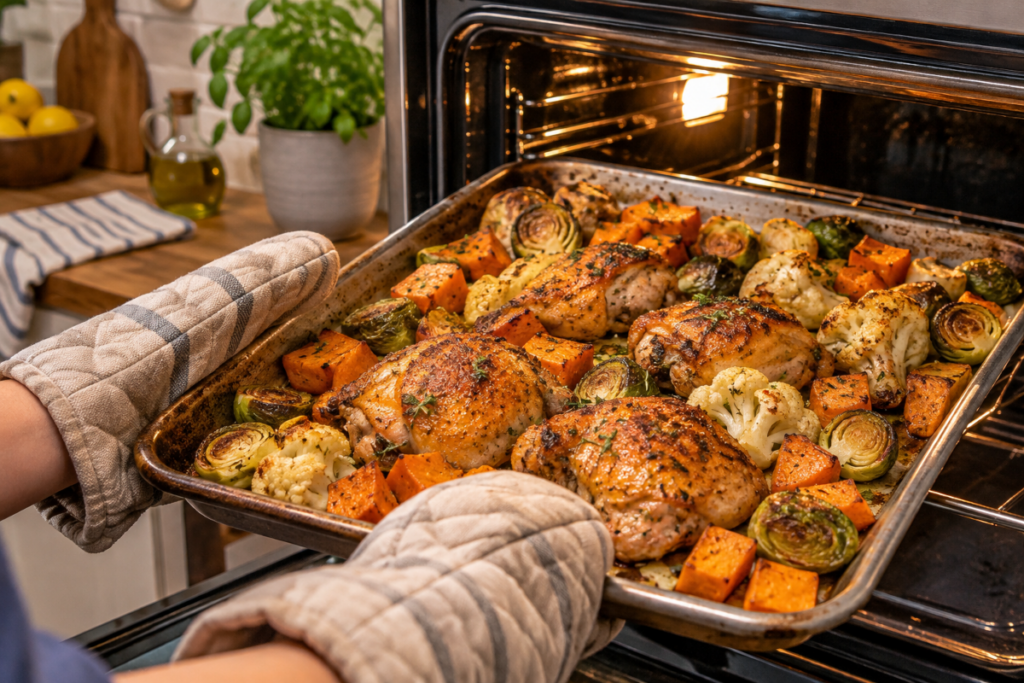
Rosemary Chicken Thighs with Brussels Sprouts and Sweet Potatoes
Boneless chicken thighs are relatively forgiving during roasting because their higher fat content compared with chicken breast helps them retain moisture. Brussels sprouts develop browned outer leaves, while sweet potatoes provide a soft interior and mild sweetness that complements rosemary and garlic. The combination works particularly well as a substantial evening meal.
Cut the sweet potatoes into small cubes and halve larger Brussels sprouts to improve cooking consistency. Depending on the thickness of the chicken thighs and the size of the vegetables, the sweet potatoes may benefit from an earlier start. A little Dijon mustard can be served alongside the finished meal if mustard seeds and the other ingredients in the product suit your dietary preferences.
Ginger Garlic Shrimp with Broccoli and Mushrooms
Shrimp cook considerably faster than most cuts of meat, making them useful when a shorter roasting time is desirable. Broccoli and mushrooms offer contrasting textures and work well with ginger, garlic, and olive oil. Purchasing peeled and deveined shrimp can substantially reduce the preparation involved.
Begin roasting the vegetables before adding the shrimp, giving the mushrooms time to release moisture and the broccoli an opportunity to brown. Add the seasoned shrimp toward the end of cooking and remove the pan when the seafood is properly cooked. Fresh lime juice and chopped cilantro provide a finishing combination that requires no additional cooking.
Herb-Roasted Pork Tenderloin with Carrots and Cabbage
Pork tenderloin has a mild flavor that works well with thyme, sage, rosemary, and garlic. Carrots contribute sweetness, while thick slices of cabbage develop browned edges and tender interiors during roasting. Leaving some of the cabbage core attached to each wedge can help hold the leaves together during preparation.
Cutting the tenderloin into similarly sized medallions generally shortens its cooking time compared with roasting it whole. Give the carrots a head start if they are cut into thicker pieces, and allow the pork its required resting period before serving. A small amount of apple cider vinegar added after roasting complements the sweetness of the vegetables.
Lemon Oregano Chicken with Cauliflower and Red Onion
Cauliflower and red onion provide a useful foundation for a Mediterranean-inspired sheet pan meal. Combined with chicken, olive oil, oregano, garlic, and lemon, they offer plenty of flavor without requiring a separately prepared marinade. Boneless chicken breasts or thighs can be used, although their cooking times and moisture retention will differ.
Cut the cauliflower into smaller florets and the onion into substantial wedges to reduce excessive drying during roasting. Once the chicken and vegetables are properly cooked, add chopped parsley and a few olives if desired. This combination also works well as a cold salad the following day when the leftovers have been stored safely.
Why Roasting Has Its Limits for Lectin Reduction
Roasting develops flavor, softens vegetables, and allows several ingredients to be prepared simultaneously. Its effectiveness as a lectin reduction technique, however, depends on the food, the properties of its lectins, and the conditions under which it is cooked. A high oven temperature alone does not establish that the interior of an ingredient has reached the conditions necessary to inactivate a particular lectin.
Dry oven heat should not be treated as a substitute for the established moist cooking procedures recommended for certain dried legumes. Raw or inadequately cooked red kidney beans can contain high levels of active phytohaemagglutinin, a lectin associated with acute gastrointestinal illness. Health Canada’s guidance on lectins in dry legumes identifies proper soaking and vigorous boiling as necessary preparation steps for dried red kidney beans.
Anyone who includes kidney beans in their eating pattern should prepare them using an appropriate, established cooking method before adding them to a sheet pan meal. Commercially canned kidney beans have already undergone sufficient heat processing to address this particular lectin-related food-safety concern, although that does not establish that they are entirely free of lectins.
The sheet pan formula is best approached as a cooking technique for ingredients that already fit your preferred eating pattern. Roasting provides convenience and desirable culinary qualities without requiring assumptions about the precise lectin content of every finished meal.
Knowing When Your Sheet Pan Dinner Is Ready
An oven set to 425°F does not guarantee that the center of a piece of meat has reached a safe temperature. Ingredient thickness, starting temperature, oven performance, and the amount of food on the pan all affect cooking progress. A digital food thermometer removes much of the uncertainty when preparing mixed sheet pan meals.
The official minimum internal cooking temperature recommendations from FoodSafety.gov establish the following guidelines for common proteins. These are minimum food-safety requirements rather than preferred temperatures for achieving a particular texture.
- Chicken, turkey, and other poultry: 165°F (74°C), including ground poultry.
- Fish: 145°F (63°C).
- Whole cuts of beef, pork, and lamb: 145°F (63°C), followed by a minimum three-minute rest.
- Ground beef, pork, and lamb: 160°F (71°C).
- Shrimp, lobster, crab, and scallops: Cook until the flesh becomes opaque and pearly or white.
Insert the thermometer into the thickest portion of the protein, avoiding contact with bones or the baking sheet. Check multiple pieces when their sizes vary considerably, since one properly cooked piece does not establish that everything on the pan is ready.
Vegetables sharing a pan with raw meat must also be handled carefully. Those exposed to raw poultry juices, for example, should reach 165°F before being served. If vegetables are likely to finish substantially earlier than the accompanying meat, roasting them separately provides better control over both food safety and texture.
Making the Formula Even Easier with Frozen Ingredients
A freezer containing individually portioned fish, chicken, cauliflower, broccoli, and other preferred vegetables provides a useful backup when fresh ingredients are running low. Plain frozen vegetables also eliminate much of the washing and chopping involved in preparing dinner, making the 15-minute target more achievable.
Many frozen vegetables can be roasted directly from frozen when their package instructions permit. They generally release more moisture than fresh vegetables, so adequate spacing and additional roasting time may be necessary. Frozen broccoli may have a softer finished texture than fresh broccoli, but allowing moisture to evaporate before the pan becomes crowded can improve browning.
Frozen meat and seafood require additional planning because their starting temperature affects cooking time. Moving a portion of protein into a refrigerator maintained at 40°F (4°C) or below before it is needed makes it easier to coordinate the following evening’s meal. Keep thawing proteins in suitable containers that prevent juices from dripping onto other foods.
Vacuum-packaged fish requires particular attention during thawing. Clemson University’s Cooperative Extension guidance on thawing vacuum-packed fish explains the food-safety concerns associated with reduced-oxygen packaging. Remove frozen fish from its vacuum-sealed package before refrigerator thawing, and place it in a clean, covered container.
Small Flavor Changes That Prevent Repetitive Meals
Eating roasted chicken and vegetables several times a week can become tiresome when every meal has the same seasoning. Keeping a modest collection of herbs, spices, and finishing ingredients available provides variety without requiring a cupboard full of specialty products or complicated sauces.
Rosemary, thyme, and garlic create an earthy flavor that suits chicken, pork, and root vegetables. Lemon, dill, and parsley complement fish, while ginger, garlic, and lime give shrimp and roasted broccoli a different character. Sage pairs particularly well with sweet potatoes, mushrooms, and pork.
Finishing ingredients can be added after cooking to preserve flavors that may diminish during prolonged exposure to heat. Fresh parsley, lemon juice, delicate herbs, and a drizzle of extra virgin olive oil can brighten roasted ingredients. A spoonful of homemade herb sauce or a little balsamic vinegar can also give leftover vegetables a different flavor.
Commercial seasoning blends remain convenient, but readers restricting particular ingredients should examine their labels. Paprika and chili powder come from nightshade plants, while some prepared marinades and seasoning products may contain wheat, soy, or other ingredients a reader prefers to avoid. Keeping individual seasonings available makes it easier to prepare familiar flavor combinations without repeatedly inspecting ingredient labels.
Preparing Tomorrow’s Meal Without Cooking Twice
Sheet pan cooking fits naturally into a modest meal preparation routine. When sufficient space is available, roasting an additional portion of protein and vegetables requires relatively little extra work. Those ingredients can provide the foundation for lunch or another dinner without repeating the entire preparation process.
Leftover chicken can be shredded and served over leafy greens with olive oil and lemon. Roasted vegetables can be incorporated into an omelet, added to soup, or served alongside another protein. Sweet potatoes can be mashed with olive oil and herbs to provide a different accompaniment for the following evening.
The CDC’s food storage recommendations advise refrigerating perishable foods within two hours, or within one hour when exposed to temperatures above 90°F (32°C). Divide larger quantities into shallow containers for prompt cooling, and keep the refrigerator at 40°F (4°C) or below. Cooked leftovers should generally be consumed within three to four days or frozen for longer storage, and any leftovers being reheated should reach 165°F (74°C).
Labeling containers with their preparation dates removes uncertainty when several different leftovers accumulate throughout the week. Storing proteins and vegetables separately can also provide more flexibility, allowing individual components to be reheated or combined with freshly prepared ingredients as needed.
Creating a Weeknight Routine for Low-Energy Days
A sustainable kitchen routine should account for evenings when enthusiasm for cooking is particularly low. Elaborate meal plans may look appealing on a quiet weekend, but their practical value diminishes when every dinner requires extensive chopping, specialty ingredients, or several stages of preparation. Keeping two or three familiar sheet pan combinations available provides a dependable alternative.
A grocery list containing chicken thighs, frozen broccoli, cauliflower, sweet potatoes, lemons, and onions can support several different dinners. Ingredients can overlap between meals, helping reduce grocery expenses and preventing partially used vegetables from being forgotten in the refrigerator. Frozen proteins and vegetables can remain available as backup ingredients rather than being assigned to a specific evening.
For someone tracking individual food tolerance, the simplicity of these meals offers another practical advantage. Meals containing a small number of familiar ingredients are easier to document, and changing one ingredient at a time can make patterns easier to recognize. Recording preparation methods and approximate portions alongside symptoms provides more useful context than recording ingredient names alone, although these observations cannot establish that lectins are responsible for a particular reaction.
Consider keeping a dedicated section of the freezer and pantry for particularly demanding evenings. Individually portioned proteins, plain frozen vegetables, olive oil, and a handful of familiar seasonings can eliminate much of the shopping and preparation associated with an unplanned dinner. Having those ingredients ready turns an otherwise demanding cooking session into a manageable household routine, even when there is little energy left to spare.