

For most of human history, movement wasn’t something people “fit in” between desk work, errands, and nightly scrolling, it was simply part of being alive. The body was engineered to walk, bend, carry, reach, gather, and roam. Digestion evolved inside that rhythm, relying on the subtle contractions and gravitational shifts created by a life in motion. Today, though, modern living has tucked most of us into chairs for hours at a time. And while the mind learns to live with sitting, the gut does not negotiate so easily.
When digestion slows, the rest of the body feels it. Meals linger longer than they should. Inflammation smolders. A sense of heaviness settles in. And the immune system, deeply intertwined with the gut, begins responding to discomforts we might not even notice consciously. What’s fascinating is that the solution doesn’t necessarily require intense workouts, sweat-drenched gym visits, or exhausting routines. Often, the most profound digestive improvements come from something much simpler: gentle movement.
Walking after meals. Light stretching during breaks. Standing more than sitting. Even the subtle sway of shifting weight from foot to foot has effects that echo deep inside the digestive system. Movement isn’t merely a calorie-burner; it’s a biological signal. And that signal instructs the gut and immune system to work in harmony instead of distress.
This narrative explores why small, frequent movement, especially low-intensity activity, has such a powerful impact on digestion and inflammation, and why your body feels profoundly different when you choose motion over stillness.
The Stillness Problem: What Happens to Digestion When We Sit Too Much
It’s easy to underestimate how dramatically stillness affects the gut. Sitting for long periods appears calm and harmless from the outside, but internally it changes the physics of digestion. Blood flow slows. Peristalsis, the wave-like motion of the intestines, becomes sluggish. The abdominal cavity compresses, reducing the space the digestive organs need to function optimally.
Most people notice this in small, everyday ways: feeling overly full from a normal meal, subtle bloating, sluggish bowel movements, or what feels like random discomfort after eating. Those sensations often aren’t random at all. They are signs that food isn’t moving efficiently through the digestive tract.
The longer food sits, the more opportunity there is for fermentation where it’s not supposed to happen. Gas accumulates. The gut’s bacterial communities shift their behavior. And the immune system, which monitors the entire digestive tract like a watchful guard, detects irritation. Even mild irritation can lead to a cascade of inflammatory signals, especially in people who already struggle with sensitive digestion or inflammatory conditions.
Stillness is not neutral. The gut notices it, reacts to it, and often struggles within it. And yet, the moment you start to move, even gently, the entire picture changes.
Walking: The Body’s Oldest Digestive Aid
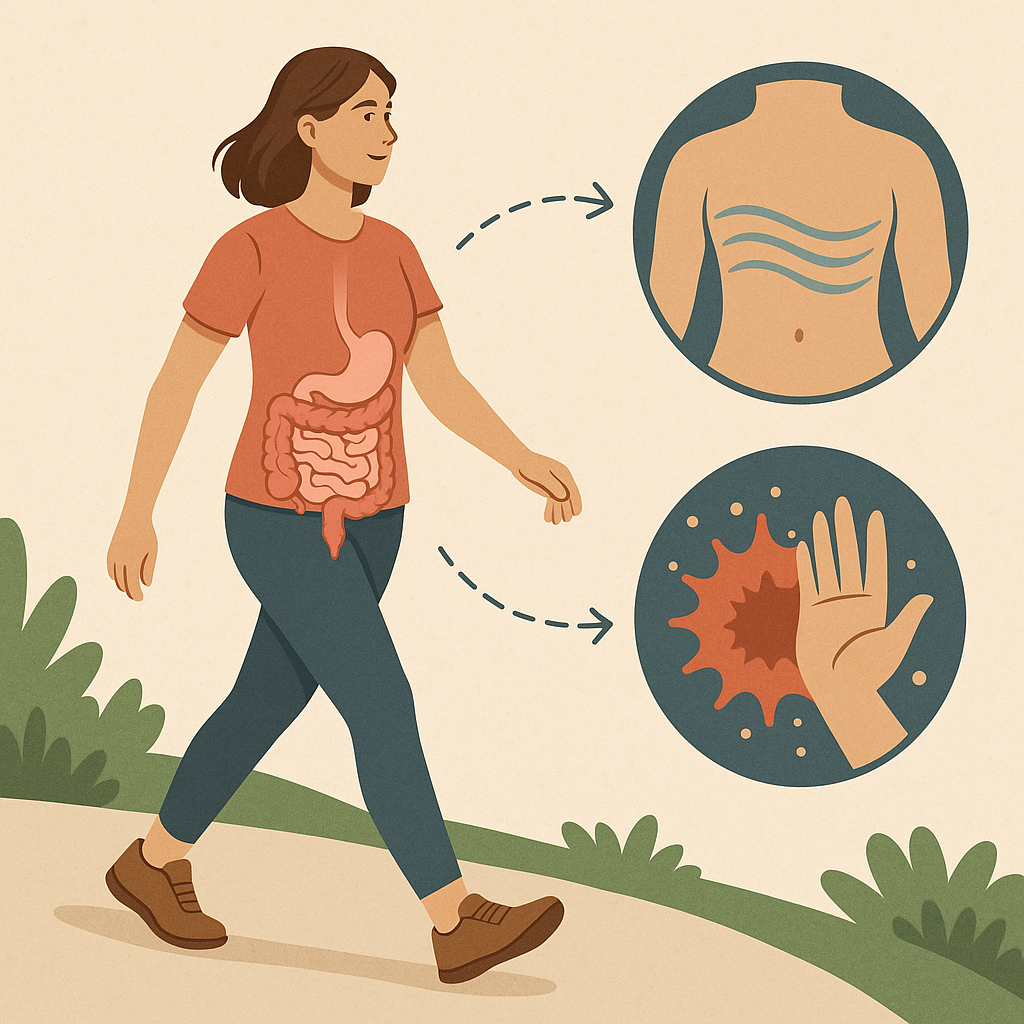
Walking is one of the most underrated digestive tools available. A simple stroll after eating is enough to stimulate peristalsis, encourage gastric emptying, and improve blood flow to the intestines. That means food moves more smoothly, nutrients are absorbed more efficiently, and discomfort is less likely to arise.
But on a deeper level, walking soothes the nervous system. The rhythm of steps, the predictable swing of the arms, and the shift of the torso signal safety to the brain. When the brain relaxes, the gut relaxes, which matters because the two are connected through a vast network of nerves known as the gut-brain axis.
A calm gut digests better than a tense one. Think about how you feel on a stressful day when you eat quickly and sit back down immediately afterward. Compare that with how you feel after a peaceful meal followed by a slow stroll. The difference is not imagination; it’s physiology responding to motion.
Walking also has another effect: it disperses inflammation. Each step helps move lymph fluid through the body, clearing out cellular waste, calming inflammatory pathways, and supporting the immune system’s regulatory functions. Inflammation thrives in stagnation; movement interrupts it.
A ten-minute walk after meals isn’t a workout, it’s communication. It tells the digestive system, “Time to get to work,” and reminds the immune system, “Everything is under control.”
Light Movement Throughout the Day: The Secret Most People Overlook
Most people assume that a daily workout is enough to protect their health. But if that workout is followed by ten hours of sitting, the benefits are muted. The gut interprets long periods of stillness the same way regardless of whether you hit the gym earlier.
This is where low-intensity, frequent movement becomes uniquely powerful.
Standing for a few minutes. Stretching the spine. Rotating the hips. Taking stairs instead of elevators. Even pacing during a phone call. These micro-movements mimic the natural rhythm the body expects. It’s motion woven throughout the day, not isolated bursts of exercise.
When these gentle activities are sprinkled into daily life, the digestive system stays more “awake.” Blood circulates freely. Neural pathways stay engaged. The intestines continue their wave-like contractions. And inflammation is less likely to gather in stagnant pockets of tissue.
Light activity also changes how the body metabolizes food. Muscles become slightly more active, even at rest, and they siphon circulating glucose from the bloodstream more efficiently. This helps stabilize post-meal blood sugar, which in turn reduces inflammatory spikes. A steady bloodstream means steadier digestion.
This is why cultures that walk frequently, garden daily, or perform household tasks throughout the day tend to have fewer digestive complaints despite not emphasizing formal exercise routines. Their lifestyles maintain the gentle momentum the body thrives on.
The Gut’s Reaction to Gentle Motion: Why It Works Biologically
Movement doesn’t just help digestion. It activates specific biological mechanisms designed for it.
Here are the most important ones, explained narratively rather than clinically:
1. Motion Tells the Gut to “Wake Up” – Inside the walls of the intestines are smooth muscles that naturally contract in waves to drive food forward. When you move your body, those muscles take the hint and join in. It’s like tapping a dozing friend on the shoulder, they perk up.
2. Blood Flow Shifts in Favor of Digestion – Sitting compresses the abdominal cavity, slowing circulation. Movement lifts that compression and redistributes blood toward the digestive organs, giving them the oxygen and nutrients they need to work optimally.
3. Inflammation Begins to Clear Rather Than Accumulate – Movement acts like a pump for the lymphatic system. Unlike the bloodstream, the lymph system has no heart to keep fluid circulating. It depends entirely on your motion. Every stretch, twist, and step helps pull inflammation out of tissues and move it toward areas where the body can neutralize it.
4. The Nervous System Downshifts into a Digestive State – The digestive system functions best under the parasympathetic nervous system that is often called “rest and digest.” Gentle movement, especially rhythmic activities like walking or light stretching, signals the body to enter this calmer state.
5. Microbial Balance Improves – A smoothly functioning gut environment supports a balanced microbiome. Motion prevents stagnation, reducing the likelihood of bacterial overgrowth or fermentation in the wrong places.
Together, these effects paint a clear picture: gentle activity isn’t an optional wellness bonus; it’s a biological requirement for optimal digestive health.
Movement as an Anti-Inflammatory Practice
Inflammation often feels like an internal fog; hazy fatigue, subtle aches, or a vague sense that the body is working harder than it should. But inflammation is often born from very specific triggers: slowed digestion, delayed clearance of waste, unstable blood sugar, poor circulation, and heightened stress responses.
Movement addresses every one of those triggers.
- Stabilizes blood sugar by increasing muscle uptake.
- Improves circulation, delivering nutrients and clearing waste.
- Lowers cortisol, reducing stress-related inflammation.
- Activates the lymphatic system, clearing inflammatory byproducts.
- Assists the gut so food doesn’t stagnate and irritate the intestines.
The immune system experiences all of these improvements as signals of safety. When the body is in motion, not frantic exercise, but natural, gentle motion, the immune system assumes the environment is safe enough to reduce its defensive posture.
This is why inflammation drops in people who walk regularly, stretch throughout the day, or practice gentle movement routines like tai chi or yoga. The immune system recognizes motion as an indication that the body is functioning within its natural design.
How Light Activity Supports a Low-Lectin Lifestyle
For those living low-lectin, whether out of sensitivity, inflammation, or personal choice, movement becomes even more important.
Many high-lectin foods can cause digestive distress when eaten in large amounts or in improperly prepared forms. Even low-lectin eaters experience occasional discomfort from accidental exposures, stress, or changes in routine.
Movement helps the body manage these moments with greater ease.
- A short walk can reduce the severity of post-meal bloating.
- Gentle stretching can ease abdominal tension caused by irritation.
- Light daily activity can speed the clearance of inflammatory compounds.
- Consistent motion creates resilience, making the digestive system more adaptable.
The lifestyle isn’t just about what you eat. It’s about how the body responds to food. Movement is one of the simplest ways to guide that response in a healthier direction.
You Don’t Need Intense Exercise, You Just Need to Move More Often
One of the most freeing truths about digestion and inflammation is that you don’t need to turn your life into a training program. You don’t need equipment. You don’t need a coach. You don’t need a gym membership. You don’t need long hours carved out of busy days.
You only need motion. Repeated, gentle motion.
Here’s what that can look like without lists, just real life:
- After lunch, instead of returning immediately to work, you might walk down the street and back, letting your body glide naturally while your gut begins its work.
- During long desk sessions, you might stand up every 30 minutes, not for exercise, but simply to remind your body that it isn’t trapped.
- In the evening, you might stretch in a slow, almost meditative way, unwinding the pressure that has built up in your torso and abdomen throughout the day.
- On days when you feel inflamed or sluggish, you might let your body choose the pace instead of forcing intensity. Gentle movement often does more than pushing harder ever could.
These small changes add up. They are cumulative, not dramatic. Movement layers itself into your biology the same way sunlight accumulates warmth on the skin.
A Body in Motion Is a Digestive System at Peace
When people begin incorporating gentle activity into daily life, they often notice effects that seem almost too simple to be real:
- Meals feel lighter.
- Bowel movements become more regular.
- Bloating becomes less intrusive.
- Post-meal fatigue fades.
- Stress feels more manageable.
- Inflammation quiets down.
It feels like a return to normal, not a new, sensational state, but a restoration of how the body wants to feel. A digestive system that works with you instead of against you. An immune system that remains calm instead of reactive. A body that feels like it’s participating in its own well-being.
The human body was designed to live in movement. Not extreme movement. Not punishing movement. Just natural motion woven into the day. When we reintroduce that motion, step by step, stretch by stretch, the gut notices. The immune system notices. And the entire body begins to shift toward balance.
Movement is medicine. Not metaphorically, but biologically. And once you begin to feel the difference, it’s hard to imagine living without it.