


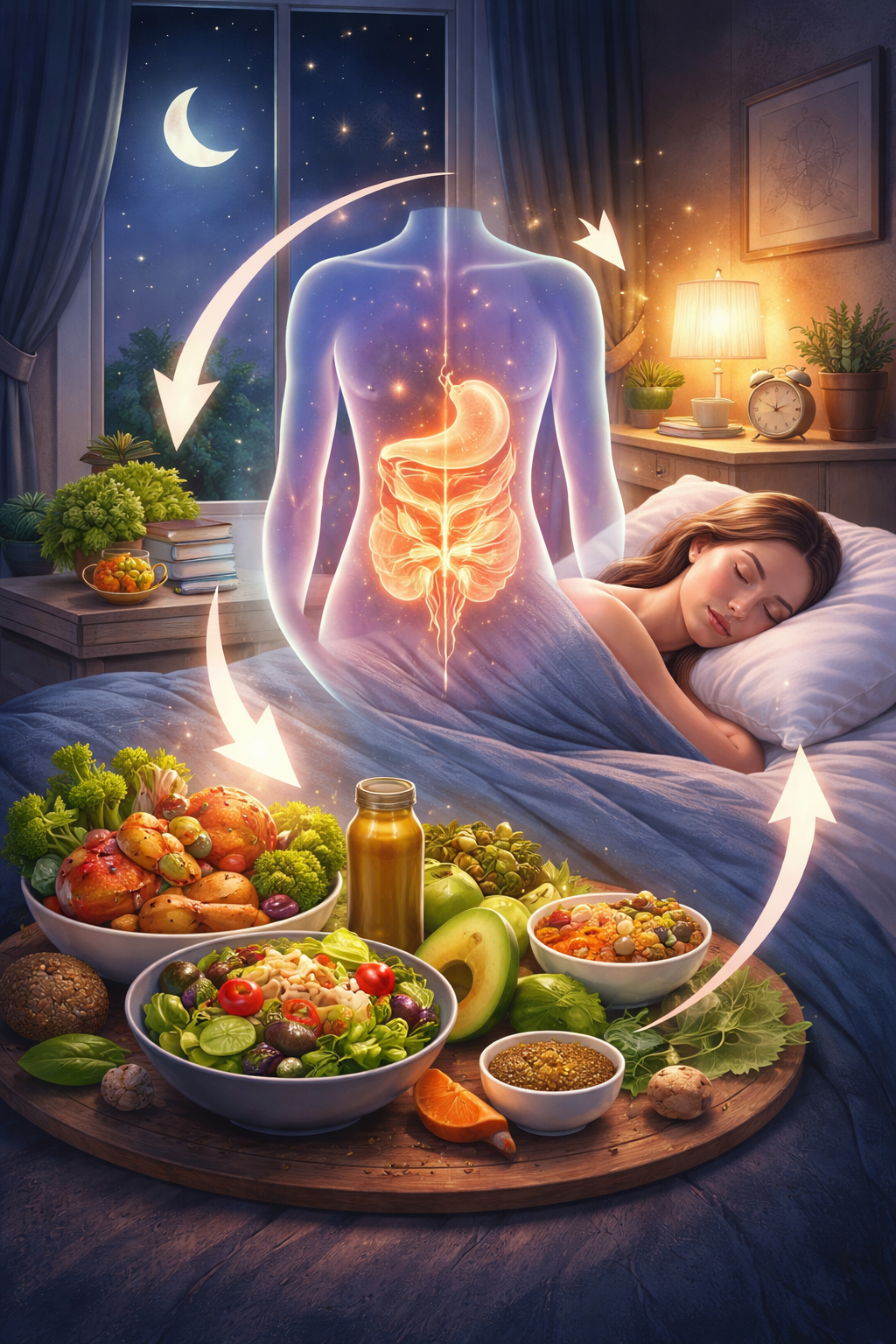
Many people begin a low-lectin lifestyle because of obvious reactions. Bloating after meals. Joint stiffness the next morning. Brain fog that seems to drift in and out without warning. What often goes unnoticed is how deeply these reactions intertwine with sleep. Not just how long you sleep, but how well your body moves through its natural sleep cycles. When sleep becomes fragmented or shallow, food reactions tend to feel louder, more unpredictable, and harder to recover from. Conversely, when sleep is steady and restorative, tolerance often improves even when the diet is not perfect.
Sleep is not simply a passive shutdown. It is an active biological repair process. Hormones are released in specific phases. The gut lining renews itself. The immune system recalibrates. All of these processes directly affect how the body handles lectins and other dietary stressors. Understanding this relationship can quietly change how you approach both food and rest, especially during a transition to living low-lectin.
Sleep as a Structured Biological Rhythm
Sleep unfolds in cycles that repeat several times per night. Each cycle moves through lighter stages of sleep, deeper restorative stages, and periods of rapid eye movement. These phases are not interchangeable. Deep sleep supports tissue repair and immune regulation. REM sleep plays a role in nervous system balance, emotional processing, and hormone signaling. Disruptions in any of these phases can ripple into digestion and inflammation.
When sleep cycles are shortened or interrupted, the body loses time in its deeper stages. That loss matters for anyone sensitive to lectins. The gut lining relies on nighttime repair to maintain its barrier function. Without adequate deep sleep, intestinal permeability can increase slightly, allowing lectins to interact more aggressively with immune tissue. This does not mean sleep loss creates lectin sensitivity from scratch, but it can amplify existing vulnerabilities.
Over time, inconsistent sleep trains the body to remain in a state of low-grade alert. Cortisol rises earlier in the night. Melatonin production becomes irregular. These hormonal shifts influence how food is metabolized the following day, sometimes making previously tolerated foods feel suddenly problematic.
The Gut Does Not Sleep When You Do
Digestion slows during sleep, but the gut does not shut down. Instead, it switches tasks. During nighttime rest, the digestive system focuses less on breaking down incoming food and more on maintenance. Cells lining the intestines turn over rapidly. Beneficial microbes rebalance. Inflammatory signaling is dampened when sleep is deep and uninterrupted.
Lectins complicate this process because they bind to carbohydrate structures along the gut lining. When the lining is already inflamed or stressed, lectins can cling more persistently, increasing irritation. Sleep deprivation does not cause this binding, but it reduces the body’s ability to disengage from it. This is one reason people often notice worse reactions after poor sleep, even if their diet has not changed.
Living low-lectin becomes easier when the gut has nightly opportunities to heal. Sleep provides that window. Without it, the margin for error narrows.
Blood Sugar, Cortisol, and Nighttime Eating
Sleep cycles also regulate blood sugar control. Poor sleep reduces insulin sensitivity, meaning glucose lingers longer in the bloodstream. This effect can occur after even a single night of disrupted sleep. When insulin signaling is impaired, inflammatory responses to food increase, including responses to lectins.
Cortisol plays a central role here. Normally, cortisol drops in the evening and rises gradually toward morning. When sleep is irregular, cortisol may spike late at night or remain elevated throughout the night. Elevated cortisol encourages cravings for quick energy foods the next day, often pushing people toward refined carbohydrates or lectin-containing staples like grains and legumes.
Late-night eating compounds the issue. Digesting food during periods when the body expects to be repairing itself interferes with sleep depth. Lectin-containing foods eaten late may linger longer in the gut, increasing exposure time. Over weeks or months, this pattern can create a feedback loop where poor sleep worsens food reactions, and food reactions disrupt sleep.
Inflammation Feels Louder When You Are Tired
Inflammation is not only a physical sensation. It is also interpreted through the nervous system. Fatigue lowers the threshold at which discomfort becomes noticeable. A mild reaction after a high-lectin meal may feel tolerable on a well-rested day but overwhelming after fragmented sleep.
This amplification does not mean symptoms are imagined. Rather, the nervous system becomes more sensitive when sleep-deprived. Pain perception increases. Gut motility becomes erratic. Signals between the brain and digestive system lose precision. For someone transitioning to low-lectin eating, this can make it harder to identify true triggers. Foods may appear inconsistent, reacting one day and not the next, when the underlying variable is actually sleep quality.
Rested bodies provide clearer feedback. Fatigued bodies distort it.
REM Sleep and Emotional Food Memory
REM sleep plays a unique role in how we remember food experiences. During REM phases, the brain processes emotional memory and pattern recognition. If sleep is disrupted, emotional associations with food can become skewed. A bad reaction may feel more threatening than it objectively is, or a mild discomfort may be remembered as severe.
This matters because fear and stress around food increase digestive reactivity. Stress hormones alter gut motility and immune response, creating real physiological changes. Inadequate REM sleep can therefore magnify anxiety around eating, making dietary transitions feel heavier than they need to be.
Low-lectin living is not meant to be punitive or fearful. Quality sleep helps keep food experiences grounded in reality rather than emotional residue.
The Morning After a Bad Night
Many people notice that reactions often appear the day after poor sleep, not always immediately after a meal. This delayed pattern can be confusing. It is tempting to blame the most recent food choice when the true issue began the night before.
After disrupted sleep, inflammatory markers rise. Gut permeability increases slightly. Blood sugar regulation falters. When lectins are introduced into this environment, the body reacts more strongly. This can manifest as joint stiffness, skin irritation, sinus pressure, or cognitive fog hours after eating.
Recognizing this timing can reduce unnecessary restriction. Not every reaction signals a new intolerance. Sometimes it signals a sleep debt.
Sleep Consistency as a Dietary Tool
Living low-lectin is often framed as a food list. What to avoid. What to substitute. While those details matter, sleep consistency quietly shapes how effective those choices become. Going to bed and waking at consistent times supports predictable hormone release. Predictable hormones support stable digestion.
Consistency does not require perfection. It requires rhythm. Even small improvements in sleep timing can widen the body’s tolerance window. People often find that once sleep stabilizes, occasional dietary missteps carry fewer consequences. The body recovers faster. Symptoms resolve sooner.
This does not mean lectins become harmless, but it does mean the body becomes more resilient.
Nighttime Recovery and Immune Modulation
The immune system recalibrates during sleep. Specific immune cells become more active at night, clearing debris and regulating inflammatory responses. When sleep cycles are shortened, immune signaling remains elevated into the daytime. This heightened state makes the immune system more reactive to dietary proteins, including lectins.
Over time, chronic sleep disruption can lock the immune system into a defensive posture. Food reactions become exaggerated. Healing slows. This pattern is particularly relevant for individuals with autoimmune tendencies or chronic inflammatory conditions, who often seek low-lectin diets for symptom relief.
Restorative sleep does not replace dietary changes, but it allows them to work as intended.
Gentle Adjustments That Support Both Sleep and Digestion
Improving sleep quality does not require dramatic interventions. Simple, steady adjustments often yield the greatest benefit. Eating the final meal earlier in the evening allows digestion to wind down before sleep. Reducing evening exposure to bright light supports melatonin production. Maintaining a calm bedtime routine signals safety to the nervous system.
From a low-lectin perspective, choosing evening meals that are lighter and easier to digest can reduce nighttime gut activity. Cooked vegetables, clean proteins, and simple fats tend to sit more comfortably than dense starches or high-lectin foods. This supports deeper sleep cycles and more effective overnight repair.
The goal is not rigidity, but alignment.
When Sleep Becomes the Missing Piece
Many people commit to living low-lectin with dedication, yet feel stalled in their progress. Symptoms improve but do not fully resolve. Energy remains inconsistent. Food reactions seem unpredictable. In these cases, sleep is often the overlooked factor.
Without sufficient deep and REM sleep, the body struggles to integrate dietary improvements. The gut repairs more slowly. Hormonal balance remains unstable. The nervous system stays on edge. Addressing sleep does not require abandoning dietary goals. It completes them.
The body heals in layers. Food is one layer. Sleep is another. Ignoring either limits the whole.
A Lifestyle, Not a Checklist
The relationship between sleep cycles and food reactions reveals something important about living low-lectin. It is not a checklist of forbidden foods. It is a lifestyle that supports the body’s natural rhythms. Sleep and digestion evolved together. Separating them creates friction.
When sleep is respected, the body communicates more clearly. Food reactions become easier to interpret. Recovery accelerates. The low-lectin lifestyle feels less like constant vigilance and more like quiet cooperation with the body.
In this sense, sleep is not separate from dietary healing. It is part of the same conversation. One happens at the table. The other happens in the dark. Both shape how the body responds, recovers, and ultimately thrives.