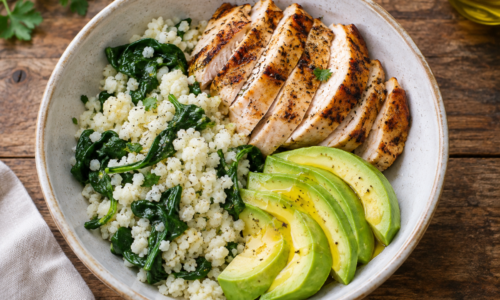
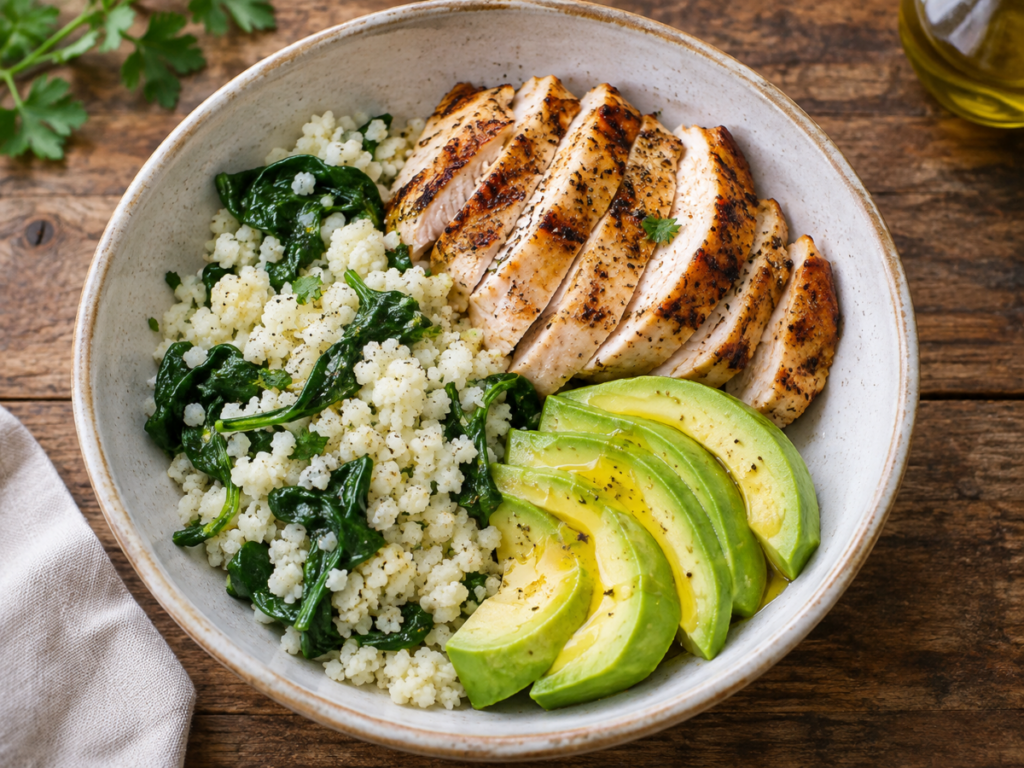
A satisfying low-lectin meal does not require an elaborate recipe or an extensive collection of specialty ingredients. A bowl built around three components, a vegetable-rich base, a dependable protein source, and a well-chosen fat, offers a practical way to prepare lunches and dinners without starting from scratch every time. The ingredients can change throughout the week, while the basic preparation method remains familiar.
This approach is particularly useful when conventional meal staples such as wheat pasta, certain grains, or legumes are being limited. Rather than searching for a direct replacement for every restricted ingredient, the bowl begins with vegetables and proteins that already fit the intended eating pattern. A finishing fat adds richness and flavor, while herbs, seasonings, and optional starches provide opportunities for variety.
The formula also makes leftovers easier to use. Yesterday’s roasted chicken can become the protein in a cauliflower rice bowl, while cooked vegetables from dinner can form the foundation for eggs or seafood the following day. Keeping the components flexible reduces preparation work and allows meals to be adjusted according to available ingredients, appetite, and household preferences.
Understanding the Three-Step Bowl Formula
The basic formula draws on established nutritional principles while allowing for the ingredient choices associated with low-lectin eating. The Harvard Healthy Eating Plate emphasizes vegetables, appropriate protein sources, whole grains, and healthy oils. A low-lectin bowl adapts some of these principles by placing greater emphasis on selected vegetables and proteins, with compatible carbohydrate sources added as needed.
Each component contributes something different to the meal. Vegetables provide fiber, water, vitamins, and minerals, while protein supplies amino acids needed for the maintenance and repair of body tissues. Dietary fats contribute energy, supply essential fatty acids, and help the body absorb fat-soluble vitamins. The nutritional composition of the finished bowl depends on the ingredients and portions used, so the formula serves as a framework rather than a fixed nutritional prescription.
For everyday preparation, the three components can be selected independently. A single vegetable base can accompany different proteins, and the same cooked protein can be paired with several combinations of vegetables. This flexibility makes it possible to prepare meals from ordinary grocery purchases without relying on a collection of specialized low-lectin recipes.
Step 1: Build a Vegetable-Rich Base
The base determines much of the bowl’s volume, texture, and flavor. For someone following a low-lectin approach, cooked nonstarchy vegetables offer considerable flexibility without depending on conventional wheat-based products or bean mixtures. Cauliflower rice, sautéed cabbage, spinach, kale, zucchini, asparagus, and broccoli are useful starting points.
Cauliflower rice is especially convenient because its small pieces distribute evenly throughout a bowl and absorb seasonings readily. Fresh cauliflower can be grated or pulsed in a food processor, then sautéed until tender and much of its released moisture has evaporated. Frozen cauliflower rice works similarly, although it may require additional cooking time to remove excess water. Allowing moisture to evaporate before adding the other ingredients helps prevent the finished bowl from becoming watery.
Zucchini provides a softer base and works well with poultry, seafood, and eggs. Thinly sliced zucchini can be sautéed briefly, while spiralized zucchini offers a noodle-like presentation. Both preparations release moisture during cooking, so they are generally best prepared shortly before serving. Cooking zucchini in a relatively uncrowded skillet helps excess moisture evaporate rather than collect around the vegetables.
Leafy greens offer another option, particularly when combined with vegetables that retain more structure. Spinach cooks quickly and reduces considerably in volume, while kale and collard greens usually benefit from longer cooking to soften their tougher leaves and stems. A mixture of sautéed cabbage, carrots, and spinach provides contrasting textures and can serve as a foundation for several different protein choices.
Adding Starches When the Meal Needs More Substance
A base made entirely from nonstarchy vegetables may be appropriate for a lighter meal, but it may not provide enough energy for everyone. Peeled, cooked sweet potatoes can add carbohydrates and a naturally sweet flavor, while millet or sorghum may be options for people who include those grains within their dietary approach. Neither grain should automatically be classified as lectin-free, and their suitability depends on the specific food, preparation method, and restrictions being followed.
Millet and sorghum behave differently during cooking. Millet can develop a fluffy or softer consistency depending on the variety and amount of cooking liquid, while whole sorghum generally retains a firmer, chewy texture. Both can be cooked according to their package directions and portioned into bowls as needed. Sorghum works particularly well alongside roasted vegetables, while softer millet can provide a foundation for poultry or sautéed greens.
The amount of starch included can reflect the purpose of the meal. A substantial dinner after physical activity may call for more carbohydrates than a small lunch, and people with higher energy requirements may need additional food beyond the three basic components. Excluding grains and legumes without accounting for the nutrients and energy they provide can make a restrictive eating pattern unnecessarily difficult to maintain.
What Vegetable Preparation Does to Lectins
Cooking vegetables changes their texture, moisture content, and some of their nutritional characteristics. Heat softens plant tissues, which may make certain vegetables easier to chew and more comfortable for people who have difficulty tolerating large portions of raw produce. However, improved tolerance after cooking does not establish that lectins were responsible for previous digestive discomfort.
Lectins are a diverse group of proteins, and their responses to food preparation vary. The European Food Safety Authority’s 2026 assessment of plant lectins in food explains that appropriate processing can deactivate certain lectins, with particular attention to those found in improperly prepared beans. Its risk assessment focused on phytohaemagglutinin because sufficient evidence was available to characterize the risk associated with that lectin. These findings should not be interpreted as proof that cooking removes every lectin from vegetables or that reducing lectin activity necessarily improves human health.
Peeling or removing seeds from selected vegetables may be part of someone’s preferred low-lectin preparation routine. These techniques also change texture, edible fiber, and the amount of usable produce, while their effects on lectin activity cannot be generalized across different plants. When the objective is simply to make a vegetable more pleasant to eat, ordinary culinary considerations such as tenderness, moisture, and flavor provide useful guidance.
Step 2: Add a Satisfying Protein
Protein gives the vegetable base greater substance and contributes nutrients that may otherwise be limited in a lighter meal. Fish, poultry, eggs, and seafood are familiar choices that work well with a wide range of vegetables and seasonings. Rotating these protein sources also provides nutritional variety without requiring a major change in cooking techniques.
Salmon is particularly useful because it supplies protein along with long-chain omega-3 fatty acids. Its naturally rich flavor pairs well with cauliflower rice, spinach, asparagus, and roasted carrots. Leaner fish such as cod and haddock offer a milder alternative, especially when the bowl includes avocado or an olive oil dressing. Fish can be baked, pan-cooked, or prepared in an air fryer, depending on the equipment available.
Chicken and turkey are convenient for meals prepared in advance. Roasted chicken can be sliced or shredded, while ground turkey can be cooked with garlic, herbs, and vegetables directly in a skillet. Chicken thighs contain more fat than breast meat and tend to retain a pleasing texture when reheated carefully. Chicken breast offers a leaner option, although it can become dry if overcooked initially or reheated excessively.
Eggs provide another affordable protein source when there is no prepared meat or seafood available. Scrambled eggs can be folded into cooked greens, while hard-cooked eggs work well in chilled vegetable bowls. A freshly cooked egg also pairs nicely with sautéed cabbage or cauliflower rice. The choice of preparation affects the finished texture more than the basic structure of the bowl.
Choosing Protein Within a Low-Lectin Eating Pattern
Plain animal proteins are generally straightforward choices for someone restricting plant lectins because they do not introduce the plant ingredients commonly targeted by these diets. Prepared protein products require more attention, particularly when they contain breading, soy-based sauces, wheat flour, or seasoning blends. Checking ingredient labels helps identify additions that may fall outside a particular dietary plan.
Plant-based protein sources require a different assessment. Beans and soy foods are restricted in some low-lectin approaches, although properly prepared legumes remain nutritious foods for many people. Their exclusion should be considered a feature of the chosen eating pattern rather than evidence that all legumes are harmful when consumed.
Raw or inadequately cooked kidney beans present a specific, established food-safety concern because they can contain harmful amounts of the lectin phytohaemagglutinin. The FDA’s guidance on naturally occurring food toxins recommends soaking dried kidney beans for at least five hours, discarding the soaking water, and boiling them in fresh water for at least 30 minutes. Low-temperature slow cooking alone should not be relied upon to deactivate this lectin, while properly commercially canned kidney beans have already undergone appropriate processing. This known hazard should not be extended to every lectin-containing food.
Step 3: Finish With a Gut-Friendly Fat
The final component adds richness, flavor, and a more satisfying texture. Extra virgin olive oil and avocado are convenient choices because they can be added directly to cooked ingredients without requiring a separate sauce. Walnuts and macadamia nuts can also contribute dietary fat and a contrasting crunch when they suit the meal.
The expression “gut-friendly fat” is best understood as a fat source that contributes useful nutrients and is comfortably tolerated. It does not mean that a particular oil has been clinically demonstrated to repair intestinal damage or reverse digestive disease. Olive oil has considerable research supporting its use within heart-conscious dietary patterns, but claims about its ability to heal the intestinal lining go beyond what has been established in human clinical research.
The American Heart Association’s guidance on healthy cooking oils recommends replacing saturated and trans fats with sources of monounsaturated and polyunsaturated fats. Olive oil contains predominantly monounsaturated fat and is suitable for many everyday cooking and dressing applications. Avocado provides unsaturated fat along with fiber, while walnuts contribute polyunsaturated fats, including the plant omega-3 fatty acid alpha-linolenic acid.
Matching Fat Sources to the Ingredients
The fat component should complement the protein and vegetables already present. A bowl containing lean chicken or white fish may benefit from a drizzle of olive oil or sliced avocado, while salmon already contains substantial fat and may need little additional richness. Roasted vegetables that were prepared with olive oil may require only a small amount of dressing when assembled.
Preparation temperature also influences how a fat is best used. Extra virgin olive oil works well in many sautéing and roasting applications when kept within suitable cooking temperatures, and its flavor makes it useful for finishing meals. Avocado is generally best added after cooking, especially when its fresh texture is part of the bowl’s appeal.
Coconut oil appears in some low-lectin recipes, although its nutritional composition differs considerably from olive oil. Its high saturated fat content makes it a less favorable everyday choice under established cardiovascular nutrition guidance. It can still contribute a particular flavor or cooking characteristic, but there is no sound basis for treating it as a superior option for intestinal repair.
Fat quantity can also influence meal comfort. Large, rich meals may aggravate reflux or other digestive symptoms in susceptible individuals, regardless of whether the ingredients fit a low-lectin plan. Adjusting the amount of oil, avocado, or nuts may improve the eating experience without requiring an otherwise useful ingredient to be eliminated.
Three Practical Low-Lectin Bowl Combinations
The formula becomes easier to use once several familiar combinations are established. Each example can be prepared with ordinary cookware and adjusted according to the ingredients already available. The seasonings and finishing ingredients provide variety without requiring an entirely different preparation method.
Mediterranean Salmon and Cauliflower Rice Bowl
Begin with cauliflower rice sautéed in olive oil and garlic, then add cooked spinach and roasted asparagus. Place a cooked salmon fillet over the vegetables and finish with fresh lemon juice and chopped parsley. The cauliflower absorbs the seasonings, while the greens and asparagus provide a lighter contrast to the naturally rich salmon.
This combination works well when the cauliflower rice is cooked while the fish is baking. Any excess liquid from the spinach should be drained or cooked away before assembly so that it does not dilute the seasoning. Lemon juice is best added near serving because its fresh acidity complements the fish and vegetables without requiring a heavy dressing.
Herb-Roasted Chicken and Sweet Potato Bowl
Combine peeled, roasted sweet potato with sautéed kale and tender zucchini, then add sliced roasted chicken. A dressing of extra virgin olive oil, lemon juice, and chopped herbs provides flavor without relying on commercially prepared sauces. The sweet potato contributes a softer, slightly sweet contrast to the savory poultry and greens.
This bowl is convenient for advance preparation because the sweet potatoes and chicken can be cooked in larger batches. The zucchini can be sautéed shortly before serving to preserve its texture, while the kale can be reheated with the other vegetables. For a different flavor, rosemary or thyme can replace parsley without changing the underlying ingredients.
Turkey, Cabbage, and Avocado Bowl
Cook ground turkey in a skillet with garlic and preferred seasonings until thoroughly cooked. In a separate pan, sauté shredded cabbage and sliced carrots until tender, then combine them with the turkey. Add freshly sliced avocado just before serving, along with a little lime juice and chopped cilantro if desired.
Cabbage provides enough structure to serve as the primary base, although cooked millet or sorghum can be added when additional carbohydrates are wanted and those grains fit the dietary plan. The turkey can be seasoned differently on another occasion, allowing the same vegetable combination to take on a new flavor. Cooking the cabbage until tender while allowing excess moisture to evaporate prevents the bowl from becoming soggy.
Using Texture and Seasoning to Improve the Finished Bowl
A bowl containing several soft ingredients can become unappealing even when the individual foods are well prepared. Texture deserves attention during cooking, especially when cauliflower rice, zucchini, and leafy greens are combined. Roasted vegetables offer browned surfaces and concentrated flavors, while lightly sautéed vegetables can retain some firmness. Combining different preparations often produces a more appealing result than cooking every ingredient in the same way.
Acidity helps sharpen flavors, particularly in meals containing richer proteins or added oils. Lemon juice works well with fish and leafy greens, while lime can complement turkey, cabbage, and avocado. Fresh herbs provide aroma, and a modest amount of toasted nuts can add crunch. Garlic, rosemary, parsley, thyme, and cilantro can be used in different combinations without relying on elaborate sauces.
Commercial dressings deserve attention because they may contain ingredients excluded from a particular low-lectin plan. Wheat-based thickeners, soy ingredients, added sweeteners, and certain seed-derived ingredients may be relevant depending on the restrictions being followed. A homemade mixture of olive oil, lemon juice, and herbs provides a convenient alternative with a short, recognizable ingredient list.
Seasoning individual components during preparation also improves the final result. Vegetables generally develop better flavor when seasoned as they cook, while poultry and fish benefit from appropriate seasoning before heating. The finishing dressing can then connect the flavors without being responsible for all the seasoning in the meal.
Preparing Bowl Ingredients Ahead of Time
The three-step method becomes especially convenient when several components are available in the refrigerator. A tray of roasted vegetables, a batch of cooked poultry, and washed greens can supply the foundation for multiple meals. Storing proteins, vegetables, and dressings separately allows different combinations to be assembled without sacrificing their individual textures.
Moisture management is particularly useful for cauliflower rice and zucchini. Both can release water after refrigeration, leaving a prepared bowl soggy when reheated. Cooking away excess moisture before storage and keeping dressings separate can improve the result. Delicate ingredients such as fresh avocado and herbs are generally best added immediately before eating.
Advance preparation also requires appropriate food handling. The FoodSafety.gov minimum cooking temperature chart specifies 165°F (74°C) for poultry, including ground turkey, and 145°F (63°C) for fish, or cooking fish until its flesh is no longer translucent and separates easily with a fork. A food thermometer provides a dependable way to check meat temperatures rather than relying on appearance alone.
Cooked perishable ingredients should be refrigerated promptly, within two hours of preparation or within one hour when exposed to temperatures above 90°F (32°C). Dividing large batches into shallow containers allows food to cool more quickly in the refrigerator. Refrigerators should be maintained at 40°F (4°C) or below, and cooked leftovers should be reheated to 165°F (74°C).
The FoodSafety.gov cold storage recommendations specify three to four days of refrigerated storage for cooked meat and poultry leftovers. Portions that will not be eaten within the recommended storage period can be frozen in suitable containers. Dating the containers helps prevent older ingredients from remaining in the refrigerator beyond their recommended storage time.
Shopping for Bowls Without Relying on Specialty Foods
The formula works best when grocery purchases provide several possible combinations rather than ingredients intended for a single recipe. Chicken, eggs, cabbage, carrots, cauliflower, and leafy greens can form the basis of numerous meals, while olive oil serves both cooking and dressing purposes. Fish, sweet potatoes, avocado, and compatible grains can be added according to the week’s menu and available budget.
Frozen vegetables are particularly useful because they reduce preparation time and spoilage. Plain frozen cauliflower rice, broccoli, spinach, and other vegetables can be cooked directly according to package instructions, making them convenient when fresh produce is unavailable. Frozen fish and poultry also help maintain a supply of protein, provided they are stored, thawed, and cooked safely. Choosing unseasoned products makes it easier to control the ingredients.
Expensive specialty foods are not necessary for most of these combinations. Cabbage, carrots, eggs, frozen vegetables, and ordinary cuts of chicken can produce satisfying bowls at a relatively modest cost. More expensive ingredients, including fresh salmon and macadamia nuts, can provide occasional variety without becoming everyday requirements.
Planning around ingredients with several possible uses can also reduce waste. A head of cabbage can become a warm vegetable base, a component of a turkey bowl, or an addition to a soup. Leftover roasted vegetables can accompany eggs the following morning, while extra cooked chicken can be served cold over greens when handled and stored properly.
Adjusting Bowls Around Digestive Tolerance
One advantage of preparing ingredients separately is the ability to change a specific component without redesigning the entire meal. Someone who experiences discomfort after a large serving of raw greens may prefer a smaller portion of cooked spinach or tender zucchini. Another person may find a modest amount of olive oil more comfortable than a substantial serving of avocado. These adjustments can be made while maintaining familiar proteins and vegetables.
Digestive symptoms may reflect several characteristics of a meal, including fiber content, fat quantity, portion size, and individual sensitivity to particular carbohydrates. For example, cauliflower contains fermentable carbohydrates that can contribute to gas or bloating in some people, even when it has been thoroughly cooked. Such a reaction does not establish that lectins were responsible, and changing the vegetable base may be more informative than removing numerous unrelated foods.
A simple meal record can help identify recurring patterns. Recording the base, protein, added fat, approximate portions, preparation method, and subsequent symptoms provides more useful detail than labeling an entire meal as tolerated or poorly tolerated. Comparing meals that differ in only one or two ingredients may help narrow down practical food preferences, although these observations cannot establish a specific biological cause.
Portion sizes can be adjusted just as readily as ingredients. A smaller bowl of eggs and cooked greens may suit a light lunch, while poultry, roasted vegetables, and sweet potato can provide a more substantial dinner. If a particular combination repeatedly causes discomfort, changing the amount of a suspected ingredient before removing an entire food category may preserve more nutritional variety. The resulting meal record can also provide useful context for a registered dietitian or healthcare professional when symptoms persist or dietary restrictions become extensive.