


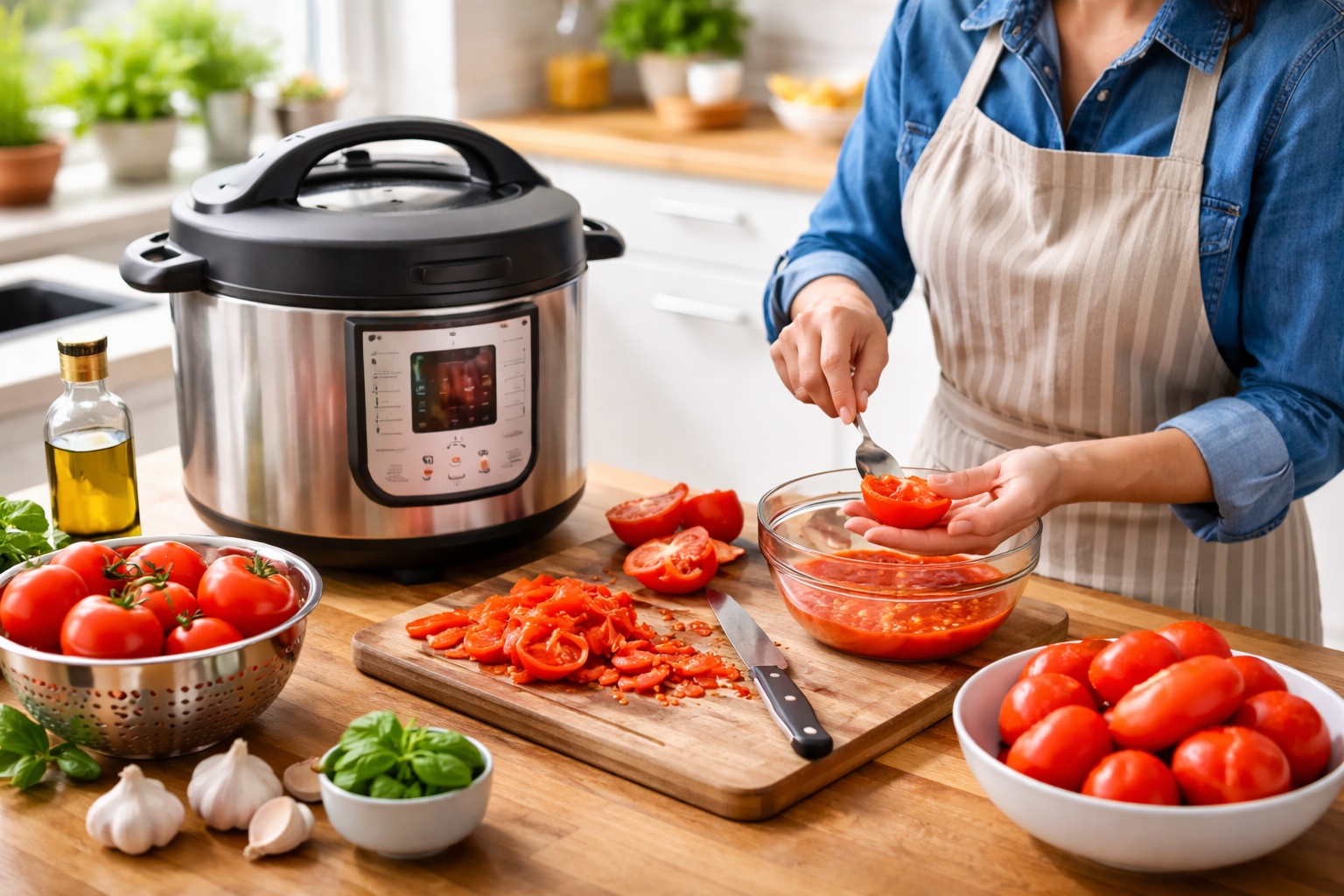
Tomatoes occupy a complicated place in many kitchens. They are central to sauces, soups, stews, and countless comfort foods, yet they also belong to the nightshade family, a group of plants often discussed in relation to lectins and digestive sensitivity. For people exploring a low lectin way of eating, tomatoes are rarely the first food to disappear completely. Instead, they are often adapted. The method of preparation matters as much as the ingredient itself, and pressure cooking has emerged as one of the most reliable ways to make tomatoes easier on the body.
This article explores why tomatoes can be problematic for some people, how lectins behave under heat and pressure, and how pressure cooking changes the structure of tomatoes in ways that may reduce lectin activity. More importantly, it walks through the process in a practical, grounded way, focusing not just on technique, but on why each step matters.
Understanding Lectins in Tomatoes
Lectins are proteins found throughout the plant kingdom. Their role in plants is largely defensive. They help protect seeds and fruits from pests by binding to carbohydrates in the digestive systems of insects and animals. In humans, lectins are not universally harmful. Many people consume lectin containing foods daily with no obvious consequences. Others, however, experience discomfort ranging from bloating and fatigue to joint stiffness or brain fog.
Tomatoes contain lectins primarily in their skins and seeds. These lectins are more resistant to digestion than some other plant proteins. When they reach the gut intact, they may interact with the intestinal lining in sensitive individuals. This interaction does not mean tomatoes are inherently bad, but it does suggest that preparation methods which alter lectin structure can make a meaningful difference.
Why Heat Alone Is Not Always Enough
Cooking tomatoes is nothing new. Simmering sauces, roasting tomatoes, and baking them into dishes has been part of human food culture for centuries. Heat does reduce some lectin activity, but standard cooking temperatures do not always fully deactivate them. Lectins are relatively heat stable compared to other proteins.
This explains why someone may tolerate raw tomatoes poorly, feel slightly better with cooked tomatoes, but still notice symptoms after eating long simmered sauces. Heat helps, but it may not go far enough for those with heightened sensitivity.
Pressure cooking introduces an additional variable. By raising both temperature and pressure, it changes how proteins unfold and denature. This combination can be especially effective at disrupting lectin structures.
What Makes Pressure Cooking Different
Pressure cooking works by trapping steam inside a sealed vessel. As pressure builds, the boiling point of water rises well above 212 degrees Fahrenheit. Inside a pressure cooker, temperatures can exceed 240 degrees Fahrenheit without burning the food.
At these temperatures, proteins behave differently. Lectins that might survive normal boiling can be more thoroughly denatured. Their ability to bind to carbohydrates is reduced, which may make them less biologically active in the digestive tract.
This is why pressure cooking is frequently recommended for other high lectin foods such as beans and legumes. The same principle applies to tomatoes, especially when combined with peeling and deseeding.
Preparing Tomatoes Before Pressure Cooking
The process of lowering lectin exposure begins before the pressure cooker is even turned on. Tomatoes are not uniform in their lectin distribution. The skins and seeds contain higher concentrations than the flesh.
Peeling tomatoes removes a significant portion of lectins. Deseeding further reduces them. While this step may feel tedious, it is one of the most impactful adjustments you can make.
Blanching tomatoes briefly in boiling water makes the skins slip off easily. A shallow cross cut at the base helps the process along. Once peeled, slicing the tomatoes in half allows the seeds and inner gel to be removed with minimal effort.
This preparation step does not eliminate lectins entirely, but it significantly reduces the load before pressure cooking even begins.
The Pressure Cooking Process
Once prepared, tomatoes are ready for the pressure cooker. The goal is not to fry or caramelize them, but to expose them to moist heat under pressure. This environment is ideal for breaking down lectins while preserving the tomato’s core structure.
A small amount of liquid is necessary to generate steam. Tomatoes release their own juice as they cook, but adding a bit of water or broth ensures consistent pressure. Avoid adding acidic ingredients at this stage, as acids can affect cooking dynamics and are better introduced after pressure cooking is complete.
Cooking time matters. For tomatoes, relatively short pressure cooking times are sufficient. Around 10 to 15 minutes at full pressure is often enough to soften the flesh and alter lectin proteins. Longer times may further break down lectins, but they also change texture dramatically, which may or may not be desirable depending on the final dish.
Allowing pressure to release naturally rather than forcing a quick release helps stabilize the contents and avoids splattering acidic liquid.
Texture and Flavor After Pressure Cooking
Pressure cooked tomatoes behave differently than simmered ones. Their cell walls break down more completely, resulting in a smoother, more integrated texture. This is especially useful for sauces, soups, and purees.
Flavor changes are subtle but noticeable. Pressure cooking tends to mellow sharp acidity and deepen sweetness. Because the tomatoes are cooked quickly at high temperature, some volatile aromatics are preserved better than in long simmered sauces.
For those concerned about taste loss, it is reassuring to know that pressure cooking does not strip tomatoes of their character. Instead, it transforms them into a gentler, rounder version of themselves.
Why Some People Still React
Even with careful preparation and pressure cooking, not everyone tolerates tomatoes. Lectins are only one component of nightshade sensitivity. Tomatoes also contain other compounds such as alkaloids and acids that may contribute to reactions.
Lowering lectin levels does not guarantee universal tolerance, but it does remove one major variable. For many people, pressure cooked, peeled, and deseeded tomatoes represent a threshold where enjoyment becomes possible again.
Listening to your body remains essential. Introducing pressure cooked tomatoes in small amounts allows you to observe how your system responds without overwhelming it.
Comparing Pressure Cooking to Other Methods
Roasting tomatoes concentrates flavor but exposes them to dry heat, which may not be as effective at lectin reduction. Slow simmering can help, but temperatures remain lower than those achieved under pressure. Canning uses pressure cooking principles and is one reason many people tolerate canned tomatoes better than fresh ones.
Commercial canned tomatoes are often pressure processed and peeled, which aligns closely with low lectin preparation principles. However, additives, acidity regulators, and processing variability can still affect individual tolerance. Home pressure cooking offers control over every step.
Incorporating Pressure Cooked Tomatoes Into Meals
Once pressure cooked, tomatoes become a flexible base ingredient. They can be blended into sauces, folded into soups, or used as a foundation for stews. Because their lectin activity is reduced, they often integrate more smoothly into meals built around low lectin vegetables and proteins.
Some people choose to freeze pressure cooked tomato portions for convenience. This allows quick access to a prepared ingredient without repeated cooking. Freezing does not reintroduce lectins, making it a practical option for batch cooking.
A Shift in Perspective
Pressure cooking tomatoes is not about fear or restriction. It is about understanding how food interacts with the body and using preparation methods that respect individual physiology. Rather than eliminating tomatoes outright, this approach reframes them as an ingredient that can be adapted.
This shift in perspective is central to a sustainable low lectin lifestyle. Food becomes something to work with, not against. Techniques like pressure cooking expand options rather than narrow them.
Final Thoughts
Tomatoes have fed humans for generations, and for many people, they continue to do so without issue. For others, the path to enjoying them again lies in preparation. Pressure cooking offers a scientifically grounded, practical method for reducing lectin activity while preserving flavor and versatility.
By peeling, deseeding, and pressure cooking tomatoes, you create a version that is gentler on the digestive system and easier to integrate into a low lectin way of eating. It is not a guarantee, but it is a powerful tool.
As with any dietary adjustment, curiosity and patience matter more than perfection. Pressure cooked tomatoes are not about following rigid rules. They are about giving your body a version of food it is more likely to welcome.