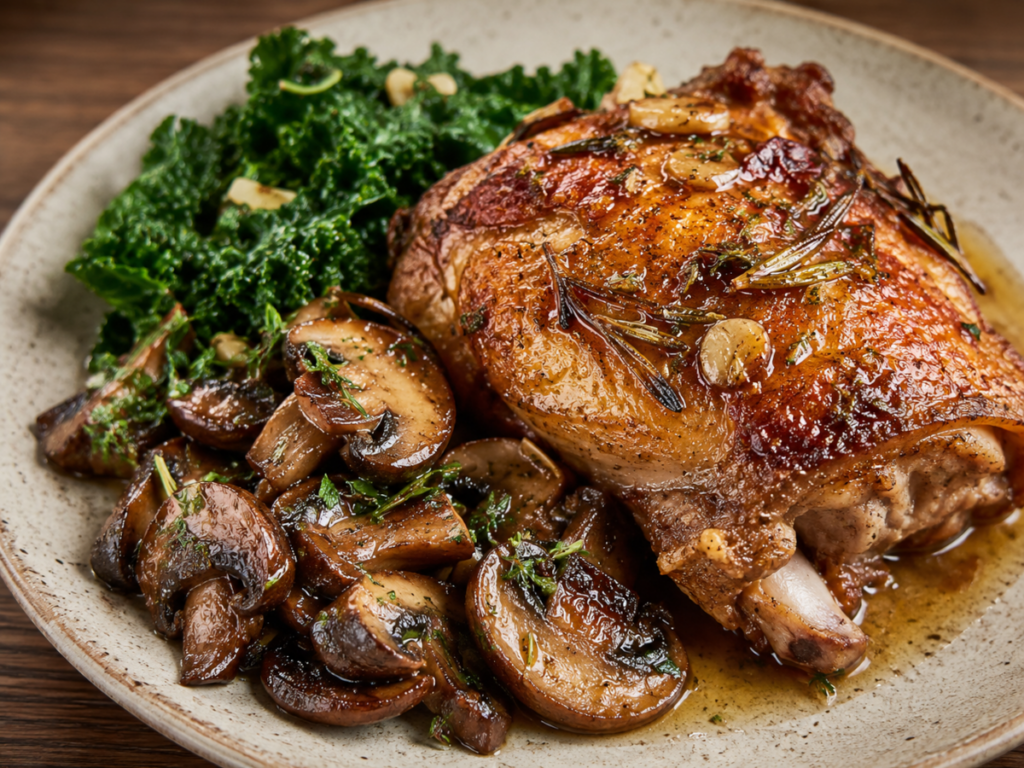
Turkey has been trapped in the holiday category for far too long. Most people picture a massive bird, an overcrowded oven, and several hours of stressful temperature checking. Turkey thighs offer a far easier path. They provide rich dark meat, crispable skin, forgiving cooking times, and enough natural flavor to carry a simple meal without a complicated sauce.
This version pairs garlic and rosemary roasted turkey thighs with cremini or shiitake mushrooms browned in ghee and fresh herbs. The combination feels substantial without relying on bread, pasta, potatoes, beans, or sugary glazes. For someone building meals around lower-lectin ingredients, it checks several useful boxes. The protein is satisfying, the mushroom side cooks quickly, and the ingredient list remains easy to understand.
It also tastes like real comfort food. That matters.
Why Turkey Thighs Deserve More Attention
Turkey breast gets most of the attention because it is lean and familiar. It is also easy to dry out. Thigh meat contains more fat and connective tissue, which gives it a deeper flavor and a wider margin for error in the oven. A few extra minutes usually will not ruin it.
Bone-in, skin-on thighs are especially good for roasting. The bone helps the meat cook steadily, while the skin protects the surface and renders fat into the pan. As the thigh roasts, garlic, rosemary, salt, and turkey drippings combine into a simple pan seasoning that smells far more complicated than it actually is.
The skin is not merely decorative. Properly dried and exposed to steady heat, it becomes crisp and savory. That contrast between browned skin and tender dark meat is one of the main reasons this cut works so well.
For the best result, avoid crowding the pan. Turkey thighs need open space around them so hot air can reach the skin. When pieces are pressed together, they trap moisture and steam instead of roast.
A Practical Low-Lectin Dinner
A low-lectin plate does not need to look like a list of missing foods. It works better when the meal is built around ingredients that already belong together. Turkey is naturally free of plant lectins. Mushrooms are fungi rather than plants, and they are commonly included in many low-lectin eating patterns. Garlic, rosemary, thyme, parsley, ghee, and olive oil add flavor without requiring bottled sauces filled with sweeteners, starches, soy, or other ingredients that some people prefer to limit.
Individual tolerance still matters. Low-lectin eating is not a universal medical treatment, and people can react differently to specific foods for reasons unrelated to lectins. Mushrooms, for example, may bother someone who is sensitive to certain fermentable carbohydrates. That does not make them a bad food. It simply means personal experience remains part of meal planning.
The same reasoning applies to dairy fats. Ghee has had most of its milk solids removed, making it a common choice for people who want buttery flavor with very little lactose or casein. Those with a confirmed dairy allergy should still choose another cooking fat, such as extra-virgin olive oil, avocado oil, or rendered poultry fat.
Cremini or Shiitake Mushrooms
Both mushroom options work, but they produce slightly different dishes. Cremini mushrooms have a mild, earthy flavor and a firm texture. They are easy to find, reasonably priced, and difficult to overpower. They absorb the ghee and herbs while still tasting like themselves. For a family meal or a first attempt, cremini mushrooms are the safe choice.
Shiitake mushrooms bring a stronger savory character. Their flavor is woodier and more intense, which pairs especially well with dark turkey meat. Fresh shiitakes should have their tough stems removed before slicing. The stems can be saved for homemade stock, but they tend to remain chewy in a quick sauté.
A mixture of both mushrooms is even better. Cremini mushrooms supply body and volume, while shiitakes deepen the flavor. Do not soak mushrooms in a bowl of water. They absorb moisture readily, which makes browning more difficult. Wipe away visible dirt with a slightly damp cloth or rinse them very briefly, then dry them thoroughly.
The Secret to Browning Mushrooms
Mushrooms contain a great deal of water. Once they hit a hot pan, that moisture begins to escape. The pan may look dry at first, then suddenly fill with liquid. Patience fixes this. Use a wide skillet and give the mushrooms room. A crowded skillet traps steam and leaves the mushrooms pale and rubbery. Cook them in two batches when necessary. Let the first side sit against the hot pan long enough to develop color before stirring.
Salt timing also affects texture. Adding salt immediately encourages the mushrooms to release water early. That approach is not wrong, but it slows browning. For darker edges, let the mushrooms cook in the hot ghee for several minutes before seasoning them. Fresh herbs should go in near the end. Rosemary can withstand longer cooking, but parsley and thyme retain more aroma when added during the final few minutes.
Roasted Turkey Thighs with Sautéed Mushrooms
Ingredients
- 2 large bone-in, skin-on turkey thighs, approximately 1 1/2 to 2 pounds each
- 1 tablespoon extra-virgin olive oil or avocado oil
- 4 garlic cloves, finely minced or grated
- 1 tablespoon finely chopped fresh rosemary
- 1 teaspoon fresh thyme leaves
- 1 1/2 teaspoons sea salt
- 1/2 teaspoon freshly ground black pepper
- 1/2 teaspoon onion powder, optional
- 1/2 cup unsalted turkey or chicken broth, preferably without added sugar or unnecessary thickeners
- 16 ounces cremini mushrooms, shiitake mushrooms, or a mixture
- 2 tablespoons ghee
- 1 garlic clove, finely minced
- 1 teaspoon fresh thyme leaves
- 1 tablespoon chopped fresh parsley
- 1/4 teaspoon sea salt, plus more to taste
- Freshly ground black pepper, to taste
- 1 teaspoon fresh lemon juice, optional
Instructions
- -- Preparing the Turkey --
- Remove the turkey thighs from the refrigerator about 20 to 30 minutes before roasting. This takes some of the chill off the meat and promotes more even cooking.
- Heat the oven to 400°F. Position a rack in the middle of the oven.
- Pat every surface of the turkey dry with paper towels. Pay close attention to the skin. Surface moisture is the enemy of crispness.
- Mix the olive oil, garlic, rosemary, thyme, salt, pepper, and optional onion powder in a small bowl. Gently loosen the skin from the meat with your fingers, taking care not to tear it. Rub some of the garlic and herb mixture directly onto the meat under the skin. Spread the remaining mixture across the outside and underside of each thigh.
- Arrange the turkey thighs skin-side up in a roasting pan or oven-safe skillet. Leave space between them. Pour the broth into the bottom of the pan, avoiding the skin.
- Roast uncovered for 50 minutes, then begin checking the internal temperature. Insert an instant-read thermometer into the thickest part of the thigh without touching the bone.
- Turkey parts should reach a safe minimum internal temperature of 165°F. Color alone is not a dependable test because safely cooked turkey can sometimes remain slightly pink.
- Dark meat often becomes more tender when cooked somewhat beyond the minimum safe temperature. Many cooks prefer turkey thighs around 175°F to 185°F because the extra heat helps soften connective tissue. Remove them when the meat feels tender and the juices run clear around the thermometer opening.
- If the skin begins to darken too quickly, loosely cover the thighs with foil. Do not seal the foil tightly, since trapped steam will soften the skin.
- Transfer the cooked turkey to a cutting board or platter. Rest it uncovered for 10 to 15 minutes before serving. Resting allows the juices to settle back into the meat instead of flooding the plate during carving.
- -- Sautéing the Mushrooms --
- Prepare the mushrooms while the turkey rests.
- Clean the mushrooms and slice them approximately 1/4 inch thick. Remove and discard or save the tough shiitake stems.
- Heat a large skillet over medium-high heat. Add the ghee and allow it to melt completely. Once the surface looks glossy and hot, spread the mushrooms across the skillet in a single layer.
- Leave them alone for 3 to 4 minutes. Stir, then continue cooking for another 4 to 6 minutes. The mushrooms will release moisture before they begin to brown. Keep cooking until most of that liquid has evaporated and the edges develop a deep golden color.
- Reduce the heat to medium. Add the minced garlic and thyme. Cook for about 60 seconds, stirring frequently so the garlic does not burn.
- Season with salt and pepper. Add the parsley and optional lemon juice just before removing the skillet from the heat.
- The lemon is not meant to make the mushrooms taste citrusy. A small amount lifts the heavier flavors from the ghee, turkey fat, and dark meat.
- -- Serving the Meal --
- A whole turkey thigh can be quite large, so carving makes the meal easier to portion. Run a sharp knife along the bone, separate the meat, and cut it into thick slices. Keep some crisp skin attached to each serving.
- Spoon the mushrooms beside the turkey rather than underneath it. Placing the turkey directly on top traps steam and softens the browned mushroom edges.
- The pan juices can be served as they are. Skim off excess fat, taste the remaining liquid, and spoon a small amount over the sliced meat. Avoid drowning the crispy skin.
- For a larger plate, add a simple green vegetable. Sautéed kale, roasted cauliflower, steamed broccoli, asparagus, or cabbage all work well with the garlic and herb profile. A bitter green is especially good because it cuts through the richness of the thigh meat and ghee.
Adjustments for Different Preferences
Boneless turkey thighs may be used, but they cook faster and do not retain moisture quite as well. Begin checking them after 30 to 35 minutes. Skinless thighs also work, although they lose the crisp exterior that makes this preparation special.
Dried herbs can replace fresh herbs in a pinch. Use about one-third as much because dried herbs are more concentrated. One teaspoon of dried rosemary can replace one tablespoon of fresh rosemary. Crush dried rosemary between your fingers before mixing it with the oil so the pieces are not unpleasantly sharp.
Garlic can burn when left in thick clumps on exposed skin. Finely grate it, mix it thoroughly into the oil, and tuck most of it underneath the skin. That gives the meat a stronger garlic flavor while protecting the garlic from direct oven heat.
People avoiding dairy can replace the ghee with olive oil, avocado oil, or turkey fat collected from the roasting pan. Turkey fat produces an especially unified flavor because the mushrooms pick up the same savory character as the main dish.
Storing and Reheating Leftovers
Cool leftovers promptly and refrigerate them in sealed containers. Store the turkey and mushrooms separately when possible. This keeps the mushrooms from making the turkey skin soggy.
For reheating, place the turkey in a baking dish with a spoonful of broth. Cover the meat loosely with foil while leaving the skin partially exposed. Warm it in a 325°F oven until heated through. A few minutes under the broiler can restore some crispness, but watch it closely because garlic and herbs can burn quickly.
Reheat the mushrooms in a dry skillet over medium heat. Once they begin to sizzle, add a small amount of ghee or olive oil. This method preserves their browned texture better than microwaving.
Leftover turkey also works cold. Slice it thinly and serve it over mixed greens with avocado, cucumber, olive oil, and a little lemon. The mushrooms can be chopped and folded into scrambled eggs, added to sautéed cabbage, or warmed alongside leftover cauliflower mash.
The bones should not be discarded. Place them in a pressure cooker with water, a few garlic cloves, herbs, and low-lectin vegetables such as celery or peeled carrot. The resulting broth can become the base for soup, pan sauces, or another round of roasted vegetables.