

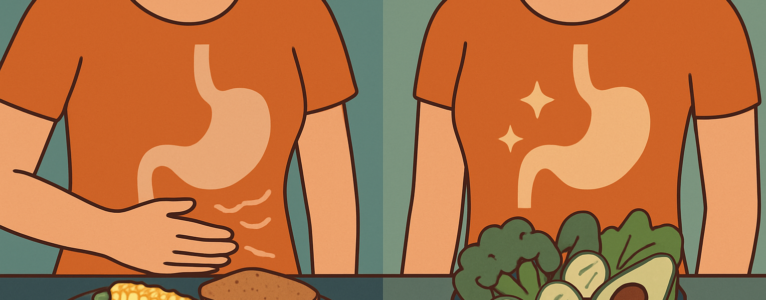
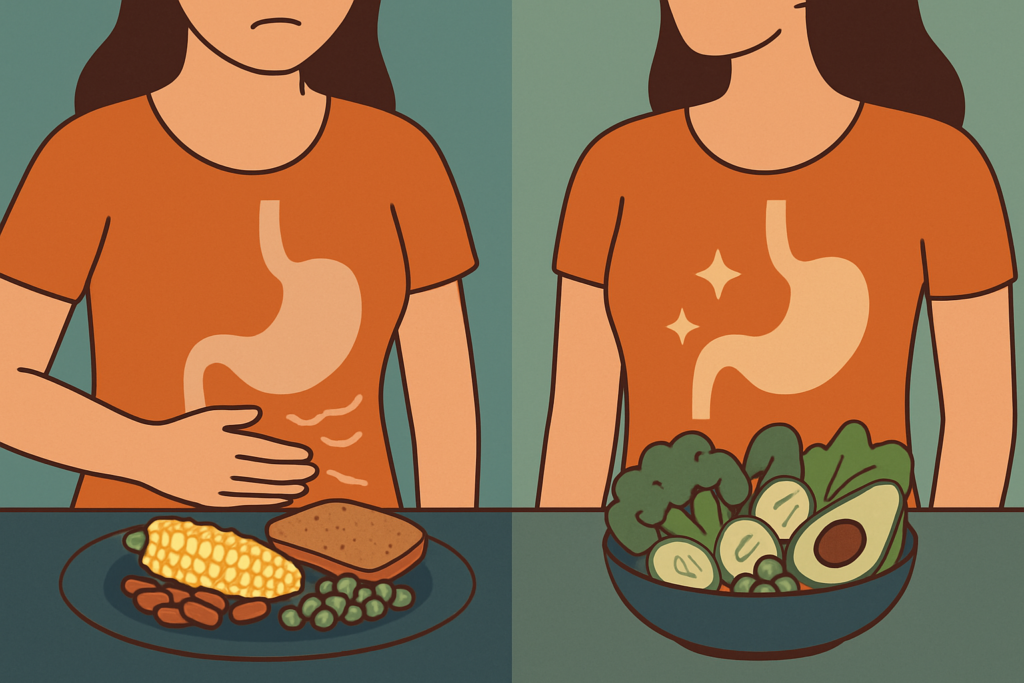
When people shift into a low-lectin lifestyle, they often expect the body to respond with relief of less bloating, smoother digestion, fewer flare-ups. And while these improvements are real and well-documented within nutrition science and in lived experience, the early days can sometimes feel confusing. You make a change to feel better… yet your body gives you gas, cramping, headaches, or fatigue. It’s a moment many people dread, because it comes with that nagging question: Is this diet even working?
But here’s the truth. Your body is always communicating. Some of those early sensations are legitimate digestive reactions, meaning something you ate didn’t sit well, or your gut isn’t ready for it. Other sensations, however, are part of a natural, temporary “detox-like” adjustment as the body recalibrates from old habits to new nourishment. These two experiences can feel similar on the surface, and that’s why people often mistake one for the other.
Understanding the difference isn’t just helpful for troubleshooting, it’s empowering. It gives you the confidence to keep going, to refine your approach, and to stay grounded in what your unique body is telling you.
This article explores how they unfold, how they feel, and how to interpret them without second-guessing yourself.
The Body You Had… and the Body You’re Building
When someone starts eating low-lectin, especially after years of relying on grains, legumes, nightshades, or ultra-processed foods, the body goes through two overlapping experiences. First, it has to stop dealing with things that have been irritating it. Second, it has to learn how to digest foods that may be beneficial but unfamiliar.
Imagine your digestive tract as a long, winding hallway that has been cluttered for years, boxes piled up, dust in the corners, old habits stacked against the wall. When you finally start clearing that hallway, the process isn’t always smooth. You move boxes, you stir up the dust, you reveal things you didn’t even know were there.
This is the transition many people experience when they overhaul their diet. It’s not the food causing the problem. It’s the shift from the old environment to the new one.
This shifting often falls into one of two categories: a digestive reaction or a detox response.
Digestive Reactions: The Gut’s Way of Saying “Not Yet” or “Not Like That”
A digestive reaction is immediate, specific, and often predictable. It’s your body reacting to a food in a way that suggests irritation, intolerance, or a mismatch with your current gut status.
Here’s a classic example. Someone reintroduces beans, even properly soaked and pressure-cooked, and suddenly they feel bloated or uncomfortable. Another person tries resistant starch for the first time and ends up with cramping. These are not signs that the food is harmful; instead, they indicate your gut microbes and mucosal lining may not be ready yet.
It’s like giving someone a heavy workout on their first day back at the gym. The workout isn’t the enemy. It’s simply more than their body is prepared to handle.
- Digestive reactions often show up as:
- Cramping shortly after eating
- Sharp or localized gas discomfort
- Loose stools or an urgent need to go
- Heartburn when introducing acidic or high-fiber foods
- Fatigue specifically tied to digestion
In narrative form, a digestive reaction tends to feel like your body raising a small flag: Hey, that didn’t go how we expected. Maybe we need a smaller portion, a different preparation, or a slower introduction.
These reactions are useful information, not a warning to abandon your plan. They give you clues about what your gut still needs to rebuild.
Detox Responses: Cleanup Mode in Real Time
A detox response, on the other hand, is more whole-body. It’s not about one specific food; it’s about your body adjusting to the absence of old irritants and the sudden presence of truly nourishing foods.
Detox gets a lot of hype online, often framed in dramatic and unrealistic ways, but in reality, it’s simply your systems recalibrating. Your liver, lymphatic system, and gut microbiome begin shifting almost immediately when your diet changes. Your body stops dealing with a daily barrage of inflammatory foods and finally has the space to repair things that have been ignored for years.
This “space to repair” can produce sensations that mimic illness or digestive upset. Not because something is wrong, but because something is finally changing.
A detox response is usually more diffuse, gradual, and inconsistent, showing up as:
- Temporary fatigue
- Mild headaches, especially in the afternoon
- A vague sense of heaviness or grogginess
- Slight changes in sleep patterns
- Mild, whole-gut bloating rather than localized cramping
- Emotional waves or mood dips
- A general “off” feeling without clear triggers
What distinguishes a detox response from a digestive reaction is pattern and timing. It doesn’t reliably show up after a specific food. It’s a feeling that moves through you in waves. Sometimes easing in the morning and returning later, or lasting two to three days and then disappearing entirely.
In many cases, this is the microbiome reorganizing. When foods high in lectins are removed, certain bacterial populations die off while others flourish. This microbial turnover can release compounds that temporarily affect mood, digestion, and energy levels. It’s not dangerous. It’s just part of the natural remodeling of the gut ecosystem.
How Both Experiences Overlap and Confuse People
The tricky part is that both digestive reactions and detox responses can occur during the same week. Someone might introduce pressure-cooked lentils, get bloated, and assume it’s detox. Or they may remove high-lectin foods, experience fatigue, and assume it’s a reaction to something they ate. The overlap leads people to abandon their diet prematurely, believing they’ve “failed,” when in reality they were moments away from feeling better.
To understand the distinction, think of the body as a house undergoing renovation:
- A digestive reaction is like discovering a faulty outlet when you plug something in.
- A detox response is like dust in the air after tearing down a wall.
Both happen during renovation, but they mean very different things about the process.
The Role of Timing in Interpretation
How your body reacts in the minutes after eating versus the days after changing your diet is often your biggest clue.
Digestive reactions usually appear:
- Immediately
- Within 30 minutes
- Or within the first 2–3 hours
And they typically relate to the meal you just ate.
Detox responses, on the other hand, show up:
- Hours later
- The next morning
- Or on a random day that doesn’t correspond directly to any single meal
It’s more like your body doing backend cleanup work than responding to something you ate five minutes ago.
This distinction matters because it guides how you adjust your approach. If something consistently causes near-immediate bloating or discomfort, that food may need gentler preparation or a slower introduction. If you feel low-energy for two days after a big dietary shift, that’s not a food issue. It’s an adjustment period.
Why Your Emotional State Plays a Role
Food reactions are not just physical. Your brain and gut are deeply intertwined, and when you change your diet, your nervous system changes along with it.
Stress can amplify digestive reactions. Anxiety can make detox feel worse. Even hope, the excitement of wanting to feel better, can heighten sensitivity to every new sensation. The mind tries to interpret the body’s signals, sometimes too quickly, worrying about the meaning behind every small discomfort.
A helpful mindset is to regard these sensations as feedback, not judgment. Your body is not criticizing your choices. It is simply responding in real time, trying to adapt.
What Story Is Your Body Telling?
When you strip away the terminology and listen carefully, the body’s communication becomes surprisingly clear.
A digestive reaction says:
“This was too much for me right now.”
A detox response says:
“Things are shifting. Keep supporting me.”
Both messages are valuable. Both messages are part of healing. Neither message is a sign of failure.
The best approach is gentle curiosity. Instead of asking, “What’s wrong?” try asking, “What’s this telling me?”
If you suspect a digestive reaction, you can try:
- Smaller portions
- More thorough cooking
- Introducing foods one at a time
- Keeping a simple food log
If you sense detox, the focus shifts to support:
- Hydration
- Sleep
- Light movement
- Reducing stress
- Allowing time for adjustment
The key is creating space. Space for your body to adapt, space for your mind to observe, and space for your plan to evolve.
The Turning Point: When Things Start Feeling Better
Most people notice a clear shift within a few days to a few weeks. Suddenly the fog lifts. Meals digest more smoothly. Bloating fades. Energy steadies. Sleep improves. Inflammation settles. What once felt confusing now becomes reassuring.
And often, looking back, people realize the early discomfort wasn’t a sign that they were doing something wrong. It was a sign that they were finally doing something right.
Your body doesn’t resist healing. It resists abrupt change. Once it understands the new rhythm, it thrives.
Your Journey Is Unique and That’s the Point
There is no universal “rulebook” for detox or digestive reactions. No two bodies respond the same way. Some people transition smoothly; others feel waves of adjustment. Some experience emotional release, others feel physical cleansing, others barely feel anything at all.
Your experience reflects your history, your diet, your microbiome, your stress levels, your past inflammation, and your present habits. Your body writes its own story. Your job is to read it, not compare it to someone else’s.
In the end, the distinction between digestive reactions and detox responses is not merely academic. It’s a practical compass that keeps you grounded during change. It helps you troubleshoot without panic. It helps you stay committed without confusion. Most importantly, it builds trust between you and your body. Trust that you can navigate discomfort with clarity, and trust that healing doesn’t happen overnight, but through countless small steps that bring you closer to stability.
If you feel sensations, good, strange, or somewhere in between, it means your body is awake and communicating. And that is always a positive sign.