Some dinners feel heavier than the work required to make them. A cutting board fills with scraps, three pans compete for space, and the sink looks punished before anyone has taken a bite. This is not that kind of meal.
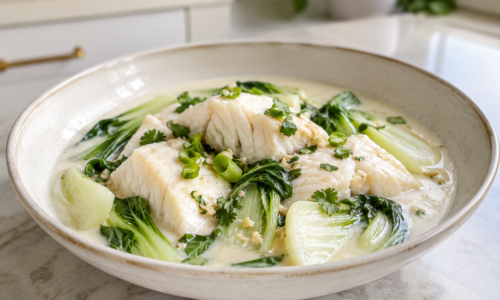
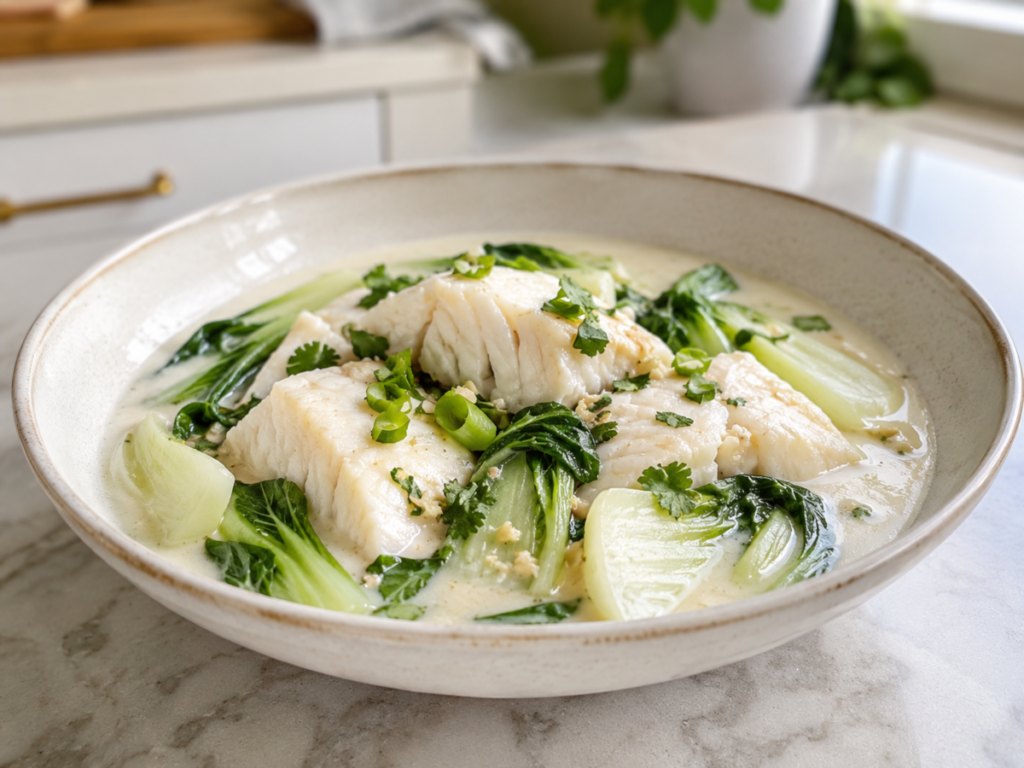
White fish simmered in coconut milk with lemongrass, ginger, garlic, and bok choy comes together in one wide skillet. The broth tastes rich without needing flour, cheese, or a long reduction. The fish stays tender because it cooks gently in liquid, while the bok choy softens just enough to absorb the aromatic broth without losing all of its bite.
For people following a low-lectin lifestyle, this is the sort of recipe that earns repeat status. It begins with a straightforward animal protein, uses a cruciferous vegetable instead of beans or grains, and gets its body from coconut milk rather than a starch-thickened sauce. It also feels like a complete dinner, not a collection of substitutions trying to imitate something else.
Why This Combination Works
Mild white fish needs help, but not abuse. Cod, haddock, pollock, halibut, and similar fillets have a clean flavor that welcomes aromatics. They can also dry out quickly when blasted with high heat. A coconut milk poach solves both problems. The liquid carries flavor into every bite and protects the fish from the harsh surface heat of a dry skillet.
Lemongrass brings a bright citrus scent without adding lemon juice at the beginning of cooking. Ginger adds warmth and a little peppery heat. Garlic rounds out the broth with a savory edge. None of them needs to dominate. Their job is to build layers around the fish.
Bok choy fits the dish especially well because its pale stems and green leaves behave differently in the pan. The stems stay firmer and lightly crisp, while the leaves wilt into the broth. Adding them in stages gives you both textures instead of a pot of uniformly soft greens.
The result lands somewhere between a soup, a curry, and a gentle fish stew. It is spoonable, but not watery. Rich, but not clumsy. Best of all, it tastes intentional.
The Low-Lectin Logic Behind the Bowl
A low-lectin meal does not have to revolve around a long list of forbidden foods. It works better when the plate begins with foods that naturally fit the approach.
White fish contains no plant lectins. It provides protein without the seed coats, grain proteins, or legume components that often become the focus of lectin-aware eating. That does not make every fish automatically ideal for every person, but it gives the recipe a clean starting point.
Bok choy belongs to the Brassica family, along with broccoli, cabbage, cauliflower, and kale. It contains glucosinolates, sulfur-containing plant compounds that help explain the sharp or slightly bitter character of cruciferous vegetables. Current research is still sorting out how glucosinolates and their breakdown products affect human health, how cooking changes them, and how gut microbes influence their metabolism. The evidence is promising in several areas, but these compounds should not be marketed as magic medicine.
From a lectin perspective, bok choy is generally a practical vegetable choice. It is not a bean, grain, nightshade, or seed-heavy ingredient. Cooking also softens its structure and makes the meal easier for many people to tolerate than a large raw salad. Personal response still matters. Someone who reacts poorly to cruciferous vegetables may need a smaller portion, a longer cooking time, or a different green.
Coconut milk gives the broth fullness without relying on wheat flour, cornstarch, or dairy. It is also high in saturated fat, so more is not always better. A measured amount spread across four servings creates a satisfying broth without turning the dish into a bowl of coconut cream. USDA dietary evidence reviews continue to treat coconut as a source of saturated fat, which is a good reason to use it thoughtfully rather than pouring with abandon.
Ginger Is Flavor First
Ginger often gets promoted as though a few slices can repair the digestive system on command. That is too neat. Human trials have studied ginger for nausea, gastric emptying, dyspepsia, and other digestive concerns, but the findings vary by dose, preparation, condition, and study quality.
Some controlled research suggests ginger can speed gastric emptying or support certain nausea-related outcomes. Other trials have found limited or inconsistent symptom improvement. Broad reviews call the evidence useful in selected settings while also pointing out the need for better standardized studies.
That makes ginger worth respecting, not worshipping. In this recipe, it is present because it tastes excellent with coconut milk and fish. Any digestive benefit is secondary and individual.
Choosing the Right White Fish
Cod is the easiest all-purpose choice. It is mild, widely available, and sturdy enough to simmer without falling apart immediately. Haddock has a slightly sweeter flavor and a softer flake. Pollock is often more affordable and works well when handled gently. Halibut is firmer and meatier, though it usually costs more.
Fresh and frozen can both work. Frozen fish is often the better practical buy because it can be portioned, stored, and thawed only as needed. Look for plain fillets without breading, seasoning packets, sauces, or added starches. If the fish is frozen in a block of ice or covered in heavy freezer burn, the texture may suffer.
Thaw fillets overnight in the refrigerator, then pat them dry. Excess surface water dilutes the broth and can make the fish cook unevenly. Similar thickness matters more than identical weight. Thin tail pieces finish faster than thick center cuts, so tuck a thin end under itself or remove smaller pieces early.
Coconut Lemongrass White Fish with Bok Choy
Servings: 4
Prep time: 15 minutes
Cook time: 20 minutes
Total time: 35 minutes
Ingredients
* 1 1/2 pounds white fish fillets, such as cod, haddock, pollock, or halibut
* 1 tablespoon extra-virgin olive oil or avocado oil
* 2 stalks lemongrass
* 1 tablespoon freshly grated ginger
* 3 garlic cloves, finely minced
* 1 can full-fat unsweetened coconut milk, about 13.5 ounces
* 1/2 cup water or unsalted fish stock
* 1 tablespoon coconut aminos
* 1/2 teaspoon sea salt, plus more to taste
* 1/4 teaspoon ground black pepper
* 4 small heads baby bok choy, or 2 large heads
* 1 teaspoon finely grated lime zest
* 1 to 2 tablespoons fresh lime juice
* 2 tablespoons chopped fresh cilantro, optional
* Thinly sliced scallions, optional
Prepare the Ingredients
- Trim the root ends from the bok choy. Separate the stalks, rinse carefully between the layers, and dry them. Slice the pale stems into pieces about one inch wide. Keep the leafy green portions in a separate pile because they cook much faster.
- Remove the dry outer layers from the lemongrass. Trim off the root end and the tough green tops, leaving the pale lower portion. Smash each stalk firmly with the flat side of a chef’s knife, then cut it into two or three large pieces. These pieces will perfume the broth and can be removed before serving.
- Pat the fish dry and cut it into four portions. Season lightly with salt and black pepper.
Build the Broth
- Heat the oil in a wide, deep skillet over medium heat. Add the smashed lemongrass, grated ginger, and garlic. Cook for about one minute, stirring often. The garlic should smell fragrant but should not brown.
- Pour in the coconut milk and water or fish stock. Add the coconut aminos and sea salt. Stir until the coconut milk becomes smooth and the broth begins to steam.
- Bring the liquid to a gentle simmer. Avoid a hard boil. Aggressive bubbling can break the coconut milk, toughen the fish, and toss delicate fillets around the pan.
Cook the Bok Choy and Fish
- Add the sliced bok choy stems to the broth. Simmer for three minutes, giving them a head start.
- Nestle the fish portions into the skillet in a single layer. Spoon a little broth over the top, cover the pan, and cook gently for five to eight minutes. The exact timing depends on the thickness of the fillets.
- Add the bok choy leaves during the final two to three minutes. Cover again and cook until the greens are wilted and the fish is opaque and separates easily with a fork. For food safety, the FDA recommends cooking finfish to an internal temperature of 145°F, or until the flesh is opaque and flakes easily.
- Remove the skillet from the heat. Stir the lime zest and one tablespoon of lime juice into the broth around the fish. Taste the liquid, then add more lime juice, salt, or black pepper as needed.
- Discard the lemongrass pieces. Spoon the fish, bok choy, and coconut broth into shallow bowls. Finish with cilantro or scallions if desired.
Getting the Broth Right
Coconut milk varies widely by brand. Some cans are thick enough to stand a spoon in, while others pour like regular milk. If the broth seems too thick, add water two tablespoons at a time. If it seems thin, let it simmer uncovered for a few minutes before adding the fish.
Do not reduce the broth aggressively after the fish goes in. White fish moves from tender to dry quickly, and boiling can make the fillets fragment. Remove cooked fish to a plate first if the liquid needs extra concentration.
Lime belongs near the end. Adding a large amount of acidic juice early can dull the fresh flavor and may cause the coconut broth to look slightly separated. Zest gives citrus fragrance without much acidity, while juice sharpens the finished dish.
Coconut aminos add saltiness and a mild sweetness. Brands differ, so taste before adding more salt. People avoiding sweetened condiments should check the label because some products contain more sugar than others.
Easy Adjustments Without Breaking the Recipe
A few sliced mushrooms can be added with the bok choy stems for a deeper savory flavor. Chopped cabbage works when bok choy is unavailable, though it needs several extra minutes to soften. Spinach can replace the bok choy leaves, but it should go in only during the final minute.
For more heat, add a small amount of crushed red pepper or sliced fresh chile if those foods fit your personal plan. Heat is optional. The broth has enough character without it.
A spoonful of chopped cilantro gives the finished bowl a bright herbal edge. People who dislike cilantro can use thinly sliced scallion greens or a small amount of fresh basil. Avoid loading the broth with too many herbs. Lemongrass and ginger already set a clear direction.
The meal can be served alone as a light dinner or paired with cauliflower rice for a more substantial plate. Roasted broccoli, sautéed cabbage, or a simple cucumber-free green salad can also sit beside it without competing with the broth.
Common Mistakes That Flatten the Dish
The first mistake is leaving the lemongrass whole and untouched. An intact stalk releases far less flavor. Smashing it opens the fibers and gives the coconut milk access to the aromatic oils.
The second mistake is grating the entire lemongrass stalk. The upper section is fibrous and unpleasant to chew. Use the tender lower portion, or keep the smashed pieces large enough to remove.
The third mistake is boiling the fish. Gentle heat gives you moist flakes. Violent heat gives you dry edges and broken pieces.
The fourth mistake is adding every part of the bok choy at once. The leaves finish long before the stems. Separating them takes less than a minute and makes the final texture much better.
The fifth mistake is treating coconut milk as unlimited simply because it fits a dietary label. Rich ingredients still deserve proportion. One standard can divided across four servings is enough to create body, carry the aromatics, and make the meal satisfying.
Storage and Reheating
Store leftovers in a covered container in the refrigerator for up to two days. Keep the fish submerged in some broth to protect it from drying out.
Reheat gently in a covered skillet over low heat. Stop as soon as the broth is hot and the fish is warmed through. A microwave works in a pinch, but use short intervals at reduced power. High heat makes already-cooked fish firm and can cause the coconut broth to separate.
This dish is best freshly cooked, so freezing is not ideal. The broth can become grainy after thawing, the bok choy softens further, and delicate fish may break apart. A better meal-prep method is to make the aromatic coconut broth one day ahead, refrigerate it, then add fresh bok choy and fish when dinner is fifteen minutes away.