Starting a low-lectin lifestyle can make an ordinary grocery store feel strangely unfamiliar. Foods that once seemed automatic suddenly come with questions. Which vegetables belong in the cart? Are all nuts treated the same? What replaces bread, pasta, beans, and conventional milk? How much food is enough for a full week?
The easiest answer is not to rebuild your entire diet in one shopping trip. Begin with a small group of dependable ingredients, learn several repeatable meals, and pay attention to how your body responds. A low-lectin starter week should feel steady, not punishing. You are building a working kitchen, not auditioning for a cooking show.
This grocery list and meal plan focus on simple proteins, lower-lectin vegetables, satisfying fats, modest fruit portions, and practical leftovers. The plan also avoids the common beginner mistake of buying twenty specialty products before learning what meals actually fit daily life.
What “Low-Lectin” Means in a Starter Plan
Lectins are carbohydrate-binding proteins found throughout nature. They are especially concentrated in certain raw or undercooked legumes, grains, seeds, and members of the nightshade family. Lectin content is not equal across every food, and preparation matters. Research has shown that soaking and boiling can greatly reduce active lectins in many foods, while the FDA warns that raw or undercooked kidney beans can cause severe digestive illness because of phytohaemagglutinin, a specific lectin. Properly cooked and canned kidney beans contain far lower levels.
A low-lectin lifestyle usually goes beyond avoiding food poisoning from raw beans. Many people use it as a structured way to identify foods that seem connected with bloating, indigestion, headaches, fatigue, joint discomfort, or other recurring symptoms. Evidence for broad claims about lectins and chronic disease remains mixed, so this plan should be treated as a practical elimination framework rather than a promise of medical results. Reviews of so-called antinutrients also point out that many lectin-containing foods provide fiber, minerals, and other beneficial compounds, especially when properly prepared.
That distinction matters. The goal is not fear. The goal is controlled observation.
The Beginner Grocery List
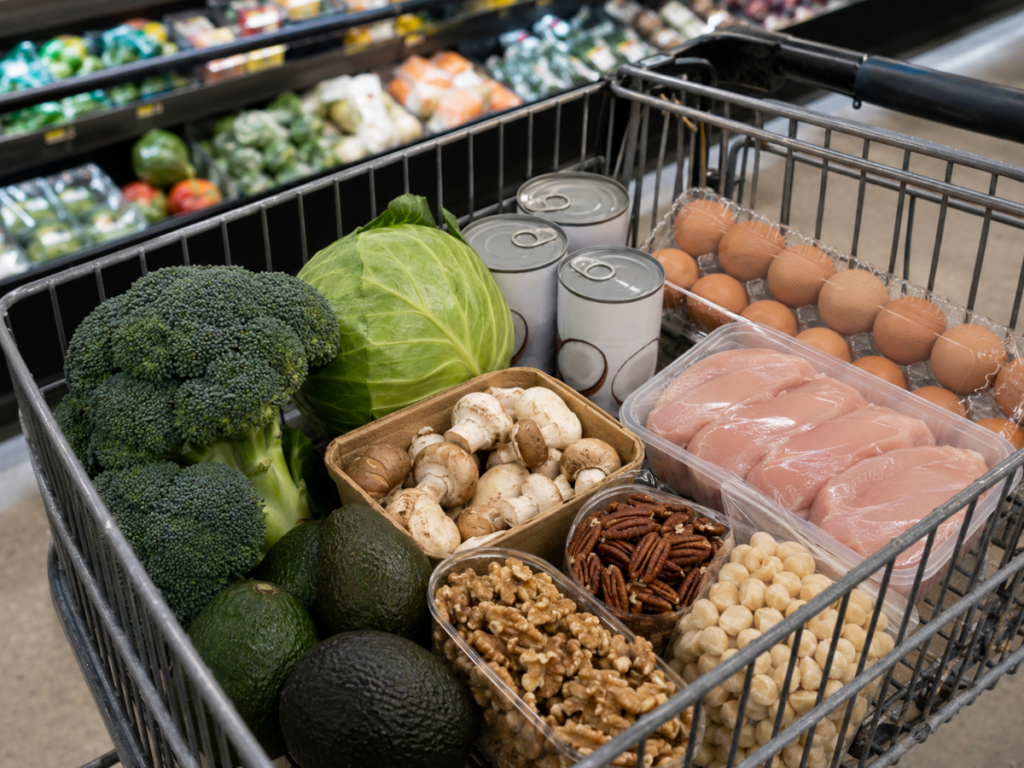
This list is designed for one adult for seven days, with enough flexibility for larger appetites and leftovers. A couple can roughly double the proteins and add extra vegetables.
Proteins
Choose three or four main proteins rather than buying everything at once.
- 1 dozen eggs
- 2 to 3 pounds chicken thighs or breasts
- 1 to 1½ pounds ground turkey
- 2 salmon fillets
- 2 cans wild salmon, sardines, or tuna packed in water or olive oil
- Optional plain A2 yogurt, goat yogurt, or sheep yogurt
- Optional aged goat or sheep cheese
Eggs make breakfast easy, chicken carries several lunches and dinners, ground turkey works in skillets or lettuce wraps, and fish adds variety without adding complicated preparation. Protein also helps meals feel complete. The body needs dietary protein to maintain tissues, muscle, skin, and many normal functions.
Vegetables and Fresh Herbs
Build most meals around vegetables that do not require peeling and deseeding to fit the plan.
- 2 heads cauliflower
- 2 bunches broccoli
- 3 zucchini
- 1 large bag leafy greens
- 1 cabbage
- 1 bunch asparagus
- 1 package mushrooms
- 2 onions
- 1 bulb garlic
- 3 avocados
- 1 bunch celery
- 1 bag carrots
- Fresh parsley, basil, cilantro, or rosemary
- 1 lemon and 2 limes
Zucchini is technically a fruiting vegetable and contains seeds. Some people tolerate it well, while stricter plans remove the peel and seeds. Beginners can choose either approach. The same principle applies to cucumbers. Personal tolerance carries more weight than rigid internet charts.
Fats and Pantry Basics
- Extra-virgin olive oil
- Avocado oil
- Unsweetened coconut milk
- Ghee or grass-fed butter, if tolerated
- Walnuts, pecans, macadamias, or blanched almonds
- Unsweetened coconut flakes
- Apple cider vinegar
- Sea salt
- Black pepper
- Garlic powder
- Onion powder
- Turmeric
- Cinnamon
- Dried oregano
- Paprika
- Mustard without added sugar
- Coconut aminos
These ingredients prevent “plain chicken and steamed broccoli syndrome.” A low-lectin meal can still be rich, crisp, creamy, spicy, or deeply savory. Olive oil, avocado, herbs, citrus, and coconut milk do much of the heavy lifting.
Fruit and Simple Extras
- Blueberries, blackberries, or raspberries
- 2 green bananas, optional
- 2 apples, optional
- Unsweetened almond or coconut milk
- Hemp hearts or ground flax, based on tolerance
- Cassava flour or almond flour, optional
- Grain-free tortillas with a short ingredient list, optional
Fruit does not need to disappear, but it should not become the center of every meal. A small serving of berries with yogurt or a few apple slices with nuts is easier to assess than a giant smoothie containing six ingredients.
Prep Once, Eat Several Times
Set aside about ninety minutes before Day 1. Roast a tray of broccoli, cauliflower, carrots, and onions with olive oil, salt, and garlic powder. Bake or pan-sear enough chicken for three meals. Brown the ground turkey with onions, oregano, and garlic. Hard-boil six eggs. Shred half the cabbage for slaw and chop the rest for a skillet meal.
Make one simple dressing by whisking olive oil, lemon juice, mustard, salt, and pepper. Make a second sauce from unsweetened coconut milk, lime juice, garlic, and a pinch of salt.
This is where the week becomes realistic. Dinner leftovers become lunch. Roasted vegetables become breakfast hash. Cooked chicken becomes salad, lettuce wraps, or soup. Repetition is not failure. It is the reason the plan works on a Wednesday when energy is low.
Day 1: Start with Familiar Food
Breakfast is scrambled eggs with sautéed spinach and mushrooms. Add half an avocado if hunger tends to return quickly.
Lunch is a chicken salad bowl with leafy greens, roasted vegetables, walnuts, and lemon-mustard dressing.
Dinner is baked salmon with asparagus and cauliflower mash. Steam or boil the cauliflower until soft, then blend it with olive oil, garlic, salt, and a small spoonful of ghee if dairy is tolerated.
Keep snacks simple. Choose a boiled egg, a small handful of macadamias, or celery with mashed avocado.
Day 2: Use the Leftovers on Purpose
Breakfast is plain A2, goat, or sheep yogurt with berries, cinnamon, and chopped pecans. People avoiding dairy can use unsweetened coconut yogurt, but labels deserve close attention because many products contain gums, starches, and added sugar.
Lunch is leftover salmon over greens with avocado and lemon.
Dinner is a ground turkey skillet with cabbage, mushrooms, onions, and coconut aminos. Cook the cabbage until tender but not limp. Make enough for tomorrow’s lunch.
This day teaches a useful pattern. A low-lectin meal does not need a recipe name. Protein, vegetables, fat, and seasoning are enough.
Day 3: Build a Better Breakfast Bowl
Breakfast is a warm cauliflower hash with leftover roasted vegetables and two fried eggs. Season it with turmeric, black pepper, and garlic.
Lunch is the leftover turkey and cabbage skillet.
Dinner is coconut chicken soup. Simmer cooked chicken, celery, carrots, chopped greens, garlic, broth, and unsweetened coconut milk. Add lime juice at the end. Check packaged broth for tomato concentrate, yeast extracts, added sugar, or grain-based thickeners if those ingredients are being avoided.
A soup like this is useful because it stretches protein without leaving the meal thin or unsatisfying. It also freezes well.
Day 4: Keep the Middle of the Week Easy
Breakfast is two boiled eggs, sliced avocado, and a small serving of berries.
Lunch is leftover coconut chicken soup.
Dinner is turkey lettuce wraps. Reheat seasoned ground turkey and spoon it into large lettuce leaves with shredded cabbage, avocado, cilantro, and coconut-lime sauce. Serve roasted broccoli on the side.
Grain-free tortillas can replace lettuce leaves, but beginners should read the ingredient panel. A product labeled “grain-free” can still contain chickpea flour, pea protein, corn derivatives, gums, or several starches. Marketing language is not the same thing as a simple ingredient list.
Day 5: Add Variety Without Starting Over
Breakfast is a mushroom and herb omelet with a small amount of goat or sheep cheese, if tolerated.
Lunch is a canned salmon bowl with greens, celery, avocado, lemon, olive oil, and black pepper.
Dinner is sheet-pan chicken with cauliflower, carrots, and onions. Season everything with rosemary, garlic, salt, and olive oil. Roast until the chicken is fully cooked and the vegetables have browned edges.
This dinner should produce enough chicken for Day 6. Cooking extra protein is one of the simplest ways to avoid expensive convenience food.
Day 6: Make the Plan Feel Flexible
Breakfast is unsweetened coconut yogurt with walnuts, cinnamon, and berries, or eggs if a savory breakfast feels better.
Lunch is leftover sheet-pan chicken and vegetables.
Dinner is zucchini noodles with creamy garlic chicken. Spiralize the zucchini, or slice it into thin ribbons. Remove the peel and seed core for a stricter version. Warm coconut milk with garlic, salt, black pepper, and a little nutritional yeast if tolerated. Add sliced cooked chicken, then toss with the zucchini just long enough to soften it.
Overcooking zucchini creates a watery bowl. Keep the heat moderate and stop early.
Day 7: Finish with a Clean-Out Meal
Breakfast is an egg scramble made with any remaining greens, mushrooms, onions, or roasted vegetables.
Lunch is a large chopped salad with leftover chicken, avocado, cabbage, herbs, nuts, and lemon dressing.
Dinner is a refrigerator clean-out soup or skillet. Combine the remaining protein, vegetables, broth, herbs, and coconut milk. Keep the flavors coherent. Garlic, rosemary, and lemon work well together. Turmeric, coconut milk, and lime form another dependable combination.
The final meal should use what remains rather than forcing another store trip. Waste becomes expensive fast, especially when specialty products are involved.
Portion Sizes Without Obsessive Measuring
Use the meal plan as a structure, not a calorie prescription. A practical plate begins with a palm-sized portion of protein, at least one generous serving of vegetables, and enough fat to make the meal satisfying. Larger bodies, active people, and anyone recovering from under-eating may need more.
Hunger between every meal usually means the meals are too small, too lean, or too dependent on watery vegetables. Add another egg, more chicken, half an avocado, olive oil, or a side of nuts. Constant snacking is not a required feature of healthy eating.
People with diabetes, kidney disease, gallbladder disease, food allergies, a history of disordered eating, or prescribed nutrition limits should adapt the plan with a qualified clinician. Major dietary changes can affect medication needs, electrolyte intake, glucose patterns, and total energy intake.
Common Beginner Mistakes at the Store
The first mistake is replacing every familiar food with a packaged imitation. Grain-free crackers, bars, wraps, cereals, and desserts can empty a grocery budget while leaving meals less satisfying. Buy real meal ingredients first.
The second mistake is treating every food list as universal law. One person may react to conventional dairy but feel fine with A2 yogurt. Another may tolerate peeled tomatoes but not almond flour. A useful plan records patterns instead of forcing every body into the same template.
The third mistake is under-buying protein. A refrigerator full of vegetables looks healthy, but it can lead to grazing, cravings, and an emergency takeout order. Purchase enough eggs, poultry, fish, or other tolerated protein to anchor each day.
The fourth mistake is making the first week too strict to sustain. Start with clean, repeatable meals. Track digestion, energy, sleep, headaches, skin changes, joint comfort, and appetite. Change one variable at a time so the results mean something.
A Simple Shopping Rule for Week Two
Before buying anything, assign it a job. Eggs cover three breakfasts. Chicken covers two dinners and two lunches. Cauliflower becomes mash, roasted vegetables, and breakfast hash. Cabbage becomes slaw, skillet vegetables, and soup.
Anything without a job is likely to become waste, clutter, or an expensive experiment. Keep the second week close to the first, then replace only two or three meals based on what tasted good, what caused symptoms, and what fit your schedule.