A delayed flight, an unexpected highway closure, or several hours between restaurants can make food planning difficult for someone following a low-lectin diet. Airport food courts and roadside convenience stores often rely on sandwiches, wheat-based snacks, fried foods, and packaged products containing ingredients that some low-lectin eaters prefer to avoid. Finding a suitable meal becomes especially challenging when transportation schedules leave little time to examine labels or request substitutions.
A prepared travel kit provides dependable food options when schedules change or suitable meals are unavailable. The most practical approach combines familiar shelf-stable foods, safely chilled meals, hydration supplies, and a small reserve for unexpected delays. Road trips offer considerably more flexibility than flights, so packing decisions should account for travel duration, available storage space, refrigeration, and transportation restrictions.
Building a Two-Layer Low-Lectin Travel Kit
An effective travel kit works best when divided into two categories: foods intended for the scheduled trip and backup supplies reserved for unexpected disruptions. Separating these categories prevents someone from consuming their emergency provisions early and discovering later that nothing remains when a connection is missed or a restaurant is closed. It also makes packing easier because the emergency portion can remain largely unchanged between trips.
The first layer contains meals and snacks intended for immediate consumption, such as chilled chicken, hard-boiled eggs, prepared vegetables, and other familiar foods. The second contains commercially packaged, shelf-stable products that do not require refrigeration before opening. These reserves are especially useful when a cooler loses its ability to maintain safe temperatures or travel plans extend beyond the original schedule.
Accessibility should influence how the kit is organized. A small food pouch within reach of an airline seat or in a car’s passenger compartment is more useful than supplies buried beneath clothing in a suitcase. Essential medications, medically necessary supplies, and foods needed to manage a diagnosed medical condition should remain accessible in accordance with the traveler’s established care requirements.
The Basic Packing Blueprint
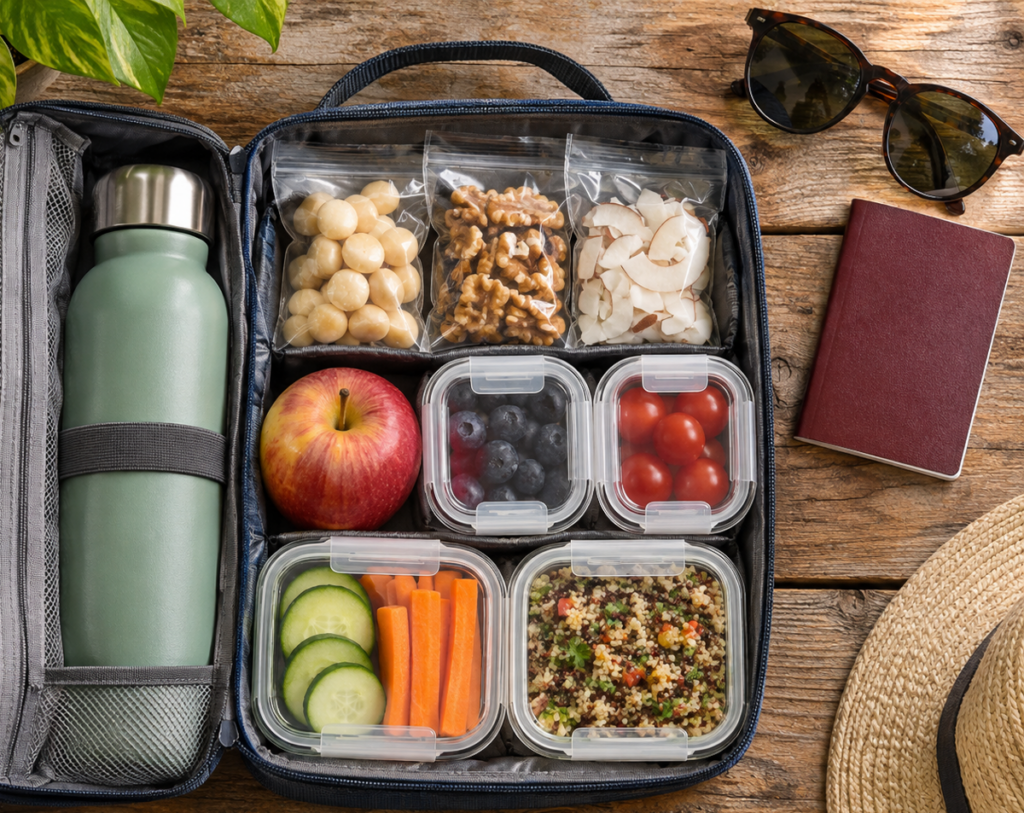
A compact travel kit can be assembled around six categories. Quantities will depend on the length of the trip, available storage space, and the number of people traveling.
- Shelf-stable snacks: Individually portioned walnuts, pecans, macadamia nuts, unsweetened coconut chips, or other familiar foods compatible with personal dietary preferences.
- Backup protein: Commercially packaged, shelf-stable meat or fish products, with labels checked for storage instructions and unwanted ingredients.
- Durable fresh produce: Whole apples, oranges, or other fruits that travel well and fit the individual’s usual eating pattern.
- Hydration supplies: A refillable water bottle, an empty bottle for airport security, and optional electrolyte products when appropriate.
- Food handling essentials: Reusable utensils, napkins, hand wipes, resealable bags, and leak-resistant containers.
- Temperature-control equipment: An insulated food bag, frozen cold packs, and a cooler thermometer when transporting perishable foods.
These supplies create a flexible starting point rather than a fixed menu. Nuts may be convenient for one traveler, while another might prefer coconut, fruit, or a different packaged snack. Foods already eaten regularly are generally easier to incorporate into travel plans than unfamiliar products purchased shortly before departure.
Choosing Shelf-Stable Foods for Low-Lectin Travel
Shelf-stable foods form the foundation of the emergency portion because they can remain packed without continuous refrigeration. They are especially helpful during extended airport delays, unexpected overnight stops, or situations where a cooler can no longer maintain a safe temperature. Useful choices should be durable, easy to portion, and substantial enough to help bridge the time between regular meals.
Plain macadamia nuts, walnuts, and pecans are common choices in many low-lectin eating plans. They provide dietary fats and some protein without requiring cooking or refrigeration, making them convenient for travel. Dry-roasted varieties with short ingredient lists are often easier to evaluate than heavily seasoned versions containing flour coatings, sweeteners, or complicated flavor blends.
Unsweetened coconut chips offer another portable option, particularly when a change from nuts is welcome. Their crisp texture and lightweight packaging make them suitable for backpacks, glove compartments during active travel, and carry-on bags, provided they are protected from excessive heat and moisture. Commercial varieties differ considerably, with some containing added sugars, syrups, or flavorings that may not fit an individual’s preferences.
Shelf-stable meat snacks can supply additional protein when a full meal is unavailable. Beef jerky and similar products sometimes contain soy sauce, wheat ingredients, added sugars, or seasoning blends that warrant closer inspection. Choose products specifically labeled for unrefrigerated storage and follow their instructions after opening, since drying or vacuum-sealing alone does not establish that a food is shelf-stable.
Commercially sterilized, unopened fish or meat pouches may also be suitable for some road trips. Their packaging must clearly indicate that refrigeration is unnecessary before opening, and any unused contents should be handled according to the label. Because some pouches contain substantial liquid, they may be less convenient for airport security screening than ordinary dry snacks.
Reading Labels on Packaged Travel Foods
Protein bars, grain-free crackers, and vegetable chips deserve closer inspection because their packaging does not always reveal the ingredients used to create their texture. Some contain pea protein, chickpea flour, soy derivatives, wheat, or other ingredients that an individual may be limiting. Products marketed as plant-based, gluten-free, or grain-free do not automatically meet a particular low-lectin eating plan.
Ingredient lists are more useful for identifying foods someone intends to avoid than determining the amount of biologically active lectins in a finished product. Processing methods can affect lectin activity, and ingredient labels do not measure those changes. A bar containing pea protein, for example, may be unsuitable for someone avoiding legumes, but its ingredient list alone does not establish that the finished food contains harmful levels of active lectins.
Travelers with diagnosed food allergies must also distinguish allergen avoidance from ordinary dietary preferences. A product’s compatibility with a low-lectin diet does not establish that it is safe for someone with a food allergy. Ingredient labeling, relevant allergen declarations, and cross-contact precautions remain necessary when an allergy is involved.
Preparing Fresh Low-Lectin Meals Before Departure
Homemade travel meals offer greater control over ingredients than most packaged snacks. Preparing food at home allows travelers to choose their preferred proteins, vegetables, seasonings, and dressings without depending on restaurant substitutions. The main limitation is that cooked meats, eggs, and many prepared vegetables require refrigeration throughout transport.
A practical cold meal might include roasted chicken, washed leafy greens, peeled cucumber slices, and roasted carrots. Keeping dressing separate helps preserve the vegetables’ texture, especially when the meal will remain packed for several hours. Olive oil and lemon juice provide a simple dressing combination, although containers carried through airport security must comply with applicable liquid restrictions.
Hard-boiled eggs are another convenient protein option for travelers who tolerate them. They can be cooked, chilled promptly, and transported in an insulated container with adequate cold packs. Leaving the shells intact until eating can reduce direct handling of the prepared egg, but it does not eliminate the need for refrigeration.
Whole fruits are generally easier to transport than sliced fruit or prepared fruit salads. Apples and oranges can remain intact during ordinary travel without the same refrigeration requirements as cut melon or other prepared perishable fruit. Wash produce under safe running water before eating or packing it, and keep sliced produce that requires refrigeration properly chilled.
Preparing Food Without Creating Storage Problems
Travel meals benefit from a little extra attention to moisture and packaging. Leafy salads dressed hours in advance may become limp, while roasted vegetables packed before cooling can release condensation that affects their texture. Cooling cooked foods promptly in shallow containers under refrigeration, then packing components separately, helps preserve quality while meeting food-safety requirements.
Moisture-rich sauces create another problem because containers can leak when backpacks and carry-on bags are moved repeatedly. Small leak-resistant containers placed inside a secondary resealable bag reduce the chance of spills. For flights, consider adding a permitted amount of dressing after security or purchasing a suitable condiment at the destination instead of transporting multiple liquid containers.
Road Trip Food Safety: Packing and Maintaining a Cooler
Road trips provide opportunities to carry prepared meals, but temperature control becomes a significant responsibility. A cooler left inside a parked vehicle can warm considerably, even when outdoor conditions seem comfortable. Insulation slows temperature changes but cannot maintain safe refrigeration indefinitely without sufficient ice or frozen cold packs.
The FDA’s guidance for handling food safely outdoors recommends keeping cold perishable foods at 40°F (4°C) or below. Perishable foods should not remain without adequate temperature control for more than two hours, with the limit reduced to one hour when temperatures exceed 90°F (32°C). These limits apply to the accumulated time food spends outside safe temperature conditions, rather than restarting whenever a container is returned to a cooler.
A cooler thermometer provides more dependable information than touching a food container to determine whether it feels cold. Food may still feel cool after warming beyond the recommended refrigeration temperature. Cooked chicken, eggs, seafood, and other refrigerated meals should remain at 40°F or below until they are ready to be eaten.
Organizing a Cooler for Longer Drives
Packing efficiency affects how well a cooler maintains its temperature. Foods should enter the cooler already chilled, with cold packs or ice distributed around and above the containers. Watertight packaging prevents melted ice water from contacting prepared meals, while limiting how frequently the lid is opened helps preserve the cold environment.
Separating beverages from perishable meals can be useful on extended drives. Drink coolers are usually opened frequently, while food coolers can remain closed until a planned meal stop. The University of Nebraska-Lincoln’s guidance on traveling with food explains the recommended temperatures for transporting cold foods at 40°F or below and hot foods at 140°F (60°C) or above.
Keep the cooler secured inside the air-conditioned passenger compartment when practical, away from direct sunlight. Replenish ice as needed and transfer refrigerated food to a working refrigerator upon arrival. If a cooler fails and perishable food has exceeded safe time and temperature limits, discard the affected food rather than judging its safety by smell or appearance.
Flying With Low-Lectin Foods: TSA Rules and Packing Restrictions
Air travel requires a different strategy because airport security distinguishes solid foods from liquids, gels, creams, and spreadable products. Travelers departing from U.S. airports can generally bring solid foods in carry-on luggage, including nuts, sandwiches, and many prepared meals. Screening officers may request additional inspection, and the final decision about whether an item passes through the checkpoint rests with TSA personnel.
The Transportation Security Administration’s food screening guidance explains that solid food items are generally permitted in carry-on and checked baggage. Liquids and gel-like foods are subject to different requirements, regardless of whether they are intended as snacks, condiments, or components of a meal. Packaging foods in clearly organized containers can make inspection easier, although it does not guarantee that every item will be permitted.
Under the standard TSA liquids rule, liquids, gels, creams, and pastes carried through security must generally be in containers of no more than 3.4 fluid ounces (100 milliliters), with those containers fitting inside one quart-sized bag. Olive oil, yogurt, nut butter, dips, and salad dressings may fall within these restrictions. A small container that meets the requirements may be permitted, while larger quantities generally need to remain out of carry-on baggage unless an applicable exemption exists.
Ordinary frozen gel packs are generally permitted through screening when completely frozen solid. Packs that have partially melted or contain free liquid may be subject to the standard liquids rule, making them less dependable if they begin thawing before reaching security. Medically necessary cooling supplies and certain infant or child feeding products have separate screening provisions that should be reviewed when relevant.
Selecting Meals That Work in an Airline Cabin
An airline meal should be compact, easy to eat with minimal utensils, and unlikely to spill or produce strong odors. A sealed container of chilled roasted chicken and vegetables may be easier to handle than a large salad requiring several separate components. Shelf-stable nuts, whole fruit, and commercially packaged dry snacks are particularly useful on shorter flights because they avoid the challenge of maintaining refrigeration.
Travelers carrying chilled meals must account for the entire journey, including transportation to the airport, security processing, boarding, flight time, and transportation after landing. A short flight can still involve many hours away from reliable refrigeration. If an insulated bag cannot maintain the required temperature throughout that period, shelf-stable alternatives are a safer choice.
An empty refillable water bottle can ordinarily pass through security and be filled afterward. This eliminates the need to purchase multiple bottled drinks in the terminal and makes water readily available during the flight. Travelers should check airline restrictions on baggage size and any utensils or other equipment included in their food kit.
International Flights and Agricultural Restrictions
International travel introduces restrictions beyond ordinary airport security rules. Fresh fruits, vegetables, meats, seeds, and certain other agricultural products may be prohibited or require inspection when entering another country. Foods permitted on an aircraft are not necessarily permitted through customs at the destination.
Travelers entering the United States must declare agricultural products, including relevant food items, as explained in the USDA’s guidance for travelers arriving from another country. Declaring an item does not guarantee that it can enter the country, but it allows inspection officials to determine whether import requirements are satisfied. Keeping commercially packaged products in their original containers may help establish their identity and country of origin.
For international journeys, choosing a smaller assortment of familiar packaged snacks can simplify packing. Travelers should review the destination country’s current import restrictions before departure and avoid assuming that domestic travel rules apply internationally. Any food remaining upon arrival should be declared when required, even if it was purchased at an airport.
Planning for Delays, Missed Connections, and Limited Food Choices
An emergency food supply should account for more than the scheduled travel time. A three-hour flight can involve several additional hours of airport waiting, boarding delays, and ground transportation. Weather, traffic, and mechanical problems can similarly extend road trips beyond their planned duration.
One practical strategy is to carry enough shelf-stable food for an additional substantial snack or simple meal beyond the planned itinerary. Individual portions make it easier to preserve emergency supplies rather than opening several containers at once. Nuts and coconut can help with short delays, but longer disruptions may require a more substantial meal containing additional protein and other foods.
Grocery stores can provide useful alternatives when restaurants offer few suitable choices. Whole fruit, plain nuts, ready-to-eat products with appropriate ingredient lists, and refrigerated prepared proteins often provide more flexibility than a limited convenience-store menu. Prepared foods should be selected with attention to their ingredients, handling conditions, and storage requirements.
Roadside restaurants may accommodate straightforward substitutions, such as replacing bread or pasta with vegetables or serving grilled protein without a particular sauce. Asking how a dish is prepared is more useful than relying entirely on the menu description. Marinades, breading, cooking sauces, and dressings can contain soy, wheat, or other ingredients that may matter to someone following a specific low-lectin plan.
Hydration, Digestion, and Hygiene During Travel
Travel can disrupt established eating and drinking routines, particularly when schedules involve early departures, long periods of sitting, or limited access to familiar meals. Changes in meal timing, fluid intake, and food choices can contribute to digestive discomfort or irregular bowel habits. These symptoms have multiple possible explanations and should not automatically be attributed to lectin exposure.
Drinking water regularly and allowing adequate time for meals can help maintain familiar routines. Plain water is sufficient for many ordinary travel situations, while electrolyte products may be appropriate during substantial sweating or other circumstances involving increased fluid losses. Individuals who must restrict sodium, potassium, or fluid intake for medical reasons should select beverages consistent with their existing medical guidance.
Hygiene supplies deserve space alongside food containers and snacks. Wash hands with soap and safe running water before handling or eating food whenever facilities are available, and use an appropriate hand sanitizer when handwashing is not possible. Wipes can remove some visible residue from hands or surfaces, but they cannot make improperly stored or contaminated food safe to eat.
International travel may require additional precautions regarding food and water quality. The CDC’s food and water guidance for international travelers discusses risks associated with inadequate sanitation, unsafe drinking water, and improperly handled foods. In destinations where sanitation is uncertain, fully cooked foods served hot and fruit that can be peeled by the traveler are generally more dependable choices than raw produce prepared under unknown conditions.
Keeping an Emergency Travel Kit Ready Between Trips
A dedicated travel pouch makes preparation easier because the shelf-stable portion can remain organized between journeys. Nuts, coconut snacks, appropriate packaged proteins, utensils, and resealable bags can be replenished after each trip rather than assembled from scratch. Before departure, inspect packaging, check best-by or expiration dates as appropriate, and confirm whether any products have special storage requirements.
Storage conditions matter even for commercially packaged foods. Heat can damage packaging or reduce food quality, while moisture may affect dry snacks and cardboard containers. Keep the emergency kit in a cool, dry location between trips instead of permanently storing it inside a vehicle exposed to temperature extremes.
At the destination, check what remains before the return journey. Replace consumed snacks, clean reusable containers, and discard refrigerated leftovers that have not remained within safe storage conditions. A return flight, an international border crossing, or an unexpectedly long drive may require different provisions from those packed for the outbound journey.
Using Hotel Refrigeration to Prepare for the Return Trip
A hotel room equipped with a working refrigerator can expand meal options, especially when a nearby grocery store offers fresh produce and simply prepared proteins. However, some hotel beverage coolers are designed primarily for chilling drinks rather than maintaining safe temperatures for perishable foods. A refrigerator thermometer can help establish whether the compartment consistently maintains 40°F or below before it is used to store cooked chicken, eggs, or other refrigerated meals.
Hotels with reliable refrigeration make it possible to assemble a fresh meal for the following day’s travel. Cooked proteins can be purchased from appropriate food retailers, chilled promptly, and packed with cold packs before departure. Check the food’s handling instructions, avoid leaving refrigerated purchases unrefrigerated during errands, and make sure the available cooling equipment can maintain safe temperatures until the meal is eaten.
When a hotel lacks dependable refrigeration, the next day’s provisions can be built around unopened shelf-stable foods and durable whole fruit. Purchasing refrigerated items shortly before departure is another option when they can be transported safely and consumed within an appropriate period. This approach allows the return trip to be planned around the facilities actually available, rather than depending on food-storage equipment that may not perform as expected.