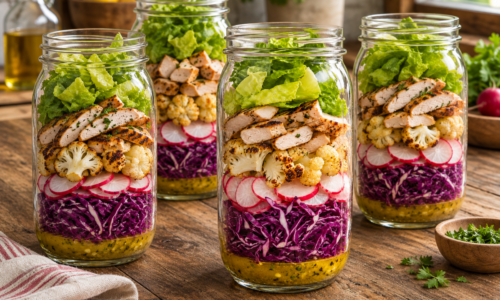
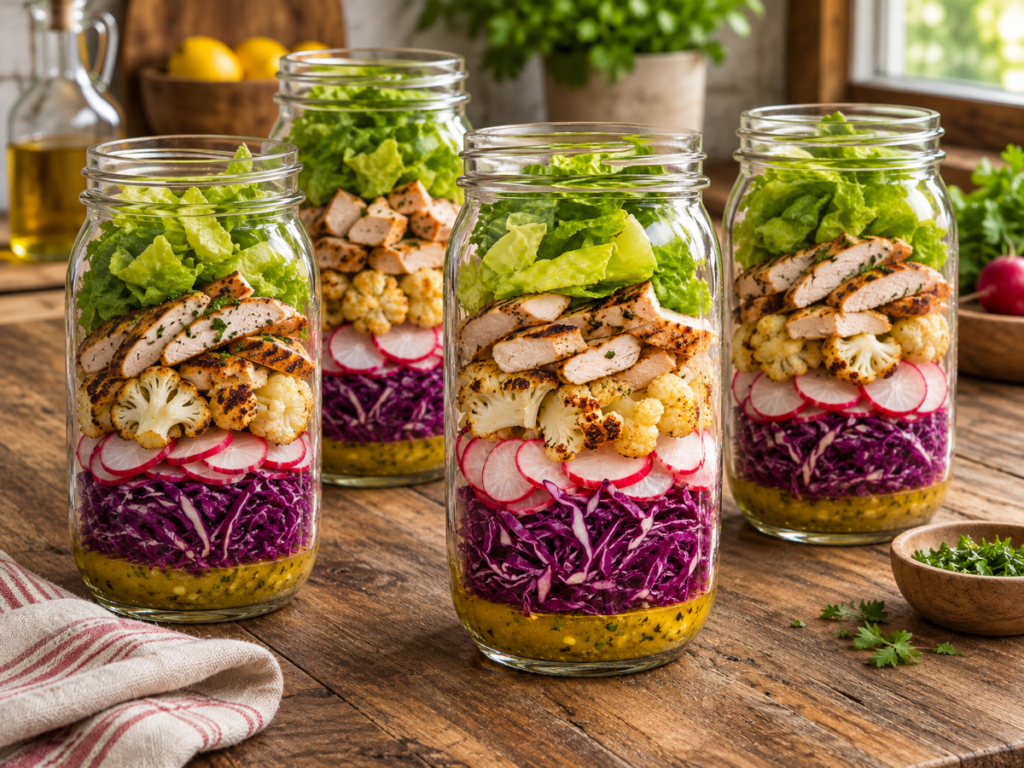
A mason jar salad can travel neatly to work and still disappoint at lunch if the lettuce is sitting in dressing or surrounded by damp vegetables. The problem often begins during assembly, when ingredients that release moisture are placed beside greens that absorb it. Changing the order of the layers makes a noticeable difference in texture, especially when salads are prepared a day or two ahead.
For a low-lectin eating plan, the jar also makes ingredient selection straightforward. Leafy greens, crunchy vegetables, cooked poultry, fish, or eggs can take the place of familiar salad additions such as beans and grains that some readers prefer to limit. The aim is a satisfying meal that remains crisp until serving, with no special equipment beyond a clean container and ordinary kitchen tools.
How Layering Protects the Greens
A jar separates ingredients vertically, allowing dressing to settle below vegetables that can tolerate contact with liquid. Chopped romaine, spinach, and arugula stay above the wetter components rather than sitting in a dressed mixture for hours. The method reduces contact between moisture and tender leaves, although it cannot prevent every change in texture during refrigeration.
The basic order is dressing, firm vegetables, cooked protein and other substantial additions, a relatively dry buffer layer, and leafy greens at the top. Mississippi State University Extension’s salad-in-a-jar guidance similarly recommends keeping dressing low and greens high, with drier ingredients closest to the leaves. Depending on the recipe, protein and vegetables can trade places as long as their moisture does not collect against the greens.
A wide-mouth jar makes this arrangement easier to assemble and empty. A 24- to 32-fluid-ounce container is a practical starting point for a lunch-sized salad, although the amount needed depends on its ingredients and the appetite it is meant to satisfy. Leave a little space at the top so the lid closes without crushing the lettuce, and plan to pour the contents into a bowl if the jar is too full to toss the salad properly.
Layer One: Dressing at the Bottom
Start with a modest amount of dressing that can coat the salad once everything is mixed. Extra virgin olive oil whisked with lemon juice or vinegar, minced garlic, and dried oregano makes a simple option; mustard or other seasonings can be added if they fit the chosen eating plan. Commercial dressings are convenient too, but checking the ingredient list helps identify sweeteners, soybean-based ingredients, or other additions a reader may wish to avoid.
Oil and vinegar separate as the jar rests, so the most watery portion of a vinaigrette may settle at the bottom. That is one reason delicate greens should never be packed directly above it. An acidic dressing can season sturdy vegetables as they sit, but it does not make the assembled salad shelf-stable or extend the safe life of cooked proteins.
If a recipe depends on keeping every component distinct, pack the dressing in a small separate container instead. This is useful for salads containing particularly tender greens, avocado, or roasted vegetables that soften when exposed to vinegar. It also offers more control over the amount of dressing added at lunchtime.
Layer Two: Vegetables That Can Handle Dressing
Shredded red cabbage, carrot sticks, sliced radishes, celery, and fennel are suitable choices for the lowest food layer. Their firm texture generally survives short contact with vinaigrette better than that of lettuce or cooked zucchini. Cut them into pieces large enough to retain some crunch, then arrange them so the dressing has little opportunity to splash upward while the jar is carried.
Cabbage is especially useful because a generous layer occupies space and helps separate the dressing from softer ingredients. Thinly sliced fennel contributes a mild licorice-like flavor, while radishes add a peppery bite that suits lemon and herb dressings. Carrots can be cut into short matchsticks instead of finely grated if a firmer texture is preferred.
Moisture-rich ingredients need different handling. Cucumber pieces can leak water after cutting, particularly when they have been salted, so dry them thoroughly and use them in salads intended to be eaten sooner. Removing the soft seed cavity from a cucumber can reduce its watery center, but this is a texture choice and should not be presented as a proven method of eliminating lectins.
Layer Three: Chilled Protein and Cooked Vegetables
Cooked chicken, turkey, beef, salmon, and hard-boiled eggs can make a jar salad substantial enough for lunch. Use fully cooked ingredients that have been refrigerated promptly, and avoid packing them while they are warm. A hot chicken breast placed directly into a closed jar can warm the other ingredients and create condensation that collects on the greens.
Roasted cauliflower or broccoli can add bulk and a firmer bite than steamed vegetables, provided excess moisture has been allowed to drain. Cauliflower florets usually hold their shape more clearly than finely riced cauliflower, which can compact into a damp layer. Mushrooms are another option, but cook off most of their released liquid before chilling them for assembly.
Keep the juiciest cooked ingredients below a drier layer of cabbage or another sturdy vegetable when possible. Flaked fish is easily crushed, so handle it gently and avoid pressing the upper layers down to fit more food. Any cooked leftovers added to a jar retain the same storage history they had before assembly; packing them into a new container does not reset that clock.
Layer Four: A Dry Buffer and Leafy Greens
The last substantial layer should limit direct contact between damp cooked foods and delicate greens. Thoroughly dried cabbage, chopped romaine ribs, or another relatively firm vegetable can serve as a buffer beneath spinach or arugula. A buffer is helpful but not a waterproof seal, so drying ingredients before packing remains necessary.
Romaine is a reliable choice when a salad needs to stay crisp overnight because its thicker ribs give it structure. Baby spinach packs compactly but bruises if pressed too firmly, while arugula offers a sharper flavor and a more delicate leaf. Kale tolerates handling well and is easier to eat when its tougher leaves are sliced thinly.
Wash produce under running water before cutting it, then remove surface moisture with a salad spinner or clean towel. The FDA’s produce-handling guidance advises washing and drying produce and explains that packages marked ready-to-eat or pre-washed do not need another wash. Avoid washing greens with soap, and use clean knives and cutting boards that have not contacted raw meat or seafood.
Place the leaves loosely at the top and close the lid without compressing them. Dry greens fare better than wet ones, but even a carefully layered salad will eventually lose some of its freshly prepared texture. For delicate herbs, consider adding them with the greens rather than pressing them into the protein layer.
Ingredients Best Added Just Before Serving
Avocado is a good example of an ingredient that does not always belong in an advance-packed jar. Once cut, it begins browning through a reaction with oxygen, and its soft flesh can be damaged by the weight of other ingredients. Lemon juice slows discoloration but will not keep avocado looking freshly sliced for several days, so adding it at lunch is often the simpler option.
Walnuts, pecans, and similar crunchy toppings also benefit from separate packing. Moisture from other ingredients can soften them, even when they sit high in the jar. A small dry container maintains their texture, and the nuts can be sprinkled over the salad after dressing and greens are mixed.
Drained olives are easier to pack ahead, although leftover brine can contribute unwanted liquid. Very juicy roasted vegetables or soft cooked zucchini are better saved for a salad that will be eaten soon or carried in a separate container. These decisions are mainly about texture and convenience rather than lectin removal.
Choosing Low-Lectin Ingredients Without Overstating the Science
A low-lectin-style salad might focus on lettuce, cabbage, cauliflower, mushrooms, eggs, and animal proteins while omitting beans or certain grains. These are practical ingredient choices within that eating pattern, not proof that the resulting salad is entirely free of lectins. Different plants contain different lectin proteins, and published measurements do not support precise claims about the lectin content of every prepared vegetable combination.
There is a specific, established food-safety issue with raw or insufficiently cooked kidney beans. Their lectin phytohemagglutinin can cause acute gastrointestinal illness when beans are not cooked adequately. In its 2026 assessment of lectins in foods, the European Food Safety Authority distinguishes this risk from properly prepared pulses and describes soaking followed by thorough boiling as an effective way to reduce active lectins.
Commercially canned beans have already been heat processed, unlike raw dried beans, and should not be equated with inadequately cooked beans. Someone following a low-lectin plan may choose to leave them out, but avoiding all lectin-containing foods is not an established medical requirement. As Harvard’s Nutrition Source explains, human research on the amounts of active dietary lectins people consume and their long-term health effects is limited.
Removing beans and grains also changes a salad’s nutritional profile. Their contribution of fiber, carbohydrates, and plant protein may need to be supplied elsewhere in the day’s meals, depending on what was removed. In the jar itself, a substantial protein portion and a variety of vegetables help create a more filling lunch than greens and dressing alone.
Three Low-Lectin Mason Jar Salad Combinations
The layering method adapts well to ingredients already prepared for other meals. Each combination below follows the same bottom-to-top arrangement, with cooked components fully chilled before assembly. Amounts can be adjusted to the container, and any ingredients that spoil or soften quickly can be packed separately.
Lemon-Herb Chicken and Roasted Cauliflower
Pour olive oil and lemon dressing into the jar, then add sliced celery and carrot matchsticks. Follow with chilled grilled chicken and roasted cauliflower florets, using a layer of shredded cabbage above them to separate any remaining moisture from chopped romaine. Finish with fresh parsley among the greens rather than against the dressing.
Cauliflower contributes a hearty texture without needing cooked grains, while the celery and carrots stay crunchy against the vinaigrette. For the cleanest texture, spread roasted cauliflower in a shallow container to refrigerate before packing, rather than placing it warm in the jar. Leftover chicken is convenient here if it remains within its safe refrigerated storage period.
Mediterranean Salmon With Fennel and Cabbage
Add a lemon and olive oil vinaigrette, followed by shredded red cabbage and thinly sliced fennel. Layer fully cooked, chilled salmon above the vegetables, then a small amount of dry chopped romaine before topping with spinach. Include well-drained olives near the salmon, and add freshly sliced avocado at serving time if desired.
Fennel’s crispness works well with the soft texture of salmon, and the cabbage can pick up flavor from the dressing without becoming limp immediately. This salad is better prepared close to the day it will be eaten because cooked fish and tender spinach are less forgiving in storage than raw cabbage. Take care not to mash the salmon as the jar is filled.
Broccoli, Egg, and Arugula Salad
Begin with olive oil and apple cider vinegar dressing, then add sliced radishes and cooled roasted broccoli. Place hard-boiled egg pieces above them, followed by dry romaine and arugula. Keep chopped walnuts in a separate container until serving so they remain crisp.
Broccoli adds substance, while the egg supplies protein and the radishes provide contrast to the softer cooked vegetables. If the broccoli is especially moist after cooking, drain it before chilling and use a firmer vegetable layer between it and the lettuce. Prepare the salad according to the storage time of the oldest perishable ingredient, not the day the jar was assembled.
Refrigeration, Storage Time, and Safe Transport
A screw-on lid prevents leaks and keeps the contents covered, but it does not turn a salad into a canned or shelf-stable food. Keep prepared jars at 40°F (4°C) or below, and refrigerate them promptly after assembly. FoodSafety.gov’s cold storage chart lists three to four days for cooked meat or poultry leftovers and for prepared egg, chicken, and tuna salads, although some fresh greens and fish preparations will lose eating quality sooner.
The oldest perishable ingredient sets a practical limit on the jar’s useful life. Chicken cooked on Monday and packed into a salad on Wednesday should still be treated as Monday’s leftovers, assuming it was cooled and stored safely throughout. If an ingredient already looks deteriorated before packing, layering it carefully will not restore its quality.
Refrigerate cooked components in shallow containers before combining them with fresh produce. According to the CDC’s food-poisoning prevention guidance, perishable food should not remain unrefrigerated for more than two hours, or one hour when exposed to temperatures above 90°F (32°C). These limits also apply to lunches being transported or left on a desk, so use a refrigerator or an insulated bag with enough frozen cold packs to keep the salad cold.
Inspect the jar before eating and discard food showing mold, slime, or other signs of spoilage. Appearance and smell are not reliable tests for all harmful microorganisms, however, which is why proper chilling and storage limits still apply to salads that look fresh. Clean containers, clean utensils, and separation of raw meat from ready-to-eat vegetables matter just as much as attractive layers.
Pack for the Way You Plan to Eat
A jar filled to the rim is awkward to toss, especially when it contains large cauliflower florets or chicken pieces. For a work lunch, a separate bowl may be worth the small extra item to carry: tip the jar upside down into the bowl so greens land first and dressing follows over the other ingredients. If eating directly from the jar is the priority, choose a larger container and leave enough room to shake it only when ready to eat.
A useful meal-prep routine is to roast vegetables and cook proteins in advance, chill them promptly, then assemble only as many salads as can be eaten within the ingredients’ safe storage periods. Keep washed, dried greens and optional toppings separate until the jars are filled, and mark each lid with the date of the oldest cooked ingredient. That small bit of planning makes it easier to choose which salad to eat first without sacrificing the crispness the layering method was designed to preserve.