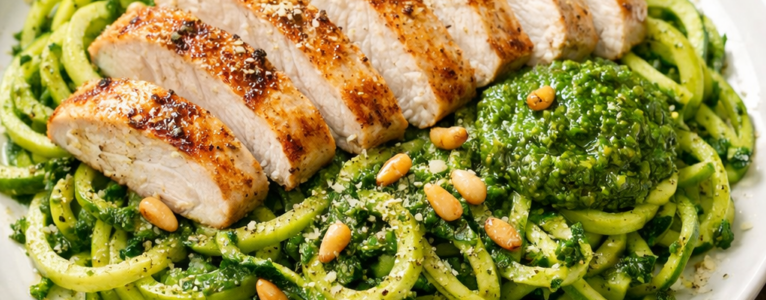
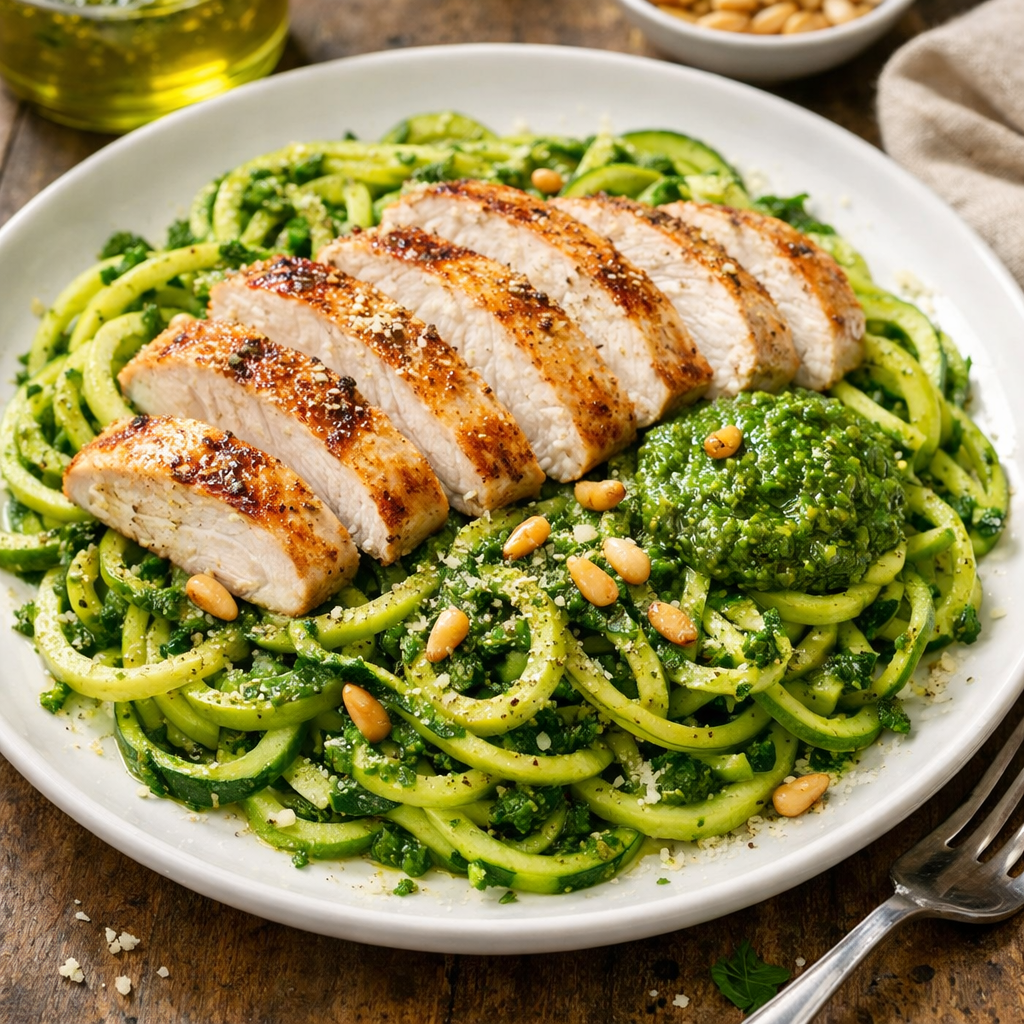
There is something comforting about a bowl of noodles coated in fresh pesto and topped with warm slices of grilled chicken. It feels familiar. It feels complete. But for many people exploring lectin awareness, traditional pasta becomes one of the first foods they reconsider.
Wheat pasta is not just a carbohydrate source. It contains wheat germ agglutinin, a lectin that has been studied for its ability to bind to certain carbohydrate structures on intestinal cells. While most people tolerate wheat without immediate symptoms, others with digestive sensitivity or autoimmune tendencies may find that reducing lectin exposure improves how they feel.
This is where zucchini noodles, often called zoodles, quietly change the equation. By replacing grain-based pasta with spiralized zucchini, the entire lectin load of the dish shifts. What remains is a meal built on whole foods that are naturally low in lectins and supportive of digestive health. Pastured chicken and pesto zoodles is not about restriction. It is about intelligent substitution. It reflects what happens when food tradition meets modern nutritional insight.
Understanding the Lectin Angle
Lectins are proteins found primarily in plants, especially in seeds, grains, and legumes. They function as defense molecules. Their defining characteristic is their ability to bind to carbohydrates. In laboratory settings, certain lectins have demonstrated the ability to attach to intestinal cell surfaces.
This binding property is not automatically harmful. In fact, some lectins are being studied for potential medical applications. The concern arises when large amounts of active lectins reach a compromised gut barrier. Research suggests that certain lectins can resist digestion and may interact with gut lining cells under specific conditions.
Heat can inactivate many lectins. Proper boiling and pressure cooking dramatically reduce lectin activity in beans. Fermentation can alter lectin structures in grains. However, wheat based pasta, even when cooked, still contains residual lectin activity. For individuals experimenting with lower lectin intake, reducing wheat products is often a practical starting point.
Why Zucchini Works
Zucchini is a summer squash that contains minimal lectin activity compared to cereal grains and legumes. Most lectins in plants are concentrated in seeds or protective outer layers. The fleshy interior of zucchini is generally well tolerated.
From a metabolic perspective, zucchini also carries a lower carbohydrate load than pasta. This reduces post-meal blood sugar spikes, which can help stabilize energy and support balanced inflammatory signaling.
Light sautéing softens zucchini fibers and improves digestibility without overcooking. The goal is tender strands that retain slight firmness. Texture matters. Satisfaction matters. When zucchini replaces pasta, the dish shifts from being grain-centered to vegetable-centered. That change alone can significantly lower dietary lectin exposure.
Choosing the Right Protein
Chicken itself does not contain lectins, since lectins are plant proteins. However, the quality of animal protein still matters.
Pastured chicken typically offers a more favorable fatty acid profile compared to conventionally raised poultry. Birds raised with access to natural forage often have improved omega 3 content and lower inflammatory fat ratios. While the differences vary, many people seeking an anti-inflammatory dietary pattern prefer higher quality animal sources.
Proper cooking is also important. Heat denatures muscle proteins, making them easier to digest. Grilling or pan-searing chicken breast until fully cooked ensures both safety and digestibility. Protein also slows gastric emptying, improves satiety, and stabilizes blood sugar when paired with vegetables and healthy fats. In a low-lectin framework, clean protein acts as a foundation.
The Power of Fresh Pesto
Pesto brings flavor, but it also adds functional nutrients. Fresh basil provides polyphenols and aromatic compounds that contribute antioxidant activity. Garlic contains sulfur compounds such as allicin, which have been studied for cardiovascular and immune support. Extra virgin olive oil delivers monounsaturated fats and bioactive polyphenols associated with reduced oxidative stress.
Pine nuts or walnuts can be used in moderation. While nuts do contain lectins, their levels are significantly lower than those found in legumes and grains. Lightly toasting them improves flavor and may reduce certain anti-nutrient activity. The key is making pesto at home. Store-bought sauces often contain soybean oil, starches, or additives that increase lectin exposure. Homemade pesto keeps the ingredient list clean and intentional.
Pastured Chicken and Pesto Zoodles
Ingredients
- For the zoodles and chicken:
- 3 medium zucchini, spiralized
- 2 pastured, organic chicken breasts
- 2 tablespoons extra virgin olive oil
- Sea salt to taste
- Freshly ground black pepper
- For the pesto:
- 2 cups fresh basil leaves, tightly packed
- 2 cloves garlic
- 1/4 cup pine nuts or walnuts, lightly toasted
- 1/3 to 1/2 cup extra virgin olive oil
- Sea salt to taste
- Optional: 2 tablespoons freshly grated aged Parmesan if tolerated
Instructions
- Prepare the chicken. Pat the chicken breasts dry and season both sides with sea salt and pepper. Heat a grill pan or skillet over medium heat with 1 tablespoon olive oil. Cook the chicken for approximately 5 to 7 minutes per side, depending on thickness, until internal temperature reaches 165°F. Remove from heat and allow to rest for at least 5 minutes before slicing.
- Make the pesto. In a food processor, combine basil, garlic, toasted nuts, and a pinch of sea salt. Pulse until roughly chopped. Slowly drizzle in olive oil while blending until a smooth but slightly textured sauce forms. Taste and adjust salt as needed. Add Parmesan if using.
- Cook the zoodles. Heat the remaining tablespoon of olive oil in a large skillet over medium heat. Add spiralized zucchini and sauté for 2 to 4 minutes. The goal is just until tender. Avoid overcooking to prevent excess moisture.
- Assemble the dish. Remove the skillet from heat. Toss the warm zoodles with enough pesto to lightly coat. Plate the zoodles and top with sliced grilled chicken. Add a spoonful of extra pesto if desired.
- Serve immediately.
What This Plate Represents
This dish illustrates a broader concept in lectin-aware eating. Instead of focusing on what must be eliminated, it highlights what can be built. The base is a low-lectin vegetable. The protein is clean and properly cooked. The sauce is fresh, whole, and free from industrial additives. There are no refined grains, no processed seed oils, and no hidden soy derivatives.
From a scientific standpoint, the meal reduces exposure to some of the most commonly discussed dietary lectins while supporting blood sugar balance and digestive comfort. From a culinary standpoint, it is vibrant and satisfying.
Living Low-Lectin Without Living Small
Modern lectin research is still evolving. Not everyone needs to eliminate lectins entirely. Many lectin-containing foods can be prepared safely with traditional methods such as soaking, fermenting, or pressure cooking.
But for individuals experimenting with reduced lectin intake, meals like pastured chicken and pesto zoodles offer a practical, enjoyable starting point. They demonstrate that lowering lectin exposure does not require complicated rules. It requires awareness, thoughtful swaps, and a willingness to return to whole foods.
In the end, the goal is not dietary perfection. It is resilience. A resilient gut barrier. Balanced immune signaling. Stable blood sugar. Sustainable habits. Sometimes that journey begins with something as simple as replacing pasta with zucchini and blending fresh basil with olive oil in your own kitchen.
That is not just a recipe. It is a strategy you can taste.