Holiday gatherings have a way of putting familiar foods in unfamiliar circumstances. A beautifully roasted turkey may be surrounded by bread stuffing, creamy casseroles, mashed potatoes, homemade gravy, and desserts prepared from recipes passed down through generations. For someone attending their first holiday celebration while following a low-lectin diet, the challenge often lies in identifying which dishes fit their eating plan without turning dinner into a lengthy investigation of every ingredient.
The uncertainty usually comes from how holiday foods are prepared. Flour disappears into gravy, cornmeal becomes part of stuffing, and an otherwise suitable vegetable dish may contain a packaged sauce or ingredients someone has chosen to limit. With some preparation and a few thoughtful arrangements, it is possible to enjoy a traditional holiday meal while maintaining the dietary boundaries that matter to you.
Establish Your Dietary Boundaries Before the Gathering
Low-lectin eating plans vary considerably in the foods they restrict. Some emphasize limiting legumes and certain grains, while more restrictive approaches also exclude nightshade vegetables, corn, or particular seeds. Preparation methods may influence which ingredients someone includes, although techniques such as peeling, deseeding, and cooking do not affect every lectin in the same way.
Before attending a holiday gathering, identify the foods you intend to avoid and those that remain acceptable within your established eating plan. Someone who excludes wheat may choose to skip traditional stuffing while having no concerns about roasted sweet potatoes or butter. Another person may avoid both wheat and nightshade vegetables but regularly include certain properly cooked legumes.
Making these distinctions ahead of time prevents unnecessary decisions at the dinner table. It also helps separate a deliberate dietary preference from restrictions required for a diagnosed allergy, celiac disease, or another medical condition. Those medically necessary restrictions may involve additional precautions, including preventing cross-contact between foods and utensils.
There is also a scientific distinction worth understanding. As discussed in the Harvard T.H. Chan School of Public Health’s review of dietary lectins, many lectins lose substantial activity through appropriate cooking, while evidence demonstrating broad health benefits from following a low-lectin diet remains limited. A person can follow a preferred low-lectin eating pattern without treating every food that naturally contains lectins as harmful.
Talk With Your Host Before the Menu Is Finalized
A short conversation with the host several days before the celebration can prevent many last-minute complications. Most hosts already have their main dishes planned and know which ingredients they expect to use. Asking about the menu early gives everyone more flexibility without interfering with the cooking schedule on the day of the gathering.
Focus on specific ingredients rather than expecting the host to understand the entire low-lectin dietary framework. Asking whether the turkey contains a packaged marinade, whether the gravy is thickened with wheat flour, or whether the vegetables will be roasted separately provides information you can actually use. A host may not know which foods contain lectins, but they will often know whether their stuffing contains cornbread or their casserole uses condensed soup.
Offering to bring a dish is another practical way to approach the conversation. A simple explanation that you’re following a particular eating plan and would be happy to contribute a vegetable side or another suitable preparation communicates your needs without asking anyone to redesign the meal. Bringing something that complements the existing menu also makes the arrangement feel like an ordinary contribution to the gathering.
You do not need a complete ingredient inventory for every dish on the table. Identifying a suitable protein, a couple of dependable sides, and something you can contribute may provide enough options for a satisfying meal. Additional foods can be considered once their ingredients are known.
Start With the Main Course
Traditional holiday proteins often provide a straightforward starting point for a low-lectin meal. Turkey, chicken, beef, lamb, and seafood do not contain the plant lectins typically targeted by low-lectin protocols. However, the seasonings, sauces, coatings, and other ingredients used during preparation can influence whether the finished dish fits your plan.
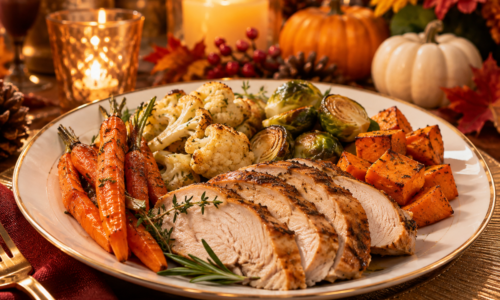
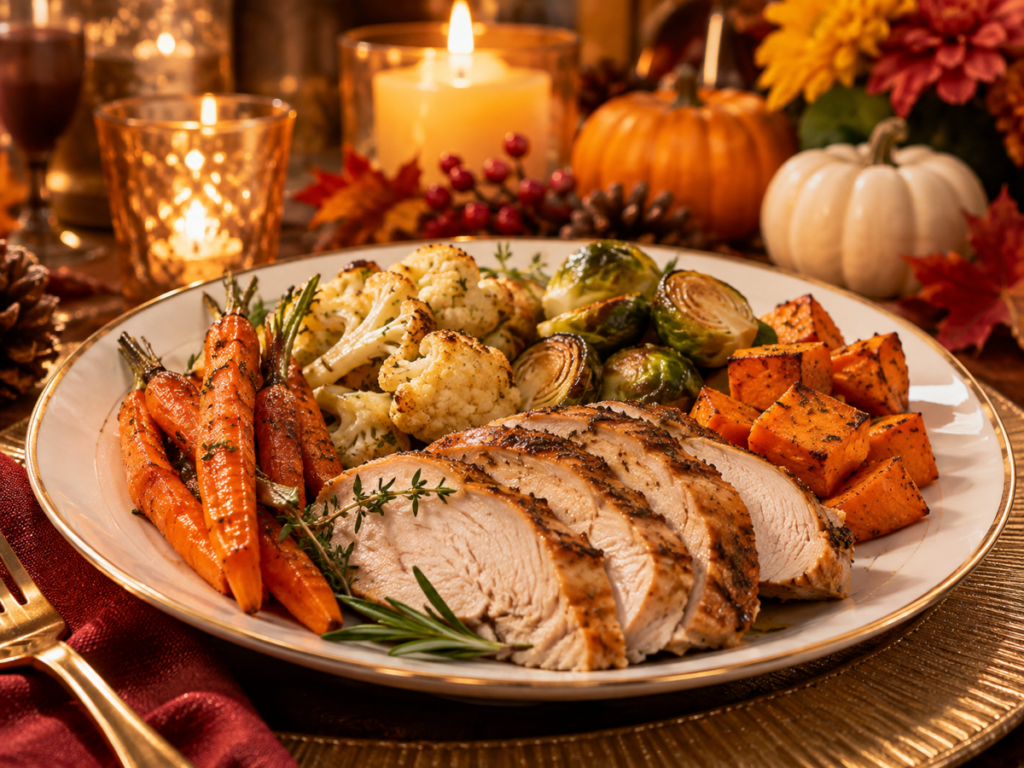
A turkey roasted with olive oil, butter, garlic, rosemary, and thyme may work well for someone following a low-lectin approach. Commercially prepared birds sometimes contain injected solutions, seasoning mixtures, or marinades that deserve a closer look if you are avoiding specific ingredients. Checking the product label beforehand is more reliable than attempting to identify every seasoning after the turkey has been carved.
Ham and beef roasts require similar consideration. A simple herb-seasoned roast may be suitable, while a sweet glaze, breadcrumb coating, or prepared sauce could introduce ingredients you prefer to limit. When the preparation is uncertain, requesting a portion without an optional sauce or topping can sometimes resolve the issue.
Food safety remains independent of dietary preference. The USDA recommends cooking turkey to an internal temperature of 165°F, measured with a food thermometer in the thickest part of the breast and the innermost portions of the thigh and wing. If the bird contains stuffing, the center of the stuffing must also reach 165°F.
Choose Holiday Vegetables With Familiar Ingredients
Vegetable sides can be among the easiest dishes to accommodate, particularly when they are prepared with straightforward seasonings. Roasted carrots, parsnips, cauliflower, asparagus, and Brussels sprouts are commonly included in low-lectin eating plans. Their preparation can remain simple, relying on olive oil, garlic, fresh herbs, or lemon rather than packaged sauces.
Roasting develops sweetness and browned flavors that pair naturally with traditional holiday meats. Cutting vegetables into reasonably uniform pieces helps them cook more evenly, although dense root vegetables generally require more cooking time than tender vegetables such as asparagus. Cooking separate vegetables on different trays can help prevent delicate ingredients from becoming overdone while firmer ones finish cooking.
Sweet potatoes offer another useful option for people whose protocols exclude white potatoes because of their nightshade classification. Although they share a common name, sweet potatoes belong to a different botanical family than white potatoes, as explained by the USDA Agricultural Research Service. Their natural sweetness works well with cinnamon, butter, or a small amount of maple syrup, depending on your dietary preferences.
A simple salad may also fit comfortably into the meal. Leafy greens combined with avocado, fresh herbs, and a dressing made from olive oil and lemon juice provide an alternative to heavily dressed vegetable dishes. Prepared dressings should be evaluated by their actual ingredients, since some contain soybean oil, corn-derived sweeteners, or thickeners that particular low-lectin protocols restrict.
Pay Attention to Stuffing, Gravy, and Casseroles
Stuffing deserves special attention because traditional recipes commonly rely on wheat bread, cornbread, or a combination of both. Even homemade versions that contain fresh herbs, celery, onions, and broth may be unsuitable for someone restricting particular grains. The ingredients matter more than whether the recipe is homemade or commercially prepared.
A cauliflower-based alternative can provide some of the familiar savory flavors associated with holiday stuffing. Small pieces of cauliflower combined with sautéed celery, onions, herbs, and an appropriate amount of broth create a vegetable-centered side that works well alongside roasted turkey. The texture will differ from traditional bread stuffing because cauliflower releases moisture and does not absorb liquid or hold its structure like toasted bread.
Gravy presents a less obvious ingredient issue. Many traditional gravies contain wheat flour, while others rely on cornstarch or prepared thickening mixes. Asking about the thickener is especially useful because it is almost impossible to identify once the gravy has been prepared.
Pan juices offer a simpler alternative when they are prepared separately from flour-thickened gravy. Skimming excess fat and gently reducing the juices can concentrate their flavor, although the resulting sauce will generally remain thinner than conventional gravy. Specialty flours do not all produce the same thickening effect, so replacing wheat flour in an established recipe may require adjustments to the liquid and cooking method.
Green bean casseroles, corn puddings, and creamy vegetable bakes also deserve individual attention. Green beans are immature legume pods, and some low-lectin approaches include them while others restrict legumes more broadly. A casserole may contain condensed soup, fried onion toppings, wheat-based thickeners, or other ingredients that influence whether the finished dish fits your plan.
Bring a Dish That Can Stand on Its Own
Contributing a homemade dish provides one dependable option without requiring the host to prepare a separate meal. It also allows you to control the ingredients, seasonings, and cooking method. A preparation that complements the existing holiday menu is generally more useful than an elaborate specialty recipe that requires unfamiliar ingredients or equipment.
A roasted vegetable medley makes a practical contribution. Carrots, cauliflower, and parsnips can be cut into similar-sized pieces, tossed with olive oil, seasoned with rosemary or thyme, and roasted until tender with lightly browned edges. Adding fresh lemon juice after cooking can brighten the flavor without requiring a prepared dressing.
For a more substantial contribution, consider herb-roasted chicken, sautéed greens, or a salad with a separately packaged dressing. Avoid relying on unfamiliar flour substitutes or complicated recipe conversions immediately before a gathering. Ingredients such as almond flour, coconut flour, and cassava flour behave differently in baking and thickening applications, so a tested recipe is preferable when the finished texture matters.
Transportation deserves some planning as well. Choose a dish that can be safely refrigerated and served cold, or one that can be reheated and held at an appropriate temperature at the destination. Confirming whether oven space will be available can prevent an awkward situation when the host is already using every burner and oven rack.
Understand What Holiday Cooking Changes About Lectins
Holiday meals frequently contain cooked grains, legumes, and vegetables, making it useful to distinguish raw ingredients from their prepared forms. Certain lectins lose substantial biological activity when exposed to sufficient moist heat, particularly through boiling. The degree of reduction depends on the particular lectin, the food containing it, and the cooking conditions.
Red kidney beans provide a well-established example. They contain phytohaemagglutinin, a lectin that can cause significant gastrointestinal illness when beans are eaten raw or inadequately cooked. The FDA’s Bad Bug Book guidance on kidney bean lectins recommends soaking dried kidney beans for at least five hours, discarding the soaking water, and vigorously boiling them in fresh water for at least 30 minutes. It also warns against relying on slow cookers to make raw kidney beans safe because they may not reach the temperatures needed to inactivate the lectin adequately.
Commercially canned kidney beans have already undergone substantial heat processing and are generally safe from this particular lectin-poisoning hazard. Someone following a restrictive low-lectin protocol may still choose to exclude them, but that dietary decision should be distinguished from the established food-safety risk associated with improperly cooked dried beans.
Other preparation methods sometimes used in low-lectin eating, including peeling tomatoes, removing seeds, and fermenting foods, cannot be assumed to eliminate every lectin. Their effects vary according to the ingredient and processing conditions, and some claimed reductions have limited direct supporting evidence. The demonstrated reduction of lectin activity in a laboratory measurement also does not automatically establish that the prepared food produces better health outcomes in people.
For a holiday gathering, this distinction is most useful when evaluating ingredients you’ve already decided to restrict. Proper cooking may change the activity of certain lectins, but it does not necessarily make a dish compatible with your particular eating plan.
Approach Holiday Desserts With a Little Advance Planning
Dessert can be one of the more challenging courses because traditional recipes often combine several ingredients restricted by particular low-lectin protocols. Pie crusts commonly contain wheat flour, while cakes, cookies, and puddings may incorporate grains, starches, or other ingredients you prefer to avoid. The filling and crust should be evaluated separately because a fruit-based dessert may still contain an unsuitable pastry or thickener.
Baked pears, fresh berries, or another fruit-based preparation may provide a simpler alternative. Pears baked with cinnamon and a modest amount of butter offer familiar holiday flavors without requiring a complicated flour substitution. For people who include nuts in their eating plan, an appropriate topping can add texture, although nuts should be chosen according to individual restrictions and any known allergies.
If dessert is a meaningful family tradition, preparing an acceptable version beforehand may be worthwhile. A tested recipe using preferred ingredients provides a more predictable result than attempting to recreate a traditional dessert with unfamiliar substitutes on the day of the celebration. There is also no requirement to replace every dessert on the table, particularly if the main meal already offers enough satisfying choices.
Handle Family Questions Without Turning Dinner Into a Dietary Debate
Food carries family traditions, and declining a particular dish can occasionally attract attention. Someone may have spent hours preparing a cherished stuffing recipe or a dessert served at every holiday gathering. A polite explanation that you’re currently avoiding one of the ingredients is usually enough to acknowledge their effort while maintaining your dietary preference.
Questions about lectins may also arise, especially among relatives who are unfamiliar with low-lectin eating. Explaining that you’re paying closer attention to certain ingredients and food preparation methods can describe your approach without making claims about how those foods affect everyone else. If someone is genuinely interested, you can discuss the subject further at a more convenient time.
A holiday gathering rarely provides the ideal setting for an extended discussion about dietary research. Guests may have different experiences, nutritional needs, and opinions about particular foods. Keeping the explanation focused on your own choices allows the conversation to continue naturally without inviting an argument over the menu.
Plan for the Timing of the Holiday Meal
Holiday dinners do not always follow a predictable schedule. Guests may arrive hours before the main meal, appetizers may circulate throughout the afternoon, and the turkey may take longer than anticipated. Someone depending entirely on the holiday dinner for their next meal may find themselves choosing among unfamiliar foods while unusually hungry.
Eating a modest meal or snack beforehand can make the timing less consequential. Eggs, leftover roasted chicken, avocado, or another familiar food may be appropriate depending on your eating plan. The intention is simply to avoid arriving at a lengthy gathering without having eaten for an extended period.
It also helps to identify a few likely choices before approaching the serving table. A portion of roasted turkey, suitable vegetables, and a dish you’ve contributed may provide a complete meal without requiring extensive substitutions. Additional foods can be included when their ingredients and preparation are clear.
Buffet arrangements deserve attention because shared serving utensils can transfer sauces, crumbs, and other food ingredients between dishes. For someone with a medically diagnosed food allergy or celiac disease, this cross-contact can be a genuine safety concern rather than a dietary preference. In those circumstances, arranging a separately prepared and protected portion with the host may be necessary.
Follow Food-Safety Rules at the Holiday Buffet
Buffet-style meals introduce food-handling concerns that apply regardless of lectin content. Turkey, meat dishes, dairy-based casseroles, and other perishable foods may sit out while guests socialize or return for second servings. Food that fits a low-lectin eating plan still requires proper temperature control.
The FDA’s guidance for serving safe buffets recommends keeping hot foods at 140°F or warmer and cold foods at 40°F or colder. Perishable foods left at room temperature for more than two hours should be discarded unless they have been maintained at safe hot or cold holding temperatures. When the surrounding temperature exceeds 90°F, that time limit decreases to one hour.
Smaller serving dishes can help hosts maintain both food quality and appropriate temperatures. Rather than repeatedly adding fresh food to a dish that has been sitting on the table, nearly empty serving dishes should be replaced with clean ones containing properly held food. Cold dishes can be kept over ice, while suitable warming equipment can help maintain the temperature of hot preparations.
Leftovers require the same attention. The USDA recommends refrigerating leftovers promptly in shallow containers to encourage faster, more even cooling. Properly refrigerated leftovers should generally be eaten within three to four days or frozen for longer storage, and reheated leftovers should reach 165°F.
If you’re bringing home food from the gathering, consider how long it will remain unrefrigerated during travel. An insulated cooler with ice packs can help keep chilled foods cold, especially when the drive home is lengthy. Food that has already exceeded safe holding limits should not be saved simply because it will be refrigerated afterward.
Use the Experience to Simplify Future Holiday Meals
The first holiday gathering can reveal useful details about which familiar recipes already fit your dietary preferences. Perhaps the host regularly prepares roasted vegetables without complicated sauces, or the turkey seasoning contains only ingredients you normally use. Recording those practical details makes it easier to plan future celebrations without requesting the same information every year.
If you maintain a food journal, the gathering may also provide an opportunity to document unfamiliar ingredients or noticeable digestive symptoms. Holiday meals often differ from everyday eating in portion sizes, fat content, seasonings, alcohol consumption, and meal timing. These factors can influence gastrointestinal symptoms, so a reaction after dinner does not establish that lectins were responsible.
A particularly successful homemade dish may become a regular contribution to future celebrations. Saving the recipe, recording how well it traveled, and noting whether it needed reheating can make preparation easier the following year. Those details are especially useful when multiple relatives host gatherings or when holiday meals take place away from home.
Family recipes may also offer opportunities for small, practical adjustments. A vegetable casserole could be prepared with its sauce served separately, or a portion of pan juices might be reserved before flour is added to make gravy. Arrangements like these can become familiar parts of the holiday cooking routine, allowing traditional dishes and individually prepared alternatives to share the same table.