How Acidic Environments Change Protein Behavior
Proteins are often talked about as if they are static things. A chicken breast is protein. A bean contains protein. Lectins are proteins. Enzymes are proteins.

The way you prepare food can dramatically change lectin levels, nutrient availability, and digestive comfort. In this category, you’ll learn essential low-lectin cooking techniques like pressure cooking, fermentation, soaking, sprouting, peeling, deseeding, and more. Each method is explained step-by-step so you can apply it confidently at home.
These guides help you transform high-lectin foods into gentler, gut-friendly options and maximize flavor along the way. If you’re looking to build your skills and master the low-lectin kitchen, start here.
Proteins are often talked about as if they are static things. A chicken breast is protein. A bean contains protein. Lectins are proteins. Enzymes are proteins.
For most of human history, food preparation was not a matter of convenience. It was a matter of survival.
For most people trying to eat better, cooking shortcuts feel like survival tools. Modern life does not leave much room for soaking beans overnight, simmering broths for hours, or carefully peeling and deseeding vegetables after a long workday.
Long before lectins became a buzzword in modern nutrition, people around the world were already developing ways to live with them.
For anyone exploring a low-lectin way of eating, cooking methods quickly become more than a culinary preference.
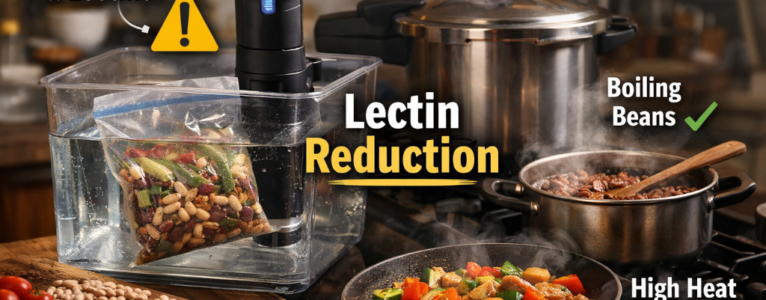
Sous-vide cooking has earned a reputation as one of the most precise and gentle ways to prepare food.
When people begin paying attention to lectins, cooking quickly becomes part of the conversation. It is not just what you eat, but how you prepare it.
One of the most persistent myths in nutrition is the idea that food safety, digestibility, and tolerance are mostly a function of how long something is cooked.
One of the quiet assumptions most people make about food is that once it is cooked, it is “done.” The cooking step is treated as a finish line.
For decades, raw food has carried an almost untouchable reputation. Raw means natural. Raw means pure. Raw means healthy.