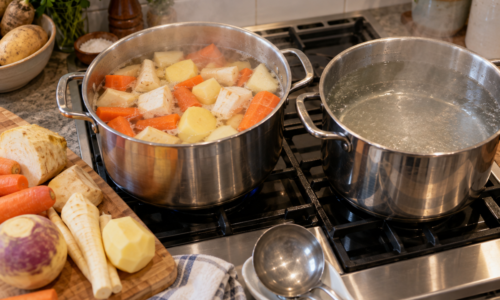
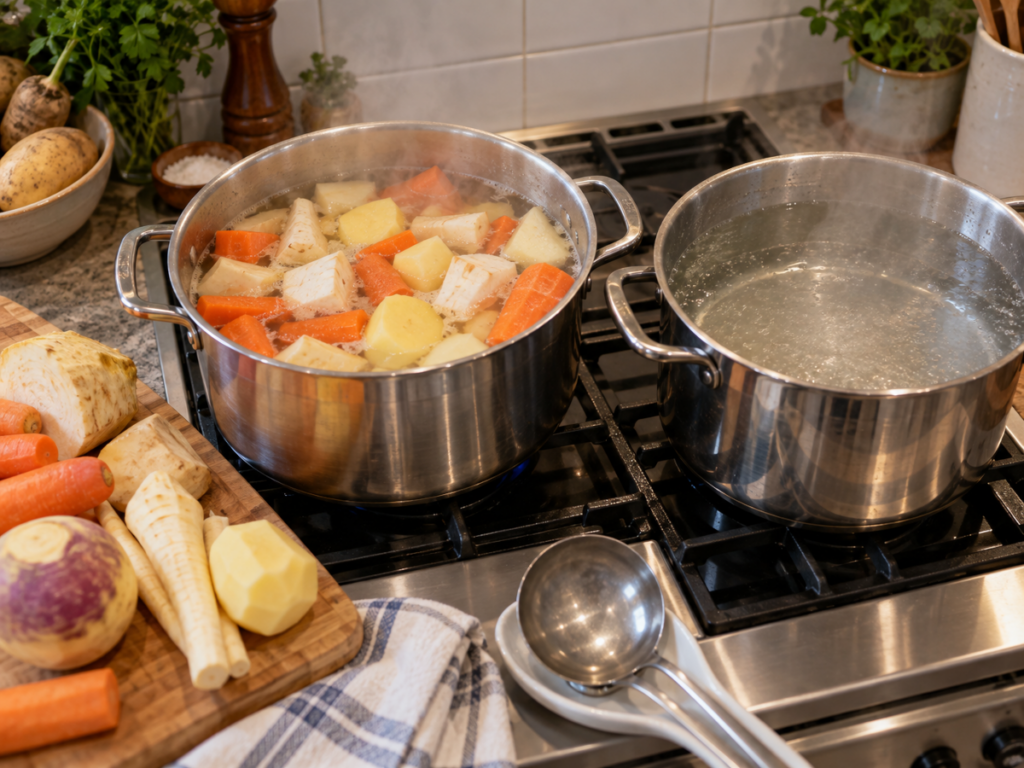
A pot of carrots, parsnips, potatoes, or other root vegetables usually seems simple enough. Add water, simmer until tender, drain, season, and serve. For someone paying closer attention to food tolerance, however, there is another preparation method worth understanding: boiling the vegetables once, discarding the water, adding fresh water, and cooking them again.
This technique is often called double boiling or double cooking. It has been studied most closely as a way of removing potassium from potatoes and other tuberous vegetables, especially for people who need medically supervised potassium restriction. Its usefulness in a low-lectin kitchen is more specific. Double boiling can change what remains in a vegetable because heat breaks down plant tissue while water carries some soluble compounds away, but that does not mean simmering something twice automatically removes every compound a low-lectin eater might be concerned about. Understanding what the technique actually does makes it easier to decide when the extra pot of water is worthwhile and when ordinary cooking is enough.
What Happens During the First Boil
Once pieces of a root vegetable enter hot water, several things begin happening at the same time. Heat softens cell walls, starches absorb water and gelatinize, and some substances inside the vegetable begin moving into the surrounding cooking water. The amount transferred depends on the vegetable, the compound being measured, how small the pieces are cut, the amount of water used, and how long the food stays in contact with that water.
Potassium offers one of the clearest examples. Research on potatoes has found that boiling can remove substantial amounts of potassium, while simply soaking raw potatoes may accomplish much less. One study found that boiling potato cubes reduced potassium by about half, while shredded potatoes lost even more because much more surface area was exposed to the water. Other minerals were lost along with potassium, including magnesium, phosphorus, iron, zinc, and manganese.
That movement into the water explains why draining matters. If the cooking liquid becomes part of a soup, stew, or sauce, the compounds that left the vegetable have not disappeared from the meal. They have simply moved from the vegetable into the broth. Double boiling takes this process one step farther.
Why Replacing the Water Can Increase Leaching
In a basic double-cooking method, peeled or prepared vegetables are cut into pieces and placed in water. They are partially boiled, drained and sometimes rinsed, then covered with fresh water and cooked until tender.
Research involving several tropical roots and tubers, including yams, yuca, malanga, and related vegetables, found that boiling, rinsing, and boiling again generally removed more potassium than a single boiling treatment. The effect was not identical for every vegetable, which is an important reminder that cooking methods do not produce one predictable percentage across all plant foods.
More recent research with potatoes has reached a similar result. In one study examining different double-cooking conditions, double-cooked potatoes consistently lost more potassium than potatoes cooked once. The researchers also observed that the first cooking period disrupted potato tissue, allowing potassium within the cells to move more readily into the water.
The practical mechanism is fairly straightforward. The first pot of water becomes increasingly loaded with substances escaping from the vegetable. Throwing that water away and replacing it with fresh water creates another opportunity for soluble compounds to move outward.
Cut size also matters. Small cubes, thin slices, or shredded vegetables expose more tissue directly to water than a whole potato or large chunk. That can improve leaching, although it can also leave the finished vegetable softer and more prone to breaking apart.
Double Boiling Is Better Established for Potassium Than for Lectins
The distinction between potassium removal and lectin reduction deserves attention in a low-lectin kitchen. Double boiling has measurable evidence behind it as a potassium-reduction technique, but there is far less evidence showing that root vegetables specifically need two separate boiling cycles to meaningfully reduce lectin exposure.
Lectins are carbohydrate-binding proteins found throughout the plant kingdom. A 2026 European Food Safety Authority assessment notes that lectins occur in foods including legumes, grains, tomatoes, potatoes, and eggplants. Heat treatment can reduce or deactivate many plant lectins, although the amount of heat required varies considerably between foods and lectin types. The strongest food-safety concerns and preparation evidence involve legumes, particularly improperly cooked beans, rather than ordinary servings of carrots, parsnips, turnips, or similar roots.
That means double boiling should not be described as a proven universal “lectin removal” treatment for root vegetables. Heat may affect lectin proteins that are present, and repeated cooking certainly adds more heat exposure, but published evidence does not establish that two separate simmering cycles offer a meaningful lectin-related advantage for every root vegetable compared with thorough conventional cooking.
For someone following a low-lectin lifestyle, the method makes more sense as an optional preparation tool than as a requirement. A person who already tolerates roasted carrots or boiled parsnips well has little reason to assume that every serving must now be cooked twice.
Water Can Also Carry Away Some Oxalate
Another reason repeated water cooking occasionally enters dietary discussions is oxalate. Oxalates occur naturally in many plant foods, and their amounts vary greatly among species, cultivars, growing conditions, and preparation methods. They are a separate category of compounds from lectins.
Boiling has been shown to reduce soluble oxalate in many vegetables because that portion can move into the cooking water. In research comparing household cooking methods, boiling reduced soluble oxalate by approximately 30 to 87 percent in the vegetables tested and generally removed more than steaming or baking.
Root vegetables do not all behave alike. Research compilations show reductions after boiling in foods such as carrots and beets, but the amounts vary, and some oxalate remains because part of it is insoluble. Food composition measurements also vary considerably between studies.
Replacing the water theoretically creates another opportunity for soluble material to leave the food, but evidence specifically demonstrating a predictable additional oxalate reduction from double boiling common root vegetables is limited. Someone who has been medically instructed to manage oxalate intake should base that strategy on the full diet and professional guidance rather than assuming that cooking a high-oxalate food twice makes portion size irrelevant.
Potatoes Require a Different Kind of Attention
White potatoes occupy an unusual position in low-lectin discussions because they are tubers from the nightshade family and contain several compounds people sometimes group together incorrectly. Potato lectins and potato glycoalkaloids are different substances, and reducing one does not automatically mean reducing the other.
The primary glycoalkaloids in potatoes are alpha-solanine and alpha-chaconine. Concentrations are highest around sprouts, skin, damaged tissue, and green areas produced after light exposure. Boiling peeled potatoes can reduce glycoalkaloid content somewhat, largely through movement into the cooking water, but boiling is not considered especially effective at destroying these compounds. Avoiding heavily greened, bitter, damaged, or extensively sprouted potatoes remains more relevant than expecting a second boil to correct poor-quality potatoes.
For a person who includes peeled white potatoes occasionally within a personalized low-lectin approach, double boiling may make sense for preparation reasons, particularly if potassium reduction is also desirable. It should not be treated as a way to turn a badly greened potato into an appropriate ingredient.
Sweet potatoes are botanically different from white potatoes and should not automatically be assigned the same concerns simply because both are called potatoes. Their cooking behavior, plant chemistry, and individual tolerance deserve to be considered separately.
Cassava Needs Its Own Safety Rules
Cassava, or yuca, also deserves separate treatment because it naturally contains cyanogenic glycosides that can release cyanide. This issue has nothing to do with lectins, and casual experimentation with cooking times is not the right approach for raw cassava.
Food-safety guidance emphasizes that processing requirements depend on the type of cassava and the form in which it is sold. Research reviewed by Food Standards Australia New Zealand indicates that simple cooking methods such as boiling, steaming, baking, or frying can produce widely varying reductions in cyanogenic compounds and may not always be sufficient by themselves for higher-cyanide cassava. Commercially processed, canned, or appropriately prepared cassava products offer a more predictable starting point.
Anyone preparing fresh cassava should therefore follow established cassava-specific preparation instructions rather than assuming that “boil it twice” is a universal safety formula. Double cooking can be useful for some roots, but cassava chemistry requires more specific handling.
The Nutritional Tradeoff of Throwing Away Cooking Water
Anything that improves leaching also raises the possibility of nutrient loss. Potassium may be the target in a medically restricted diet, but potassium is ordinarily an essential nutrient. Magnesium and other minerals can leave vegetables during boiling as well, and water-soluble vitamins may also be reduced during prolonged cooking. Clinical guidance on lowering potassium through food preparation specifically acknowledges this tradeoff.
For people without a medical need to restrict potassium, aggressively removing it from vegetables provides no automatic health advantage. Someone eating a varied diet may decide that the additional nutrient loss, softer texture, extra cooking time, and additional water use are not worthwhile. This is where personal goals matter. Double boiling can be a targeted technique without becoming a rule applied to every vegetable in the kitchen.
A Practical Double-Boiling Method
For potatoes, yams, rutabaga, parsnips, turnips, celeriac, and similar sturdy vegetables, a practical household method begins with peeling when that fits the vegetable and the dietary goal. Cut the food into relatively even pieces so they cook at roughly the same rate. Smaller pieces encourage greater contact with the water, but very small cubes may become overly soft during the second cooking period.
Place the vegetables in a generous amount of water and bring them to a boil. Cook only until they begin to soften rather than taking them all the way to their finished texture. Drain the first water completely, give the vegetables a quick rinse if desired, then return them to the pot with fresh water and simmer until tender.
Discard the second cooking water if leaching is the objective. After draining, flavor can be rebuilt with extra virgin olive oil, butter or ghee if those fit the person’s eating pattern, fresh herbs, garlic, lemon, sea salt, or other tolerated seasonings.
The method works especially well when the finished vegetables will be mashed, pureed, or incorporated into a dish where a slightly softer texture is welcome. For roasted vegetables, double boiling can serve as a par-cooking stage. The drained pieces can be dried thoroughly, lightly coated with an appropriate fat, and finished in the oven for browning.
When a Second Boil Is Worth the Extra Step
Double boiling makes the most practical sense when there is a clear reason for increasing water extraction. Potassium reduction is the best documented example, particularly when a qualified clinician or dietitian has recommended dietary potassium management. The technique can also appeal to people experimenting systematically with food preparation to see whether certain cooked vegetables feel different for them.
For lectins alone, the case is much weaker. Thorough cooking already exposes food proteins to heat, and current research does not demonstrate that routinely replacing the water halfway through cooking provides a special lectin-related benefit across ordinary root vegetables.
A more useful approach is to treat double boiling as one variable that can be tested rather than another dietary commandment. Keep the vegetable, serving size, accompanying foods, and seasoning reasonably consistent, then compare normal boiling with double boiling on separate occasions. If digestion, comfort, or another personally tracked response consistently differs, that observation can help shape future preparation choices even when research has not identified the exact reason.
For many meals, a well-cooked tray of roasted carrots or a pot of tender turnips will remain perfectly reasonable. On other days, peeling, cutting, simmering, draining, and giving those vegetables a second pot of fresh water may provide the degree of preparation someone is looking for. The value of double boiling comes from knowing what that extra water can actually remove, rather than assuming that cooking twice automatically makes every root vegetable better.