

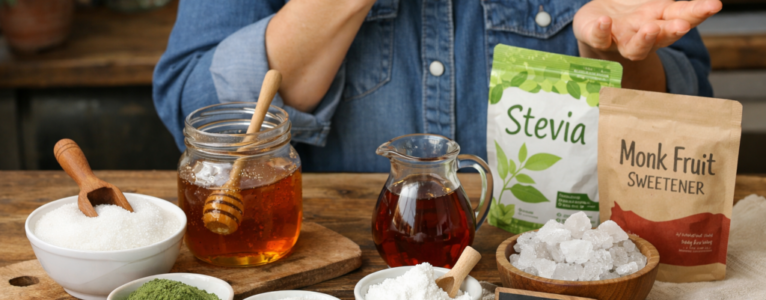
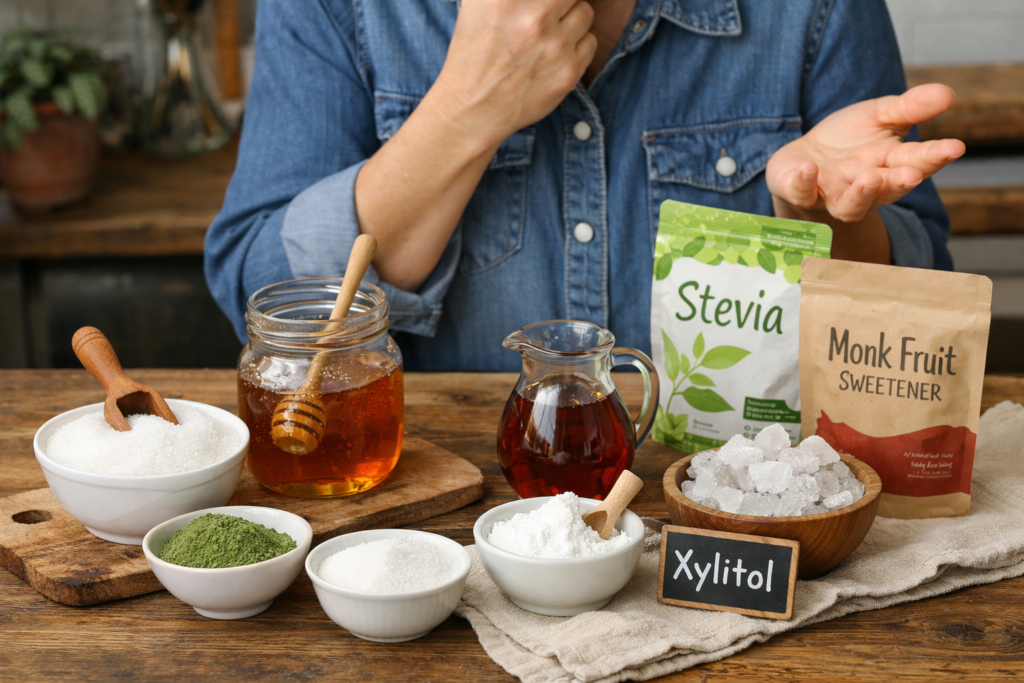
Sweetness has always been more than flavor. It is comfort, memory, and sometimes a quiet reward at the end of a long day. For many people exploring a low-lectin lifestyle, sweeteners become one of the more confusing categories to navigate. Unlike obvious lectin sources such as beans or certain grains, sweeteners exist in a gray area. They are often processed, sometimes refined, and not always discussed through the lens of gut interaction.
The question is not simply which sweeteners are “healthy.” It is which ones are least likely to disrupt the gut environment, especially for individuals who are already paying close attention to lectin exposure, digestive sensitivity, or immune signaling. In that context, the idea of a “gut-neutral” sweetener becomes more useful than labels like natural or artificial.
This is not about eliminating sweetness entirely. It is about understanding how different sweeteners interact with the body and choosing ones that create the least friction.
What “Gut-Neutral” Really Means
When we talk about gut neutrality, we are not talking about a substance that does nothing. Almost everything we consume has some biological effect. Instead, gut-neutral refers to sweeteners that are less likely to irritate the gut lining, disrupt the microbiome in a harmful way, or contribute to symptoms like bloating, gas, or inflammation.
Lectins themselves are proteins that bind to carbohydrates, and while most sweeteners do not contain lectins in a meaningful way, they still influence the same environment where lectins exert their effects. The gut lining, the microbial ecosystem, and the immune system are all part of that shared space.
A sweetener that rapidly spikes blood sugar, feeds undesirable bacteria, or pulls water into the intestines can create downstream effects that feel very similar to lectin sensitivity, even if lectins are not directly involved.
This is why the conversation around sweeteners matters in a low-lectin framework.
The Simplicity of Whole-Source Sweetness
One of the most overlooked approaches to sweetening food is also the oldest. Whole-food sweetness. This includes things like ripe fruit, cooked apples, or even small amounts of raw honey in its less processed form.
These sources come with context. Fiber, enzymes, trace minerals, and plant compounds all travel together. That does not make them harmless, but it does change how the body processes them.
For many people, small amounts of whole-food sweeteners are surprisingly well tolerated. A baked apple with cinnamon or a drizzle of honey in tea often feels different from consuming a highly refined sweetener, even if the sugar content is similar.
From a lectin perspective, preparation still matters. Peeling and deseeding fruits that are known to contain higher lectin levels in their skins or seeds can make them more approachable for sensitive individuals. Cooking can also reduce certain plant defense compounds and make digestion easier.
Whole-source sweetness is rarely discussed as a “sweetener category,” but it often sets the baseline for what gut-neutral can look like in practice.
Honey and Maple Syrup: Traditional but Not Identical
Honey and maple syrup are often grouped together, but they behave differently in the body.
Honey is a biologically active substance. It contains small amounts of enzymes, antioxidants, and antimicrobial compounds. Some research suggests that certain types of honey may support beneficial bacteria, while others may simply act as a sugar source. The variability depends on the floral source and processing.
Maple syrup, on the other hand, is primarily composed of sucrose with trace minerals like manganese and zinc. It is less biologically complex than honey but also less variable. For many people, this simplicity can be a benefit.
In terms of gut neutrality, both honey and maple syrup tend to be better tolerated than highly refined sugars when used in modest amounts. They are absorbed relatively efficiently in the small intestine, which means less of the sugar reaches the colon where it can feed gas-producing bacteria.
However, they are still sugars. Overconsumption can shift the gut environment in ways that are not ideal, especially for individuals dealing with metabolic issues or dysbiosis.
The key difference is not that one is “good” and the other is “bad,” but that both exist on a spectrum where dose matters.
Refined Sugar: Neutral or Problematic?
White sugar is often portrayed as the villain of modern nutrition, but its relationship with the gut is more nuanced.
Sucrose, which makes up table sugar, is a simple disaccharide composed of glucose and fructose. It is typically broken down and absorbed in the small intestine. In small amounts, it may not directly irritate the gut lining in the way some poorly tolerated sugar alcohols can.
In that sense, refined sugar can appear “neutral” in the short term. It does not contain lectins, and it does not inherently ferment in the gut if it is fully absorbed.
The problem emerges with quantity and frequency. Large amounts of refined sugar can overwhelm normal absorption processes, leading to more sugar reaching the colon. This can feed opportunistic microbes and contribute to imbalances over time.
There is also the metabolic side. Frequent blood sugar spikes can influence inflammation, hormone signaling, and overall energy regulation. These systemic effects can indirectly affect gut health.
So while refined sugar may be less immediately disruptive than some alternatives, it is not truly neutral when viewed through a broader lens.
Sugar Alcohols: The Hidden Source of Gut Distress
Sugar alcohols such as erythritol, xylitol, sorbitol, and maltitol are often marketed as low-calorie or low-glycemic alternatives. They are common in “sugar-free” products and are sometimes recommended for people managing blood sugar.
From a gut perspective, they are one of the least neutral categories.
These compounds are not fully absorbed in the small intestine. A significant portion travels to the colon, where it is fermented by gut bacteria. This fermentation process produces gas and can draw water into the intestines, leading to bloating, cramping, and diarrhea in some individuals.
Erythritol is often considered the most tolerable of the group because a larger percentage is absorbed before reaching the colon. Even so, sensitivity varies widely from person to person.
For individuals already paying attention to lectins and gut health, sugar alcohols can create symptoms that feel confusingly similar to lectin reactions. This makes them a poor fit for a gut-neutral approach.
High-Intensity Sweeteners: Small Dose, Big Impact
Artificial and high-intensity sweeteners such as sucralose, aspartame, and saccharin are used in very small amounts because they are significantly sweeter than sugar.
On the surface, they seem like an ideal solution. Minimal calories, minimal sugar, and no direct lectin content.
However, research over the past decade has raised questions about their effects on the gut microbiome. Some studies suggest that certain artificial sweeteners can alter the composition of gut bacteria in ways that may not be beneficial. The exact mechanisms are still being studied, and not all findings are consistent, but the trend is worth paying attention to.
There is also the behavioral aspect. Intense sweetness without accompanying calories can affect appetite regulation and cravings, which may lead to increased overall intake of sweet foods.
From a gut-neutral standpoint, the concern is not acute irritation but subtle shifts over time. These sweeteners may not cause immediate discomfort, but their long-term effects on the gut ecosystem are still being understood.
Stevia and Monk Fruit: Plant-Based but Not Always Gentle
Stevia and monk fruit are often positioned as natural alternatives to artificial sweeteners. They are derived from plants and contain compounds that provide sweetness without significant calories.
Stevia, in particular, has been studied for its potential effects on blood sugar and insulin response. Some people tolerate it well, while others report digestive discomfort or a lingering aftertaste that makes it less appealing.
Monk fruit sweeteners are usually blended with other compounds, often erythritol, which brings us back to the issues associated with sugar alcohols. Pure monk fruit extract is less common in commercial products.
In terms of gut neutrality, these sweeteners occupy a middle ground. They are not inherently disruptive for everyone, but they are not universally gentle either. Individual response plays a significant role.
The Role of Preparation and Context
One of the recurring themes in low-lectin living is that how you prepare food matters just as much as what you eat. This applies to sweeteners as well.
Combining sweeteners with fats, proteins, or fiber can slow absorption and reduce the likelihood of sharp blood sugar spikes. This can make a sweetened food feel more stable and less reactive in the body.
For example, a dessert made with almond flour, eggs, and a modest amount of honey may be better tolerated than a sugary beverage consumed on an empty stomach. The matrix of the food changes the experience.
Timing also matters. Consuming sweet foods alongside a meal rather than in isolation can influence how they are processed.
These are subtle shifts, but they often make a meaningful difference for people who are paying attention to their gut.
Finding Your Personal Baseline
There is no single sweetener that works perfectly for everyone. Gut health is highly individual, shaped by genetics, diet, lifestyle, and past exposures.
For some people, small amounts of honey or maple syrup feel completely neutral. For others, even those can trigger symptoms. Some individuals tolerate stevia without issue, while others find it disruptive.
The most reliable approach is to establish a personal baseline. Start with simpler, less processed sweeteners in small amounts and observe how your body responds. Pay attention not just to immediate reactions, but to how you feel over the next several hours or even the next day.
This process does not require perfection. It requires awareness.
A Practical Perspective on Sweetness
In a low-lectin lifestyle, the goal is not to remove every possible irritant from your diet. That would be unrealistic and unnecessary. The goal is to reduce the overall burden on your system so that your body can function more smoothly.
Sweeteners are just one piece of that puzzle.
When viewed through the lens of gut neutrality, a few general patterns emerge. Whole-food sources of sweetness tend to be the most balanced. Traditional sweeteners like honey and maple syrup can fit in moderate amounts. Refined sugar is not inherently toxic but becomes problematic with excess. Sugar alcohols are often the most disruptive. High-intensity sweeteners and plant-based alternatives fall somewhere in between.
What matters most is how these choices fit into your overall pattern of eating.
Closing Thoughts
Sweetness does not have to be an enemy. It is part of how we experience food and, in many ways, part of how we connect with it.
The shift that happens in a low-lectin lifestyle is not about fear. It is about awareness. Understanding that even small choices, like the type of sweetener you use, can influence how you feel.
Gut-neutral sweeteners are not perfect or universal. They are simply the options that create the least resistance in your system.
And sometimes, that is all you need.