

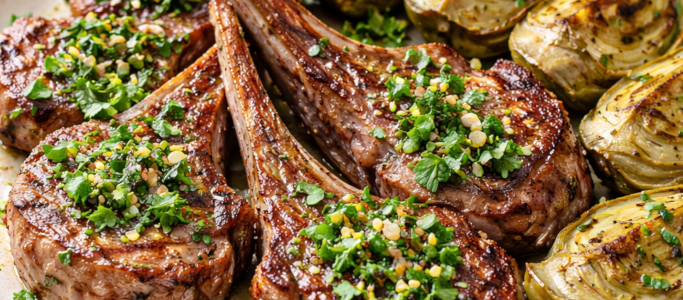
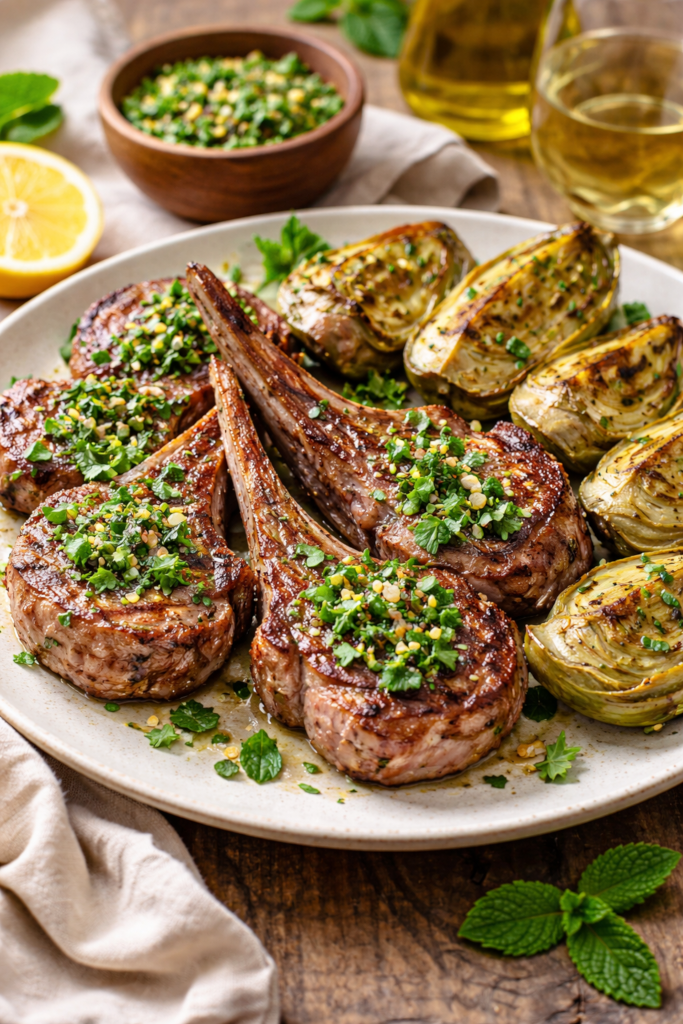
There is something grounding about cooking a meal that feels both ancient and intentional. Mediterranean lamb chops with mint gremolata are not just a recipe. They are a reflection of how food used to be approached before modern processing blurred the lines between nourishment and irritation. When you begin exploring a low-lectin lifestyle, meals like this become more than dinner. They become a way to reconnect with how food interacts with the body on a deeper level.
Lamb, herbs, citrus, and simple preparation methods tell a story that aligns closely with what modern lectin research is beginning to uncover. Not all foods affect all people the same way. The goal is not restriction for the sake of rules. The goal is awareness, preparation, and choosing ingredients that work with your body instead of against it.
This dish captures that philosophy in a way that is both practical and satisfying.
Why Lamb Fits Naturally into a Low-Lectin Lifestyle
One of the first surprises people encounter when exploring lectins is that animal proteins are not the primary concern. Lectins are plant proteins. They are part of a plant’s defense system, designed to discourage animals and insects from eating them. Because of this, lectins are concentrated in certain plant foods such as legumes, grains, and nightshades.
Lamb stands apart in this conversation. In many parts of the world, lamb is still raised in more traditional ways compared to other meats. Grass-fed lamb tends to have fewer additives, fewer exposures to processed feed, and a cleaner nutrient profile. It is rich in protein, contains essential fats, and provides micronutrients like zinc and B vitamins that support immune function and energy production.
From a lectin perspective, lamb offers simplicity. There is no need to soak it, pressure cook it, or modify it to reduce lectins. What matters instead is how it is seasoned and what it is paired with. That is where the rest of the dish becomes important.
The Role of Herbs and Why Simplicity Works
The Mediterranean region has a long history of using herbs not just for flavor, but for their functional properties. Mint, parsley, and garlic are not random choices in this recipe. They each contribute something meaningful.
Parsley is often overlooked, but it contains compounds that support digestion and may help the body process certain plant compounds more efficiently. Mint has a long association with calming the digestive system. Garlic, when used in moderate amounts and properly prepared, provides sulfur compounds that support immune health.
What is interesting from a lectin perspective is that these ingredients are generally well tolerated when used fresh and in balanced quantities. They are not heavy sources of problematic lectins, especially compared to foods like beans or wheat. The gremolata itself becomes more than a topping. It acts as a bridge between flavor and function.
Lemon Peel and the Subtle Science of Citrus
Many people new to low-lectin eating assume citrus is always straightforward. The reality is slightly more nuanced. The juice of citrus fruits is typically well tolerated, but the peel contains concentrated plant compounds that can either support or irritate depending on the individual. In this recipe, lemon peel is used in small amounts. This provides aromatic oils and brightness without overwhelming the dish.
The key is balance. Small quantities often enhance a meal without introducing issues. This reflects a broader principle in lectin-aware living. It is not always about complete elimination. It is about understanding dose and preparation.
Artichokes and the Prebiotic Conversation
The side of grilled artichoke hearts brings another layer to this dish that goes beyond taste. Artichokes are known for their prebiotic fiber, particularly a compound called inulin. Prebiotics are not bacteria themselves. They are food for beneficial gut bacteria. A healthy gut microbiome plays a role in how the body responds to many dietary components, including lectins.
Properly prepared artichokes are generally considered compatible with a low-lectin approach. The key is to use tender parts and cook them thoroughly. Grilling softens the fibers and enhances digestibility while adding a smoky depth that complements the lamb. This pairing highlights an important idea. A low-lectin lifestyle is not about removing all plant foods. It is about choosing the right ones and preparing them thoughtfully.
Cooking Methods and Why They Matter
How you cook your food can be just as important as what you cook. Grilling is a method that works particularly well for this dish. It allows excess fat to render, creates a flavorful crust, and does not introduce additional ingredients that could complicate digestion. The high heat also changes the structure of certain compounds, making them easier for the body to handle.
While lectins are primarily a concern in plant foods, cooking methods still influence overall digestibility. Simple methods like grilling, roasting, and pressure cooking tend to align well with a low-lectin approach. The goal is to reduce unnecessary complexity.
Mediterranean Lamb Chops with Mint Gremolata and Grilled Artichokes
This recipe is designed to be both approachable and aligned with low-lectin principles. Each ingredient is chosen for compatibility and simplicity.
Ingredients
For the Lamb Chops:
- 6 grass-fed lamb chops
- 1 tablespoon olive oil
- 1 teaspoon sea salt
- 1 teaspoon dried rosemary or 1 tablespoon fresh rosemary
For the Mint Gremolata:
- 2 tablespoons fresh mint, finely chopped
- 2 tablespoons fresh parsley, finely chopped
- 1 small garlic clove, minced
- 1 teaspoon lemon zest
- 1 tablespoon extra virgin olive oil
- Pinch of sea salt
For the Grilled Artichokes:
- 2 whole artichokes or 1 jar of artichoke hearts packed in water or olive oil
- 1 tablespoon olive oil
- Pinch of sea salt
Instructions
- Prepare the Artichokes. If using fresh artichokes, trim the outer leaves and cut them in half. Steam them for about 20 to 25 minutes until tender. This pre-cooking step helps break down tougher fibers and improves digestibility. If using jarred artichoke hearts, rinse and drain them. Once ready, lightly coat with olive oil and set aside.
- Season the Lamb. Pat the lamb chops dry. Rub them with olive oil, salt, and rosemary. Let them sit at room temperature for about 15 minutes. This allows the seasoning to settle into the meat and promotes even cooking.
- Make the Gremolata. In a small bowl, combine the chopped mint, parsley, garlic, lemon zest, olive oil, and a pinch of salt. Mix gently and set aside. Letting it sit allows the flavors to blend naturally.
- Grill the Lamb and Artichokes. Preheat your grill to medium-high heat. Place the lamb chops on the grill and cook for about 3 to 4 minutes per side for medium-rare. Adjust time based on your preferred doneness. At the same time, grill the artichokes for about 4 to 5 minutes until they develop light char marks.
- Assemble the Dish. Place the lamb chops on a plate and spoon the mint gremolata over the top. Serve alongside the grilled artichokes.
What This Meal Teaches Beyond the Plate
Meals like this do more than nourish. They teach. They show that a low-lectin lifestyle does not have to feel restrictive or complicated. In fact, the opposite is often true. When you strip away highly processed foods and focus on clean proteins, fresh herbs, and thoughtful preparation, meals become simpler and more satisfying.
This dish also highlights an important shift in thinking. Instead of asking whether a food is universally good or bad, the question becomes more personal. How does this food interact with your body? How is it prepared? What is it paired with? Modern lectin research continues to evolve, but one pattern is becoming clearer. Context matters. Preparation matters. Individual response matters.
The Bigger Picture of Living Low-Lectin
When you zoom out from this single recipe, you begin to see how it fits into a broader framework. Living low-lectin is not about fear of food. It is about understanding food.
It is about recognizing that modern diets often combine ingredients in ways that our bodies did not historically encounter. It is about noticing patterns in how you feel after eating. It is about making adjustments that support long-term well-being.
A dish like Mediterranean lamb chops with mint gremolata is a small, practical step in that direction. It brings together clean protein, supportive plant ingredients, and simple cooking methods in a way that aligns with both tradition and modern insight.
A Return to Intentional Eating
At the end of the day, this meal represents something larger than its ingredients. It reflects a return to intentional eating. A return to meals that are built with purpose rather than convenience. A return to listening to your body and responding with awareness.
You do not need a complicated system to begin. Sometimes it starts with something as simple as choosing lamb over processed meat, fresh herbs over bottled sauces, and a grill over a microwave. From there, the path becomes clearer.
And often, it tastes a lot better too.