

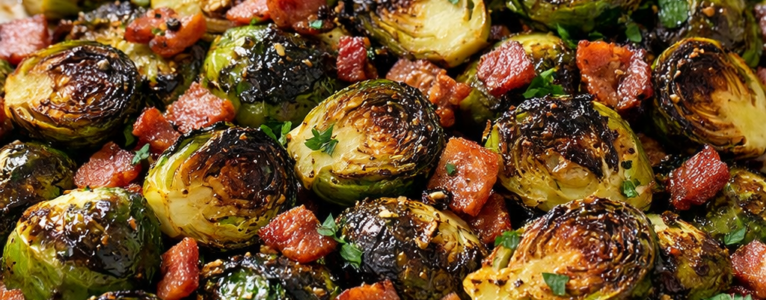
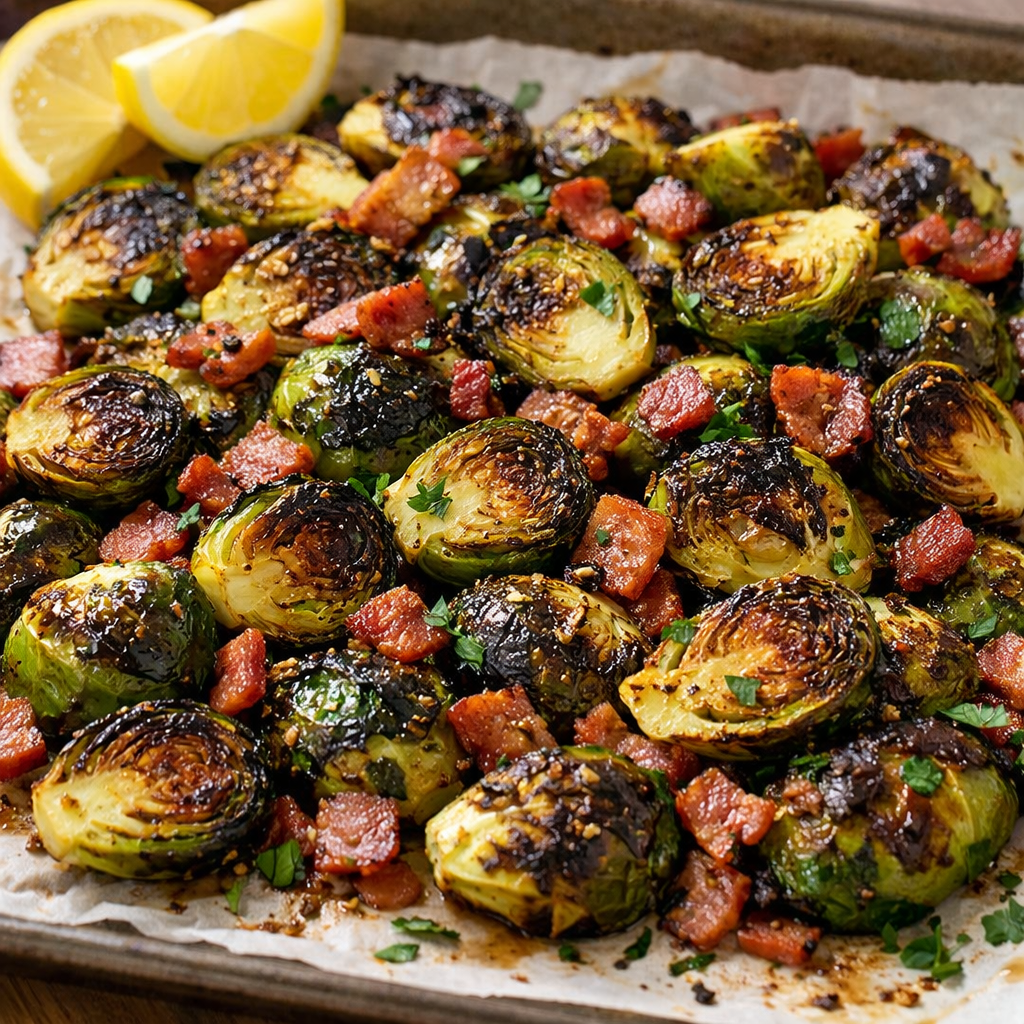
There is something grounding about putting a sheet pan in the oven and waiting for vegetables to transform. Raw Brussels sprouts are tight, pale, and slightly bitter. Bacon is soft and pliable. But give them heat, a little fat, and enough time, and they change completely. The sprouts loosen, their edges darken, their sugars caramelize. The bacon crisps and releases flavor into every corner of the pan.
For many people exploring a low lectin lifestyle, this kind of transformation is more than culinary. It is biological.
Brussels sprouts sit in the cruciferous family, alongside broccoli, cauliflower, cabbage, and kale. These vegetables have long been valued for their fiber, vitamins, and sulfur containing compounds such as glucosinolates. In a world where beans, grains, and certain nightshades often dominate conversations about lectins, cruciferous vegetables are generally considered low in problematic lectins and well tolerated by many individuals.
That matters. Because the goal of a lectin aware lifestyle is not restriction for the sake of fear. It is about understanding how plant proteins interact with our bodies and learning how preparation methods influence that interaction. This simple roasted Brussels sprouts with pastured bacon dish offers a practical example of how modern lectin science intersects with traditional cooking.
What Lectins Actually Are
Lectins are carbohydrate binding proteins found in many plants. Their biological role in plants is primarily defensive. They can bind to specific sugar structures on cells, including microbes and insects. In humans, some lectins can survive digestion to varying degrees, depending on their structure and how the food is prepared.
The best studied example is phytohemagglutinin in raw kidney beans. When beans are undercooked, this lectin can cause gastrointestinal distress. Proper soaking and boiling dramatically reduces its activity. That is not a theory. It is well documented.
But not all lectins are the same. Different plant families produce different lectins. Their resistance to heat varies. Their ability to bind to human gut cells varies. Their biological activity varies. That nuance often gets lost in broad dietary conversations.
Cruciferous vegetables like Brussels sprouts contain relatively low levels of lectins compared to legumes and certain grains. The lectins present in brassica vegetables are generally considered less problematic for most people, especially when cooked. Cooking matters because lectins are proteins. Proteins have structure. And structure determines function.
Why Heat Changes the Conversation
Proteins fold into specific shapes. That shape allows them to bind to other molecules. When exposed to heat, many proteins denature. This means they lose their three dimensional structure.
When a lectin loses its shape, its ability to bind to carbohydrate structures often decreases. That is why traditional cooking methods such as boiling, pressure cooking, fermenting, and roasting have been used for centuries. They were not described in molecular terms, but they were biologically meaningful.
Roasting Brussels sprouts at 400°F exposes them to sustained heat. While roasting is not identical to boiling, the internal temperature of the vegetable rises high enough to alter protein structure. Combined with the fact that cruciferous vegetables are not lectin heavy in the first place, this makes roasted Brussels sprouts a generally safe choice for those moderating lectin intake. This is where modern science and traditional kitchens align.
The Role of Fat and Pastured Bacon
Why add bacon? Flavor is part of the answer. But physiology is also part of it. Fat slows gastric emptying. That means food moves through the stomach more gradually. For some individuals with sensitive digestion, pairing vegetables with healthy fats can reduce bloating and improve tolerance.
Using nitrate free, pasture raised bacon does a few things. First, it avoids added curing agents that some people prefer to limit. Second, pasture raised pork often has a more favorable fatty acid profile, with slightly higher omega 3 content compared to conventionally raised pork. The difference is not extreme, but it is measurable.
The combination of avocado oil and bacon fat also increases the absorption of fat soluble nutrients. Cruciferous vegetables contain compounds such as vitamin K and various phytonutrients that are better absorbed in the presence of fat. So this dish is not just low lectin friendly. It is nutrient strategic.
Roasted Brussels Sprouts with Pastured Bacon
Servings: 4 Side Dishes
Ingredients
- 1 pound fresh Brussels sprouts, trimmed and halved
- 4 to 6 slices nitrate free, pasture raised bacon, chopped
- 1 to 2 tablespoons avocado oil
- Sea salt to taste
- Freshly ground black pepper to taste
- Optional additions that remain low lectin friendly for most individuals:
- A squeeze of fresh lemon juice after roasting
- A sprinkle of chopped fresh parsley
Instructions
- Preheat the oven to 400°F or 200°C.
- Line a large baking sheet with parchment paper.
- In a mixing bowl, toss the halved Brussels sprouts with avocado oil, salt, and pepper.
- Spread them cut side down on the baking sheet.
- Scatter chopped bacon evenly over and around the sprouts.
- Roast for 25 to 35 minutes, or until the outer leaves are deeply browned and crispy and the bacon is cooked through.
- Remove from the oven and, if desired, finish with a squeeze of lemon juice or a light sprinkle of parsley.
- Serve warm.
Cruciferous Vegetables and Gut Health
Brussels sprouts contain fiber and compounds that feed beneficial gut bacteria. When gut bacteria ferment certain fibers, they produce short chain fatty acids such as butyrate. Butyrate plays a role in maintaining the integrity of the intestinal lining.
This is relevant in lectin discussions because some theories propose that certain lectins may increase intestinal permeability in susceptible individuals. While research is ongoing and not all claims are equally supported, there is evidence that gut barrier integrity is central to immune regulation. Supporting the gut barrier through diverse plant intake, adequate fiber, and proper food preparation is part of a balanced strategy.
Cruciferous vegetables also contain sulforaphane precursors. Sulforaphane has been studied for its role in supporting detoxification pathways and antioxidant activity. Most of the research has focused on broccoli sprouts, but Brussels sprouts share similar biochemical families. In plain language, these vegetables are doing more than filling a plate. They are participating in cellular conversations.
A Balanced View of Lectins
It is important to be clear. Lectins are not inherently evil. Some lectins are being studied for therapeutic use, including potential roles in cancer research and targeted drug delivery. Others are part of normal plant biology and are neutral for most people when properly prepared.
The issue arises when certain individuals have heightened sensitivity, underlying gut conditions, or autoimmune tendencies. In these cases, reducing dietary exposure to high lectin foods such as undercooked legumes or certain processed grain products may improve symptoms. But eliminating entire categories of vegetables without context can reduce nutrient diversity.
That is why dishes like roasted Brussels sprouts with bacon are so valuable. They demonstrate that low lectin eating can still be rich in vegetables, flavor, and nutritional density.
The Importance of Preparation
Many traditional food cultures soaked beans, fermented grains, peeled and deseeded nightshades, and cooked vegetables thoroughly. These practices were not accidental.
Soaking and fermenting reduce certain antinutrients. Pressure cooking dramatically reduces lectin activity in legumes. Peeling and deseeding tomatoes removes some of the lectin concentrated in skin and seeds. Slow cooking and roasting alter protein structure.
The modern food system, however, often favors convenience. Lightly cooked vegetables, quick sautés, and minimally processed plant foods are marketed as automatically superior. In many cases they are healthy. But context matters.
For individuals exploring lectin awareness, preparation is not optional. It is central. Roasting Brussels sprouts until their edges are charred is not overcooking. It is transformation.
Real World Application
A sustainable way of eating must fit into real life. It must work on a Tuesday night. It must satisfy family members who are not reading research papers. It must feel abundant rather than restrictive. This dish accomplishes that.
It uses whole ingredients. It avoids common high lectin culprits such as beans, wheat, and nightshades. It leverages heat to modify plant proteins. It includes healthy fats to support nutrient absorption. It tastes indulgent while remaining simple.
For someone transitioning into a low lectin lifestyle, this kind of recipe builds confidence. It shows that the plate can remain colorful and satisfying.
Beyond the Plate
There is a broader lesson here. Modern lectin research is nuanced. It does not support panic. It supports awareness. It recognizes variability among individuals. It emphasizes proper cooking. It invites curiosity rather than fear. A sheet pan of Brussels sprouts and bacon may not look like science. But inside that oven, proteins are unfolding, sugars are caramelizing, fats are carrying nutrients, and plant compounds are becoming more bioavailable. The kitchen becomes a laboratory, but one rooted in tradition.
When we understand how lectins function, how heat alters proteins, and how food interacts with the gut, we gain agency. We stop reacting to headlines and start responding to our own biology. And sometimes that journey begins with something as simple as halved Brussels sprouts, tossed in avocado oil, scattered with pasture raised bacon, and roasted until the edges turn crisp and golden. Simple food. Real science. Practical application.
That is what living low lectin can look like.