Your intestines are lined with millions of cells that work constantly to protect your body. These cells help absorb nutrients, maintain a protective barrier, and communicate with your immune system. What makes them especially interesting is that their behavior can change in response to chemical signals produced during digestion.
Some of those signals come from bacteria living in your gut. When certain bacteria break down dietary fiber, they produce substances that can influence how intestinal cells function. Researchers have discovered that some of these substances also affect the way cells read and use their genetic instructions.
This connection involves a field of science called epigenetics, which helps explain how genes can become more or less active without changing the DNA itself. For someone following a low-lectin lifestyle, understanding this process adds another consideration to food selection. The foods included in a meal can influence the digestive environment, even when the immediate goal is to avoid ingredients that seem to cause discomfort.
Understanding the Gut’s Protective Barrier
The intestinal lining acts like a carefully maintained fence surrounding a garden. The fence allows useful supplies to pass through designated openings while keeping unwanted visitors outside. In your intestines, the useful supplies include nutrients and water, while the protective system helps prevent harmful microorganisms and other unwanted substances from reaching surrounding tissues.
The cells forming this lining are connected by structures called tight junctions. These connections help regulate what moves through the spaces between neighboring cells. They work alongside protective mucus, immune cells, and other defenses that maintain the separation between the intestinal contents and the rest of the body.
The intestinal barrier is constantly responding to its environment. Infections, inflammation, certain medications, and other factors can affect how well it functions. Dietary components and substances produced by gut bacteria can also influence the activity of intestinal cells.
When the barrier becomes unusually permeable, substances may cross it more easily than they ordinarily would. Researchers call this increased intestinal permeability, although the popular expression leaky gut is frequently used to describe it.
Increased permeability has been documented in certain digestive conditions, including inflammatory bowel disease and celiac disease. However, ordinary symptoms such as gas or bloating cannot establish whether someone has a barrier problem.
A 2024 scientific review of intestinal barrier function describes how the intestinal lining interacts with dietary components, gut bacteria, and the immune system. Researchers are particularly interested in how these interactions influence the cells responsible for maintaining the barrier.
Epigenetics Explained Without Complicated Science
Every cell in your body contains DNA, which carries instructions for making proteins and performing essential tasks. Those instructions help cells grow, replace damaged components, communicate with neighboring cells, and respond to their surroundings. However, cells do not need to follow every instruction at the same time.
Picture DNA as an enormous cookbook containing thousands of recipes. The recipes stay in the book, but a cook chooses different pages depending on what needs to be prepared. Cells operate in a somewhat similar way, using certain genetic instructions more actively when particular tasks need to be performed.
Epigenetics helps regulate which instructions are easier or harder for cells to use. Tiny chemical markings can attach to DNA or to proteins associated with DNA, influencing how accessible certain genes become. These changes can affect gene activity without rewriting the genetic information.
The National Institute of Environmental Health Sciences explains epigenetics as part of the system that helps determine when individual genes become active or inactive. Some epigenetic changes can be long-lasting, while others respond to changing conditions within the body.
Inflammation provides an example of why this regulation matters. When the immune system detects an infection or injury, cells activate instructions involved in organizing a protective response. As conditions change, other signals help regulate that activity.
Scientists are studying whether substances produced during digestion participate in these regulatory processes. Certain compounds can influence proteins involved in gene regulation, potentially changing how cells respond to inflammatory signals.
The process is more complicated than simply switching an inflammatory gene on or off. Different cells respond to different signals, and many genes participate in the body’s inflammatory responses. A chemical change that affects gene activity in a laboratory does not necessarily produce a noticeable health improvement in someone eating an ordinary meal.
How Dietary Fiber Influences Gut Bacteria and Gene Activity
One of the most interesting connections between food and epigenetics begins with dietary fiber. Humans cannot fully digest certain carbohydrates found in plant foods, so some of this material passes through the small intestine and reaches the colon. There, bacteria capable of breaking down these carbohydrates use them as a food source.
As certain bacteria process fermentable fiber, they produce compounds called short-chain fatty acids. Three commonly studied examples are acetate, propionate, and butyrate. These substances help connect the activities of gut bacteria with cells in the intestinal lining and other tissues.
Butyrate has received considerable scientific attention because cells lining the colon use it as an important energy source. It can also influence cellular signaling involved in intestinal maintenance and immune function.
The relationship is relatively easy to picture. Gut bacteria receive material that your digestive system has not completely broken down. Some of those bacteria use the material and produce compounds that intestinal cells can absorb or respond to.
A 2024 review published in Nature Reviews Immunology examines how short-chain fatty acids influence intestinal barrier function and immune activity. Researchers describe several ways these compounds communicate with cells, including interactions with cell-surface receptors and enzymes involved in gene regulation.
One group of enzymes receiving attention is called histone deacetylases. Their name is technical, but their role is easier to understand when we return to the cookbook example.
DNA is wrapped around proteins called histones, which help organize genetic material inside cells. Chemical markings on these proteins can influence how easily the cell reaches particular genetic instructions. Histone deacetylases remove certain markings, participating in the regulation of gene activity.
Butyrate can inhibit some of these enzymes under experimental conditions. This can change how accessible certain genes become, potentially influencing cellular behavior.
Butyrate and propionate can also contribute to other chemical modifications of histones. Scientists are investigating how these changes affect genes involved in cell growth, development, and other functions.
These discoveries help explain why the relationship between food and intestinal health extends beyond the nutrients absorbed immediately after eating. The substances produced by gut bacteria can participate in biological processes that influence how cells operate.
There is still considerable variation in how this happens. Different bacteria process different carbohydrates, and the amount of short-chain fatty acids produced depends on the available food and the composition of the microbial community.
What Research Says About Inflammatory Genes
Laboratory research has provided some of the clearest evidence that substances produced by gut bacteria can influence gene regulation. Researchers can expose cells to butyrate or propionate and examine changes in chemical markings, genetic activity, and cellular behavior. These experiments help identify biological mechanisms that may also operate in the human digestive system.
A 2025 study published in Nature Metabolism examined how butyrate and propionate influence chemical markings on histones. Researchers studied cultured human cells, including colorectal cancer cells, and intestinal tissues from mice.
They identified relationships between these chemical modifications and genes involved in cellular growth, development, and the movement of charged particles across cells. The findings provide evidence that substances associated with bacterial fermentation can participate in epigenetic regulation.
However, this study did not demonstrate that eating particular vegetables switches off inflammatory genes in humans. Its main contribution was identifying mechanisms through which these compounds can influence cellular instructions.
Another 2025 study published in The FEBS Journal investigated butyrate in intestinal tissue samples from people with inflammatory bowel disease. Researchers observed reductions in certain inflammatory signals after exposing tissue samples to butyrate under laboratory conditions.
The effects were particularly noticeable in immune cells called monocytes and macrophages. The researchers linked much of the response to changes involving an enzyme called HDAC3, which participates in the regulation of gene activity.
The findings were more limited in intestinal lining cells, where butyrate affected some cellular functions without broadly suppressing inflammatory gene activity. This distinction demonstrates why scientists must examine individual cell types rather than assume that one substance produces the same response everywhere.
Human dietary research provides another perspective. A 2021 randomized dietary study published in Cell examined the effects of increasing fiber or fermented foods in healthy adults over a 17-week study period.
The higher-fiber group showed changes in the carbohydrate-processing abilities of its gut bacteria, but the researchers did not observe an overall improvement in the study’s primary measure of inflammatory responses. Participants following the fermented-food diet showed increased microbial diversity and reductions in several measured inflammatory markers.
The study involved 36 participants, with 18 assigned to each dietary group. Its findings suggest that dietary changes can affect the microbiome and immune measurements, but they do not establish that either eating pattern repairs the intestinal barrier through epigenetic changes.
Researchers have therefore established several connections between bacterial fermentation, cellular signaling, and gene regulation. Determining which dietary changes produce reliable improvements in human intestinal health remains an active area of investigation.
What This Means for Someone Following a Low-Lectin Diet
Lectins are proteins found in many plant foods, including beans, grains, and certain vegetables. Different lectins have different properties, and their biological activity can depend on food preparation and the quantities consumed.
Some lectins are well known for causing problems when foods are prepared incorrectly. Raw or inadequately cooked kidney beans, for example, can contain substantial amounts of active phytohaemagglutinin, a lectin capable of causing severe digestive symptoms.
The European Food Safety Authority’s 2026 assessment of lectins in food identifies undercooked beans as a potential health concern. It also explains that appropriate preparation substantially reduces harmful lectin activity.
For dried beans, EFSA recommends soaking in water for 6 to 12 hours, replacing the soaking water, and boiling at 100°C for at least 30 minutes, continuing until the beans are properly softened. Low-temperature slow cooking alone is not a reliable method for making raw kidney beans safe, because the temperature may be insufficient to deactivate the harmful lectin.
This evidence establishes the importance of proper preparation for certain foods. It does not demonstrate that lectins from ordinarily prepared foods generally damage the intestinal barrier or change inflammatory genes in humans.
For people who prefer a low-lectin eating pattern, the practical connection to epigenetics lies partly in the foods chosen as replacements. Many foods commonly restricted in such diets, including legumes and some grains, also supply dietary fiber.
Removing these foods can change the carbohydrates available to intestinal bacteria. The nutritional effect depends on how the remaining meals are organized.
Someone who eliminates beans and whole grains but regularly eats a variety of vegetables, selected fruits, and other tolerated plant foods may still consume useful amounts of fiber. A person who removes those foods without finding suitable replacements may end up with a much narrower range of fermentable carbohydrates.
Research has not established that a low-lectin diet itself creates favorable epigenetic changes or prevents inflammatory disease. The evidence does, however, provide a reason to consider fiber intake and food variety when planning meals around lectin-related preferences.
Choosing Low-Lectin-Friendly Foods That Provide Fiber
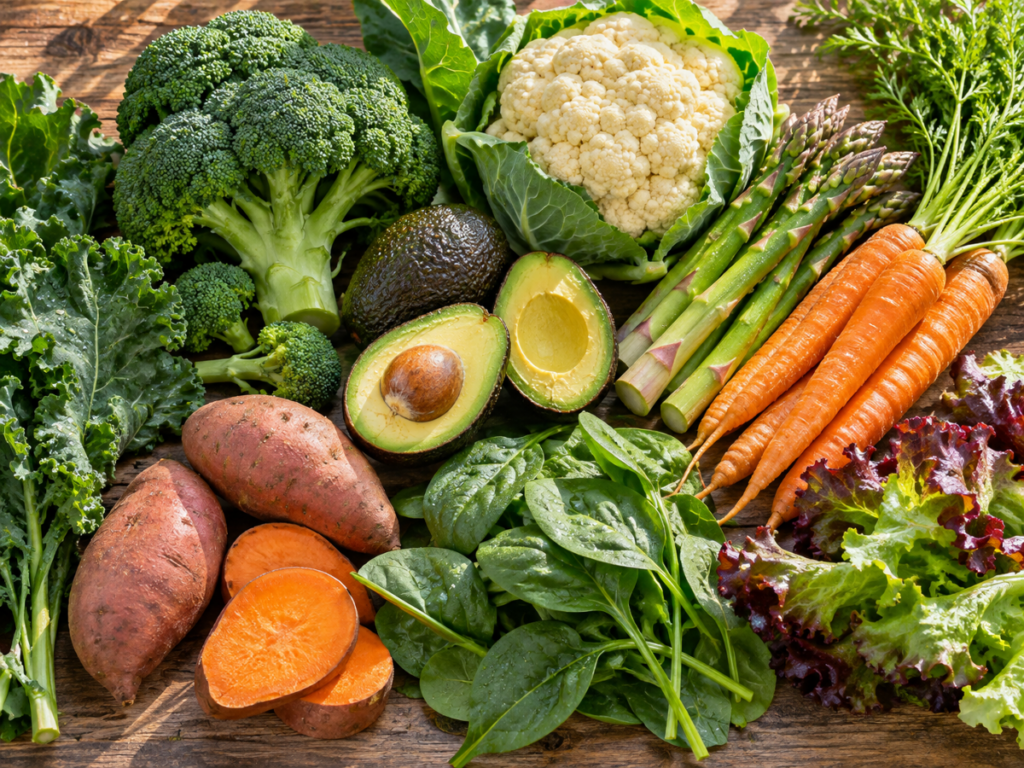
Broccoli, cauliflower, asparagus, carrots, leafy greens, avocados, and sweet potatoes are commonly used in low-lectin meal plans. They provide different combinations of fiber, vitamins, minerals, and other nutrients. Their suitability depends on the particular dietary framework and the individual’s food tolerance.
These vegetables are not nutritionally interchangeable. Sweet potatoes supply substantial dietary carbohydrate along with fiber, while leafy greens provide comparatively little energy per serving. Avocados contain fiber and unsaturated fats, making them useful when adding richness to a meal without relying on heavily processed sauces.
Broccoli and cauliflower contribute fiber and plant compounds, but their fermentable carbohydrates can cause digestive discomfort in some people. Asparagus also contains carbohydrates that certain intestinal bacteria ferment readily.
The National Institute of Diabetes and Digestive and Kidney Diseases identifies several of these vegetables among foods that can contribute to symptoms in people sensitive to particular fermentable carbohydrates. This is especially relevant for individuals with irritable bowel syndrome.
The distinction matters because digestive reactions are not necessarily caused by lectins. A person may tolerate cooked carrots comfortably while experiencing gas after eating asparagus because the foods contain different types and amounts of carbohydrates.
Cooking methods also affect the experience of eating vegetables. Steaming, roasting, and simmering can soften plant tissues and change their texture, making certain foods more comfortable to eat. However, cooking does not reliably remove every fermentable carbohydrate or eliminate all lectins from every food.
A practical approach involves choosing vegetables that fit the preferred eating pattern while maintaining enough variety to avoid repeatedly relying on the same ingredients. Frozen vegetables can be particularly useful because they are often less expensive, require little preparation, and can be portioned as needed.
Building Meals Around More Than Food Restrictions
A dinner of roasted chicken, steamed broccoli, cooked carrots, and baked sweet potato provides an example of how a low-lectin-friendly meal can include several sources of dietary fiber. The chicken supplies protein, while the vegetables contribute carbohydrates, fiber, and other nutrients.
Olive oil can be used to roast the carrots or finish the vegetables after cooking. It adds flavor and unsaturated fat, although it does not provide the fermentable fiber that intestinal bacteria use.
A different dinner might feature baked fish with sautéed spinach, roasted cauliflower, and avocado. This combination provides a different selection of plant ingredients without requiring specialty products or unfamiliar cooking techniques.
Someone who finds cauliflower uncomfortable could substitute cooked carrots or another tolerated vegetable. If asparagus causes bloating, a smaller serving or a different vegetable may be more practical than eliminating every plant food associated with fermentation.
These adjustments also illustrate why food substitutions should be evaluated for their nutritional contributions. Replacing a fiber-containing side dish with an ingredient that provides almost no fiber may reduce digestive symptoms for some people, but it also changes the material available for bacterial fermentation.
The same principle applies to prepared foods marketed for restrictive diets. A product labeled grain-free or low in certain plant ingredients may still contain added fibers such as inulin or chicory root fiber. These ingredients can contribute to fermentable carbohydrate intake, but they may also increase gas or bloating in susceptible individuals.
Checking ingredient labels can therefore reveal information that a product’s front-of-package claims do not provide. This is particularly useful when symptoms appear after eating a processed food whose main ingredients seem familiar.
Why Digestive Improvements Do Not Prove a Genetic Change
Food journals can provide useful information when someone is trying to understand recurring digestive symptoms. Recording ingredients, approximate portions, preparation methods, and the timing of discomfort can reveal patterns that are difficult to recognize from memory.
Consider a person who experiences less bloating after replacing a wheat-based lunch with chicken and cooked vegetables. The improvement may be meaningful, but the meals differ in several ways.
Wheat contains fermentable carbohydrates called fructans, which can contribute to symptoms in some people. The replacement meal may also contain different amounts of fat, fiber, and total food. These differences make it difficult to determine which factor caused the improvement.
The same limitation applies to epigenetics. Feeling better after changing a diet does not demonstrate that particular genes became less active or that the intestinal barrier was repaired. Those processes require specialized research methods to investigate.
Observations become more useful when dietary changes are made in a controlled, manageable way. Keeping portions and accompanying ingredients reasonably consistent while examining one food at a time may help distinguish a repeatable reaction from an isolated episode.
A journal can also reveal patterns that have little to do with individual ingredients. Large meals, rapid increases in fiber, and particular combinations of fermentable foods may affect comfort even when each ingredient is tolerated separately.
Persistent digestive problems deserve appropriate medical evaluation, especially when accompanied by unexplained weight loss, bleeding, or prolonged diarrhea. Such symptoms can reflect conditions that dietary experimentation alone cannot identify.
Giving Gut Bacteria a More Varied Food Supply
Different types of dietary fiber provide different opportunities for bacterial fermentation. Some fibers are broken down readily by intestinal bacteria, while others are fermented more slowly or contribute primarily to stool bulk. The resulting effects depend on the food, the microbial community, and how the digestive system processes the material.
This helps explain why eating a large quantity of one vegetable is not necessarily equivalent to eating several different plant foods. The ingredients may contribute different carbohydrates, and the bacteria capable of using those carbohydrates may not be equally abundant.
A practical way to increase variety is to rotate vegetables across familiar meals. Carrots might accompany roasted chicken one evening, broccoli could be served with fish the next, and cooked greens could become part of a soup later in the week. Sweet potatoes or avocado can provide additional fiber-containing options when they fit the meal.
Increasing fiber gradually is especially relevant after a period of restricted plant intake. A sudden increase in fermentable carbohydrates can lead to gas and bloating because bacterial fermentation produces gases along with other compounds. Smaller additions make it easier to identify an uncomfortable serving size or ingredient.
The gut microbiome also changes in response to factors beyond food, including medications and illness. Consequently, the same dietary change may not produce identical microbial responses in different people, even when their meals look similar.
These differences are one reason researchers continue examining how individual microbial communities respond to dietary interventions. Scientists can now study bacterial genes, metabolic products, and changes in human tissues, but translating those findings into precise food recommendations remains challenging.
For everyday meal planning, a useful next step is to examine the vegetables and other fiber-containing foods eaten during a typical week. If the same two ingredients appear repeatedly, adding one familiar, tolerated alternative can broaden the selection without requiring a complete menu change.
This approach also makes grocery shopping and cooking more manageable. A bag of frozen broccoli, a few carrots, and a sweet potato can be used across several meals, with leftovers incorporated into soups, roasted vegetable dishes, or simple lunches. The dietary changes remain practical while preserving opportunities to consume different plant fibers, which is one of the more useful applications of current gut microbiome research.