
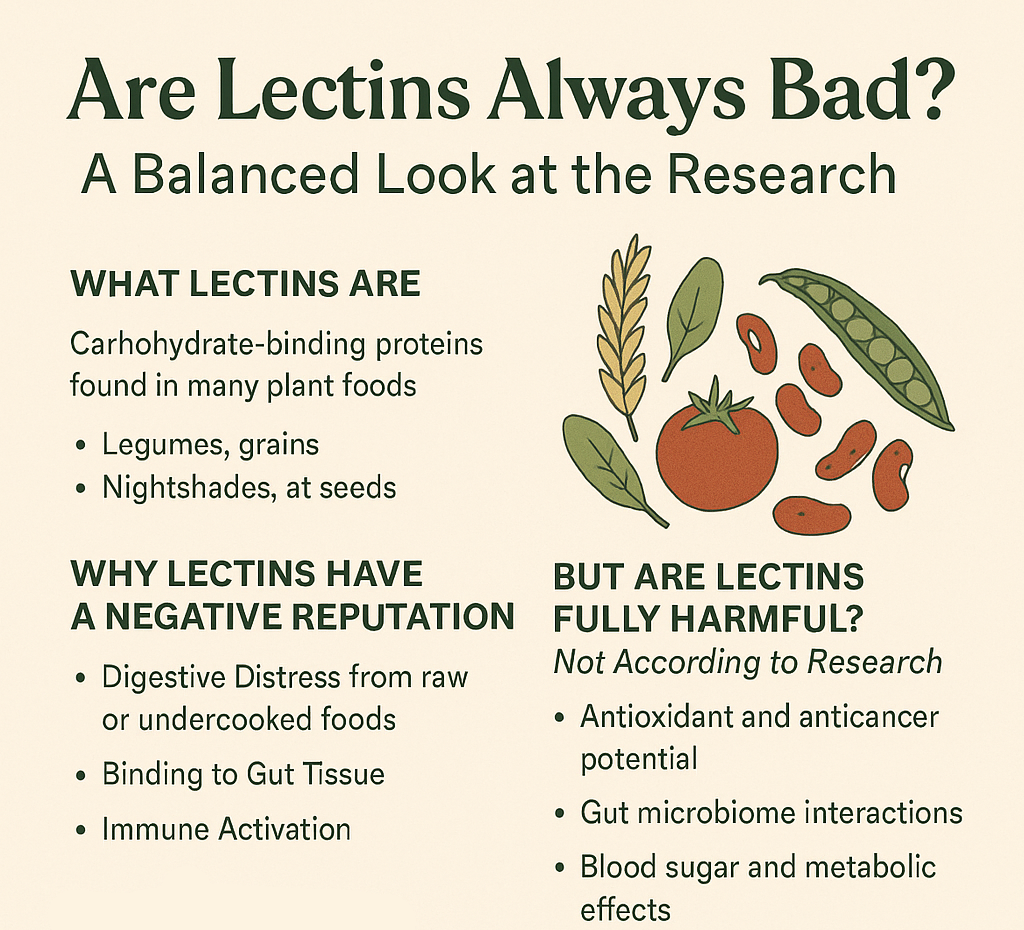
Some of the foods most frequently restricted in low-lectin eating are also among the most extensively studied ingredients in human nutrition. Beans, lentils, whole grains, nuts, and vegetables contribute to dietary patterns associated with favorable cardiovascular and metabolic outcomes. At the same time, certain lectins found in these foods have demonstrated the ability to interfere with digestive processes, interact with intestinal cells, and produce adverse effects under particular conditions.
Understanding how these findings coexist requires looking beyond the presence of lectins in an ingredient. The biological properties of the specific protein, the amount consumed, the preparation method, and the circumstances surrounding exposure all influence its potential effects. Research involving isolated lectins can reveal valuable information about cellular behavior, but studies examining people eating complete meals address a different set of questions.
For individuals following or considering a low-lectin lifestyle, this distinction provides a foundation for making dietary decisions without overlooking either the documented risks of certain lectins or the nutritional value of many lectin-containing foods.
Lectins Are a Diverse Family of Biologically Active Proteins
Lectins are proteins capable of recognizing and binding to particular carbohydrate structures. They occur throughout nature, including in plants, animals, fungi, and microorganisms. Within living organisms, they participate in processes involving cellular recognition, communication, development, and defense.
The human body produces several families of lectins that perform normal physiological functions. Certain lectins participate in immune recognition, while others help regulate interactions between cells. Their presence illustrates how carbohydrate-binding proteins can serve very different biological purposes depending on their structure and location.
Dietary lectins represent another category of interest because they enter the digestive system through food. Phytohemagglutinin from beans, wheat germ agglutinin from wheat, and peanut agglutinin from peanuts are among the more extensively investigated examples. Each recognizes particular carbohydrate structures and demonstrates different characteristics when exposed to heat, digestive enzymes, and surrounding biological conditions.
Our article on endogenous versus dietary lectins explores the differences between lectins encountered through food and those produced within the human body. Understanding this distinction helps explain why the term lectin cannot serve as a general classification of harmful substances.
Where the Evidence for Harm Is Strongest
The clearest established health concern associated with dietary lectins involves consuming raw or inadequately cooked beans, particularly red kidney beans. These beans contain phytohemagglutinin, commonly abbreviated as PHA, which can produce acute gastrointestinal illness when sufficient biological activity remains after preparation.
Symptoms can include nausea, vomiting, abdominal pain, and diarrhea. These reactions have been documented in humans and represent a genuine food-safety concern that applies regardless of whether someone ordinarily experiences digestive sensitivity.
In January 2026, the European Food Safety Authority published a comprehensive scientific assessment of the human health risks associated with plant lectins in food. Researchers examined available evidence concerning lectin toxicity, food processing, dietary exposure, and potential adverse effects. Although the assessment considered several categories of plant lectins, sufficient information for a formal risk characterization was available only for PHA.
The assessment identified inadequate food preparation, particularly of beans, as the principal established public health concern. It also found that appropriate soaking and cooking can deactivate PHA sufficiently to address that risk.
Other dietary lectins remain more difficult to evaluate because of limited human research, inconsistent measurements of lectin activity in foods, and insufficient information about long-term exposure. The evidence supporting precautions when preparing dried kidney beans is therefore considerably stronger than the evidence supporting widespread avoidance of every lectin-containing ingredient.
What Laboratory Research Reveals About Lectins
Researchers investigate lectins partly because their carbohydrate-binding properties provide opportunities to study interactions between proteins and living cells. Under controlled conditions, certain lectins can attach to intestinal epithelial cells, influence cellular signaling, and stimulate particular immune responses.
Some experiments have demonstrated changes in intestinal barrier function, nutrient absorption, or inflammatory activity following exposure to active lectins. Animal studies have also identified physiological changes in intestinal tissues after consuming diets containing particular lectins.
These findings are relevant to understanding potential biological mechanisms. However, experimental conditions frequently involve isolated proteins, concentrated exposures, or administration methods that differ considerably from consuming a normally prepared meal.
A researcher introducing purified wheat germ agglutinin into a laboratory cell culture can observe its direct interaction with those cells. Someone eating a slice of bread encounters a different situation involving food processing, baking, digestion, other dietary components, and potentially much smaller quantities of active protein.
Our article examining animal models versus human digestion in low-lectin research discusses why findings from experimental models cannot always be applied directly to everyday dietary exposure.
This distinction is particularly relevant to claims involving intestinal permeability, autoimmune disease, and chronic inflammation. Although laboratory findings provide legitimate reasons to continue investigating dietary lectins, current human evidence remains insufficient to establish that ordinary consumption of properly prepared lectin-containing foods routinely causes these conditions.
Potential Beneficial Applications of Lectins
The biological activity that makes certain lectins interesting to food-safety researchers has also attracted attention in medical and pharmaceutical research. Their ability to recognize particular carbohydrate structures offers opportunities to investigate cellular differences, immune responses, and possible therapeutic applications.
A 2020 scientific review examining commonly discussed dietary antinutrients explored research involving lectins, phytates, oxalates, and other naturally occurring plant compounds. Its discussion of lectins identified both potential adverse effects and experimental findings that suggest possible beneficial applications.
Cancer Research and Cellular Recognition
Cancer cells can display changes in the carbohydrate structures present on their surfaces. Researchers have investigated whether certain lectins can recognize these altered structures or influence processes associated with cancer cell growth.
Laboratory experiments involving lectins isolated from beans, lentils, peas, and other plants have demonstrated effects on the proliferation of particular cancer cell lines. Other investigations have examined whether specific lectins can influence apoptosis, a regulated process through which cells undergo programmed death.
These findings have encouraged further research into possible therapeutic uses. Developing a clinically effective treatment, however, requires establishing appropriate dosing, delivery methods, selectivity, safety, and effectiveness in humans. A substance that inhibits cancer cells in a laboratory may also affect healthy cells or behave differently within a living organism.
Mistletoe lectins provide an example of this research extending into clinical investigation. The National Cancer Institute’s review of mistletoe extracts describes research involving preparations that contain biologically active lectins and other compounds. Although some studies have reported favorable outcomes, significant methodological weaknesses and inconsistent results limit the conclusions that can be drawn.
Such investigations demonstrate the biological diversity of lectins. They do not establish that consuming additional dietary lectins prevents cancer, that lectin-rich foods function as cancer treatments, or that isolated lectin preparations should replace established medical care.
Immune Activity and Medical Research
Certain lectins are valuable scientific tools because they can stimulate immune cells under controlled laboratory conditions. Phytohemagglutinin, for example, has long been used in research involving lymphocyte proliferation, a process in which particular immune cells multiply.
The ability to stimulate immune activity can be useful when researchers need to investigate cellular responses. Whether that same activity would be beneficial or harmful within a living person depends on numerous circumstances, including the type of immune response, the location of exposure, and the biological characteristics of the lectin.
Claims that consuming dietary lectins strengthens or trains the human immune system remain insufficiently supported. Laboratory observations involving immune stimulation do not establish that deliberately increasing active lectin exposure produces meaningful improvements in immune function.
What Human Nutrition Studies Tell Us About Lectin-Containing Foods
Some of the strongest evidence relevant to the lectin discussion comes from research that does not specifically investigate lectins. Studies examining legumes, whole grains, and other plant foods provide information about the health outcomes associated with consuming these ingredients in their usual dietary forms.
These findings deserve attention because people consume foods containing complex combinations of proteins, carbohydrates, fats, vitamins, minerals, and other compounds. The physiological effects of a complete food cannot necessarily be predicted from the properties of one isolated constituent.
Legumes and Blood Sugar Regulation
Beans, lentils, chickpeas, and dried peas, collectively referred to as pulses, provide dietary fiber, protein, and complex carbohydrates. They also contain various lectins before preparation, making them a useful example of the distinction between experimental protein research and human dietary outcomes.
A 2021 systematic review and meta-analysis of randomized controlled trials examining pulse consumption and blood sugar regulation analyzed 65 studies involving more than 2,100 participants. The researchers examined both immediate blood glucose responses after meals and changes associated with longer-term dietary consumption.
Pulse consumption was associated with lower post-meal blood glucose responses in adults with and without type 2 diabetes. Longer-term interventions also demonstrated improvements in several measures of glucose regulation, although the magnitude and consistency of those effects varied among studies.
The research did not establish that lectins were responsible for these findings. Dietary fiber, starch structure, protein content, and the characteristics of the surrounding meal may all contribute to the observed metabolic responses.
For someone considering eliminating legumes, these findings illustrate why their broader nutritional characteristics deserve consideration. A person who tolerates properly prepared beans may have different dietary priorities from someone who repeatedly experiences discomfort after consuming them.
Whole Grains and Long-Term Health Outcomes
Whole grains contain dietary fiber, minerals, and various biologically active plant compounds, including lectins in some species. Their consumption has been examined extensively in population-based nutrition research.
A 2016 systematic review and dose-response meta-analysis published in the BMJ found associations between higher whole-grain consumption and lower risks of several chronic diseases and premature mortality. The analysis brought together evidence from prospective studies examining dietary habits and subsequent health outcomes.
Because these were observational studies, the findings cannot establish that whole grains independently caused every favorable outcome. Differences in physical activity, smoking habits, other dietary choices, socioeconomic circumstances, and additional variables may influence the observed associations.
Nevertheless, the findings provide meaningful context when evaluating broad claims that lectin-containing grains are inherently damaging. Populations consuming whole grains do not consistently demonstrate the adverse health outcomes that would be expected if ordinary dietary lectin exposure were universally harmful.
Readers who choose to restrict wheat or other grains should consider how they will replace their nutritional contributions, particularly dietary fiber. Alternative vegetables, fruits, nuts, and individually tolerated starches can help maintain nutritional variety without requiring every conventional grain to remain in the diet.
Lectins, Dietary Fiber, and the Gut Microbiome
The gut microbiome receives considerable attention in discussions about lectins because microorganisms possess carbohydrate structures that certain lectins can recognize. Experimental research has explored interactions between lectins and bacteria, including possible effects on microbial attachment, growth, and communication with intestinal tissues.
However, research has not established that dietary lectins themselves provide the primary microbial benefits associated with eating legumes, whole grains, or vegetables. These foods also contain dietary fiber, resistant starch, and fermentable carbohydrates that intestinal microorganisms can metabolize.
During fermentation, certain gut bacteria produce short-chain fatty acids, including acetate, propionate, and butyrate. These compounds participate in several physiological processes, and butyrate serves as an important energy source for cells lining the colon.
Removing a lectin-containing food may therefore change the availability of substrates that microorganisms use independently of any change in lectin exposure. The outcome depends partly on what replaces the restricted ingredient.
For example, replacing beans with additional leafy vegetables, nuts, and suitable root vegetables may preserve a substantial amount of dietary fiber. Replacing those same beans exclusively with meat or refined starches could produce a very different nutritional and microbial environment.
Our discussion of short-chain fatty acids and low-lectin eating examines the role of fermentable fiber and explains why maintaining appropriate fiber sources deserves attention within a low-lectin dietary framework.
Why Food Preparation Changes the Discussion
The biological activity of a lectin can change substantially during food preparation. Heating, hydration, fermentation, and other processing techniques influence proteins through different mechanisms, although their effectiveness depends on the particular lectin and food.
Moist heat is especially effective against phytohemagglutinin in kidney beans. The U.S. Food and Drug Administration’s guidance on naturally occurring food toxins recommends soaking dried kidney beans for a minimum of five hours, discarding the soaking water, and boiling them in fresh water for at least 30 minutes. Cooking should continue as necessary until the beans are fully tender.
Commercially canned kidney beans have already undergone adequate heat processing. Their availability also illustrates why modern food processing cannot automatically be characterized as preserving harmful lectins or creating greater exposure than traditional cooking methods.
Pressure cooking provides another way to expose ingredients to moist heat at elevated temperatures. It can substantially reduce the activity of certain lectins when appropriate conditions are used, but there is no universal percentage of lectin reduction that applies to every ingredient and cooking cycle.
Fermentation and sprouting can alter food proteins and other constituents through microbial or biochemical activity. Their effects vary according to the ingredient, microorganisms, temperature, duration, and subsequent cooking. Neither method guarantees complete lectin deactivation.
Peeling and deseeding are also commonly practiced in low-lectin kitchens. These techniques remove particular plant tissues and can influence texture, composition, and culinary performance. The degree to which they reduce lectin activity depends on the distribution of the relevant proteins within the specific plant.
Many traditional cuisines incorporate techniques such as soaking legumes, simmering stews, fermenting dough, and removing undesirable vegetable tissues. These practices serve numerous purposes, including improving flavor, preserving food, softening ingredients, and making meals easier to prepare. Modern food science provides additional insight into how some of these established techniques also affect lectin activity.
Why Individual Responses to Food Can Differ
Two people eating the same meal may experience different digestive responses for reasons that extend beyond its lectin content. Differences in gastrointestinal motility, intestinal sensitivity, medication use, underlying medical conditions, and the composition of the meal can all influence how digestion feels.
Consider a person who experiences bloating after eating lentils. The reaction could involve fermentation of carbohydrates by intestinal bacteria, the quantity consumed, accompanying ingredients, or heightened sensitivity to normal intestinal gas production. Residual lectin activity may be investigated as another possible consideration, but symptoms alone cannot establish its involvement.
Similar difficulties arise when interpreting joint discomfort, fatigue, headaches, or other symptoms associated with food consumption. These experiences can be meaningful to the individual while remaining insufficient to identify a specific biological cause.
Although intestinal permeability, genetic characteristics, and microbiome composition have been proposed as factors that could influence responses to dietary lectins, researchers have not established reliable clinical criteria for determining general lectin sensitivity. Having an autoimmune condition or digestive disorder does not automatically establish that lectins are contributing to its activity.
People experiencing persistent digestive symptoms, unexplained inflammatory complaints, or suspected food allergies should investigate those concerns appropriately. Restricting additional foods without understanding the underlying problem may complicate nutrition while leaving the actual cause unaddressed.
Applying a Low-Lectin Approach Without Unnecessary Restrictions
A low-lectin dietary approach can provide a structured way to reconsider ingredients, preparation methods, and recurring food reactions. Its practical value depends partly on establishing reasonable objectives and avoiding assumptions about what every dietary change accomplishes.
Someone beginning with several suspected food triggers might temporarily simplify meals around familiar ingredients and maintain a record of digestive symptoms. Keeping portion sizes, preparation methods, and meal timing reasonably consistent can make subsequent observations easier to interpret.
Ingredient substitutions can help maintain culinary variety during this process. Cassava flour may provide an alternative for certain wheat-based recipes, while roasted root vegetables can replace conventional potatoes in some dishes. Mushrooms, cauliflower, and other vegetables may contribute texture and substance to meals that previously relied on beans.
The Living Low-Lectin Kitchen Assistant provides a practical resource for exploring these adjustments. Its Ingredient Swapper suggests alternative ingredients, while the Convert a Recipe feature can help identify possible modifications to familiar meals. Generated suggestions should be evaluated for nutritional suitability, cooking performance, allergies, and established food-safety requirements.
Over time, reconsidering previously restricted foods may reveal that some are better tolerated than originally expected. Where medically appropriate, reintroduction can help determine whether portion size, preparation, or the inclusion of other ingredients influences the response. Foods associated with suspected allergic reactions should not be independently reintroduced at home.
There is currently no established clinical requirement to eliminate all dietary lectins, nor is there a scientifically validated timetable for restoring tolerance through lectin restriction. Someone who continues to avoid particular ingredients may have practical reasons for doing so, while another person may discover that several properly prepared foods can remain part of their regular meals.
The process becomes especially valuable when it helps distinguish necessary restrictions from those that provide no observable benefit. A person who discovers that well-cooked lentils are comfortable to eat gains another source of protein and fiber, while someone who identifies a consistently troublesome ingredient can explore suitable replacements. Maintaining that flexibility allows dietary choices to develop around documented personal observations, established food-safety practices, and the nutritional contributions of the foods that remain.