
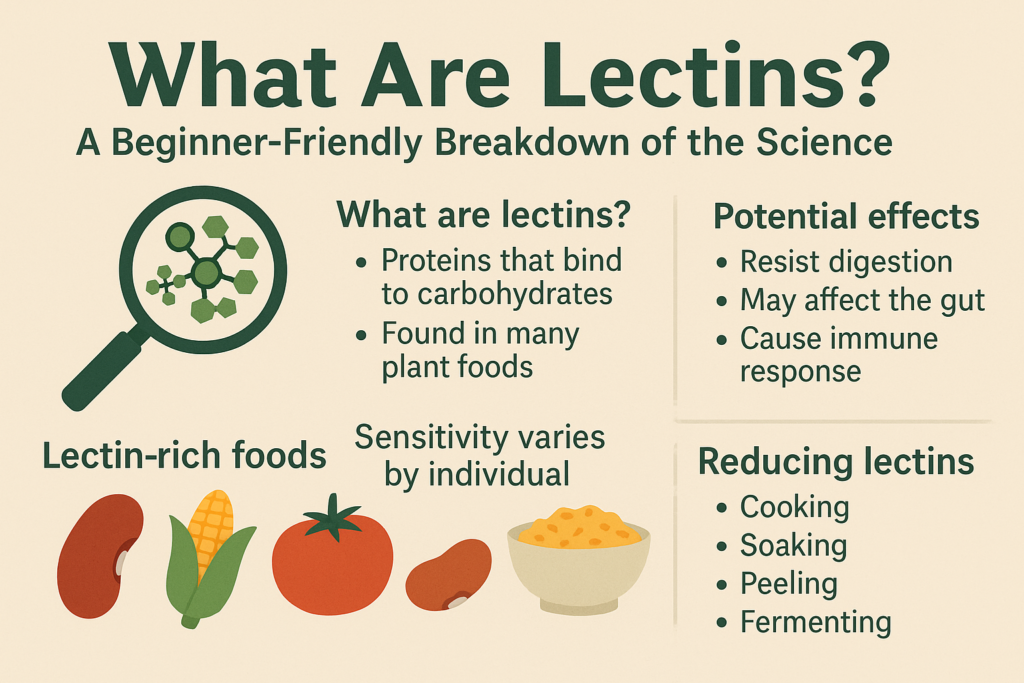
Lectins are a family of naturally occurring proteins found in many of the foods people eat every day. Beans, grains, tomatoes, potatoes, and numerous other plant foods contain different types of lectins, each with its own biological properties. Their ability to interact with carbohydrates on the surface of cells has made them a subject of interest in nutritional science, digestive health research, agriculture, and medicine.
For someone beginning a low-lectin lifestyle, understanding these proteins can make food selection and preparation considerably less confusing. A dried kidney bean, a slice of wheat bread, and a fresh tomato may all contain lectins or originate from lectin-containing ingredients, yet their biological activity, preparation requirements, and potential effects on digestion can differ substantially. Understanding those differences provides a more useful foundation for dietary decisions than simply dividing foods into acceptable and unacceptable categories.
What Exactly Are Lectins?
Lectins are proteins or glycoproteins capable of recognizing and binding to specific carbohydrate structures. These carbohydrates can exist independently or form part of larger molecules found on the surfaces of cells. The binding process is selective, meaning that different lectins recognize different carbohydrate structures rather than attaching indiscriminately to everything they encounter.
The term lectin describes a broad family of proteins rather than a single substance. Plants, animals, fungi, and microorganisms produce lectins, and the human body makes several types of its own. Within the body, certain naturally occurring lectins participate in immune recognition, cellular communication, and other normal biological processes.
Plant lectins receive particular attention in nutrition because they enter the digestive system through food. Many participate in plant defense against insects, microorganisms, and other environmental threats, although their biological functions extend beyond protection. Some are also involved in plant development, cellular recognition, and responses to environmental stress.
A comprehensive scientific review of commonly discussed dietary antinutrients, published in the journal Nutrients in 2020, examines the considerable variation among plant lectins and their potential interactions with human physiology. The review also addresses how food preparation influences exposure and why findings involving isolated plant compounds require careful interpretation when discussing ordinary dietary habits.
Why the Carbohydrate-Binding Ability Matters
The cells throughout your body have complex surfaces containing proteins, fats, and carbohydrate structures. These structures participate in communication between cells, immune recognition, and interactions with microorganisms. The digestive tract contains many such structures, including those associated with intestinal epithelial cells and the protective mucus that covers them.
When a biologically active lectin encounters a carbohydrate structure compatible with its binding site, it may attach to that structure. Depending on the lectin, its concentration, and the surrounding biological conditions, this interaction can influence cellular behavior. Researchers use this characteristic to investigate everything from cell recognition to the movement of substances across biological barriers.
However, binding alone does not establish that a lectin will cause injury or produce noticeable symptoms. A protein must survive relevant stages of food preparation and digestion, reach a suitable binding site, and remain biologically active in sufficient amounts to produce an effect. Each of these conditions influences what happens after a lectin-containing food is consumed.
For a more detailed introduction to this molecular process, our article on how lectin binding sites work explains the relationship between lectins and the carbohydrate structures they recognize.
How Lectins Interact With the Digestive System
Digestion normally breaks dietary proteins into smaller peptides and amino acids that the body can absorb. Certain lectins resist this process more effectively than many other dietary proteins, allowing some of their biological activity to survive passage through the stomach and potentially reach the intestines. The degree of resistance varies considerably among different lectins.
This characteristic has encouraged researchers to investigate whether particular dietary lectins can influence intestinal permeability, nutrient absorption, immune activity, and the microorganisms inhabiting the digestive tract. Much of the evidence concerning these mechanisms comes from laboratory experiments and animal studies, sometimes involving purified lectins administered at concentrations that differ substantially from ordinary dietary exposure.
The Intestinal Barrier
The intestinal lining performs several functions simultaneously. It allows nutrients to enter the body, helps maintain fluid balance, and limits the passage of potentially harmful substances. A layer of mucus, closely organized epithelial cells, and specialized connections between those cells contribute to this protective system.
Experiments involving certain active lectins have demonstrated changes in intestinal cell behavior and barrier function under specific conditions. Researchers have also observed changes in intestinal tissue following exposure to particular lectins in animal studies. These findings provide possible explanations for biological effects, but they do not establish that eating normally prepared lectin-containing foods routinely damages the human intestinal barrier.
The Immune System and Gut Microbiome
Lectins can interact with immune cells, and some are valuable laboratory tools precisely because of their ability to influence cellular activity. Phytohemagglutinin, a lectin associated with common beans, has long been used in scientific research to stimulate certain immune cells under controlled conditions.
Interactions between lectins and intestinal microorganisms are another area of investigation. Changes in microbial populations or activity have been observed in experimental settings, although translating these observations into reliable dietary recommendations remains difficult. A person’s microbiome is influenced by numerous factors, including dietary fiber, medication use, illness, overall eating habits, and environmental exposure.
Current research has not established that reducing ordinary dietary lectin exposure consistently improves microbial diversity, repairs intestinal permeability, or reduces autoimmune disease activity in humans. These remain separate questions from whether an individual experiences digestive improvement after changing particular foods.
What Current Research Says About Lectin Safety
One of the most useful developments in lectin research came in January 2026, when the European Food Safety Authority (EFSA) published a substantial scientific assessment of the human health risks associated with plant lectins in food. The assessment examined available research on lectin toxicity, dietary exposure, food processing, and the limitations of existing scientific evidence.
Researchers found sufficient information to characterize the health risks of phytohemagglutinin, commonly abbreviated as PHA, a lectin associated with beans belonging to the Phaseolus genus. Human cases of gastrointestinal illness following consumption of inadequately cooked beans provided evidence of a genuine food-safety concern. Animal research supplied additional information about potential intestinal and physiological effects.
The assessment also identified significant gaps in the available data for other plant lectins. Human research remains limited, and standardized methods for measuring and comparing active lectins across different foods require further development. These limitations make it difficult to establish universal exposure thresholds or draw broad conclusions about the long-term effects of different dietary lectins.
The strongest established evidence therefore concerns specific lectins and inadequate food preparation. Other proposed health effects deserve continued investigation, particularly through well-designed human studies that account for realistic dietary exposure and ordinary cooking practices.
Where Are Lectins Found?
Lectins occur throughout the plant kingdom, but their distribution and activity differ according to the plant species, variety, tissue, maturity, and preparation method. Even foods belonging to the same botanical family can contain substantially different amounts or types of lectins.
Several food categories receive particular attention in low-lectin eating:
- Beans and legumes: Kidney beans, black beans, navy beans, lentils, soybeans, and peanuts contain various lectins. Raw or inadequately cooked kidney beans present a particularly well-established food-safety concern.
- Grains and pseudocereals: Wheat, barley, and numerous other grain-like foods contain carbohydrate-binding proteins. Wheat germ agglutinin, commonly called WGA, is among the more extensively studied grain lectins.
- Nightshade vegetables: Tomatoes, potatoes, peppers, and eggplants contain different plant lectins alongside other naturally occurring compounds.
- Nuts and seeds: Lectin content and activity vary among species. Some nuts and seeds are commonly included in low-lectin eating, while others are traditionally restricted.
- Fruits and other vegetables: Lectins can occur in fruit flesh, seeds, skins, leaves, roots, and other plant tissues. Their distribution depends on the particular plant.
Determining precisely how much active lectin a food contains is more complicated than reading its nutritional label. Researchers sometimes measure lectin activity through a process called hemagglutination, which observes the ability of certain lectins to cause red blood cells to clump together under laboratory conditions.
A 2021 study examining lectin activity in commonly consumed plant foods demonstrated why measurement methods matter. Researchers used different laboratory testing procedures and identified challenges in comparing activity across foods. They also emphasized that high measured lectin activity does not necessarily establish oral toxicity in humans.
For practical purposes, food lists can provide a reasonable starting point for ingredient selection. They cannot provide an exact measurement of personal lectin exposure or reliably predict how an individual will respond to every food.
How Cooking and Preparation Change Lectin Activity
Some of the most useful information about dietary lectins comes from food science rather than clinical nutrition. Many traditional preparation methods change the structure or activity of food proteins, sometimes substantially reducing the amount of active lectin remaining in the finished meal. The effectiveness of these methods depends on the ingredient and the conditions under which it is prepared.
Boiling and Pressure Cooking
Moist heat is particularly effective against certain lectins found in legumes. Sufficient heat can change the three-dimensional structure of a protein through a process called denaturation, interfering with its ability to recognize and bind to carbohydrates.
Pressure cooking allows water and steam to reach temperatures above the ordinary boiling point of water. Under appropriate processing conditions, this can effectively deactivate certain lectins while softening dense ingredients and shortening cooking times. The results depend on temperature, exposure time, moisture, equipment performance, and the characteristics of the food.
Kidney beans deserve special attention because inadequate preparation can cause acute gastrointestinal illness, including nausea, vomiting, and diarrhea. The U.S. Food and Drug Administration’s guidance on naturally occurring food toxins recommends soaking dried kidney beans for at least five hours, discarding the soaking water, and boiling them in fresh water for at least 30 minutes. Commercially canned kidney beans have already undergone sufficient heat processing and provide a convenient alternative.
Ordinary slow cooking at temperatures below boiling should not be relied upon to deactivate lectins in raw kidney beans. Electric pressure cookers can be effective cooking tools, but preparation instructions should account for the specific ingredient and equipment rather than assuming that any pressure-cooking cycle guarantees adequate processing.
Soaking and Rinsing
Soaking allows dried legumes to absorb water, soften, and cook more evenly. It can also reduce certain water-soluble compounds as they migrate from the food into the soaking liquid. Discarding that liquid and using fresh water for cooking is a common preparation practice.
Soaking by itself should not be considered sufficient to make raw kidney beans safe. Its greatest practical value comes from preparing the ingredient for subsequent cooking and helping moisture and heat penetrate the food more effectively.
Peeling and Deseeding
Removing skins and seeds is a common practice in low-lectin cooking, particularly when preparing tomatoes, peppers, cucumbers, and squash. These techniques can change texture, remove tougher plant material, and alter the composition of the portion being eaten.
However, the distribution of lectins within plant tissues is species-specific. Scientific evidence does not support a universal rule that removing the skin and seeds of every fruit or vegetable eliminates most of its lectins. These preparation techniques are reasonable options for people who find the resulting foods easier to tolerate, provided their effects are not overstated.
Fermentation and Sprouting
Fermentation changes food through the activity of microorganisms and their enzymes. Depending on the food and fermentation conditions, these processes can alter proteins, carbohydrates, and various naturally occurring plant compounds. Some fermentation methods reduce measurable lectin activity, although the results differ among ingredients and microorganisms.
Sprouting, also known as germination, changes the biochemical composition of seeds as they begin to grow. Certain plant compounds may decrease while others increase or change form. Neither sprouting nor fermentation guarantees that all active lectins have been removed, and both processes must be carried out using appropriate food-handling practices.
Are Lectins the Same as Gluten?
Gluten and lectins are frequently discussed together because wheat contains both. Gluten is a mixture of storage proteins associated with wheat and related proteins found in barley and rye, while lectins are identified by their ability to bind to specific carbohydrates. Wheat germ agglutinin is a lectin with properties distinct from those of gluten.
The distinction becomes particularly relevant when choosing replacement ingredients. A gluten-free bread may contain flours made from corn, chickpeas, soybeans, or other ingredients that someone following a low-lectin lifestyle prefers to restrict. Similarly, reducing dietary lectins does not necessarily provide the strict gluten avoidance required by someone with celiac disease.
The relationship between wheat consumption and digestive discomfort can also involve carbohydrates unrelated to either lectins or gluten. A 2018 randomized, double-blind crossover clinical trial, published in Gastroenterology, examined 59 participants with self-reported non-celiac gluten sensitivity. Participants experienced greater digestive symptoms on average after consuming fructans, a type of fermentable carbohydrate, than after consuming gluten.
Although the trial did not investigate lectin sensitivity, it illustrates the difficulty of identifying a specific dietary trigger from food elimination alone. Removing wheat simultaneously changes exposure to gluten, lectins, fructans, and other constituents, making it difficult to determine which change accounts for an improvement.
Anyone who suspects celiac disease should investigate that possibility before eliminating gluten. The National Institute of Diabetes and Digestive and Kidney Diseases explains that removing gluten before diagnostic testing can affect the accuracy of the results.
Why Some People Feel Better After Reducing Lectin-Containing Foods
People experimenting with low-lectin eating sometimes describe improvements in bloating, bowel regularity, abdominal discomfort, energy levels, and other symptoms. These observations can be valuable when deciding which meals and ingredients fit comfortably into an individual’s daily life. Determining the biological reason for those improvements requires considerably more information.
A person who removes conventional bread, packaged snacks, sweetened cereals, and heavily processed meals may simultaneously reduce refined carbohydrates, food additives, and overall calorie intake. Someone who reduces beans and certain vegetables may also change their consumption of fermentable carbohydrates. Changes in meal size, dietary fat, fiber intake, and food preparation can contribute further to the digestive response.
This creates a challenge when evaluating low-lectin eating as a dietary intervention. An improvement following several simultaneous changes cannot reliably identify which ingredient or biological mechanism produced the result. Existing human evidence also remains insufficient to establish which groups of people are most likely to benefit specifically from lectin reduction.
Individuals experiencing digestive discomfort may still find structured dietary observation useful. Persistent abdominal pain, unexplained weight loss, blood in the stool, recurring diarrhea, or other significant symptoms warrant medical evaluation rather than increasingly restrictive dietary experimentation.
Building a Practical Beginner Low-Lectin Diet
Beginning a low-lectin lifestyle does not require rebuilding your entire kitchen around specialty products. Many familiar ingredients can form the foundation of satisfying meals while providing protein, dietary fiber, vitamins, minerals, and sufficient energy.
Common starting ingredients include:
- Leafy vegetables such as spinach, kale, and lettuce.
- Cruciferous vegetables such as broccoli, cauliflower, and cabbage.
- Root vegetables such as carrots, turnips, and sweet potatoes.
- Avocados, olives, and extra virgin olive oil.
- Onions, garlic, mushrooms, and fresh culinary herbs.
- Fish, poultry, eggs, and other preferred protein sources.
- Walnuts, pecans, and macadamia nuts.
- Alternative starches and flours made from cassava, coconut, plantains, millet, or sorghum.
- Berries, citrus fruits, and other individually tolerated fruits.
These ingredients reflect common low-lectin dietary preferences rather than a scientifically established list of lectin-free foods. Their suitability also depends on preparation, portion size, nutritional requirements, allergies, and individual digestive tolerance.
Replacing familiar staples requires some attention to nutrition. Beans and whole grains contribute fiber, minerals, and other nutrients to many conventional diets, so removing them without suitable replacements can create nutritional gaps. Our guide explaining why cutting lectins is not the same as eliminating fiber explores ways to maintain dietary fiber through alternative ingredients.
A straightforward dinner might consist of baked salmon, roasted sweet potatoes, and sautéed cabbage finished with olive oil and lemon. The same basic meal structure can accommodate chicken, different vegetables, fresh herbs, and other preferred ingredients throughout the week without requiring complicated recipes or expensive substitutes.
Discovering Your Individual Food Tolerance
There is currently no validated clinical test that establishes a general sensitivity to dietary lectins or provides a universal personal lectin threshold. Commercial food sensitivity tests should not be assumed to measure how an individual responds to lectins in normally prepared meals.
A structured period of dietary observation can offer useful information when approached carefully. Recording ingredients, preparation methods, portion sizes, meal timing, digestive symptoms, sleep quality, and stress levels provides more context than simply marking foods as acceptable or unacceptable.
Once eating habits and symptoms become relatively consistent, previously restricted foods can be reconsidered individually, where medically appropriate. A person might compare their response to a properly cooked food with how they previously responded to a different preparation of that same ingredient. Changing several foods simultaneously makes those comparisons considerably less informative.
There is no scientifically established timetable for when someone should experience improvement after reducing dietary lectins. The duration and usefulness of a dietary trial depend on the symptoms being investigated, the foods involved, and other contributing circumstances. Restriction should also be reconsidered if it provides no meaningful improvement or makes adequate nutrition increasingly difficult.
The approach described in The Low-Lectin Goal: Reducing Lectin Load Without Chasing Perfection offers a practical framework for thinking about food preparation, frequency of consumption, and personal tolerance without attempting to calculate an exact amount of dietary lectins.
Over time, a well-maintained food journal can help identify which ingredients consistently cause difficulties, which preparation methods appear to make a difference, and which previously restricted foods can comfortably return to the menu. Even when the underlying biological explanation remains uncertain, these observations can help develop a more varied, nutritionally adequate eating pattern that accommodates the individual’s actual dietary needs.