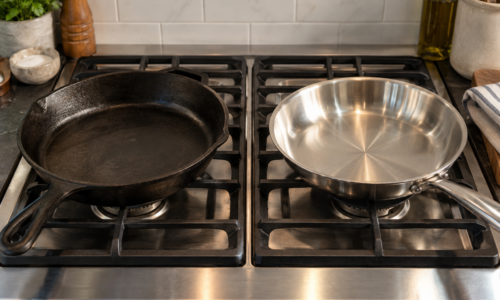
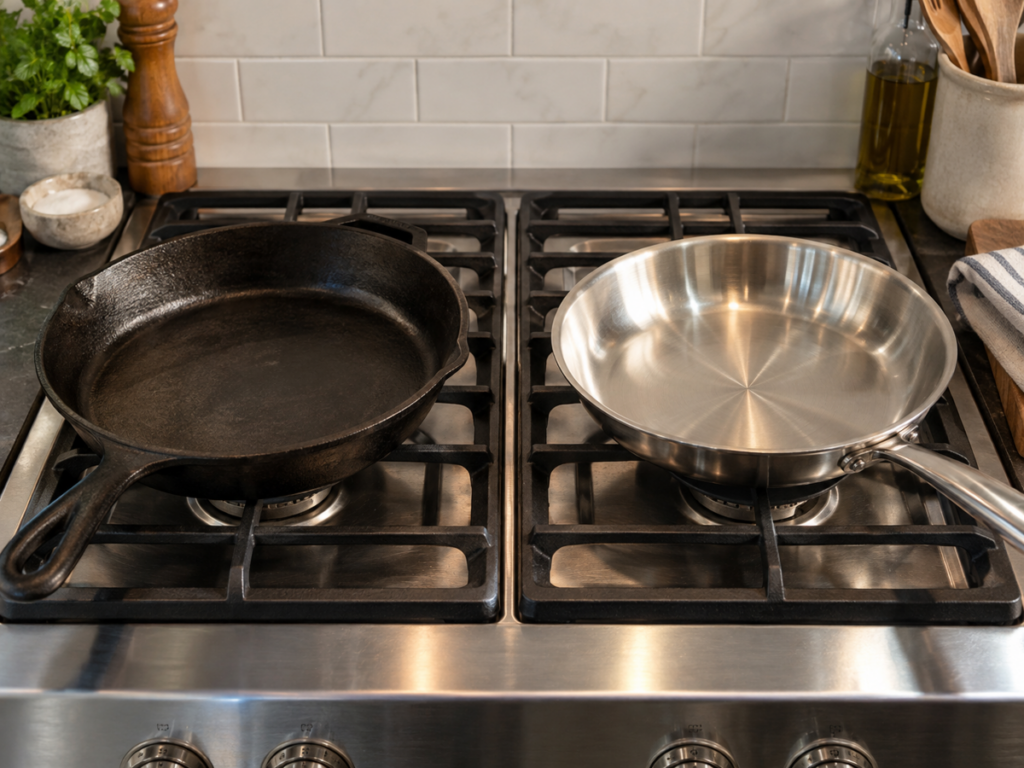
A low-lectin kitchen often gets discussed in terms of ingredients: which foods to emphasize, which foods to limit, and which preparation methods may reduce lectin exposure. Cookware deserves a place in that conversation too, especially for people who sear meat, brown vegetables, roast at high temperatures, or finish meals on the stovetop. Cast iron and stainless steel are two of the most durable choices for that kind of cooking, and both can fit comfortably into a low-lectin routine.
The phrase “non-toxic cookware” is common, but it is not a precise scientific category. A more useful way to think about cookware is whether it is made from durable food-contact materials, whether it holds up under the temperatures you use, whether it has a coating you want to avoid, and how much of the cookware material can migrate into food under normal cooking conditions. The FDA regulates substances that come into contact with food, including cookware, and its Food Code says food-contact surfaces should be safe, corrosion-resistant, durable, and resistant to deterioration under normal use.
Cast Iron Excels at Heat Retention
Cast iron has a reputation for high-heat cooking because once it becomes hot, it stays hot. That makes it especially useful for searing steak, lamb, burgers, chicken thighs, or thick pieces of fish, where a strong initial temperature helps produce browning before the interior overcooks. It also works well for roasting cauliflower, mushrooms, Brussels sprouts, peeled squash, or other vegetables that benefit from a deeply browned surface.
For a low-lectin cook, that ability can make simple meals easier. A seasoned skillet can move from stovetop to oven, handle repeated batches without losing much heat, and create good browning without requiring a synthetic nonstick surface. Meals built around animal proteins, leafy greens, mushrooms, cruciferous vegetables, herbs, garlic, and tolerated roots can all be prepared efficiently in cast iron.
Cast iron does, however, transfer some iron into food. Research has repeatedly shown that the amount depends on the food, acidity, cooking time, temperature, and condition of the pan. More acidic foods and longer cooking generally increase iron transfer. That does not make cast iron unsafe for ordinary cooking, but it does mean the pan is not chemically inert.
Acidic ingredients also affect the seasoning. A quick splash of lemon juice or vinegar near the end of cooking is very different from simmering an acidic sauce for an hour. If you regularly cook long, acidic dishes, stainless steel is usually the easier choice. This can matter in low-lectin cooking because some people use vinegar, citrus, wine, coconut aminos, or peeled and deseeded tomatoes to build flavor, depending on their personal food plan.
Stainless Steel Is the More Flexible Everyday Pan
Stainless steel is highly versatile because it handles browning, sautéing, simmering, deglazing, and acidic foods without requiring a seasoned surface. Quality stainless cookware is often built with an aluminum or copper core between layers of stainless steel, which improves heat distribution because stainless steel alone is not an especially good heat conductor. For daily cooking, that layered construction can give you more even heating than a thick cast iron skillet while still tolerating strong stovetop heat.
That makes stainless steel useful for low-lectin meals that change technique halfway through cooking. You can sear chicken, remove it, soften onions and garlic, deglaze with broth or lemon, add greens, and return the meat to the pan without worrying about stripping seasoning. It is also convenient for delicate fish, quick vegetable sautés, soups, broths, and pan sauces.
Stainless steel is not completely inert either. Studies have found that nickel and chromium can migrate from stainless cookware into acidic foods, with larger amounts generally seen in newer cookware, longer cooking times, and lower-pH foods. One study using tomato sauce found higher nickel and chromium levels after prolonged cooking in stainless steel, while another study using common cooking conditions found the amounts released from 18/10 stainless steel were below known allergy-triggering thresholds.
For most people, good-quality stainless steel remains a practical everyday cooking material. People with a known nickel sensitivity may want to pay more attention to cookware grade, acidic cooking time, and individual medical guidance, because dietary nickel can matter for some sensitized individuals. Research on stainless cookware and nickel exposure is mixed enough that broad claims such as “stainless steel never leaches” or “stainless steel is toxic” both go beyond the evidence.
High Heat Does Not Automatically Make a Food Low in Lectins
This distinction matters more than the choice between the two pans. Browning food in a very hot skillet is not the same as using a validated preparation method for foods with significant heat-sensitive lectins. Heat can reduce lectin activity, but the result depends on the food, moisture, temperature, and cooking time.
Kidney beans are the clearest food-safety example. The FDA warns that raw or undercooked kidney beans can contain high levels of phytohaemagglutinin, a lectin that can cause severe gastrointestinal symptoms. Its consumer guidance recommends soaking dried kidney beans for at least five hours, discarding the soaking water, and boiling them in fresh water for at least 30 minutes. The FDA also warns against relying on slow cookers for raw kidney beans because they may not reach a high enough temperature to adequately destroy the lectin.
Research on pulses also shows that cooking reduces lectin activity more effectively than soaking alone. For someone following a low-lectin approach, this means cookware selection and lectin reduction are related, but they are not interchangeable. A cast iron skillet can give properly prepared food an excellent sear, yet the skillet itself does not turn an inadequately cooked bean into a properly prepared one.
Pressure cooking fits into this distinction as well. A pressure cooker changes the cooking environment by combining moist heat with temperatures above the normal boiling point of water, which is one reason it is often used in low-lectin kitchens for legumes and other foods that benefit from thorough cooking. Once those foods are properly prepared, cast iron or stainless steel can be used afterward for browning, seasoning, reducing sauces, or combining the final meal.
Where Cast Iron Fits Best in Low-Lectin Cooking
Cast iron makes the most sense when heat retention and browning are the main goals. A thick steak, pasture-raised chicken thigh, lamb chop, burger, or piece of salmon can develop a well-browned exterior without the pan temperature dropping sharply when the food is added. The same quality helps with roasted or skillet-charred vegetables that might otherwise steam in a cooler pan.
It is also useful for recipes that start on the stovetop and finish in the oven. A chicken breast can be seared, surrounded by mushrooms and herbs, and transferred directly into the oven without changing pans. Sweet potatoes, cauliflower, fennel, cabbage wedges, and other tolerated vegetables can also benefit from the strong contact heat of a cast iron surface.
The tradeoff is maintenance. Cast iron should be dried thoroughly after washing, and a light film of oil helps protect the surface. Leaving wet food in the pan, soaking it for long periods, or storing acidic leftovers in it can encourage rust or damage the seasoning. These habits are easy once they become routine, but stainless steel asks less of the cook.
Where Stainless Steel Fits Best
Stainless steel is often the better choice for meals involving liquid, acid, or repeated changes in temperature. If dinner begins with searing meat but ends with broth, lemon, herbs, and a reduced pan sauce, stainless steel handles the whole process cleanly. It is also a good choice for blanching greens, simmering soup, cooking millet, preparing sauces, or reducing stock.
For readers who use peeled and deseeded nightshades in moderation, stainless steel also makes more sense for longer tomato-based preparations. The same applies to vinegar-forward braises and citrus-heavy sauces. Even though stainless can release small amounts of nickel and chromium under acidic conditions, it does not have a seasoning layer that can be stripped by acid, so it is easier to care for after these recipes.
Stainless steel can also be easier for people who dislike the weight of cast iron. Large cast iron skillets become heavy once they contain several servings of food, while a clad stainless pan can offer strong heat performance at a lower weight. For cooks preparing several meals in one session, that practical difference matters more than marketing language about which material is supposedly “cleaner.”
A Two-Pan Kitchen Often Works Better Than Picking a Winner
Cast iron and stainless steel overlap, but they solve slightly different problems. If I wanted only one high-heat pan for maximum versatility, I would lean toward a well-made clad stainless steel skillet because it can sear, simmer, deglaze, handle acidic ingredients, and move between many types of meals with little special care. If my priority were deep browning, heat retention, oven use, and a naturally seasoned cooking surface, cast iron would have the edge.
In a low-lectin kitchen, owning both can be more useful than treating the choice as an either-or decision. Cast iron can handle the steak, lamb, burgers, crispy chicken, mushrooms, and roasted vegetables. Stainless steel can handle the broth, lemon pan sauce, greens, soups, millet, and longer acidic preparations. Neither pan changes the underlying lectin content of an ingredient by itself, and neither replaces proper preparation when a food requires soaking, boiling, pressure cooking, peeling, deseeding, or another specific method.
The cooking fat matters too, especially at higher temperatures. Ghee and avocado oil are practical options for strong stovetop heat, while extra virgin olive oil works well for many moderate and moderately high-heat applications. The goal is to match the fat, pan, and temperature to the food rather than heating an empty pan until it smokes or assuming more heat always produces a better result.
A seasoned cast iron skillet and a quality stainless steel pan can cover nearly every stovetop job in a low-lectin kitchen without requiring a synthetic nonstick coating. The better choice on any given night comes down to the food in the pan, the amount of acid and moisture involved, the cooking time, and the result you want from the heat.