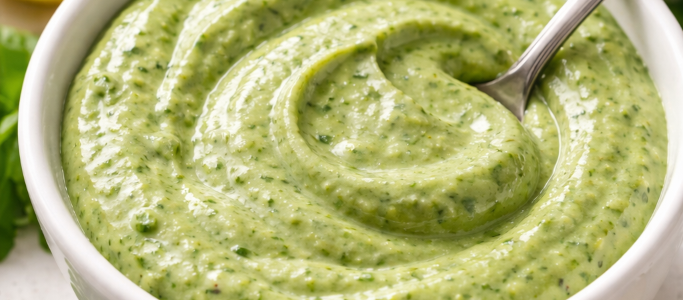
A Simple Green Goddess Dressing Can Tell the Whole Story. Lectins are not new. They’ve been part of the human food story for as long as humans have been eating plants. What is new is how dramatically our relationship with food has changed and how little our biology has changed to keep up.
Modern diets are built on convenience, global distribution, and year-round availability. Foods are bred for shelf life, visual appeal, and yield rather than digestibility or biochemical compatibility with the human gut. In that context, lectins have gone from background players to center stage. For some people, they remain harmless passengers. For others, they become quiet agitators that contribute to digestive discomfort, inflammation, immune confusion, and nutrient absorption issues that are frustratingly difficult to pin down.
This is not a story about fear. It is a story about awareness, preparation, and reclaiming agency over what ends up on your plate.
Lectins: Not Poison, Not Placebo and Context Matters
Lectins are carbohydrate-binding proteins found throughout the plant kingdom. From the plant’s perspective, they’re useful. They deter insects, survive digestion, and help ensure the plant’s survival. From the human perspective, they’re complicated.
Some lectins are easily broken down by cooking. Others are stubborn. A subset can bind to the gut lining, interact with immune cells, or interfere with nutrient transport. The degree to which this matters depends on several variables: genetics, gut integrity, overall diet, stress, sleep, and cumulative exposure.
This is where modern nutrition debates often derail. One camp argues lectins are harmless because populations have eaten them for centuries. Another claims they are universally dangerous. Both positions ignore the middle ground.
Traditional food cultures rarely consumed lectin-rich foods raw, unsoaked, unfermented, or unprocessed. Beans were soaked and pressure cooked. Grains were fermented or sprouted. Vegetables were peeled, deseeded, cooked, or paired with fats and acids that altered their biological impact. These weren’t wellness trends. They were survival strategies.
Today, many of those steps are skipped.
Why Preparation Is More Important Than Elimination
The goal of a low-lectin lifestyle is not restriction for its own sake. It is reduction through intelligent preparation.
Peeling, deseeding, pressure cooking, fermenting, and choosing lectin-lower varieties all change how lectins behave in the body. Even the presence of fats can influence how lectins interact with the gut lining. This means that how you eat something often matters more than whether you eat it.
Avocados are a perfect example.
They are widely tolerated, naturally low in problematic lectins, rich in monounsaturated fats, and supportive of gut barrier integrity. They also act as carriers delivering herbs, acids, and nutrients in a way that is both satisfying and biologically gentle.
That makes them an ideal foundation for a lectin-aware dressing.
The Role of Fats, Herbs, and Acids in Lectin-Conscious Eating
Fat is not the villain it was once made out to be. In fact, healthy fats can slow digestion, reduce mechanical irritation of the gut lining, and help regulate immune signaling in the intestinal wall. When paired with low-lectin ingredients, fats create meals that feel grounding rather than inflammatory.
Herbs bring polyphenols, antioxidants, and antimicrobial compounds that support microbial balance. Acids, like lemon juice or vinegar, can alter protein structures and improve digestive tolerance.
When you combine these elements intentionally, you don’t just get flavor. You get function.
This is why dressings matter more than people think. They are often the difference between a salad that feels nourishing and one that leaves someone bloated, fatigued, or uncomfortable.
A Lectin-Safe Take on Green Goddess Dressing
Traditional Green Goddess dressing often includes ingredients that can be problematic for lectin-sensitive individuals: raw garlic in large amounts, nightshade peppers, conventional dairy, or industrial seed oils. None of these are inherently “bad,” but they can push the system in the wrong direction for someone already dealing with gut stress.
This version keeps the spirit while respecting the biology.
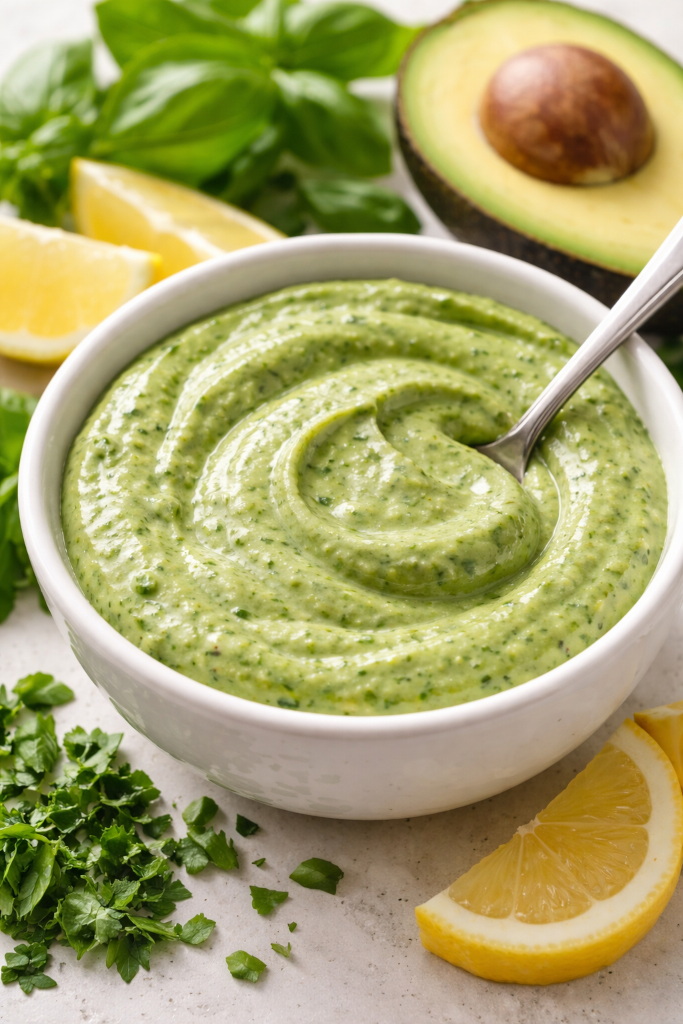
Low-Lectin Green Goddess Dressing
Ingredients
- 1 ripe avocado
- ½ cup fresh basil leaves
- ¼ cup fresh parsley
- 2 tablespoons fresh chives
- 2 tablespoons fresh lemon juice
- ¼ cup extra virgin olive oil
- 2-4 tablespoons filtered water (to desired consistency)
- ½ teaspoon sea salt
- Optional: 1 tablespoon fresh dill or cilantro (if tolerated)
Instructions
- Add all ingredients to a blender or food processor. Blend until smooth and creamy, adjusting water for thickness. Taste and adjust salt or lemon as needed. Refrigerate for 30 minutes to allow flavors to meld.
Why This Works
- Avocado provides a low-lectin, gut-supportive fat base
- Fresh herbs add antioxidants without lectin load
- Lemon juice supports digestion and flavor balance
- Olive oil enhances absorption and satiety
This dressing pairs beautifully with peeled and deseeded cucumbers, pressure-cooked chicken, wild-caught fish, or gently cooked vegetables. It can also be used as a dip or sauce, making it versatile without adding digestive complexity.
Lectins, the Gut Barrier, and Why Symptoms Are Often Delayed
One of the most confusing aspects of lectin sensitivity is timing. Reactions are rarely immediate. Instead, they accumulate.
Lectins that bind to the gut lining may not cause noticeable symptoms right away. Over time, however, repeated exposure can contribute to increased intestinal permeability, immune activation, or shifts in microbial balance. This is why people often struggle to connect food choices with symptoms like joint pain, fatigue, skin issues, or brain fog.
Reducing lectin exposure doesn’t always produce instant results but it often creates space for healing. That space allows the gut lining to repair, immune signaling to calm, and digestion to normalize.
This is also why consistency matters more than perfection.
Lifestyle Factors That Amplify or Reduce Lectin Impact
Food never acts in isolation. Sleep deprivation, chronic stress, and overtraining all increase intestinal permeability. In those states, lectins that might otherwise be tolerated can become problematic.
Conversely, adequate sleep, stress management, and gentle movement improve gut resilience. When those foundations are in place, people often find they can tolerate a wider range of foods, even those they once avoided.
The low-lectin approach works best when it is integrated, not obsessive.
Your Body as the Final Authority
No chart, list, or influencer can tell you exactly how your body will respond. Two people can eat the same meal and have completely different outcomes. That doesn’t mean one is right and the other is wrong. It means biology is personal.
The purpose of a low-lectin framework is not to impose rules. It is to offer tools so you can observe, adjust, and make informed choices without fear.
A simple dressing like this one is not just a recipe. It’s a reminder that nourishment doesn’t require complexity. It requires intention.
Closing Thoughts: Small Shifts, Real Relief
You don’t need to overhaul your entire diet overnight. You don’t need to eliminate every food that contains a lectin. What you can do is start paying attention to preparation, ingredient quality, and how foods make you feel over time.
When people adopt this mindset, something interesting happens. Meals become calmer. Digestion becomes more predictable. Cravings soften. Food stops feeling like a gamble.
That is the quiet power of living low-lectin, not as a rulebook, but as a relationship with food that respects both tradition and modern science.
And sometimes, it starts with something as simple as a bowl, a blender, and a ripe avocado.