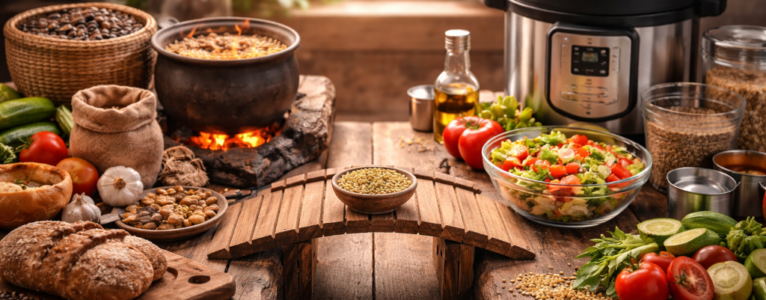

For most people trying to eat better, cooking shortcuts feel like survival tools. Modern life does not leave much room for soaking beans overnight, simmering broths for hours, or carefully peeling and deseeding vegetables after a long workday. Convenience foods, quick methods, and “good enough” substitutions become the norm, not because people are careless, but because they are busy, tired, and trying to do the best they can with limited time.
When it comes to lectins, some of these shortcuts quietly undo progress. They do not always cause immediate symptoms, and they often appear harmless on the surface. Over time, however, they can keep people stuck in cycles of digestive discomfort, inflammation, and confusion. Many people find themselves wondering why a clean diet still does not feel right.
This is not about perfection. It is about understanding which shortcuts matter, which ones do not, and why certain modern cooking habits clash with how lectins actually behave in the body.
The Illusion of “Mostly Cooked”
One of the most common assumptions around lectins is that heat solves the problem. Cooking has been part of human evolution for hundreds of thousands of years, so it feels reasonable to assume that if food is hot, browned, or softened, the lectins inside it must be neutralized.
The reality is more nuanced.
Lectins are proteins, and like many proteins, some are sensitive to heat while others are surprisingly resilient. Certain lectins denature easily and lose their ability to bind to tissues once exposed to sufficient heat and moisture. Others, particularly those found in legumes, grains, and nightshades, can survive temperatures that would destroy many bacteria.
This is where partial cooking becomes a problem.
Quick sautés, light roasting, or brief boiling may soften texture and improve flavor, but they do not always provide the sustained heat and moisture required to significantly reduce lectin activity. A pot of beans simmered for thirty minutes may look done, taste fine, and even feel traditional, yet still retain lectins capable of irritating the gut lining in sensitive individuals.
The shortcut here is rarely intentional. It is the assumption that cooked automatically means safe. For people navigating lectin sensitivity, that assumption can stall progress without ever triggering obvious warning signs.
Rushing What Traditionally Took Time
Before refrigeration, pressure cookers, and modern supply chains, many foods required preparation simply to be edible. Soaking, fermenting, sprouting, and slow cooking were not wellness trends. They were survival strategies.
Modern kitchens often skip these steps entirely. Dry beans go straight into pots. Grains are cooked the same day they are purchased. Fermentation is replaced with vinegar. Time itself becomes the enemy.
From a lectin perspective, this matters because traditional preparation methods do not just change flavor or texture. They alter chemical structures. Extended soaking allows water-soluble lectins to leach out. Fermentation introduces enzymes that partially break down problematic proteins. Long, moist cooking exposes lectins to conditions that gradually reduce their ability to bind to tissues.
When these steps are skipped, the food may still be whole, plant-based, or home-cooked, yet remain biochemically closer to its raw defensive state.
This helps explain why some people follow healthy diets and still experience bloating, joint pain, or fatigue. The shortcut is not visible on the plate. It is embedded in the process.
Pressure Cooking as an Afterthought Instead of a Tool
Pressure cooking has gained popularity in recent years, often framed as a time-saving gadget rather than a biochemical tool. Many people use it interchangeably with slow cookers or traditional boiling, assuming the differences are mostly about speed.
In reality, pressure cooking fundamentally changes how heat interacts with lectins.
Under pressure, water boils at a higher temperature. That combination of heat, moisture, and sustained exposure is particularly effective at reducing lectin activity in certain foods, especially legumes. This is where another shortcut often appears. Under-pressurizing or under-timing.
Short pressure cycles, quick-release methods, or treating pressure cooking like a glorified microwave can limit its effectiveness. A pot that never reaches full pressure or maintains it long enough may fall into the same trap as partial boiling. It is hot enough to cook, but not hot enough to matter.
Used intentionally, pressure cooking can be one of the most lectin-reducing methods available to a home cook. Used casually, it becomes just another fast path that feels productive while quietly missing the mark.
Trusting Labels More Than Reactions
Modern food packaging has trained people to outsource judgment. Labels promise gluten-free, plant-based, high protein, or heart healthy, creating a sense of safety that feels scientific and authoritative.
Lectins rarely appear in these conversations.
A food can be organic, non-GMO, locally sourced, and minimally processed, and still be high in active lectins. A gluten-free grain may remove one irritant while leaving another intact. A vegan protein powder may concentrate lectins rather than reduce them.
The shortcut here is mental rather than culinary. It is trusting marketing language to do the work that observation and self-testing once did. When symptoms persist, people often blame themselves for inconsistency rather than questioning whether the food itself, despite its labels, aligns with their physiology.
For those exploring a low-lectin approach, progress often accelerates when lived experience is treated as valid data. Digestive feedback, energy levels, joint stiffness, and skin changes frequently reveal more than any ingredient list.
Assuming Raw Is Always Better
Raw food culture has contributed valuable insights into nutrient preservation, enzyme activity, and food quality. When it comes to lectins, however, raw and beneficial do not always align.
Plants produce lectins as defense mechanisms. Cooking, soaking, and fermenting are ways humans disarm those defenses. Eating certain foods raw can preserve vitamins, but it can also preserve lectins in their most active form.
Raw spinach, raw tomatoes, raw zucchini skins, raw sprouts, and uncooked legumes may feel light and virtuous, yet for some people they provoke immediate or delayed reactions. These reactions are often blamed on fiber, food combining, or stress, when lectins may be playing a central role.
The shortcut here is ideological. It is applying a one-size-fits-all belief about raw foods to a biological reality that varies widely between individuals. Progress improves when rawness becomes a choice rather than a rule.
Overlooking Cumulative Exposure
One reason lectin issues are so difficult to identify is that they do not always cause dramatic reactions. Unlike food allergies, which often provoke immediate and unmistakable symptoms, lectins can operate quietly.
A single meal may cause nothing noticeable. Repeated exposure, day after day and week after week, can contribute to low-grade inflammation, digestive disruption, or immune activation that feels vague and nonspecific.
Shortcuts compound this problem. A little undercooked grain here, a quick-boiled legume there, raw vegetables layered into multiple meals. It all adds up. Because no single exposure feels decisive, people rarely connect the dots.
Progress often comes not from eliminating everything at once, but from reducing cumulative load. Removing one shortcut, adjusting one preparation method, or rotating foods more intentionally can create outsized improvements over time.
Speed Over Awareness
Perhaps the most subtle shortcut is cooking on autopilot.
Modern kitchens are optimized for speed. Meals are assembled between obligations. Recipes are skimmed rather than read. Food is prepared while multitasking, distracted, or exhausted. None of this is wrong, but it does make it harder to notice patterns.
Low-lectin living, at its core, is not about restriction. It is about awareness. Awareness of how food is prepared. Awareness of how the body responds. Awareness of what supports resilience versus what slowly erodes it.
When cooking becomes purely transactional, those signals get lost.
Ironically, slowing down does not always require more time. It often requires fewer assumptions. Questioning a habit. Testing a method. Noticing how the body responds after a meal prepared one way versus another.
Progress Is Not Linear and Shortcuts Are Not Always Bad
It is important to say this plainly. Not all shortcuts are harmful, and no one lives perfectly. Stress, sleep deprivation, emotional strain, and social isolation can affect digestion as much as food preparation does. Sometimes convenience is the healthiest option available.
The problem is not using shortcuts. The problem is using them blindly.
When people understand which shortcuts matter most, they can prioritize intelligently. Maybe soaking beans happens when time allows. Maybe pressure cooking becomes the default instead of a novelty. Maybe raw vegetables are peeled, seeded, or cooked gently instead of eliminated entirely.
Progress does not come from rigid rules. It comes from alignment between knowledge, behavior, and lived experience.
Reframing the Goal
A low-lectin approach is not about avoiding plants or fearing food. It is about respecting the evolutionary reality that plants and humans did not always share the same interests, and learning how traditional practices bridged that gap.
Cooking shortcuts exist because life is demanding. When those shortcuts interfere with healing, clarity, or momentum, they are worth reexamining.
Sometimes the smallest adjustments, such as an extra soak, a longer cook, or a different method, unlock changes that no supplement, elimination diet, or protocol ever could.
Often, the real progress comes not from doing more, but from undoing the quiet habits that were holding things back all along.