When people first hear about lectins, they are usually introduced to them as dietary troublemakers. Lectins are often described as plant proteins that irritate the gut, disrupt digestion, or trigger inflammation. While those descriptions are not entirely wrong, they are incomplete. They describe outcomes without explaining the deeper mechanism.
To truly understand why lectins matter, we have to move beyond the digestive tract and into the microscopic conversations happening inside the body. Lectins are not just passive irritants. They are biologically active molecules that interact directly with how cells communicate. Their real influence shows up not only in digestion, but in cell signaling, immune responses, hormone regulation, and tissue repair.
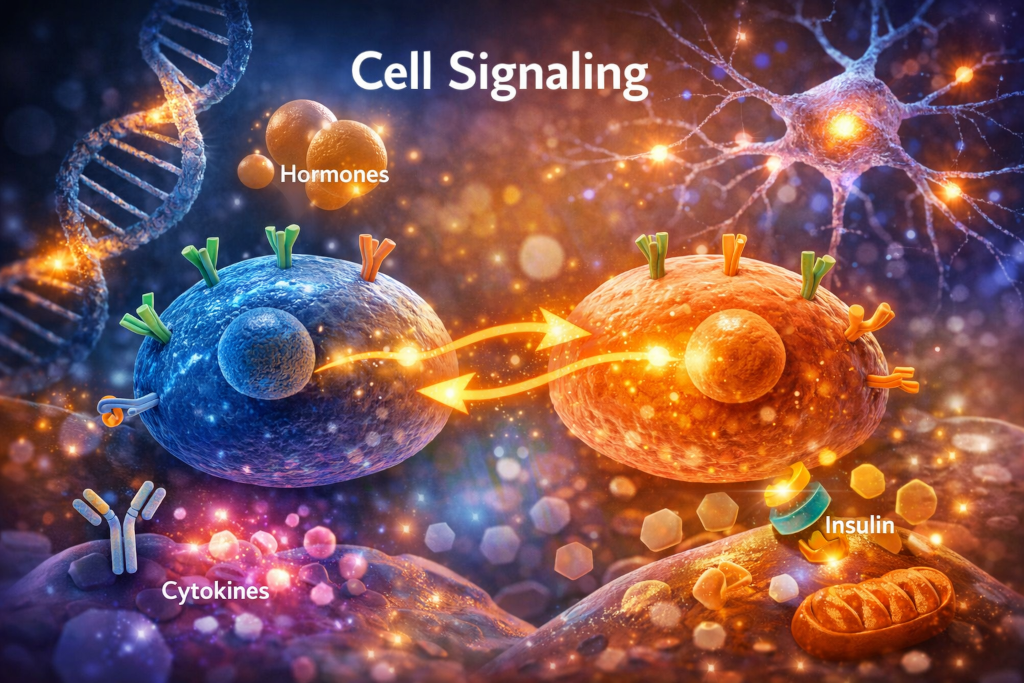
Cell signaling is how cells sense their environment, communicate with neighboring cells, and decide how to behave. It governs everything from inflammation and metabolism to immune defense and healing. Lectins intersect with this system in subtle but powerful ways. Understanding that intersection changes how we think about food, tolerance, and why some bodies react differently to the same ingredients.
This is where the low-lectin conversation becomes less about fear and more about biology.
Cell Signaling: The Language of the Body
Every cell in the body is constantly receiving and sending signals. These signals are not spoken words, but chemical messages. Hormones, neurotransmitters, immune messengers, and surface receptors all work together to keep the body coordinated. When signaling is clear and balanced, tissues function smoothly. When signaling becomes distorted, symptoms begin to appear.
Cell signaling depends heavily on receptors located on the surface of cells. These receptors act like antennae. They bind to specific molecules, recognize patterns, and trigger internal responses. Many of these receptors are glycoproteins, meaning they are proteins decorated with carbohydrate structures on their surface.
Those carbohydrate structures are not random. They act as identity markers, docking points, and regulatory switches. This is where lectins enter the picture.
Lectins are carbohydrate-binding proteins. They are designed by plants to recognize and attach to specific sugar patterns. In nature, this ability helps plants defend themselves against insects, microbes, and animals that might consume them. When lectins encounter human cells, they do what they evolved to do. They bind.
Lectins Do Not Attack Cells Randomly
One of the biggest misconceptions about lectins is the idea that they simply damage cells by being toxic. In reality, lectins are highly selective. They bind to specific carbohydrate structures with remarkable precision. Some lectins prefer mannose. Others bind to galactose, fucose, or sialic acid. These sugars are not floating freely. They are part of the signaling architecture of human cells.
When a lectin binds to a cell surface carbohydrate, it can interfere with normal signaling in several ways. It can block a receptor from receiving its intended signal. It can cluster receptors together, triggering signaling pathways that would not normally activate. It can also stabilize certain signals for longer than intended, extending immune or inflammatory responses.
This does not happen uniformly across all tissues or all people. The pattern of carbohydrates on cell surfaces varies by genetics, tissue type, age, health status, and even gut microbiome composition. This variability explains why lectins can feel harmless to one person and disruptive to another.
Lectins and the Immune System’s Alarm System
The immune system relies heavily on cell signaling. Immune cells constantly sample their environment, looking for patterns that indicate danger or damage. Lectins can influence this process by mimicking or amplifying threat signals.
When lectins bind to immune cell receptors, they can stimulate the release of cytokines. Cytokines are signaling molecules that coordinate immune responses. In small, controlled amounts, this signaling is protective. It helps fight infection and repair tissue. When signaling becomes excessive or chronic, inflammation can persist even in the absence of real threats.
This is one reason lectins are often associated with low-grade inflammation rather than acute toxicity. They do not necessarily cause immediate damage. Instead, they can subtly nudge immune signaling toward a more reactive state. Over time, this can contribute to joint discomfort, digestive sensitivity, skin issues, or brain fog in susceptible individuals.
Importantly, cooking and processing methods dramatically alter this interaction. Heat, pressure, fermentation, and soaking can change the structure of lectins enough to reduce their ability to bind to cell surface carbohydrates. When the binding is weakened, the signaling disruption is reduced.
Lectins and Gut Cell Communication
The gut is not just a digestive tube. It is a signaling hub. The lining of the gut communicates constantly with immune cells, nerve cells, and hormone-producing cells. This communication determines how nutrients are absorbed, how hunger signals are regulated, and how the immune system distinguishes food from threats.
Lectins interact directly with gut epithelial cells. Some lectins can bind to the carbohydrate structures in the mucus layer that protects the gut lining. This binding can alter how thick or protective that mucus layer remains. When the mucus barrier is compromised, underlying cells become more exposed to bacteria, food particles, and immune triggers.
Lectins can also influence tight junctions. Tight junctions are protein complexes that regulate how much passes between gut cells. Disruption of tight junction signaling does not necessarily mean the gut becomes damaged overnight. It often means signaling becomes less precise. The gut becomes more reactive, more sensitive, and less tolerant of variability.
Again, this effect is highly individual. People with resilient mucus layers, diverse microbiomes, and efficient detox pathways may experience little consequence. Others may notice significant changes in how they tolerate certain foods.
Hormonal Signaling and Metabolic Effects
Cell signaling is not limited to the immune system. Hormones rely on receptor binding and carbohydrate-mediated recognition to exert their effects. Insulin signaling, for example, depends on precise receptor interactions at the cell surface.
Some research suggests that certain lectins may interfere with metabolic signaling indirectly by influencing inflammation, gut permeability, or immune activation. When inflammatory signals are elevated, insulin receptors can become less responsive. This does not mean lectins directly cause metabolic disease, but they can contribute to an environment where signaling efficiency declines.
This may help explain why some individuals experience changes in energy levels, blood sugar stability, or weight regulation when they adjust lectin exposure. The effect is rarely immediate and rarely dramatic. It tends to be subtle and cumulative.
Why Lectins Affect People Differently
If lectins influence cell signaling, why do some people eat high-lectin diets with no obvious symptoms?
The answer lies in biological diversity. Cell surface carbohydrates differ between individuals. Gut microbiomes differ. Cooking traditions differ. Genetic variations influence immune thresholds and detox capacity. Even stress and sleep affect how cells interpret signals.
Lectins are not universally harmful or universally benign. They are context-dependent signaling modifiers. In some contexts, they may even have beneficial effects by stimulating immune vigilance or supporting microbial balance. In others, they may push already stressed systems toward overload.
This variability is why a low-lectin approach works best as a framework, not a rigid rulebook. The goal is not elimination at all costs. The goal is to reduce unnecessary signaling interference while supporting the body’s ability to communicate clearly.
Cooking as a Signaling Intervention
When we talk about cooking in the context of lectins, we are really talking about molecular communication. Heat and pressure change protein structure. When lectins lose their three-dimensional shape, their ability to bind to carbohydrates diminishes.
Pressure cooking is particularly effective because it reaches temperature thresholds that disrupt lectin stability more reliably than simmering or baking. Fermentation introduces microbial enzymes that degrade lectins over time. Soaking activates enzymatic processes within seeds and legumes that reduce lectin activity.
These techniques do not remove lectins entirely, but they change how lectins interact with cells. The result is less interference with signaling pathways and improved tolerance for many people.
Traditional food cultures discovered these techniques long before cell signaling was understood. Modern science is now catching up and explaining why they worked.
Rethinking Lectins Beyond Fear
Lectins are not villains hiding in food. They are ancient biological tools shaped by evolution. They interact with human biology because human biology uses carbohydrates as signaling language. When two systems share a language, interaction is inevitable.
Problems arise when modern diets ignore preparation methods that once balanced those interactions. Ultra-processed foods, rushed cooking, and reliance on raw or minimally treated lectin-rich foods can increase signaling noise. The body becomes less able to distinguish useful signals from background interference.
Understanding lectins as signaling modifiers rather than toxins shifts the conversation. It encourages curiosity instead of fear. It invites experimentation instead of restriction.
Living Low-Lectin as a Signaling Strategy
A low-lectin lifestyle is not about avoiding plants or demonizing food. It is about reducing unnecessary interference in the body’s communication systems. When cell signaling becomes clearer, many downstream systems benefit.
People often report improvements in digestion, mental clarity, joint comfort, and energy not because lectins were poisoning them, but because signaling pathways are no longer constantly being nudged off course. The body does what it does best when the noise level drops.
This is why sleep, stress management, and movement matter just as much as food preparation. All of these factors influence how cells send and receive signals. Lectins are one piece of a larger signaling puzzle.
The Bigger Picture
Lectin research continues to evolve. Scientists are still uncovering how carbohydrate recognition shapes immunity, metabolism, and cell behavior. As this field grows, it becomes increasingly clear that food is not just fuel. It is information.
Lectins are informational molecules. They carry signals from the plant kingdom into human biology. Whether those signals are helpful, neutral, or disruptive depends on context, preparation, and individual biology.
Living low-lectin is not about living in fear of food. It is about learning to listen to the body’s signaling system and choosing practices that support clarity over confusion. When cells communicate clearly, health becomes less of a battle and more of a conversation.