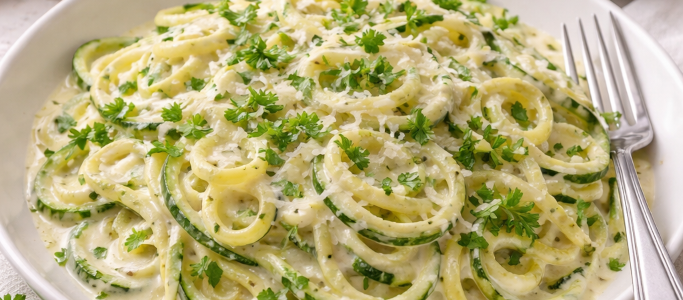
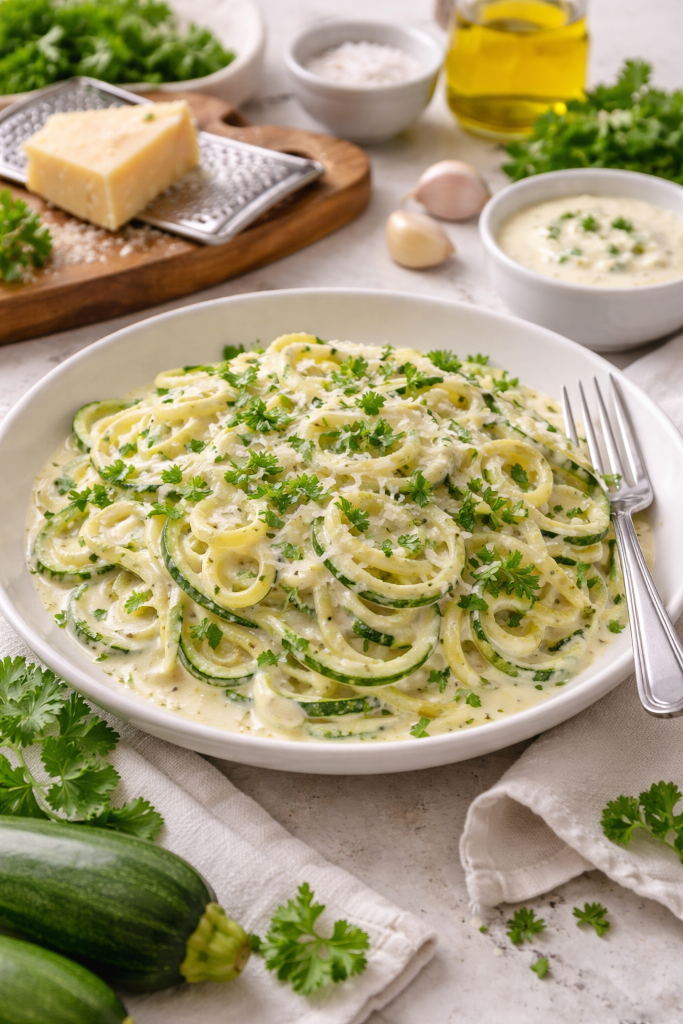
There is something deeply comforting about a bowl of Alfredo. The aroma of butter and cream, the silkiness of the sauce, the way it clings to pasta and turns a simple meal into something indulgent. For many people, dishes like this represent comfort, tradition, and celebration.
When someone begins exploring a lower-lectin way of eating, pasta is often one of the first foods they assume they must give up. Wheat based noodles are woven into modern food culture. They are affordable, convenient, and everywhere. Yet for some individuals, wheat and certain other high lectin foods are linked with digestive discomfort, bloating, fatigue, or inflammatory symptoms.
The goal is not to demonize food. It is to understand how certain compounds interact with the body and to make informed choices. Zucchini Noodle Alfredo is not a compromise. It is a strategic redesign rooted in both culinary creativity and emerging research on lectins.
This article explores why this version of Alfredo uses zucchini instead of wheat pasta, why the sauce is built the way it is, and how each ingredient fits into a lectin aware framework.
What Lectins Are and Why Preparation Matters
Lectins are a type of protein found in many plants. They bind to specific carbohydrate structures. In nature, lectins function as part of a plant’s defense system against insects, fungi, and animals. Humans have been consuming lectins for thousands of years, and in most cases traditional preparation methods such as soaking, fermenting, sprouting, and pressure cooking reduce their activity.
Modern diets, however, rely heavily on large quantities of refined grains and legumes. Incomplete cooking, ultra processing, and constant exposure may increase lectin intake for some individuals.
Research has shown that certain lectins, such as phytohemagglutinin in raw or undercooked kidney beans, can cause acute digestive distress. Other lectins like wheat germ agglutinin have been studied for their ability to interact with the intestinal lining in laboratory settings. It is important to note that much of the research is conducted in vitro or in animal models. Human responses vary widely.
A lower lectin approach is not about eliminating all plant foods. It is about recognizing patterns. For individuals who suspect lectins may contribute to their symptoms, reducing exposure from common high lectin sources can be a practical experiment.
Zucchini Noodle Alfredo is built around that principle.
Why Replace Wheat Pasta with Zucchini Noodles
Traditional Alfredo relies on wheat based pasta. Wheat contains gluten, but gluten is not the only protein present. Wheat germ agglutinin is a lectin that is heat stable and can survive normal baking or boiling temperatures.
For many people, wheat is tolerated without obvious problems. For others, it is not. Some individuals report improved digestion and reduced bloating when they reduce or remove wheat products. While gluten sensitivity and celiac disease are separate medical conditions, even people without these diagnoses sometimes find relief by moderating wheat intake.
Zucchini offers a different nutritional profile. It is low in starch, low in calories, and naturally free of gluten. It contains fiber, vitamin C, potassium, and carotenoids. Most importantly in the context of a lectin aware diet, zucchini is not considered a high lectin food compared to wheat or legumes.
Zucchini noodles, often called zoodles, provide structure and volume without the concentrated lectin exposure of grain based pasta. They also reduce the overall glycemic load of the meal. For people managing blood sugar fluctuations, this can be an added benefit.
From a digestive standpoint, zucchini is high in water content and tends to be gentle on the gut when cooked lightly. Instead of relying on refined flour, the dish becomes centered around a whole vegetable.
The Creamy Sauce Without Flour
Many commercial Alfredo sauces use flour as a thickener. Flour increases the carbohydrate load and reintroduces wheat lectins. In a low lectin version, the sauce must achieve richness and body without that addition.
The foundation of this sauce is heavy cream and butter. Dairy does not contain lectins. However, some people are sensitive to lactose or milk proteins. For those who tolerate dairy, heavy cream is relatively low in lactose compared to milk because much of the lactose remains in the skim portion that is removed during cream separation.
Butter is mostly fat with minimal milk solids. When clarified into ghee, the milk solids are removed almost entirely. For individuals sensitive to casein or lactose, ghee can be an even gentler option.
Parmesan cheese contributes thickness through its protein and fat content rather than flour. Aged cheeses like Parmesan contain less lactose because fermentation reduces it over time. The fermentation process itself is an example of traditional food preparation that changes protein structures and carbohydrate content.
Garlic is included not only for flavor but also for its well studied bioactive compounds such as allicin. Garlic does contain lectins in raw form, but cooking reduces their activity significantly. In small culinary amounts, garlic is generally well tolerated.
Instead of thickening the sauce with starch, the emulsification of fat and cheese creates a naturally creamy texture. This mirrors the traditional Roman Alfredo, which historically relied on butter and cheese rather than cream and flour.
Why Avoid Cashew Cream in This Version
Many dairy free Alfredo alternatives rely on cashew cream. While cashews can create a beautiful texture, they are technically legumes. Legumes are among the highest lectin containing plant foods when improperly prepared.
Soaking and pressure cooking can significantly reduce lectin content in beans. However, nuts and seeds vary in their lectin profile and are not always subjected to those preparation methods when used in sauces.
For individuals intentionally reducing lectins, replacing flour with a large quantity of blended cashews may defeat the purpose. This recipe keeps the ingredient list simple and focused on foods with lower lectin activity.
That said, dietary needs vary. Some people tolerate soaked and pressure cooked legumes without issue. The key is personal experimentation guided by evidence.
The Role of Cooking Technique
Cooking zucchini noodles properly is crucial. Overcooking can make them watery and dilute the sauce. Light sautéing for just a few minutes softens them while preserving structure.
Heat also matters for lectin reduction in other foods. Many lectins are heat sensitive, though some are more resistant. Pressure cooking reaches higher temperatures than standard boiling and is especially effective at reducing lectins in beans. In this recipe, there are no high lectin legumes that require pressure cooking, but understanding preparation science is part of the broader lifestyle approach.
When we think about lectins, it is not only what we eat but how we prepare it.
Nutritional Considerations Beyond Lectins
Zucchini Noodle Alfredo is lower in carbohydrates than traditional pasta Alfredo. This can support metabolic flexibility and stable blood sugar for some individuals.
The fat content from cream, butter, and cheese increases satiety. Fat slows gastric emptying, which may reduce spikes in hunger. For people who find themselves overeating high carbohydrate meals, this shift can be helpful.
Zucchini adds fiber and micronutrients without adding significant lectin exposure. It also increases vegetable intake in a way that feels familiar and satisfying.
Protein from Parmesan supports muscle maintenance and tissue repair. While this is not a high protein meal by bodybuilding standards, it is balanced in a way that aligns with many low lectin frameworks.
Zucchini Noodle Alfredo (Lectin-Safe Creamy Sauce)
Ingredients
- 4 medium zucchini, spiralized
- 2 tablespoons butter or ghee
- 3 cloves garlic, minced
- 1 cup heavy cream
- 1 cup freshly grated Parmesan cheese
- 1 tablespoon olive oil
- Sea salt to taste
- Freshly ground black pepper to taste
- Optional: chopped fresh parsley for garnish
Instructions
- Spiralize the zucchini into noodles and set aside. If excess moisture is present, lightly pat with a paper towel.
- In a large skillet over medium heat, add butter or ghee. Once melted, add minced garlic and sauté for about 30 seconds until fragrant. Avoid browning.
- Pour in the heavy cream and bring to a gentle simmer. Reduce heat slightly and allow the cream to thicken for about 3 to 5 minutes.
- Gradually stir in the grated Parmesan cheese. Continue stirring until the cheese melts and the sauce becomes smooth and creamy.
- Season with sea salt and freshly ground black pepper to taste.
- In a separate pan, heat olive oil over medium heat. Add zucchini noodles and sauté for 2 to 3 minutes until just tender. Do not overcook.
- Remove zucchini from heat and immediately toss with the Alfredo sauce until evenly coated.
- Garnish with chopped parsley if desired and serve immediately.
Addressing Common Concerns
Some critics argue that lectins are overemphasized in popular health discussions. It is true that many plant foods containing lectins are associated with positive health outcomes in population studies. Beans and whole grains, when properly prepared, are linked to lower rates of chronic disease in many epidemiological models.
Context matters. Population studies do not always account for individuals who experience specific sensitivities. Personalized nutrition recognizes that what works broadly may not work universally.
Zucchini Noodle Alfredo is not a claim that everyone must avoid wheat. It is an option for those exploring how reducing certain foods affects their own well being.
It is also worth noting that a low lectin approach should not lead to a severely restricted diet lacking in fiber and phytonutrients. Variety remains important. Many vegetables are naturally low in problematic lectins, especially when peeled, deseeded, and cooked.
A Shift in Perspective
When people hear the phrase low lectin, they sometimes imagine a rigid, joyless eating plan. In reality, the goal is to preserve pleasure while adjusting inputs.
Food is not only chemistry. It is experience. The warmth of a creamy bowl of Alfredo can coexist with a thoughtful understanding of plant defense proteins and digestive biology.
This version of Alfredo demonstrates that traditional comfort foods can be reimagined in a way that aligns with modern insights. It respects both culinary heritage and scientific curiosity.
For many readers, the journey begins with symptoms. Bloating that does not make sense. Brain fog after certain meals. Joint stiffness that seems inconsistent. While these symptoms can have many causes and should be evaluated medically when necessary, diet is one lever within our control.
Experimentation with lower lectin meals like Zucchini Noodle Alfredo offers a starting point. It is simple, approachable, and grounded in current understanding of how certain plant proteins interact with the human body.
Bringing It Back to the Table
At its core, this recipe is about choice. Wheat pasta is traditional. Zucchini noodles are adaptive. Flour thickened sauce is convenient. Emulsified cream and cheese are elegant.
The science around lectins continues to evolve. As with many areas of nutrition, nuance is essential. Avoiding raw kidney beans is universally wise. Reducing wheat and certain legumes may be helpful for some. Preparation methods matter.
Zucchini Noodle Alfredo sits comfortably in that nuanced space. It is neither extreme nor dogmatic. It is a practical example of how knowledge can reshape a plate without stripping it of comfort.
A bowl of creamy noodles can still exist in a lower lectin kitchen. It just looks a little greener.