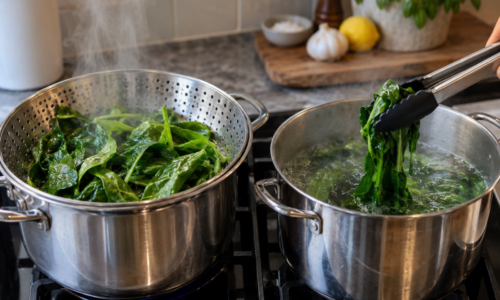
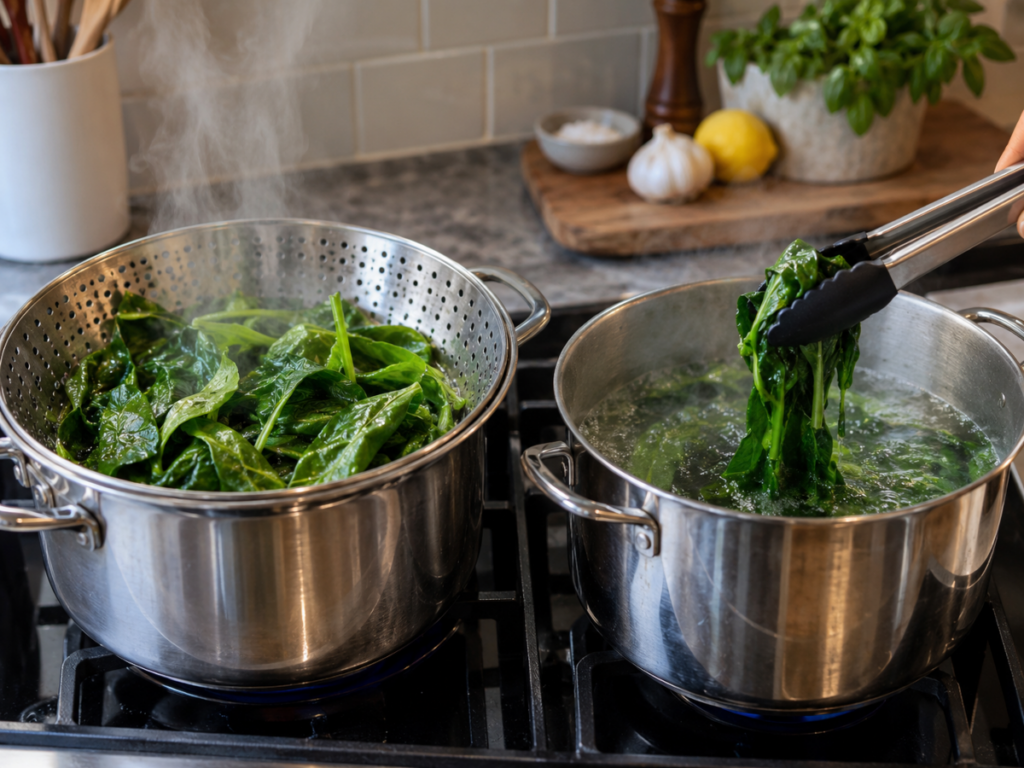
Tender greens can go from crisp and fresh to limp and dull in a matter of minutes, which is why the cooking method matters so much. Spinach, baby kale, chard, beet greens, mustard greens, and similar leaves all contain a great deal of water and have delicate cell structures. A little heat softens them, concentrates flavor, and makes a large bowl of leaves collapse into a manageable serving, but too much heat can quickly change their color, texture, and nutrient profile.
For someone following a low-lectin lifestyle, moist-heat cooking can also feel appealing because heat and water are often used to reduce certain plant compounds. The catch is that steaming and blanching do not behave the same way. Steaming keeps the greens out of the cooking water, while blanching exposes them directly to boiling water for a short period before they are drained, and often cooled quickly. That difference affects texture, flavor, nutrient retention, and the amount of water-soluble compounds that leave the leaves.
Steaming and Blanching Do Different Jobs
In everyday kitchen language, steaming means cooking food above simmering or boiling water so that hot vapor surrounds the leaves without submerging them. Blanching usually means briefly immersing food in boiling water, then removing it quickly. In food preservation literature, both boiling-water blanching and steam blanching are recognized techniques, but most home cooks use the word blanching to mean brief boiling followed by rapid cooling.
That distinction matters because water is not a neutral cooking medium. Once greens are submerged, water-soluble compounds can move out of the plant tissue and into the cooking liquid. Steaming exposes the leaves to heat and moisture without giving those compounds the same large pool of water to diffuse into. As a result, steaming often preserves more of the compounds that are easily lost through leaching, while blanching is more effective when the goal is to deliberately draw some soluble material out of the greens.
The two methods also create different textures. Steam softens leaves gradually while allowing them to retain some body, especially when the cooking time is short. Blanching heats the surface of the leaf very quickly and evenly, so tender greens can wilt almost at once. If they are removed at the right moment, the result can be silky but still fresh tasting. If they remain in the water too long, the same rapid heat transfer can make them watery and fragile.
Steaming Usually Gives Better Nutrient Retention
Water-soluble vitamins are especially sensitive to cooking conditions because both heat and contact with water can reduce how much remains in the food. Research comparing cooking methods has repeatedly found that boiling tends to cause greater losses of vitamin C and folate than steaming, although the size of the loss depends on the vegetable, the cooking time, and the amount of water used. One study of vegetables found that steaming spinach did not significantly reduce folate under the conditions tested, while boiling spinach reduced folate retention substantially.
A broader study comparing blanching, boiling, microwaving, and steaming also found that vitamin retention varied by vegetable and cooking method, with boiling often producing the lowest vitamin C retention. The researchers emphasized that there is no single cooking method that preserves every nutrient equally well, since different vitamins respond differently to heat and water.
For everyday cooking, this gives steaming a practical advantage when the main goal is to soften greens while keeping as much of their natural nutrient content as reasonably possible. A short steaming time also avoids leaving the leaves sitting in hot water after they have reached the texture you want. That is useful for baby spinach, tender chard leaves, young kale, and other greens that need very little cooking.
Blanching Is Better When You Want Soluble Compounds to Leave the Greens
Blanching has a different strength. Because the leaves are surrounded by water, some soluble minerals and plant compounds can move into the cooking liquid. That can be undesirable if nutrient retention is the main goal, but it can be useful in situations where someone intentionally wants to reduce certain water-soluble compounds.
Oxalate is a good example. Spinach and several other leafy vegetables can contain meaningful amounts of oxalate. Research comparing cooking methods found that boiling reduced soluble oxalate more than steaming because more oxalate moved into the cooking water. In that study, boiling reduced soluble oxalate by 30 to 87 percent across the vegetables tested, while steaming produced smaller reductions of 5 to 53 percent.
That does not mean everyone needs to remove oxalate from greens. Many people eat oxalate-containing foods without difficulty, and dietary needs differ widely. People who have been told by a clinician to manage oxalate intake, such as some individuals with recurrent calcium oxalate kidney stones, may have a different reason to choose boiling or blanching more often.
Other compounds can also change during blanching. Studies on leafy vegetables have reported reductions in compounds such as phytic acid, tannins, oxalic acid, and some enzyme inhibitors, although the extent depends heavily on the plant, cooking time, and method. Some findings are inconsistent across vegetables, so it is more accurate to think of blanching as a tool that can reduce certain soluble or heat-sensitive compounds rather than as a universal way to remove every so-called antinutrient.
The Low-Lectin Question Needs a Careful Answer
Lectins are proteins found throughout the plant kingdom, but their amounts and biological activity vary greatly among foods. The strongest food-safety concern involves high levels of active lectins in some raw or undercooked legumes, especially certain beans. Research measuring lectin activity across plant foods has found the highest activity in members of the legume family, and soaking plus boiling can reduce that activity substantially.
Tender leafy greens are a different category, and there is much less direct evidence showing that spinach, kale, chard, or similar greens require steaming or blanching specifically to reduce lectins. That makes it risky to claim that one of these methods is clearly superior for lectin reduction in leafy greens. Heat treatment may affect some plant proteins, but the actual result depends on the specific lectin, the food, the temperature, and the length of cooking.
For a practical low-lectin kitchen, the better way to think about these methods is to use them according to the food and the result you want. If a particular green sits better with you when cooked rather than raw, both steaming and blanching can provide a gentler texture and reduce the amount of raw plant material you are asking your digestive system to handle. If you are tracking food tolerance, keeping the cooking method consistent for a few meals can also help you separate the effect of the ingredient from the effect of preparation.
Texture Is Often the Best Guide for Tender Greens
Tender greens do not need long cooking times. Spinach may need only a minute or two of steaming, while thicker chard or mature kale can take a little longer. The leaves should soften enough to become easy to chew while still retaining some structure. Once they turn very dark, watery, or stringy, the cooking has usually gone farther than necessary for a simple side dish.
Blanching moves even faster. A pot of boiling water can wilt spinach in less than a minute, while firmer greens may need a little longer. Food-preservation guidance gives water-blanching times of about two minutes for many greens and three minutes for collards, but those times are designed for preservation rather than for immediate serving.
For dinner, you can usually stop sooner if the goal is tenderness rather than freezer preparation. Remove the greens as soon as they reach the texture you like, drain them thoroughly, and serve them promptly. If you are blanching for a cold dish or preparing greens ahead of time, cooling them quickly in cold water stops the residual heat from continuing to soften the leaves.
Flavor Changes Depending on How Much Water Touches the Leaves
Steaming tends to keep more of the vegetable’s natural flavor in the leaves. The taste may become sweeter and less grassy as the greens soften, but the flavor is still concentrated. That makes steaming a good match for simple preparations with extra virgin olive oil, garlic, lemon, sea salt, herbs, or a small amount of butter or ghee.
Blanching often creates a milder result. Some bitter or sharp-tasting compounds can move into the water, which can make strong greens easier to eat. Mustard greens, mature kale, collards, and some beet greens can benefit from this effect if their raw or lightly cooked flavor feels too intense.
The tradeoff is that blanching can also wash away some of the flavor you want to keep. Draining well becomes especially useful because water clinging to the leaves can dilute dressings and sauces. A salad spinner, clean kitchen towel, or gentle squeeze after cooling can help remove excess water without crushing the greens.
Use the Cooking Liquid Deliberately
The question of whether to discard the cooking water depends on why you chose blanching. If the goal is to lower soluble oxalate or other water-soluble compounds, discarding the water makes sense because some of those compounds have moved into it. Reusing the liquid would return part of what you were trying to remove.
If the goal is simply to cook greens and nutrient retention matters more than reducing soluble compounds, steaming is usually the simpler choice. Another option is to use a small amount of water in a covered skillet so the greens cook in their own moisture, which reduces the amount of liquid available for leaching. That method sits somewhere between steaming and sautéing and works well for delicate leaves.
Soup creates a different situation because the cooking liquid stays in the meal. Water-soluble nutrients that leave the greens may still be consumed with the broth. That does not prevent heat-related losses, but it does reduce the concern about nutrients being poured down the drain.
A Practical Way to Choose Between the Two
For tender greens eaten as a side dish, steaming is usually the better default. It gives you good control over texture, limits contact with water, and generally favors retention of water-soluble nutrients compared with boiling. It also leaves the greens dry enough to accept olive oil, butter, herbs, or a dressing without becoming diluted.
Blanching earns its place when you want a softer, milder green, when you are preparing leaves for freezing, or when you intentionally want more water-soluble compounds to move out of the food. It can also be useful for meal prep because blanched greens can be cooled, drained, refrigerated, and later added to omelets, soups, casseroles, or quick sautés.
Individual tolerance can still outweigh any general rule. Someone may digest lightly steamed spinach well but prefer chard blanched and drained, while another person may prefer firmer greens with only a brief steam. Keeping track of the specific green, cooking time, portion, and how you feel afterward can be more useful than trying to force every leafy vegetable into a single preparation method.
Small Technique Changes Make a Noticeable Difference
Whichever method you use, start with clean greens and remove thick or fibrous stems if they need more cooking than the leaves. Steam in a shallow layer rather than packing the basket tightly, so hot vapor can reach the leaves evenly. For blanching, use enough boiling water that the temperature recovers quickly after the greens go in, then remove them as soon as they are tender.
Avoid holding cooked greens over heat while the rest of dinner finishes. Residual heat continues to soften the leaves and can turn a good batch into a wet pile surprisingly fast. If timing is uncertain, cook the greens last because most tender varieties require only a few minutes.
The best method depends on what you are trying to preserve and what you are trying to remove. Steaming favors texture, concentrated flavor, and retention of many water-soluble nutrients. Blanching gives you more leaching, a milder taste, and a softer result, which can be useful for certain greens and certain dietary goals. In a low-lectin kitchen, both techniques are practical tools, and the better one is the one that fits the specific vegetable, your tolerance, and the meal you are actually cooking.