

For most of human history, food preparation was not a matter of convenience. It was a matter of survival.
Long before nutrition labels, macronutrient debates, or influencer meal plans, people learned, often through direct experience, that some foods demanded extra care. Certain plants caused stomach pain. Others led to fatigue, joint issues, or illness if eaten incorrectly. Over generations, cultures developed elaborate preparation methods not because they were fashionable, but because they worked.
Today, those methods are often dismissed as unnecessary or outdated. Modern food systems emphasize speed, efficiency, and shelf stability. If something is technically edible, it is assumed to be safe enough. But as lectin research continues to evolve, we are beginning to understand why our ancestors soaked, fermented, peeled, pressure-cooked, sprouted, and rested certain foods before eating them.
Some foods are not dangerous, but they are demanding. And they demand respect.
The Quiet Role of Lectins in Everyday Foods
Lectins are a class of proteins found throughout the plant kingdom. Their biological purpose is not to nourish humans, but to protect plants from being eaten. They bind to carbohydrates and can attach to cell membranes, including those lining the human gut.
This binding ability is what makes lectins biologically interesting and, in some cases, problematic.
Unlike many nutrients, lectins are not always fully broken down during digestion. Some pass through the digestive tract intact. Others interact directly with the intestinal lining. For many people, this interaction causes no noticeable symptoms. For others, it may contribute to digestive discomfort, bloating, immune activation, or systemic inflammation.
Modern research does not suggest that lectins are universally harmful. What it does suggest is that dose, preparation, and individual tolerance matter far more than previously assumed. This is where multiple preparation steps become important.
Why Cooking Alone Is Sometimes Not Enough
One of the most common misconceptions about lectins is that heat alone solves the problem. Cooking does reduce lectin activity in many foods, but it does not always eliminate it, especially when temperatures are insufficient or cooking times are too short.
Some lectins are heat-sensitive and break down easily. Others are surprisingly resilient. Certain lectins require sustained high heat combined with moisture and pressure to significantly reduce their activity. This helps explain why some foods feel fine when cooked one way but cause problems when prepared another.
Boiling dry beans briefly is not the same as pressure cooking them thoroughly. Roasting may deactivate some lectins while leaving others intact. Slow cooking at low temperatures can even preserve lectin activity in certain cases. When a food carries a higher lectin load, cooking becomes just one step rather than the entire solution.
Soaking as a Foundational Step, Not a Tradition
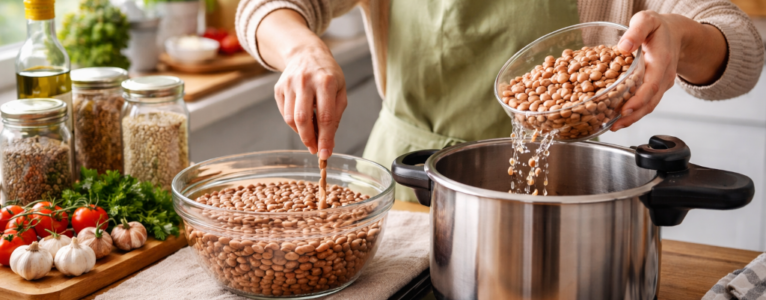
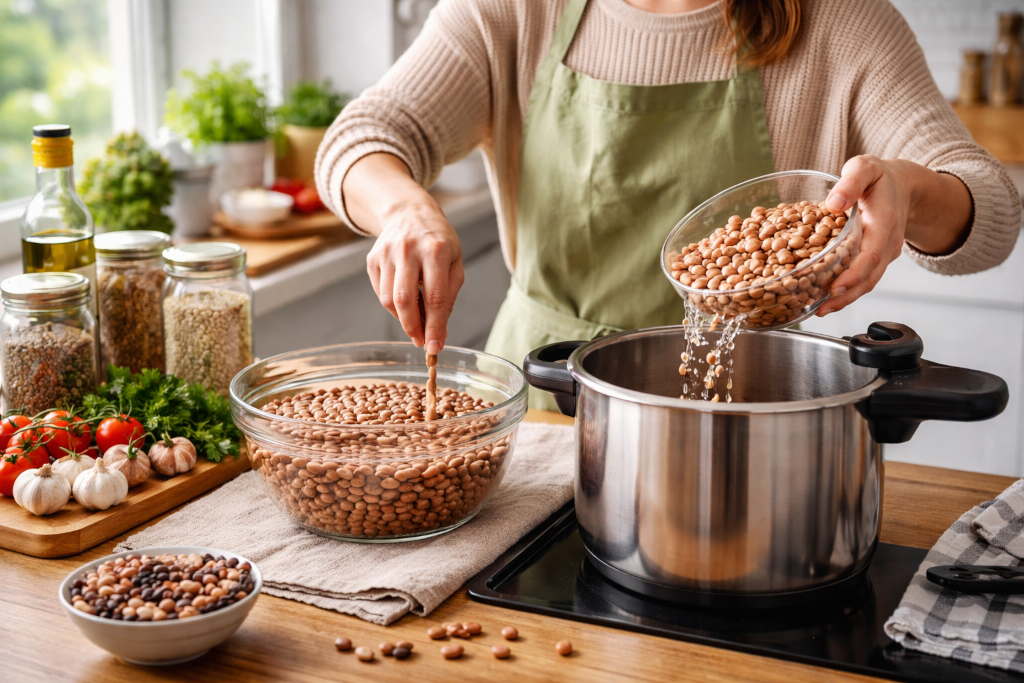
Soaking is often treated as optional or cosmetic, something done to improve texture or shorten cooking time. In reality, soaking plays a biochemical role.
When seeds, grains, and legumes are soaked in water, several processes occur simultaneously. Water activates enzymatic activity within the seed. Certain antinutrients, including lectins, begin to leach out into the soaking liquid. Enzyme inhibitors soften. Mineral-binding compounds loosen their hold.
From a lectin perspective, soaking acts as the first line of reduction. It lowers the overall lectin burden before heat is ever applied. This matters because lectin reduction tends to be cumulative. A food that is soaked and then thoroughly cooked ends up very different from one that is cooked alone. Skipping the soak is not always catastrophic. However, for sensitive individuals, it can be the difference between a food being tolerated or rejected by the body.
Peeling and Deseeding as Strategic Removal
Plants concentrate defensive compounds where they are most vulnerable, particularly on the outside and around reproductive structures. This is why lectins often appear in higher concentrations in skins, peels, seeds, and hulls.
Modern diets encourage people to eat foods whole without questioning what whole actually means. From a biological standpoint, consuming a plant exactly as it evolved to defend itself may not always serve human digestion well.
Removing skins from certain vegetables, deseeding fruits, or discarding hulls is not about stripping nutrition. It is about reducing exposure to compounds that can irritate the gut in susceptible individuals.
This practice appears repeatedly across traditional cuisines. Tomatoes were often peeled and deseeded. Squash skins were removed. Seeds were strained from sauces. These steps were not arbitrary. They were learned through observation and experience.
Fermentation and Microbial Assistance
Fermentation is one of the most powerful and least understood preparation methods when it comes to lectins. When foods ferment, bacteria and yeasts break down complex proteins, carbohydrates, and antinutrients. Lectins are included in this process. Microbial activity partially pre-digests components of the food, making it easier for the human digestive system to handle.
This helps explain why traditionally fermented foods often feel easier to digest than their non-fermented counterparts. It also explains why fermentation was so widespread long before refrigeration existed.
Fermentation is not a universal solution, and not all fermentation methods reduce lectins equally. When combined with soaking and thorough cooking, however, it can substantially change how a food interacts with the body.
Pressure Cooking and High-Temperature Moist Heat
Among modern cooking tools, pressure cookers may be the most effective option for lectin reduction. Pressure cooking exposes food to temperatures higher than boiling water while maintaining moisture. This combination is particularly effective at denaturing lectins that survive conventional cooking methods.
Research consistently shows that pressure cooking significantly reduces lectin activity in legumes compared to boiling alone. For people who enjoy beans but struggle with digestion, this single method can make previously problematic foods tolerable again.
Pressure cooking does not replace soaking or peeling. It enhances their effectiveness. When used as part of a multi-step preparation process, it dramatically lowers the final lectin load.
Traditional Food Cultures as Living Evidence
One of the strongest arguments for multi-step preparation comes from historical consistency. Cultures that relied heavily on lectin-rich foods almost always developed complex preparation traditions around them. These methods were not written in scientific journals. They were passed down because they worked.
People noticed patterns. Certain foods caused discomfort unless prepared carefully and thoroughly. Over time, shortcuts were abandoned while effective rituals remained. The human body became the feedback system.
Modern food processing removed many of these steps in the name of efficiency. Industrial cooking prioritizes speed, cost reduction, and uniformity rather than digestive resilience. The rise in digestive complaints, food sensitivities, and autoimmune conditions does not prove direct causation. It does raise important questions about what may have been lost along the way.
Individual Tolerance Over Universal Rules
Not everyone reacts to lectins in the same way. Genetics, gut integrity, microbiome composition, immune sensitivity, and overall health all influence tolerance.
Some people can eat minimally prepared foods without noticeable effects. Others experience symptoms from the same meals. This variability explains why discussions about lectins often become polarized.
Multi-step preparation is not about fear or strict elimination. It is about optional optimization, particularly for people already struggling with symptoms and looking for clarity. Reducing lectins does not require eliminating plant foods entirely. It allows people to work with biology rather than against it.
More Preparation Can Mean More Freedom
At first glance, multi-step preparation sounds restrictive. In practice, it often expands dietary options. People who once avoided certain foods completely may find they can enjoy them again once those foods are prepared properly. Instead of removing foods permanently, preparation allows them back in under better conditions.
This approach also encourages mindfulness. Food becomes something intentionally prepared rather than passively consumed. The relationship shifts toward nourishment rather than convenience. That shift alone can change how the body responds.
Food as Information, Not Just Fuel
Food is more than calories and macronutrients. It is information that interacts with the immune system, the gut lining, and metabolic pathways. Lectins are part of that information stream. When their impact is reduced through thoughtful preparation, the body interprets food differently.
Multiple preparation steps are not about perfection. They are about probability. Each step reduces risk and increases the likelihood of better digestion, lower inflammation, and improved resilience. Our ancestors did not have laboratory studies, but they had lived experience. Modern research is beginning to support what tradition already understood. Some foods ask more of us, and when we meet them halfway, they give more back.