


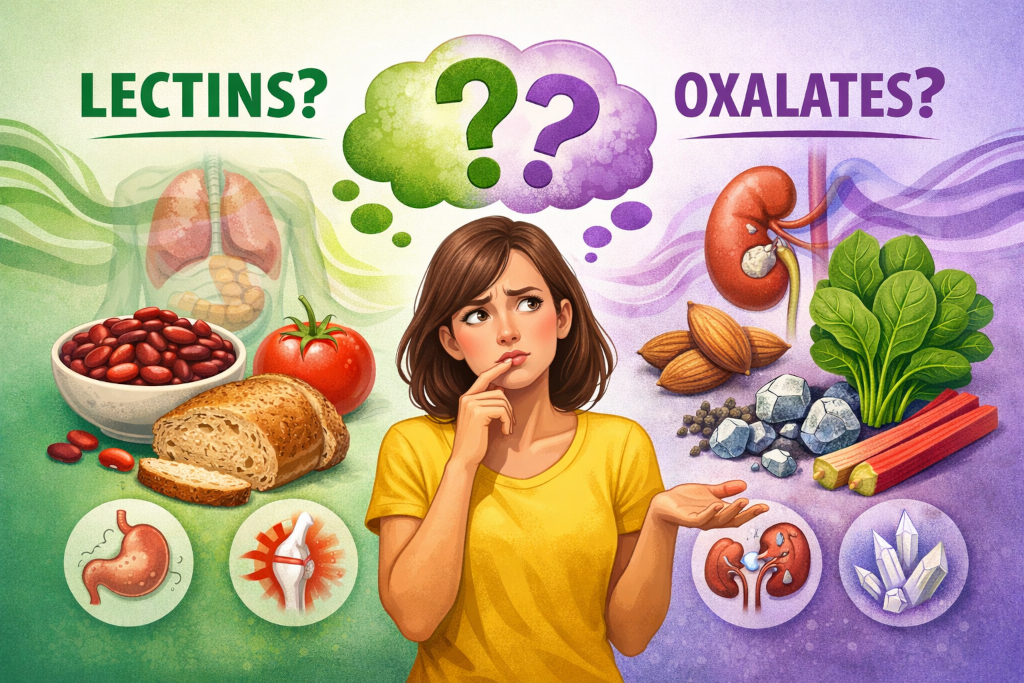
If you spend enough time reading about food sensitivities, digestive health, or inflammation, you will eventually run into two words that seem to overlap in frustrating ways: lectins and oxalates. People describe bloating, joint pain, fatigue, brain fog, skin issues, and even mood changes. Some swear cutting out lectins changed their life. Others say oxalates were the real culprit all along. Many try to avoid both and still feel confused.
The overlap in symptoms makes it tempting to lump lectins and oxalates into the same category of “bad foods.” But that shortcut often leads people down the wrong path. Lectins and oxalates are very different compounds. They behave differently in the body, trigger symptoms through different mechanisms, and respond differently to cooking, preparation, and lifestyle changes.
Understanding those differences matters. It can explain why one person thrives on a food that wrecks someone else. It can also prevent unnecessary restriction and help people troubleshoot their own reactions with more precision instead of fear. This is not about labeling foods as good or bad. It is about understanding what is actually happening beneath the surface.
Why Lectins and Oxalates Get Confused
The confusion starts with symptoms. Both lectins and oxalates can contribute to digestive discomfort, inflammatory responses, and systemic issues that extend far beyond the gut. Someone might remove spinach and almonds and feel better, then assume lectins were the problem. Another person removes beans and whole grains and sees improvement, then assumes oxalates were never an issue.
In reality, both compounds can cause trouble under the right conditions. The body’s response depends on gut integrity, mineral balance, enzyme activity, genetics, microbial composition, and how foods are prepared and consumed.
Because symptoms overlap, people often try elimination without understanding the mechanism. When improvement happens, the wrong compound gets blamed or praised. To untangle this, we need to look at what lectins and oxalates actually are and how they interact with the body.
What Lectins Are and How They Work
Lectins are carbohydrate-binding proteins found throughout the plant kingdom. Their job in nature is defense. By binding to sugars on cell surfaces, lectins can interfere with digestion, disrupt membranes, and deter insects and animals from overeating certain plants.
When humans eat lectin-containing foods, those proteins are not always fully broken down by digestion. Some lectins can survive stomach acid and enzymes intact. Once they do, they can interact directly with the lining of the gut.
This interaction is key. Lectins bind to glycoproteins on intestinal cells. In sensitive individuals or when exposure is high, this binding can irritate the gut lining, interfere with nutrient absorption, and contribute to increased intestinal permeability. That permeability allows other compounds to pass into circulation more easily, which can amplify immune responses and inflammation.
Lectins are also biologically active. They can trigger immune signaling, influence gut bacteria, and in some cases mimic hormones or immune messengers. This helps explain why lectin sensitivity can show up as joint pain, fatigue, headaches, or autoimmune flares rather than just digestive upset.
Importantly, lectins respond strongly to preparation. Heat, pressure, soaking, fermenting, and discarding cooking water can dramatically reduce lectin activity in many foods. This is why traditional food preparation methods matter so much in lectin exposure.
What Oxalates Are and How They Work
Oxalates are small organic acids found in many plants. Unlike lectins, oxalates are not proteins and do not bind to cell surfaces. Their primary issue is mineral binding.
When oxalates enter the body, they readily bind to minerals like calcium, magnesium, and iron. This binding can reduce mineral absorption in the gut and, in some cases, form insoluble crystals. When those crystals accumulate, they can irritate tissues.
The most well-known example is kidney stones, which are often composed of calcium oxalate. But oxalates do not only affect the kidneys. They can also deposit in joints, muscles, connective tissue, and even nerves in susceptible individuals.
Oxalate-related symptoms often involve sharp or burning pain, urinary discomfort, stiffness, or a sand-like sensation in tissues. Some people also experience fatigue or neurological symptoms when oxalate load exceeds the body’s ability to process and excrete it.
Unlike lectins, oxalates are not destroyed by cooking. Boiling can reduce oxalate content somewhat by leaching it into water, but many oxalates remain. Fermentation can alter oxalate content depending on the microbes involved, but it is not a reliable fix. The body also produces oxalates endogenously. Vitamin C metabolism, yeast overgrowth, and certain metabolic conditions can increase internal oxalate production, independent of diet.
Similar Symptoms, Very Different Triggers
At a surface level, lectin and oxalate symptoms can look similar. Bloating, joint pain, fatigue, and inflammation appear in both cases. The pathways, however, are not the same.
Lectin issues are often rooted in gut barrier disruption and immune activation. Symptoms may fluctuate rapidly based on exposure and often improve quickly when offending foods are removed or properly prepared.
Oxalate issues are more cumulative. Symptoms may build slowly over time as oxalates accumulate in tissues. When intake is reduced, some people experience a temporary worsening of symptoms as stored oxalates are mobilized and excreted. This phenomenon does not occur with lectins.
Another key difference is distribution. Lectin reactions tend to center around digestion, immune response, and systemic inflammation. Oxalate reactions often involve kidneys, urinary tract, joints, and localized pain patterns. These distinctions can help people identify which compound is more likely causing their symptoms.
Why Some People React Strongly and Others Do Not
Not everyone reacts to lectins or oxalates in the same way. This variability is not imaginary and it is not just about willpower or mindset. Gut integrity plays a major role. A healthy, intact gut lining can tolerate a wider range of lectins with fewer consequences. When the gut barrier is compromised, lectins have more opportunity to interact with immune cells.
Mineral status matters for oxalates. Adequate dietary calcium can bind oxalates in the gut and reduce absorption. Low calcium intake can increase oxalate uptake, even from moderate foods. Microbiome composition also matters. Certain gut bacteria can degrade oxalates, while others increase oxalate production. Lectins can alter microbial balance in ways that amplify sensitivity.
Genetics, kidney function, hydration, and overall inflammatory load all influence how the body handles both compounds. This is why one-size-fits-all advice fails so often.
Food Preparation Changes the Equation
One of the biggest differences between lectins and oxalates is how much control preparation gives you. Lectins are highly sensitive to heat and pressure. Traditional methods like soaking beans, discarding soaking water, pressure cooking, fermenting, and thorough cooking can reduce lectin activity dramatically. In many cases, the same food goes from problematic to well tolerated simply through proper preparation.
Oxalates are more stubborn. Boiling leafy greens and discarding the water can reduce oxalate content, but roasting, baking, and steaming often do very little. Some high-oxalate foods remain high regardless of preparation.
This means someone following a low-lectin approach may reintroduce foods safely through technique. Someone managing oxalate sensitivity may need to be more selective with food choices themselves, not just how they are cooked.
When Overlap Makes Things Worse
Lectins and oxalates can interact indirectly. A lectin-driven increase in gut permeability may allow more oxalates to be absorbed. In that scenario, lectins are not the direct cause of oxalate symptoms, but they make them worse.
Likewise, mineral depletion from oxalate binding can weaken gut barrier integrity over time, potentially increasing lectin sensitivity. This overlap explains why some people feel best when they address both issues strategically, not by eliminating everything but by fixing the underlying vulnerabilities.
Making Sense of Conflicting Advice
Nutrition debates often collapse complex biology into simple rules. Avoid beans. Eat more greens. Plants are poison. Plants are medicine. None of these extremes reflect reality.
Lectins and oxalates exist because plants evolved defenses. Humans evolved cooking, fermentation, and food culture in response. Problems arise when modern diets, industrial processing, and compromised health collide with compounds our bodies are not equipped to handle in high or unbalanced amounts. The goal is not purity. It is compatibility.
A Practical Way Forward
Understanding the difference between lectins and oxalates gives people agency. Instead of guessing, they can observe patterns. If symptoms improve rapidly with proper cooking and soaking, lectins are likely involved. If symptoms involve sharp pain, urinary discomfort, or delayed reactions that persist despite cooking, oxalates may be playing a role.
Supporting gut integrity, mineral balance, hydration, sleep, and stress regulation improves tolerance across the board. These lifestyle factors matter as much as food choice itself. Most importantly, people can stop treating their bodies as broken. Sensitivity is often a signal, not a flaw.
The Bigger Picture
Lectins and oxalates are not enemies. They are signals from biology, reminders that food is not just calories and macros. It is chemistry interacting with living systems. When people understand those interactions, food stops being confusing and starts being informative. Symptoms stop being random and start telling a story.
That story is different for everyone. The job is not to copy someone else’s diet but to understand your own physiology well enough to make informed choices. That is where real health begins.