

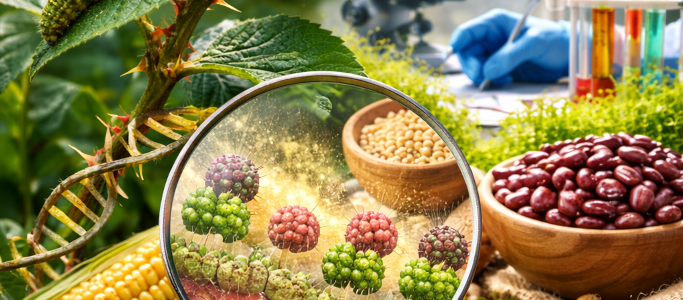
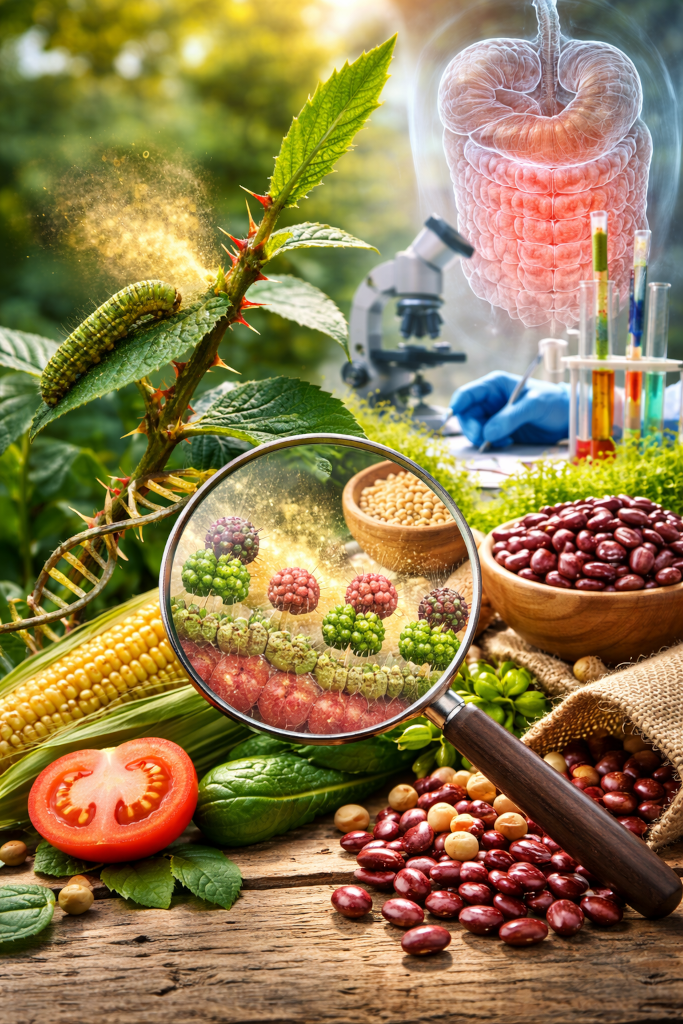
For most of human history, food was not something that came shrink-wrapped with an ingredient label or delivered within minutes of tapping a screen. Food was something people hunted, gathered, cultivated, stored, defended, and often survived on by understanding it deeply. Plants, in particular, were not passive participants in this relationship. They were living organisms engaged in a long evolutionary negotiation with the animals that consumed them.
Lectins sit right at the center of that negotiation.
To understand lectins only through the lens of modern nutrition debates is to miss their original purpose entirely. Lectins were not “designed” to harm humans, nor were they meant to nourish us. They evolved as tools, biological signals and defensive compounds that helped plants survive in a world full of predators. Once you see lectins this way, many of the contradictions and confusions surrounding them begin to make sense.
This article explores why plants evolved lectins in the first place, how they function in nature, and why modern humans may experience them differently than our ancestors did.
Plants Are Not Defenseless
Plants cannot run away. They cannot bite, claw, or chase. And yet they are constantly under threat from insects, grazing animals, microbes, and fungi. Over hundreds of millions of years, plants evolved a sophisticated chemical defense system to compensate for their immobility. Lectins are one part of that system.
From an evolutionary standpoint, lectins act as deterrents rather than poisons. Their role is not necessarily to kill, but to interfere. By binding to carbohydrates on the surfaces of cells, lectins can disrupt digestion, alter gut permeability in predators, or create enough discomfort that an animal learns to avoid that plant in the future.
This strategy is incredibly effective. A predator does not need to die for the plant to “win.” It only needs to associate that food source with negative consequences.
Lectins as Biological “Velcro”
Lectins are proteins with a unique property: they bind specifically to certain sugar molecules. This binding ability is not accidental. In plants, it allows lectins to recognize and attach to the surfaces of insects, microbes, and animals that attempt to consume them.
Think of lectins as molecular Velcro. When they encounter compatible carbohydrates, they stick.
In insects, lectins can bind to gut linings and interfere with nutrient absorption. In microbes, they can block replication or movement. In mammals, including humans, lectins may interact with intestinal cells, immune cells, or gut bacteria in ways that vary widely from person to person.
The key point here is that lectins evolved for recognition and interaction, not nutrition. Plants use them to detect and respond to biological threats in their environment.
Why Seeds and Grains Are Especially Defensive
One of the most misunderstood aspects of lectins is where they tend to concentrate. They are not evenly distributed throughout plants. Seeds, grains, legumes, and certain tubers often contain higher lectin levels than leaves or fruits. This is not a coincidence.
Seeds represent a plant’s future. If a seed is destroyed before it can sprout, the plant’s genetic line ends. Evolution strongly favors mechanisms that protect seeds long enough to germinate. Lectins serve this role by discouraging animals from eating seeds raw or in large quantities.
From the plant’s perspective, an ideal outcome is one of two things:
- The seed passes through an animal undigested and is dispersed elsewhere.
- The seed is left alone long enough to grow.
Lectins help bias the outcome in the plant’s favor.
Human History and Food Preparation
Here is where modern confusion often begins. Humans did not evolve eating large quantities of raw legumes, grains, or nightshades straight off the plant. Traditional cultures developed food preparation methods like soaking, fermenting, pressure cooking, and nixtamalization… not because they understood lectins at a molecular level, but because they paid attention to cause and effect.
Foods that caused discomfort were modified. Foods that nourished were preserved and repeated. Over generations, cultural food wisdom emerged as a survival tool. These methods did not eliminate lectins entirely, but they often reduced their activity enough for the food to become tolerable and even beneficial.
Modern diets, however, often bypass these steps. Convenience, shelf stability, and speed have replaced patience and preparation. As a result, people may be encountering lectins in forms and quantities that would have been rare for most of human history.
Lectins Are Not Inherently “Bad”
It is important to pause here and clear up a common misconception. Lectins are not universally harmful. In fact, some lectins are being studied for potential benefits, including immune signaling and antimicrobial effects. The issue is not lectins themselves, but context. Dose matters. Preparation matters. Individual biology matters.
A person with a resilient gut lining, diverse microbiome, and no underlying inflammatory conditions may tolerate lectins with little issue. Another person, already dealing with gut permeability, autoimmune tendencies, or chronic inflammation, may experience significant symptoms from the same foods.
Evolution did not select lectins to be universally toxic. It selected them to be conditionally disruptive, enough to protect the plant, without requiring extreme toxicity.
Why Modern Humans May Be More Sensitive
Several modern factors may amplify lectin sensitivity compared to our ancestors. First, plant breeding has changed food composition. Many modern crops have been selectively bred for yield, pest resistance, and shelf life, not digestibility. In some cases, this may increase lectin activity or alter how these proteins interact with the human gut.
Second, gut health has shifted dramatically. Antibiotic use, ultra-processed foods, chronic stress, and disrupted sleep all affect the gut barrier and microbiome. A compromised gut is more likely to react to compounds that were once tolerated.
Third, exposure frequency has increased. Foods that were once seasonal or regional are now consumed daily, year-round. Evolutionarily speaking, this is a very recent change. None of this implies that plants are “attacking” humans. It suggests that the environment in which lectins evolved and the environment in which humans now consume them, no longer align perfectly.
Lectins as Information, Not Just Irritants
Another overlooked aspect of lectins is that they act as signaling molecules. When lectins bind to cells in the gut, they may influence immune responses, gut motility, and microbial balance. In small or controlled exposures, this signaling could be neutral or even beneficial. In excessive or poorly tolerated exposures, it may contribute to inflammation.
This reframing is important. Lectins are not simply irritants to be eliminated at all costs. They are biological information carriers that evolved to interact with living systems. Whether that interaction is helpful or harmful depends on the context in which it occurs.
An Evolutionary Mismatch, Not a Moral Judgment
Much of the modern lectin debate is framed emotionally. Plants are either villains or saviors. Evolution tells a more nuanced story.
Plants evolved lectins to survive. Humans evolved food preparation techniques to coexist with plants. Modern industrial food systems disrupted that balance. The result is not a failure of plants or humans, but a mismatch between ancient biology and modern habits.
Understanding this removes the fear and replaces it with agency. If lectins are part of a natural defense system, then adapting how we interact with them through preparation, selection, and awareness is a rational response, not an extreme one.
Bringing the Conversation Back to the Kitchen
When people ask whether they should “avoid lectins,” the better question is: How do I work with them? This is where practical strategies like pressure cooking beans, peeling and deseeding nightshades, rotating foods, paying attention to symptoms, become tools of empowerment rather than restriction. These practices echo traditional wisdom while being informed by modern science.
Evolution does not demand perfection. It rewards adaptability.
Seeing Lectins Clearly
Lectins are not a modern invention, a dietary fad, or a nutritional conspiracy. They are ancient proteins with a clear evolutionary purpose: protecting plants in a competitive world. Understanding that purpose allows us to move beyond polarized debates and toward informed, individualized choices.
For some people, lectins may be a non-issue. For others, they may be a missing piece of a long-standing health puzzle. Neither experience invalidates the other. What matters is context, preparation, and self-observation. Principles that have guided human survival long before nutrition labels and trending diets existed.
In that sense, learning about lectins is not about rejecting plants. It is about respecting the evolutionary conversation we are part of and choosing how we participate in it.