


Lectins have become a buzzword in the nutrition world that are praised by some, questioned by others, and often misunderstood by the people just trying to make sense of their own health. For beginners, the term can sound intimidating, as if it refers to a complicated biochemical villain hiding in every salad bowl. But the truth is more nuanced, far less dramatic, and actually quite empowering once you understand the basics.
This guide breaks down what lectins are, why they matter, where they’re found, and how people can make informed decisions about reducing them without fear or confusion. If you’re stepping into a low-lectin lifestyle for the first time, think of this as your friendly on-ramp into the science.
What Exactly Are Lectins?
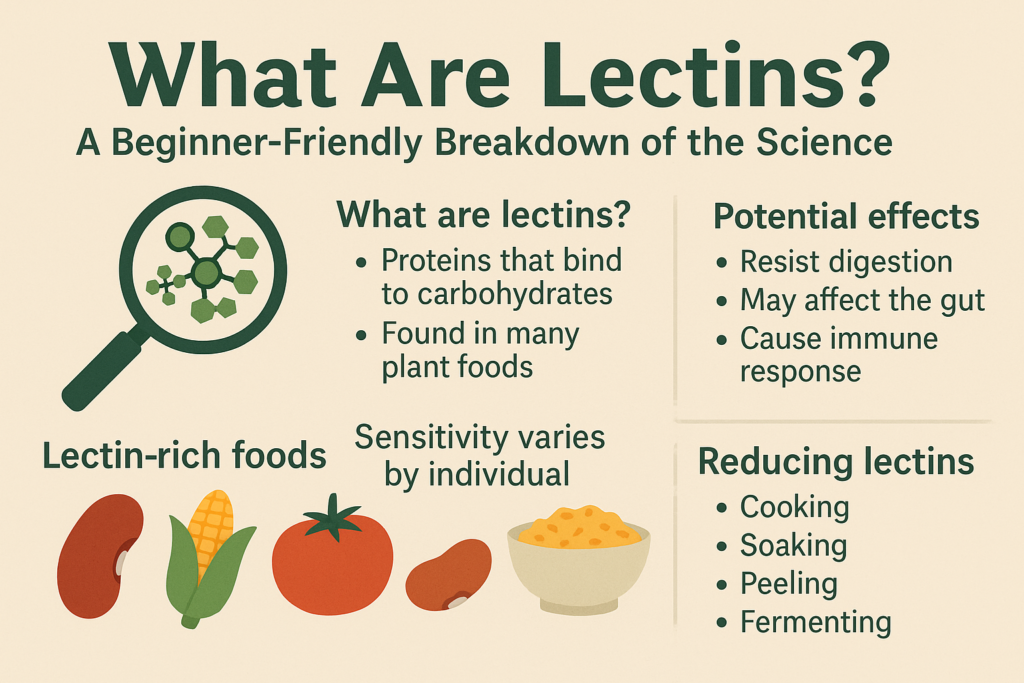
At their core, lectins are proteins found throughout the plant kingdom. Their defining characteristic is their ability to bind to carbohydrates; specifically, to the sugars on the surface of cells. This binding ability is not just a scientific curiosity; it’s a survival trait.
Plants can’t run away from danger. Instead, they’ve evolved internal chemical defenses to protect their seeds, skins, and roots from predators (including insects, animals, and, yes, humans). Lectins are part of this protective toolkit. When eaten raw or improperly prepared, lectins can create digestive stress, interfere with nutrient absorption, or cause immune reactions in susceptible individuals.
It’s important to recognize, though, that lectins are not inherently “bad.” They are simply proteins with a specific biological function; one that some bodies tolerate well and others do not.
Why Do People Talk About Lectins So Much?
Lectins entered the public spotlight when nutrition researchers and physicians began noticing correlations between high-lectin foods and certain digestive or inflammatory issues. Some individuals reported improvements in bloating, joint pain, autoimmune symptoms, or digestive discomfort when they reduced lectins in their diet, not because lectins are toxic across the board, but because certain people are sensitive to them.
So why the controversy?
Nutrition science evolves. Some experts emphasize that properly prepared lectin-rich foods have been part of traditional diets for centuries. Others argue that modern diets rely more heavily on foods like wheat, beans, and nightshades than the human digestive system may comfortably handle, especially when digestive health is already compromised.
The middle-ground approach, the one most accessible to beginners, acknowledges both viewpoints that lectins are not universally harmful, but some people feel significantly better when they reduce or modify them.
How Lectins Interact With the Human Body
To understand why lectins matter, it helps to know what happens inside the body when we eat them. Here’s a simplified breakdown:
1. Lectins Can Resist Digestion
Unlike many proteins, which get broken down into amino acids during digestion, lectins are tougher. They resist stomach acid and digestive enzymes, making them more likely to reach the small intestine intact.
2. Lectins Can Interact With the Gut Lining
Because lectins bind to carbohydrates on cell surfaces, they may interact with the cells lining the digestive tract. In some individuals, this can irritate the gut barrier or disrupt normal nutrient absorption.
3. Lectins May Influence Gut Flora
Some lectins appear to alter the balance of gut microbes. This can be helpful or unhelpful depending on the individual, but in people with digestive challenges, an already sensitive microbiome can react more strongly.
4. Certain Lectins Can Trigger the Immune System
In susceptible individuals, particularly those with autoimmune tendencies, lectins may play a small role in amplifying immune activity. This doesn’t mean lectins cause autoimmune disease, but they may aggravate existing inflammation.
The Key Takeaway
Not everyone reacts strongly to lectins. Sensitivity varies widely, and many people consume lectin-containing foods with no issues at all. The point of a low-lectin lifestyle isn’t to demonize plants. It’s to identify what works for your body.
Where Are Lectins Found?
Lectins appear in varying amounts in many plant foods, but a few categories stand out:
- Beans and Legumes – Kidney beans, black beans, lentils, soybeans, and peanuts all contain lectins. Raw or undercooked kidney beans are especially known for causing digestive distress because they contain a lectin called phytohemagglutinin.
- Grains – Wheat, barley, rye, quinoa, and many other grains contain lectins. Wheat germ agglutinin (WGA) is one of the most studied.
- Nightshade Vegetables – Tomatoes, potatoes, peppers, and eggplants contain lectins, mostly in their skins and seeds.
- Certain Nuts and Seeds – Some cashews, sunflower seeds, and pumpkin seeds contain lectins, though much lower than beans or grains.
- Fruit Seeds and Peels – Lectins concentrate in the protective outer layers—skins and seeds. This is why peeling and deseeding fruits like tomatoes and cucumbers can reduce lectin exposure.
- But Not Everything Contains High Lectins – Leafy greens, cruciferous vegetables, avocados, onions, garlic, olive oil, berries, citrus, and most animal products contain little to no lectins. Many of these remain staples in a low-lectin lifestyle.
Do Lectins Offer Any Benefits?
Interestingly, lectins do serve functions in nature, and some have been explored for potential health applications. For example:
- Certain lectins are used in laboratory settings to study immune cells.
- Some lectins may have antioxidant properties.
- Others may play a role in modulating blood sugar responses.
However, these benefits typically come from highly specific lectins in controlled settings, not from consuming large amounts of raw or unprepared lectin-rich foods. For beginners, it’s more practical to understand lectins by their potential digestive effects rather than their laboratory uses.
Why Some People Feel Better on a Low-Lectin Diet
A beginner-friendly explanation: some individuals have digestive systems that are more sensitive to plant defense compounds—including lectins, oxalates, and phytates. When the gut lining is irritated, inflamed, or recovering from dysbiosis, lectins can feel like “adding fuel to the fire.”
People who try a low-lectin approach often report improvements like:
- Less bloating or gas
- Reduced joint stiffness
- Clearer skin
- Better energy levels
- More stable digestion
- Fewer IBS-like symptoms
- Clarity around personal food triggers
These experiences don’t invalidate the nutritional value of lectin-rich foods for others. They simply highlight how individualized nutrition truly is.
How Cooking and Preparation Reduce Lectins
One of the biggest misunderstandings is that all lectins must be avoided. In reality, proper preparation can dramatically reduce lectin levels in many foods.
Here are the beginner-friendly methods:
- Pressure Cooking – This is the gold standard. Pressure cooking beans, lentils, potatoes, and tomato dishes breaks down most lectins effectively.
- Soaking and Rinsing – Traditional soaking softens outer layers, decreases cooking time, and reduces lectins—especially in legumes.
- Peeling and Deseeding – Since lectins concentrate in skins and seeds, peeling tomatoes, cucumbers, peppers, and squash can help.
- Fermentation – Fermenting foods like soybeans (tempeh, miso) reduces lectin activity and enhances digestibility.
- Sprouting – Sprouting grains and legumes lowers lectins and increases certain nutrients.
- Avoid Undercooking Beans – Raw or undercooked kidney beans can cause acute gastrointestinal symptoms. Proper cooking neutralizes the lectins responsible.
These methods make lectin-rich foods accessible even for some people who are otherwise sensitive. Others may still choose to avoid them, but the flexibility is there.
Are Lectins the Same as Gluten?
They’re related but different.
- Lectins are carbohydrate-binding proteins.
- Gluten is a family of storage proteins found in wheat and related grains.
Some individuals sensitive to gluten may also struggle with lectins, but the two are not interchangeable. Lectin sensitivity does not automatically mean gluten intolerance, and vice versa.
How to Know If Lectins Affect You
There is no single test that pinpoints lectin sensitivity. Instead, people typically discover their personal threshold by:
- Trying a structured low-lectin trial period with many notice improvements within 2–4 weeks.
- Reintroducing lectin-rich foods one category at a time. This creates clarity around which foods cause symptoms.
- Keeping a journal. Tracking meals, symptoms, energy, and digestion helps identify trends.
A low-lectin diet is not meant to be restrictive. It’s meant to be informative. The goal is clarity, not perfection.
Common Myths About Lectins – Debunked
Let’s clear up a few misconceptions that beginners often encounter:
Myth 1: “Lectins are toxic to everyone.” No. Many people tolerate lectins without noticeable issues. Sensitivity varies by person.
Myth 2: “You must eliminate lectins forever.” Most people only reduce lectins temporarily while healing the gut or identifying trigger foods. Long-term approaches vary.
Myth 3: “No lectin-containing food can ever be healthy.” Incorrect. Many lectin-rich foods—like beans or tomatoes—can offer nutrients when properly prepared.
Myth 4: “Humans were never meant to eat foods with lectins.” Lectin-containing foods have been part of traditional diets for centuries, often alongside preparation methods that reduce lectin content.
Who Might Benefit Most From Reducing Lectins?
While anyone can experiment with a low-lectin approach, certain groups may be more likely to notice improvements:
- People with digestive issues (IBS, bloating, food sensitivities)
- Individuals with autoimmune conditions
- Those with chronic inflammation
- People experiencing unexplained joint discomfort
- Individuals recovering from gut dysbiosis
- Anyone feeling overwhelmed by “mystery symptoms” without clear causes
A low-lectin diet is not a cure, but it can be a meaningful tool for understanding your body better.
What Does a Beginner Low-Lectin Diet Look Like?
A starter approach focuses on simple, satisfying foods that are naturally low in lectins, such as:
- Leafy greens
- Cruciferous vegetables (broccoli, cauliflower, cabbage)
- Avocado
- Olive oil
- Onion and garlic
- Berries and citrus
- Pasture-raised meats, fish, and eggs
- Nuts like macadamia, pecans, and walnuts
- Coconut, cassava, sorghum, millet, or plantain-based flours
From there, individuals can slowly reintroduce properly prepared beans, potatoes, and other foods if desired.
The Bottom Line: Lectins Are a Tool for Understanding Your Body And Not a Monster to Fear
Lectins are simply plant proteins with an evolutionary purpose. They are not inherently harmful, nor are they universally beneficial. They exist on a spectrum—and so do people’s reactions to them.
For beginners, the real value in learning about lectins isn’t about memorizing every food list or rigidly following a diet. It’s about gaining insights into how your body responds to different plant compounds and using that knowledge to make choices that support better digestion, energy, and overall wellness.
Reducing lectins can be a game-changing lifestyle shift for some individuals. For others, it’s a temporary experiment that creates clarity around personal food triggers. Wherever you fall, understanding lectins is a powerful step toward a more informed, intentional relationship with food.