


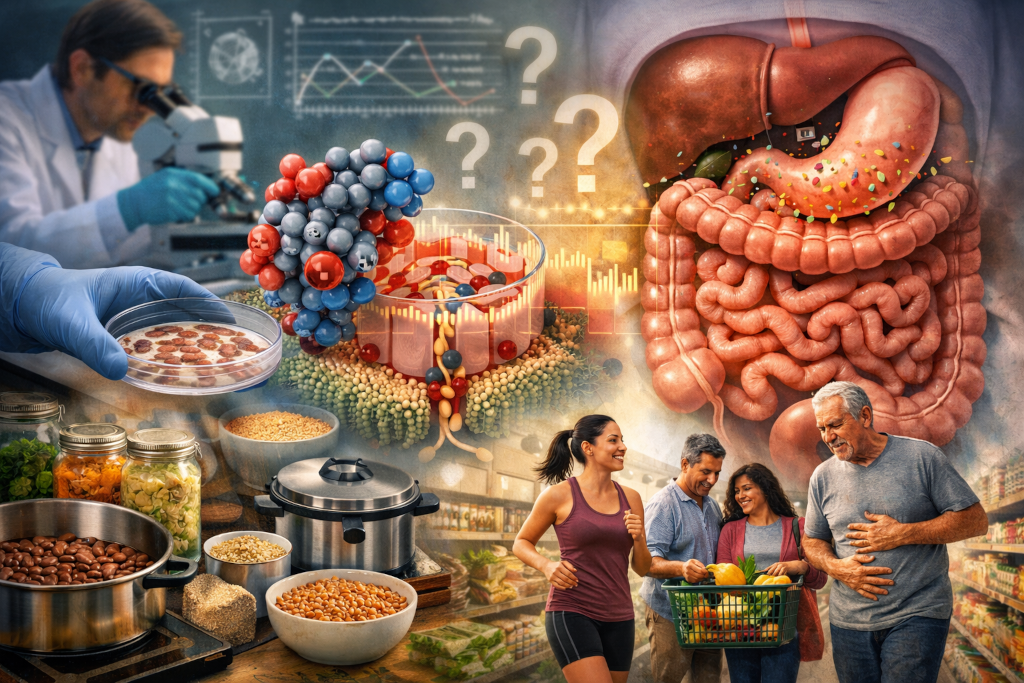
Lectins sit in an uncomfortable space between nutrition, immunology, and everyday lived experience. They are not vitamins or minerals with clearly defined deficiency states. They are not toxins in the classic sense, where exposure predictably leads to harm. And they are not allergens that trigger immediate, measurable immune reactions in most people. Instead, lectins are biologically active plant proteins that interact with the human body in subtle, variable, and often delayed ways. This complexity is precisely why lectins are so difficult to study in humans and why the scientific conversation around them remains fragmented, cautious, and frequently misunderstood.
Plant’s Defense Systems
At their core, lectins evolved as part of a plant’s defense system. Plants cannot run from predators, so they developed chemical strategies to discourage consumption. Lectins bind to specific carbohydrate structures on the surfaces of cells, a property that allows them to interfere with digestion, nutrient absorption, and in some cases cellular signaling. This same binding behavior is what makes lectins useful in laboratory research and medical diagnostics. It is also what makes them biologically relevant when consumed in food. Yet translating what we know from test tubes and animal models into clear, human-based conclusions has proven far more challenging than many people realize.
One reason lectins are hard to study is that humans do not eat lectins in isolation. Unlike a pharmaceutical compound that can be administered in a standardized dose, lectins are embedded in whole foods. Beans, grains, seeds, nuts, and many vegetables contain lectins, but they also contain fiber, polyphenols, starches, fats, proteins, and thousands of other compounds that influence digestion and metabolism. When a person eats a meal, the body responds to the entire matrix of that food, not just one protein within it. Isolating the effect of lectins without stripping away the context in which they are consumed is extraordinarily difficult, both ethically and practically.
Cooking Further Complicates this Picture
Heat, moisture, pressure, fermentation, and sprouting can dramatically alter lectin structure. Some lectins are heat-sensitive and become largely inactive when cooked properly. Others are more resilient and may survive typical cooking methods to varying degrees. Two people eating the “same” food may be consuming very different lectin loads depending on preparation methods, cultural cooking practices, and even modern food processing techniques. From a research standpoint, this variability makes standardization nearly impossible. A study that labels a food as “high-lectin” may not reflect how that food is actually eaten in real life.
Human Digestion
Another challenge lies in how lectins interact with the human digestive system. Traditional nutritional science has long assumed that proteins are broken down into amino acids before they have meaningful biological effects. Lectins challenge that assumption. Many lectins resist digestion and reach the small intestine in a partially intact form. There, they may bind to the intestinal lining, interact with gut microbes, or influence immune signaling. However, the extent to which this happens varies widely between individuals. Differences in stomach acid, digestive enzyme production, gut motility, and microbiome composition all influence how lectins behave once consumed. This means that a lectin-rich food may be tolerated by one person and problematic for another, even under controlled conditions.
Human studies also struggle with outcome measurement. Lectin-related effects are rarely immediate or dramatic. They tend to be cumulative, context-dependent, and often nonspecific. Symptoms such as bloating, joint stiffness, fatigue, brain fog, or skin irritation can emerge hours or days after exposure. These symptoms overlap with countless other conditions and dietary factors, making cause-and-effect relationships difficult to establish. Unlike blood glucose or cholesterol, there is no simple biomarker that reliably indicates lectin activity in the body. Researchers are left relying on indirect measures, self-reported symptoms, or surrogate markers of inflammation and gut permeability, all of which introduce uncertainty.
Observational Research
Ethical constraints further limit experimental design. To definitively study lectins in humans, researchers would need to expose participants to diets that may provoke inflammation or intestinal damage over extended periods. This is not ethically acceptable, especially when potential harm is involved and individual responses are unpredictable. As a result, much of what we know about lectins comes from animal models, in vitro studies, or observational research. While valuable, these approaches do not always translate cleanly to human physiology. Animals metabolize food differently, and isolated cells in a laboratory dish cannot replicate the complexity of a living digestive system.
Confounding variables add another layer of difficulty. People who consume large amounts of lectin-rich foods often differ in meaningful ways from those who do not. Dietary patterns, socioeconomic status, cultural traditions, physical activity, sleep quality, stress levels, and access to healthcare all influence health outcomes. When studies observe correlations between plant-heavy diets and certain health markers, it is difficult to determine how much of the effect is attributable to lectins versus other lifestyle factors. Conversely, when individuals report improvement after reducing lectins, skeptics often attribute the change to placebo effects or the elimination of processed foods rather than lectins themselves. Both perspectives oversimplify a far more nuanced reality.
The immune system introduces yet another variable. Lectins do not behave like classic allergens, which trigger IgE-mediated reactions that are relatively easy to test. Instead, lectins may influence immune function through low-grade, chronic pathways. They can interact with immune cells in the gut-associated lymphoid tissue, potentially altering inflammatory signaling without producing obvious allergic responses. These subtle immune effects are notoriously hard to measure, especially over the long timeframes in which they may matter most. Standard allergy testing offers little insight, leaving both patients and researchers without clear diagnostic tools.
Modern Food Distribution Complicates Matters Further
The lectin content of foods today is not identical to that of foods consumed even a century ago. Selective breeding, hybridization, and industrial agriculture have prioritized yield, pest resistance, and shelf stability. In many cases, these traits are linked to increased production of plant defense compounds, including lectins. This means that historical dietary data may not accurately reflect modern exposure levels. Yet most long-term epidemiological studies rely on dietary patterns that assume relative stability in food composition over time. This mismatch creates blind spots in our understanding.
Despite these challenges, lectin research continues to evolve. Advances in gut microbiome analysis, intestinal imaging, and molecular biology are providing new tools to explore how lectins interact with the human body. Researchers are beginning to appreciate that the question is not whether lectins are “good” or “bad,” but under what conditions they may contribute to health or dysfunction. Individual susceptibility appears to play a central role, shaped by genetics, gut integrity, immune status, and cumulative exposure.
For everyday people trying to make sense of the science, this uncertainty can be frustrating. The lack of definitive human trials does not mean lectins are irrelevant, nor does it justify dismissing personal experience. At the same time, it calls for humility and balance. Reducing lectin exposure through traditional preparation methods, such as soaking, fermenting, pressure cooking, and mindful food selection, aligns with both ancestral wisdom and modern biochemical understanding. These approaches do not require extreme dietary restriction or rigid dogma. They simply acknowledge that the human body responds best when plant foods are prepared in ways that respect their biological complexity.
As Research Continues
Lectins are hard to study in humans because humans are complex. We are not controlled environments, and we do not eat isolated compounds under laboratory conditions. Our bodies adapt, compensate, and respond in ways that resist simple explanations. As research continues, clarity will improve, but it is unlikely to arrive in the form of a single headline or universal rule. Instead, understanding lectins will require integrating laboratory science, clinical observation, and lived experience. In that space between certainty and curiosity lies the most honest conversation about how lectins fit into human health.