

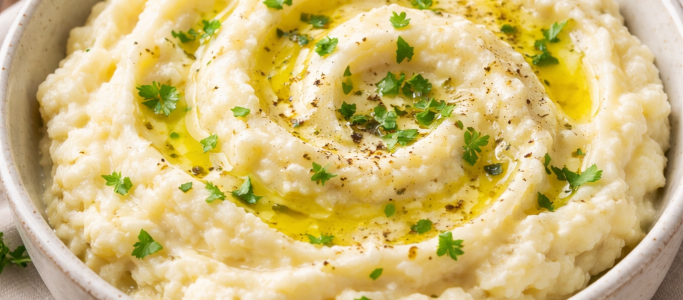
This is a low-lectin comfort food that aligns with modern nutrition science. There is something deeply reassuring about a bowl of mashed potatoes. It is familiar, warm, and woven into cultural memory. But for many people exploring a low-lectin approach to eating, traditional mashed potatoes can become complicated. White potatoes belong to the nightshade family, and although they are not especially high in lectins compared to beans and legumes, they do contain glycoalkaloids and other compounds that some individuals find irritating. For those who are sensitive or simply experimenting with reducing lectin exposure, the search for an alternative begins.
That is where cauliflower mash steps in.
Cauliflower mash with garlic and olive oil is not a substitute born from restriction. It is a dish that stands confidently on its own. It reflects a broader principle found throughout Living Low-Lectin: we are not removing foods out of fear, but choosing options that align better with digestion, inflammation balance, and long-term metabolic health.
To understand why this simple dish matters, we need to step back and briefly explore the science of lectins and why preparation methods and ingredient choices make a difference.
Understanding Lectins in Everyday Foods
Lectins are carbohydrate-binding proteins found in plants. They are especially concentrated in seeds, legumes, grains, and certain nightshade vegetables. In nature, lectins serve as a defense mechanism. They help protect plants from insects and pathogens. From the plant’s perspective, this is brilliant biology. From a human digestive perspective, it can sometimes create friction.
Most lectins are deactivated by proper cooking. Pressure cooking, soaking, fermenting, and sprouting are all techniques that significantly reduce lectin activity. However, some people with sensitive digestive systems report discomfort even with properly prepared foods. Research in this area is still evolving, and the topic can be controversial. It is important to acknowledge that lectins are not inherently harmful for everyone. Many lectin-containing foods also provide fiber, vitamins, and antioxidants.
What matters is context.
Individuals with autoimmune conditions, chronic gut irritation, or metabolic dysfunction sometimes experiment with reducing lectin exposure as part of a broader dietary strategy. The scientific literature does show that certain lectins, such as phytohemagglutinin found in raw red kidney beans, can be harmful when consumed improperly prepared. We also know that gut permeability, microbiome diversity, and immune signaling are influenced by the foods we eat.
A low-lectin lifestyle is not about demonizing plants. It is about understanding how food interacts with the body and choosing preparation methods and ingredients that support resilience.
Cauliflower fits beautifully into that framework.
Why Cauliflower Works in a Low-Lectin Kitchen
Cauliflower is a cruciferous vegetable, part of the Brassica family. Unlike legumes and grains, it is not particularly high in problematic lectins. It does contain natural plant compounds such as glucosinolates, which have been studied for their potential role in supporting detoxification pathways and cellular health.
From a nutritional standpoint, cauliflower offers:
- Vitamin C
- Vitamin K
- Folate
- Fiber
- Antioxidant compounds
It is also relatively low in carbohydrates compared to potatoes, which can be beneficial for individuals monitoring blood sugar levels. This becomes especially relevant for those navigating insulin resistance or metabolic syndrome.
In the Living Low-Lectin approach, cauliflower often appears as a structural replacement. It absorbs flavor well, responds beautifully to roasting or steaming, and when blended, it becomes surprisingly creamy.
But the transformation into something deeply satisfying depends on how it is prepared.
The Role of Garlic and Olive Oil
Garlic is more than a flavor enhancer. It contains sulfur-containing compounds such as allicin, which have been studied for antimicrobial and cardiovascular benefits. Raw garlic can be intense and irritating for some people, but when gently cooked, its flavor softens and becomes sweet and aromatic.
Olive oil, especially extra virgin olive oil, plays a central role in many traditional dietary patterns associated with longevity. It is rich in monounsaturated fats and polyphenols. Research continues to explore its anti-inflammatory properties and its support for heart health.
When combined, cauliflower, garlic, and olive oil create a dish that aligns with several pillars of metabolic and digestive health:
- Reduced exposure to high-lectin ingredients
- Stable blood sugar support
- Anti-inflammatory fat profile
- Gut-friendly fiber
Yet the real magic lies in texture and simplicity.
Texture, Satiety, and the Psychology of Comfort
Food is not just chemistry. It is experience. Mashed textures signal comfort to the brain. They are associated with warmth, safety, and nourishment. When transitioning to a lower-lectin lifestyle, people often struggle not because they lack discipline, but because they miss familiarity.
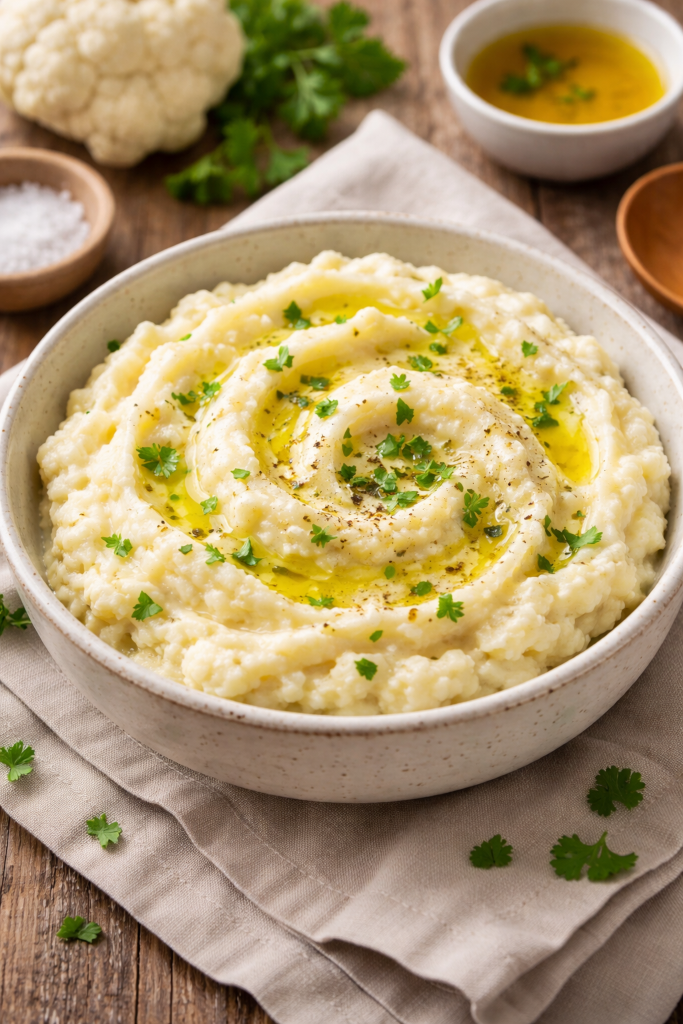
Cauliflower mash addresses that psychological gap. When prepared correctly, it becomes silky and rich. The garlic provides depth. The olive oil adds body. A pinch of sea salt enhances natural sweetness. The result is a dish that feels indulgent without relying on heavy cream, butter overload, or refined starch.
For individuals exploring gut repair protocols, this matters. Stress affects digestion. Restrictive eating patterns can increase anxiety. Finding foods that feel abundant rather than limiting supports sustainability.
Cooking Method Matters
The way cauliflower is cooked influences both texture and digestibility. Steaming preserves nutrients but can leave excess moisture. Boiling may dilute flavor if not done carefully. Roasting intensifies sweetness but changes the profile of the mash.
From a lectin perspective, cauliflower does not require pressure cooking. Standard cooking methods are sufficient. The key is achieving tenderness without waterlogging the vegetable. Many people make the mistake of blending cauliflower that is too wet. The result is thin and disappointing. Proper draining and brief evaporation of excess moisture make all the difference.
Cauliflower Mash with Garlic and Olive Oil
Ingredients
- 1 large head of cauliflower, cut into florets
- 3 to 4 cloves of garlic, peeled
- 3 tablespoons extra virgin olive oil
- 1 to 3 tablespoons warm water or unsweetened almond milk, as needed
- 1 teaspoon sea salt, or to taste
- Freshly ground black pepper, optional
- Fresh parsley or chives for garnish, optional
Directions
- Bring a large pot of water to a boil. Lightly salt the water.
- Add the cauliflower florets and whole garlic cloves to the pot.
- Cook for 10 to 12 minutes, or until the cauliflower is fork-tender.
- Drain thoroughly in a colander. Allow the cauliflower to sit for several minutes to release excess steam. This step is important for achieving a creamy texture.
- Transfer the cauliflower and garlic to a food processor or high-speed blender.
- Add olive oil and sea salt. Blend until smooth.
- If needed, add small amounts of warm water or almond milk to reach desired consistency.
- Taste and adjust seasoning.
- Serve warm, topped with fresh herbs and an additional drizzle of olive oil if desired.
Variations Within a Low-Lectin Framework
While simplicity is powerful, variation keeps meals interesting. Some people add roasted garlic instead of boiled garlic for a deeper flavor. Others incorporate a spoonful of grass-fed butter if dairy is tolerated. A small amount of nutritional yeast can introduce a subtle savory note without adding lectins.
If digestion is particularly sensitive, adding a small amount of collagen peptides can increase protein content without changing flavor. This can support satiety and connective tissue health.
These adjustments reflect a core principle of Living Low-Lectin: personalization. No single recipe is universal. The goal is observation. Notice how you feel after eating. Track digestion, energy, and mood. Small changes often produce meaningful shifts over time.
Cauliflower, Blood Sugar, and Metabolic Health
One of the reasons cauliflower mash has gained popularity beyond low-lectin circles is its impact on blood sugar stability.
Traditional mashed potatoes are high in rapidly digestible starch. Even when paired with protein and fat, they can produce a noticeable glucose response. For individuals with insulin resistance or prediabetes, this becomes a consideration.
Cauliflower is significantly lower in carbohydrate load. Replacing starch-heavy sides with fiber-rich vegetables can support glycemic balance. Research continues to emphasize the importance of stable blood sugar in reducing systemic inflammation and protecting long-term metabolic health.
For readers who use glucose tracking tools or monitor fasting glucose, this substitution can offer measurable feedback.
A Broader Perspective on Lectin Reduction
It is important to maintain balance in this conversation. Lectins are not toxins in the dramatic sense sometimes portrayed online. Many lectin-containing foods are staples in cultures associated with long life expectancy. The difference often lies in preparation methods and overall dietary patterns.
Traditional cuisines soaked beans overnight. They fermented grains. They slow-cooked stews for hours. Modern convenience shortcuts sometimes bypass these steps. The Living Low-Lectin approach acknowledges both science and tradition. It encourages informed decisions rather than rigid dogma.
Cauliflower mash embodies that spirit. It is not about fear of potatoes. It is about offering a practical option for those experimenting with reduced lectin exposure.
Sustainability and Real-World Application
A dietary change only works if it fits into daily life.
Cauliflower mash is:
- Affordable
- Widely available
- Simple to prepare
- Adaptable to different cuisines
It pairs well with roasted meats, grilled fish, or plant-based proteins that have been properly prepared. It reheats well and can be stored in the refrigerator for several days. For busy households, this matters. Complexity is often the enemy of consistency.
Final Thoughts
Cauliflower mash with garlic and olive oil may seem humble. Yet within its simplicity lies a powerful example of how small food choices can align with larger health goals. It respects modern nutritional science. It acknowledges evolving research on lectins and gut health. It supports metabolic balance without sacrificing comfort.
Most importantly, it invites curiosity. Rather than asking, “What must I eliminate?” the question becomes, “What can I create that supports how I want to feel?”
In the end, that shift in mindset may be the most transformative ingredient of all.