


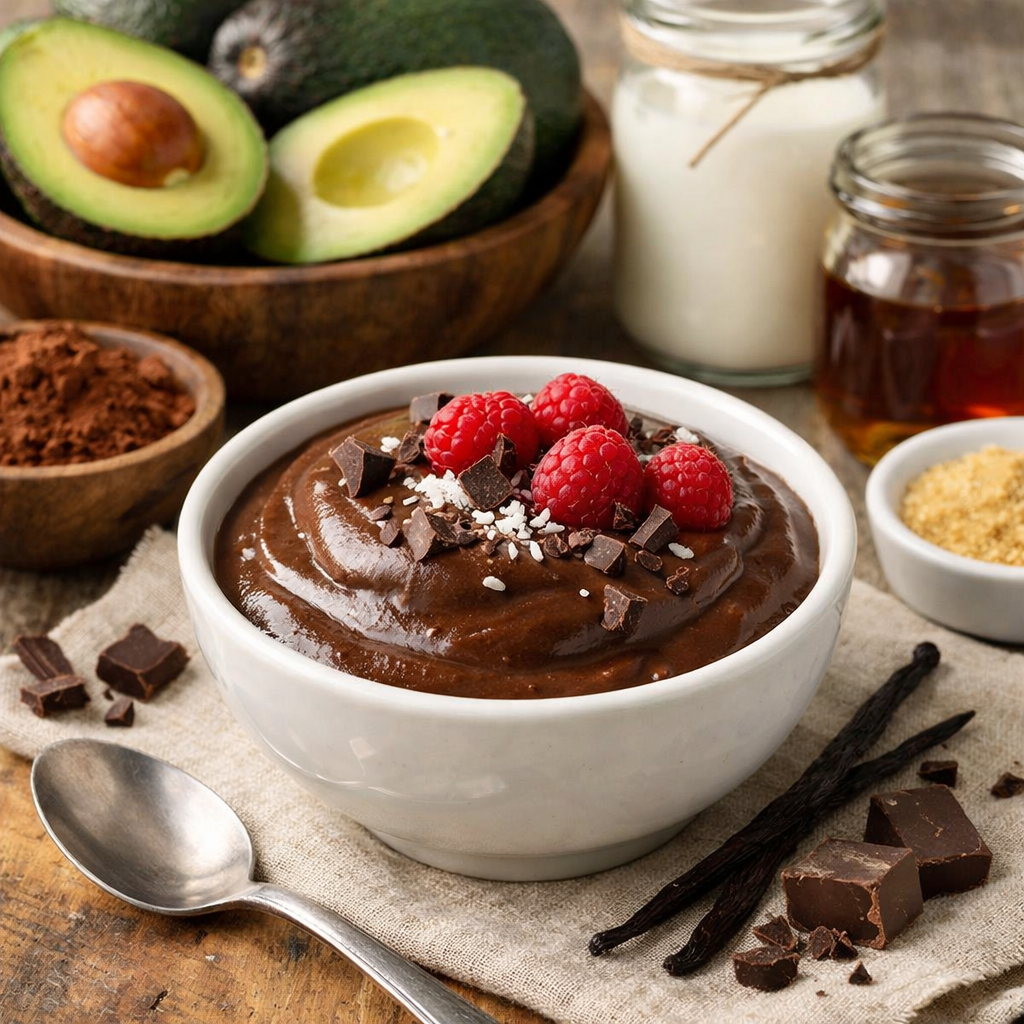
There is something almost rebellious about making chocolate pudding out of avocados.
It feels like a trick at first. A dessert that looks rich and indulgent, yet quietly sidesteps some of the most common high-lectin ingredients in modern sweets. No wheat flour. No soy lecithin. No bean-based thickeners. No slow simmering of ingredients that might irritate sensitive digestive systems. Just whole foods blended into something smooth, creamy, and deeply satisfying.
But this pudding is not just a clever swap. It tells a larger story about how we can rethink comfort food without feeling deprived. And for those exploring a low-lectin lifestyle, that shift in perspective can be just as important as the ingredient list itself. Let’s start with why this matters.
A Quick Refresher: What Lectins Actually Are
Lectins are proteins that bind to carbohydrates. They are found in many plants, especially in seeds, grains, legumes, and nightshades. In nature, they serve a purpose. They are part of a plant’s defense system, helping discourage insects, animals, and pathogens from consuming them.
In the human diet, lectins are not automatically harmful. Many people tolerate them without obvious problems. In fact, properly cooked beans and whole grains can be nutritious for a large portion of the population.
The complexity arises because lectins are biologically active. Some resist digestion. Certain lectins, when consumed in large amounts or prepared improperly, can interact with the lining of the gut. Research has shown that specific lectins can bind to intestinal cells and, in laboratory settings, influence gut permeability or immune signaling. The classic example is phytohaemagglutinin in undercooked kidney beans, which can cause acute gastrointestinal distress. That does not mean all lectins are toxic. It does mean that preparation matters, dose matters, and individual tolerance matters.
Modern food systems have changed the context in which we eat lectins. We rely heavily on wheat, soy, corn, peanuts, and legumes as foundational ingredients. They show up in breads, sauces, protein powders, snack foods, and even chocolate bars. Many of these foods are processed in ways that prioritize shelf life and texture over digestibility.
For people who notice bloating, fatigue, joint discomfort, skin flare-ups, or brain fog after eating certain foods, reducing high-lectin exposure can be an experiment worth trying. It is not about fear. It is about observation and agency. And sometimes, it starts with dessert.
Why Traditional Chocolate Pudding Can Be Problematic
A classic chocolate pudding recipe often includes milk, sugar, cocoa powder, and a thickener such as cornstarch or flour. Some versions include egg yolks. Many store-bought varieties add soy lecithin, gums derived from legumes, or stabilizers that sensitive individuals may not tolerate well.
Corn and wheat are both sources of lectins. While cooking reduces lectin activity in many foods, individuals with heightened sensitivity may still react. Soy lecithin, though highly processed, is derived from soybeans. For some, that matters.
Then there is the sugar issue. While not a lectin, refined sugar can contribute to blood sugar spikes and feed into inflammatory patterns that people trying to calm their digestive system are often attempting to reduce.
None of this means chocolate pudding is inherently unhealthy. It means that for someone experimenting with a low-lectin approach, traditional pudding may not align with their goals. That is where avocado steps in.
Avocado: A Low-Lectin Ally
Avocados are unique among fruits. They are rich in monounsaturated fats, particularly oleic acid, the same type of fat found in olive oil. They are also a good source of fiber, potassium, folate, and various phytonutrients.
From a lectin perspective, avocados are generally considered low in problematic lectins. They do not belong to the high-lectin categories of grains or legumes. Their creamy texture comes from fat rather than starch, which makes them an ideal base for pudding without needing cornstarch or flour.
When blended, avocado becomes silky. When paired with cocoa powder and a touch of natural sweetener, it transforms into something that feels indulgent yet structurally simple. This simplicity is part of the power.
Cocoa and the Question of Tolerance
Cocoa itself contains biologically active compounds such as flavonoids, which have been studied for their potential cardiovascular and antioxidant benefits. It also contains small amounts of lectins, though not typically in the same category of concern as legumes or certain grains.
As with most foods, tolerance varies. Some individuals find that dark chocolate or cocoa triggers reflux or migraines. Others tolerate it beautifully. In a low-lectin framework, cocoa can often remain in moderation, especially when paired with fats that slow absorption and when the overall diet has reduced high-lectin staples. The key is paying attention to your body’s feedback.
Low-Lectin Chocolate Avocado Pudding
This recipe is designed to be simple, flexible, and free from common high-lectin thickeners.
Ingredients
- 2 ripe avocados
- 1/4 cup unsweetened cocoa powder
- 1/4 cup full-fat coconut milk or coconut cream
- 2 to 4 tablespoons pure maple syrup or monk fruit sweetener, adjusted to taste
- 1 teaspoon vanilla extract
- A small pinch of sea salt
- Optional additions:
- 1 tablespoon collagen peptides
- A dash of cinnamon
- A few drops of peppermint extract
Instructions
- Scoop the flesh of the avocados into a blender or food processor.
- Add cocoa powder, coconut milk, sweetener, vanilla, and sea salt.
- Blend until completely smooth. Scrape down the sides as needed to eliminate any green streaks.
- Taste and adjust sweetness or cocoa intensity.
- Chill for at least 30 minutes to allow flavors to deepen.
- Serve topped with fresh berries, shaved dark chocolate, or a spoonful of coconut cream.
Why This Works for a Low-Lectin Lifestyle
This pudding avoids wheat, corn, soy, and legumes. It does not rely on slow cooking, which can be less effective at reducing lectins in certain foods compared to high-pressure methods. It uses whole ingredients that are generally well tolerated by those reducing lectin exposure.
It also supports blood sugar stability better than many traditional desserts. The fat content from avocado and coconut slows carbohydrate absorption. For people who notice that blood sugar swings worsen digestive symptoms, this can be meaningful. But the deeper reason it works is psychological.
The Emotional Side of Dietary Change
One of the hardest parts of transitioning away from high-lectin staples is not the science. It is the feeling of loss. Beans may have been part of your cultural heritage. Bread might have been your daily ritual. Chocolate pudding might remind you of childhood.
When you remove foods, it can feel like removing comfort. Creating alternatives that are satisfying helps soften that transition. It signals to your brain that this is not deprivation. It is adaptation.
Modern research on behavior change shows that sustainable habits often rely on substitution rather than pure restriction. If a low-lectin approach is going to last, it must feel livable. Dessert matters in that equation.
What Science Actually Says About Lectins and the Gut
In laboratory studies, certain lectins can bind to the intestinal lining. Some animal studies have shown that high intake of specific raw lectins may alter gut permeability or immune responses. In humans, the most dramatic examples of lectin toxicity occur when foods are undercooked, such as raw or improperly boiled kidney beans.
However, many lectin-containing foods are rendered far less active through soaking, sprouting, fermenting, and pressure cooking. Traditional cultures often used these methods long before anyone used the word lectin. The low-lectin approach is not about declaring all lectins harmful. It is about recognizing that modern eating patterns often concentrate lectins in ways that differ from ancestral preparation methods.
For individuals with autoimmune conditions, irritable bowel symptoms, or chronic inflammation, reducing high-lectin foods may lower one layer of immune stimulation. The scientific community continues to debate the extent of lectins’ role in chronic disease, but it is well established that diet interacts closely with gut barrier function, microbiome balance, and immune signaling.
An elimination and reintroduction strategy remains one of the most practical tools. Remove potential triggers. Allow symptoms to calm. Reintroduce methodically. Observe. A pudding like this fits comfortably into that elimination phase for many people.
Nutrient Density Without Complexity
Avocado pudding is not just about avoiding something. It provides something. Healthy fats support satiety and help absorb fat-soluble vitamins. Cocoa contains polyphenols. Coconut milk provides medium-chain triglycerides that are metabolized differently from long-chain fats.
When you create desserts that nourish rather than spike and crash, you shift the metabolic environment in subtle but meaningful ways. This matters for sleep, mood, and energy, all of which influence how sustainable any dietary pattern will be.
Personal Observation and Self-Experimentation
If there is one principle at the heart of living low-lectin, it is awareness. No study can tell you exactly how your body will respond. Research can outline mechanisms and probabilities. Your daily experience provides the data that matters most to you.
When you try this pudding, pay attention. Do you feel satisfied or still craving something? Do you notice digestive ease or discomfort? Does it support your goals? Keep it simple. Change one variable at a time. That approach prevents confusion and empowers clarity.
Beyond the Bowl: A Larger Philosophy
A low-lectin chocolate avocado pudding is a small act. It does not solve global food distribution issues. It does not rewrite agricultural practices. It does not end the scientific debate around lectins. What it does is demonstrate that modern comfort foods can be reimagined. It shows that dietary shifts do not have to feel punitive. It reminds you that preparation and ingredient awareness matter.
When you start seeing food not just as calories but as information, the kitchen becomes a laboratory and a place of creativity. Your body is constantly responding to what you eat. The goal is not perfection. It is alignment. Sometimes alignment looks like a bowl of chocolate pudding that leaves you feeling calm, clear, and satisfied.
And that is a sweet place to begin.